CBT-I: What It Is and How It Helps with Chronic Insomnia
When you can’t sleep night after night, pills might seem like the only answer—but CBT-I, Cognitive Behavioral Therapy for Insomnia, is a structured, drug-free approach that rewires how your brain thinks about sleep. Also known as cognitive behavioral therapy for insomnia, it’s not talk therapy in the traditional sense. It’s a practical, time-limited program that targets the thoughts and habits keeping you awake.
Unlike sleeping pills that mask the problem, CBT-I fixes the root cause. It’s built on two main parts: changing how you think about sleep, and changing what you do before and during bed. For example, if you’ve spent years lying awake worrying you’ll never fall asleep, CBT-I helps you break that cycle. It teaches you to stop associating your bed with stress and start linking it only with sleep. It also helps you reset your internal clock by controlling when you get into bed, how long you stay there, and how you respond to waking up in the night.
Related tools like sleep hygiene, a set of daily habits that support healthy sleep, including limiting caffeine, avoiding screens before bed, and keeping a consistent schedule, often appear in CBT-I programs—but they’re only one piece. The real power comes from sleep restriction, a technique that temporarily limits time in bed to match actual sleep time, building up sleep pressure so you fall faster and stay asleep longer. Another key piece is stimulus control, a method that forces your brain to reconnect the bed with sleep by leaving the bedroom if you’re not asleep within 20 minutes. These aren’t guesses—they’re proven methods backed by decades of clinical research.
People who try CBT-I often see results in as little as four to six weeks. Studies show it works better than sleeping pills over the long term, and the effects last even after treatment ends. It’s especially helpful for those with chronic insomnia linked to anxiety, stress, or aging. You don’t need a therapist to start—many apps and online programs deliver the same techniques with solid results. But if you’ve tried everything else and still can’t sleep, CBT-I is the one thing doctors agree on: it’s the gold standard.
Below, you’ll find real-world guides on how to track sleep patterns, manage nighttime anxiety, adjust your routine for better rest, and avoid common mistakes that make insomnia worse. Whether you’re just starting out or have been struggling for years, these posts give you the tools to take back your nights—without pills, without guesswork, and without giving up.
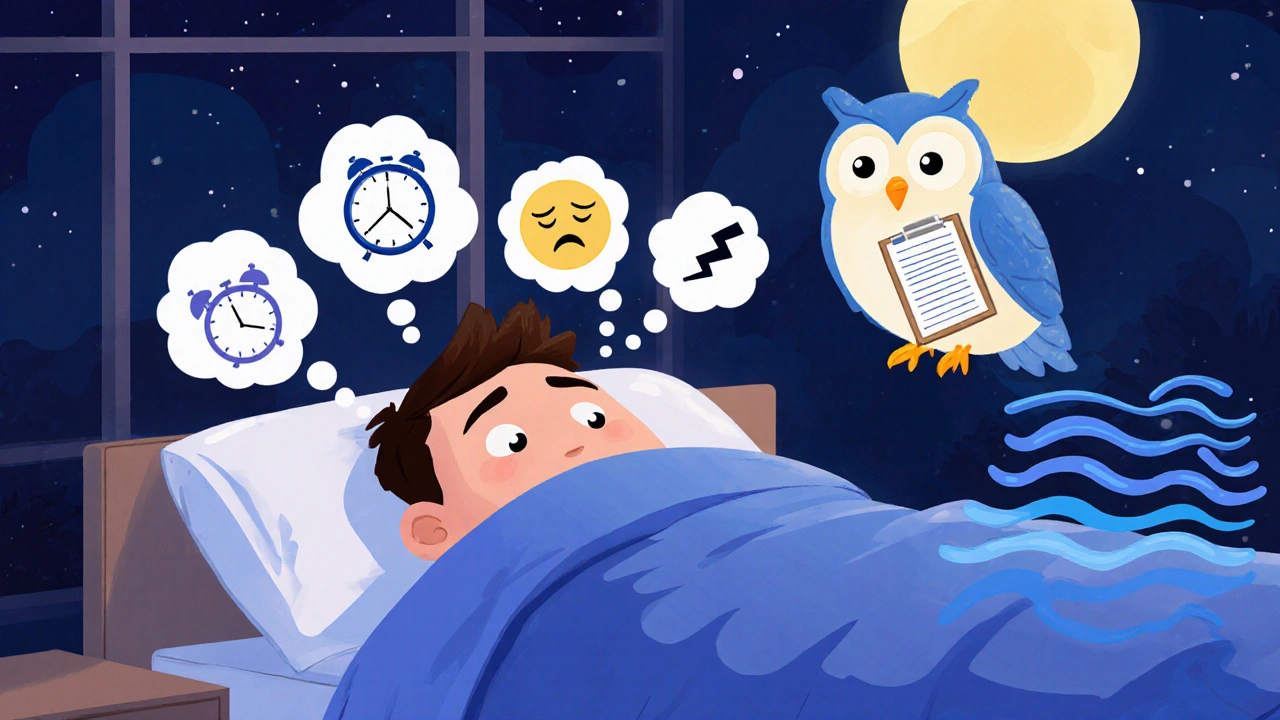
Insomnia: Why Cognitive Behavioral Therapy Beats Sleep Medications Long-Term
CBT-I is the most effective, long-lasting treatment for chronic insomnia-beating sleep medications in both effectiveness and safety. Learn how behavioral therapy rewires your sleep habits for good.