Long-term PPI use: Risks, Alternatives, and What You Need to Know
When you rely on proton pump inhibitors, a class of drugs that reduce stomach acid production, commonly used for GERD and ulcers. Also known as PPIs, they’re among the most prescribed medications in Canada — but using them for years isn’t harmless. Many people take them for months or even years without realizing the hidden risks. It’s not just about heartburn relief anymore — it’s about understanding what your body is dealing with over time.
Long-term PPI use links to real problems: lower magnesium levels, weaker bones, higher risk of kidney issues, and even changes in gut bacteria that can lead to infections like C. diff. Some studies show it can interfere with how your body absorbs key nutrients like vitamin B12 and iron. And if you’re also taking clopidogrel, a blood thinner used after heart attacks or stents, mixing it with certain PPIs like omeprazole can cut its effectiveness. That’s because both drugs compete for the same liver enzyme — CYP2C19 — which can leave you more vulnerable to clots. Not all PPIs do this, though. Pantoprazole and dexlansoprazole are safer choices if you need both drugs.
What about alternatives? Lifestyle changes — like cutting back on caffeine, avoiding late-night meals, or losing weight — often help more than people expect. H2 blockers like famotidine can work for milder cases and don’t carry the same long-term risks. And if you’ve been on PPIs for over a year, talk to your doctor about tapering off. Many people can stop safely with gradual reduction and symptom tracking. It’s not about fear — it’s about balance. You don’t need to stop if you truly need it, but you should know why you’re still on it.
The posts below dive into exactly this: how long-term PPI use affects your body, what drugs it clashes with, how to spot warning signs, and what to ask your doctor before you keep filling that prescription. You’ll find real-world advice on managing acid reflux without relying on PPIs, how to handle withdrawal symptoms, and why some people end up worse after stopping cold turkey. These aren’t theory pieces — they’re practical guides from people who’ve been there.
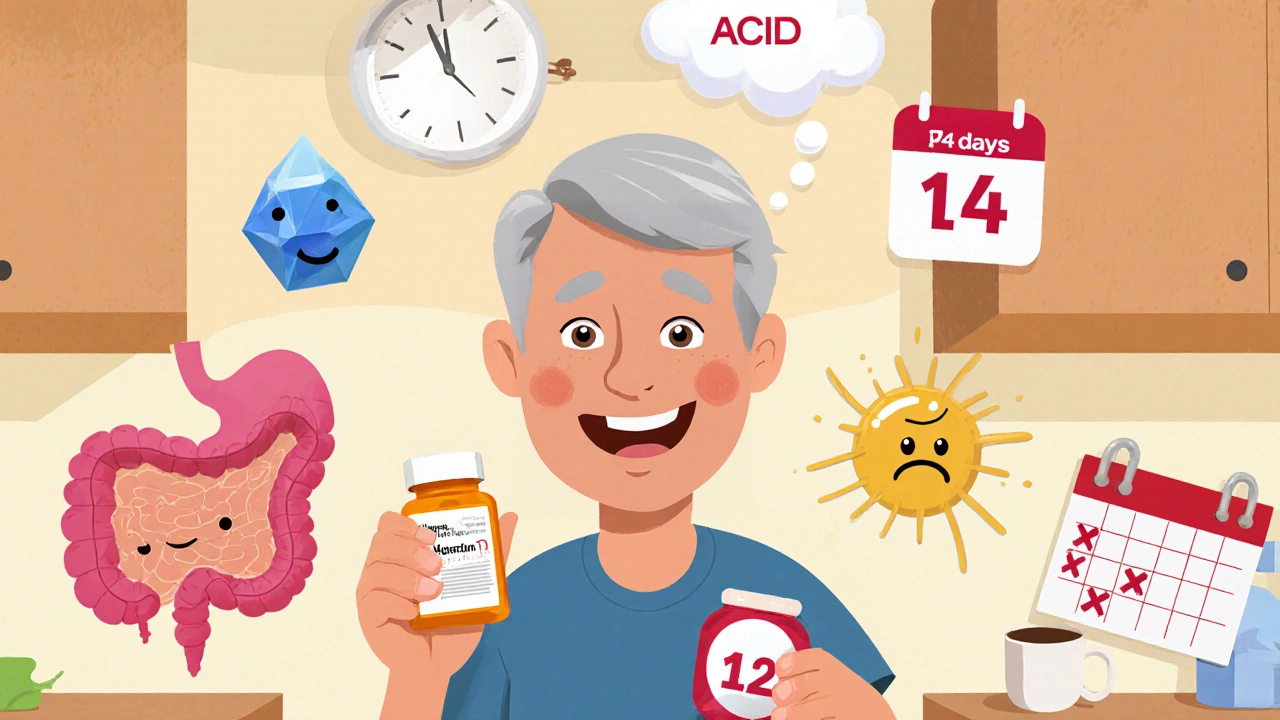
Proton Pump Inhibitors: Long-Term Risks and When to Stop
Proton pump inhibitors help with heartburn and ulcers, but long-term use carries real risks like bone fractures, kidney issues, and vitamin deficiencies. Learn when to stop and how to do it safely.