PPI Risks: What You Need to Know About Long-Term Use
When you take a proton pump inhibitor, a class of drugs that reduce stomach acid by blocking the enzyme that produces it. Also known as PPIs, they’re among the most prescribed medications in Canada—for heartburn, ulcers, and GERD. But using them longer than a few weeks can come with real, documented risks. Many people stay on PPIs for months or even years, thinking they’re harmless because they’re available over the counter. But that’s not the whole story.
The biggest concern? omeprazole, a common PPI that’s sold under brands like Prilosec and many generics, can interfere with how your body uses clopidogrel, a blood thinner often prescribed after heart attacks or stents. Omeprazole blocks an enzyme called CYP2C19, which clopidogrel needs to become active. If that enzyme is shut down, clopidogrel doesn’t work as well—and that raises your risk of another heart event. Not all PPIs do this the same way. Pantoprazole and dexlansoprazole are safer choices if you’re on both meds.
Long-term PPI use also links to lower bone density, especially in older adults. Your stomach acid helps absorb calcium, magnesium, and vitamin B12. When acid stays low for too long, your body can’t pull these nutrients in properly. That’s why people on daily PPIs for over a year have higher rates of hip fractures. Kidney problems are another quiet risk—some studies show a rise in chronic kidney disease among long-term users, though the exact cause isn’t fully clear. And then there’s the rebound effect: stop PPIs suddenly after months of use, and your stomach overproduces acid, making heartburn worse than before.
You’re not alone if you’ve been on a PPI longer than you meant to. Doctors often prescribe them for 4–8 weeks, but many patients keep refilling them without checking back. The good news? Most people don’t need to stay on them forever. Lifestyle changes—like eating smaller meals, avoiding late-night snacks, cutting back on caffeine and alcohol, and raising the head of your bed—can help manage symptoms. If you’re on a PPI and have other conditions like diabetes, kidney disease, or are taking multiple meds, you’re at higher risk for side effects. That’s why it’s critical to talk to your doctor about whether you still need it, and if there’s a safer alternative.
Below, you’ll find real-world guides on how PPIs interact with other drugs, how to recognize hidden risks, and what to do if you’ve been on them too long. These aren’t theoretical warnings—they’re based on patient experiences, clinical data, and what actually works when you’re trying to get off PPIs safely.
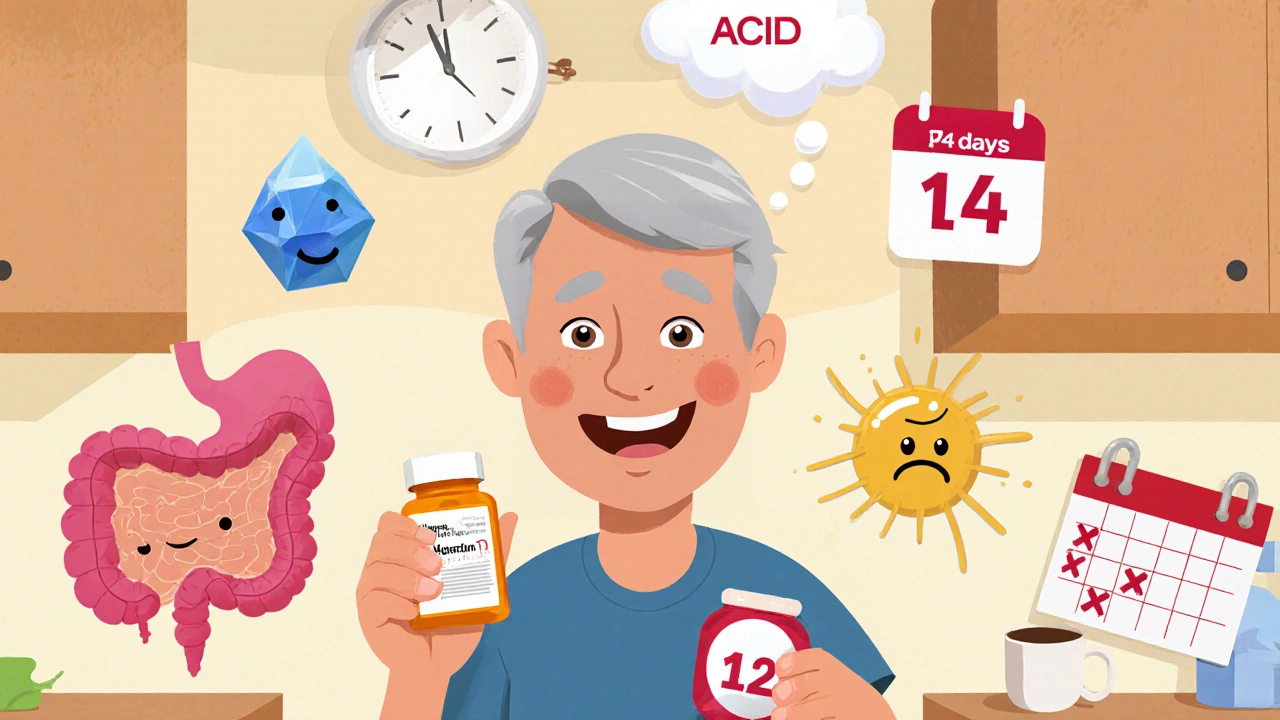
Proton Pump Inhibitors: Long-Term Risks and When to Stop
Proton pump inhibitors help with heartburn and ulcers, but long-term use carries real risks like bone fractures, kidney issues, and vitamin deficiencies. Learn when to stop and how to do it safely.