PPI Side Effects: What You Need to Know About Long-Term Use and Risks
When you take a proton pump inhibitor, a class of drugs used to reduce stomach acid by blocking the enzyme that produces it. Also known as PPIs, they’re among the most prescribed medications in Canada for heartburn, ulcers, and GERD. But using them for months or years isn’t harmless. Many people don’t realize that what starts as quick relief can lead to real, lasting problems.
PPI side effects aren’t just about upset stomach or headaches. Long-term use has been linked to nutrient deficiencies—especially magnesium, calcium, and vitamin B12—because stomach acid is needed to absorb them. Bone fractures become more likely, especially in older adults. Kidney damage, including chronic kidney disease, shows up in studies tracking users over time. And here’s something most don’t know: PPIs can make other drugs less effective. Take omeprazole, a common PPI that interferes with how the body activates clopidogrel, a blood thinner. If you’re on clopidogrel after a heart attack or stent, omeprazole could be putting you at risk. Not all PPIs do this the same way, but switching without checking with your doctor can be dangerous.
And it’s not just about drug interactions. Stopping PPIs suddenly can cause rebound acid hypersecretion—your stomach overcompensates and makes even more acid than before. That’s why people feel worse when they try to quit and think they need to stay on it forever. But there are alternatives: lifestyle changes, H2 blockers, even targeted dietary adjustments. The key is knowing when PPIs are truly necessary versus when they’ve become a habit. The posts below break down exactly how these side effects show up, which PPIs are riskiest, how to spot early warning signs, and what to do if you’ve been on them longer than you should.
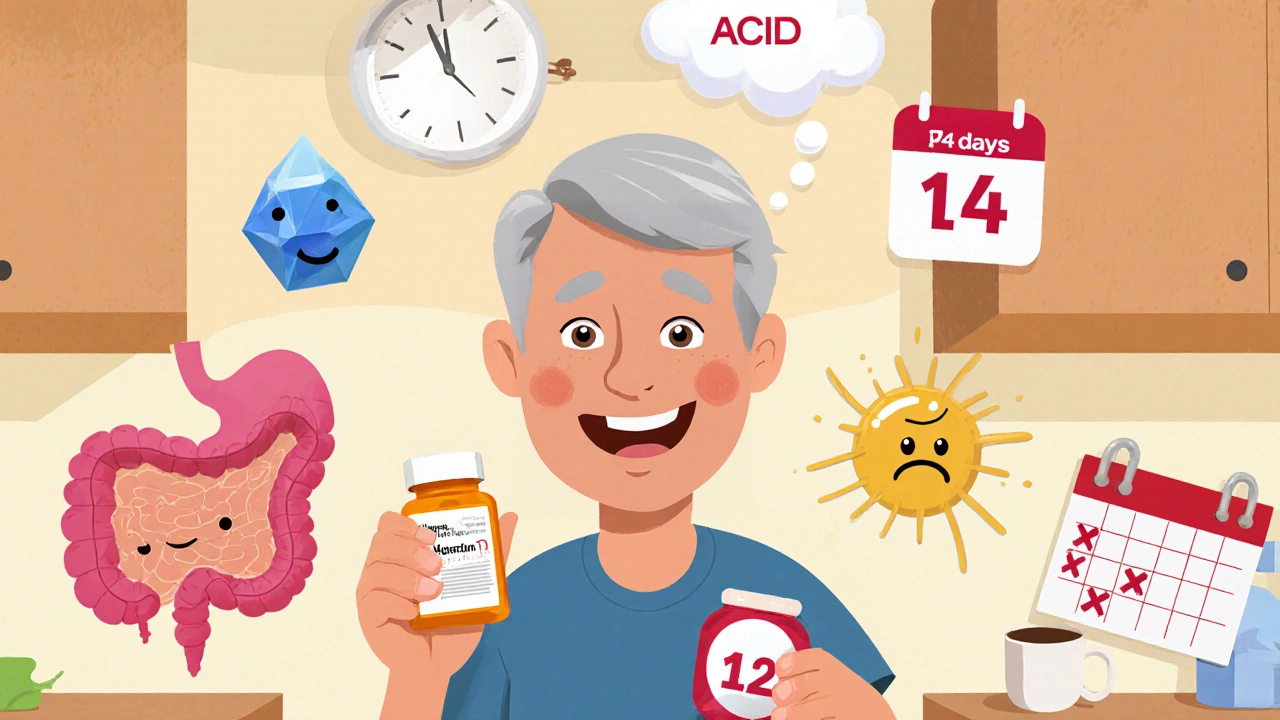
Proton Pump Inhibitors: Long-Term Risks and When to Stop
Proton pump inhibitors help with heartburn and ulcers, but long-term use carries real risks like bone fractures, kidney issues, and vitamin deficiencies. Learn when to stop and how to do it safely.