Proton Pump Inhibitors: What They Are, How They Work, and What You Need to Know
When you hear proton pump inhibitors, a class of drugs that reduce stomach acid by blocking the enzyme responsible for producing it. Also known as PPIs, they’re among the most prescribed medications in Canada for heartburn, ulcers, and GERD. But they’re not harmless. While they work well for short-term relief, long-term use can lead to real problems—like nutrient deficiencies, kidney issues, or even increased risk of bone fractures. And not all PPIs are the same. Omeprazole, pantoprazole, esomeprazole—they all do the same job, but some interact with other drugs more than others.
Take omeprazole, a common proton pump inhibitor often sold under brand names like Prilosec. It’s effective, cheap, and widely available. But if you’re also taking clopidogrel for heart health, omeprazole can make it less effective by interfering with the CYP2C19 enzyme. That’s not just a theory—it’s backed by clinical data. That’s why some doctors switch patients to pantoprazole or dexlansoprazole, which have weaker interactions. And if you’re on multiple meds? You’re at higher risk. Comorbidities like diabetes or kidney disease can change how your body handles these drugs, making side effects more likely.
People often take PPIs for months or years without realizing they might be doing more harm than good. The body adapts. Acid production rebounds. Suddenly, you can’t stop them without severe reflux. That’s why many patients end up stuck on them longer than needed. And if you’ve ever skipped a dose because you forgot, or stopped because the cost was too high, you’re not alone. Medication adherence is a real issue with PPIs, especially when symptoms disappear and people think they’re cured.
There’s also the hidden cost. Beyond the pill price, there’s the risk of missed diagnoses. Chronic heartburn could be something else—like a hiatal hernia or even early signs of esophageal cancer. PPIs mask the symptom, not the cause. That’s why knowing when to stop, when to switch, and when to ask for an endoscopy matters more than you think.
What you’ll find below are real, practical guides on how PPIs fit into everyday life. From how omeprazole clashes with clopidogrel to why some people need to avoid them entirely, these posts cut through the noise. You’ll learn how to spot dangerous interactions, understand your dosage, and make smarter choices with your care team. No fluff. Just what you need to know to stay safe and in control.
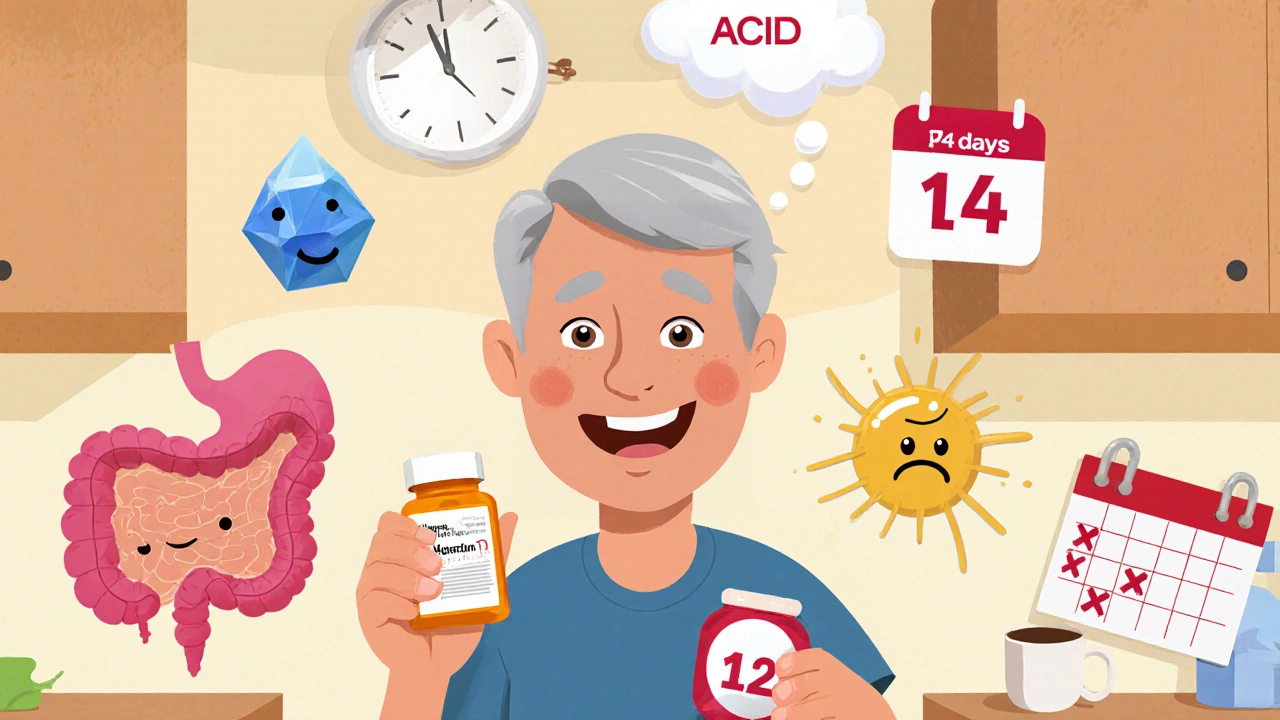
Proton Pump Inhibitors: Long-Term Risks and When to Stop
Proton pump inhibitors help with heartburn and ulcers, but long-term use carries real risks like bone fractures, kidney issues, and vitamin deficiencies. Learn when to stop and how to do it safely.