Stop PPIs: Safe Ways to Quit Acid Reflux Medications
When you stop PPIs, proton pump inhibitors are drugs that reduce stomach acid production, commonly prescribed for heartburn and GERD. Also known as PPIs, these medications work by blocking the acid pumps in your stomach lining. But many people find that after months or years of use, stopping them triggers intense rebound heartburn — not because the original problem came back, but because the stomach overcompensates for the sudden lack of suppression.
It’s not just about acid. proton pump inhibitors, a class of drugs including omeprazole, esomeprazole, and lansoprazole. Also known as PPIs, they’re linked to nutrient deficiencies, bone loss, and gut microbiome changes. That’s why more people are trying to quit — not because they don’t work, but because long-term use brings hidden risks. You’re not alone if you feel stuck: half of all PPI users take them longer than recommended, often without ever discussing a stop plan with their doctor.
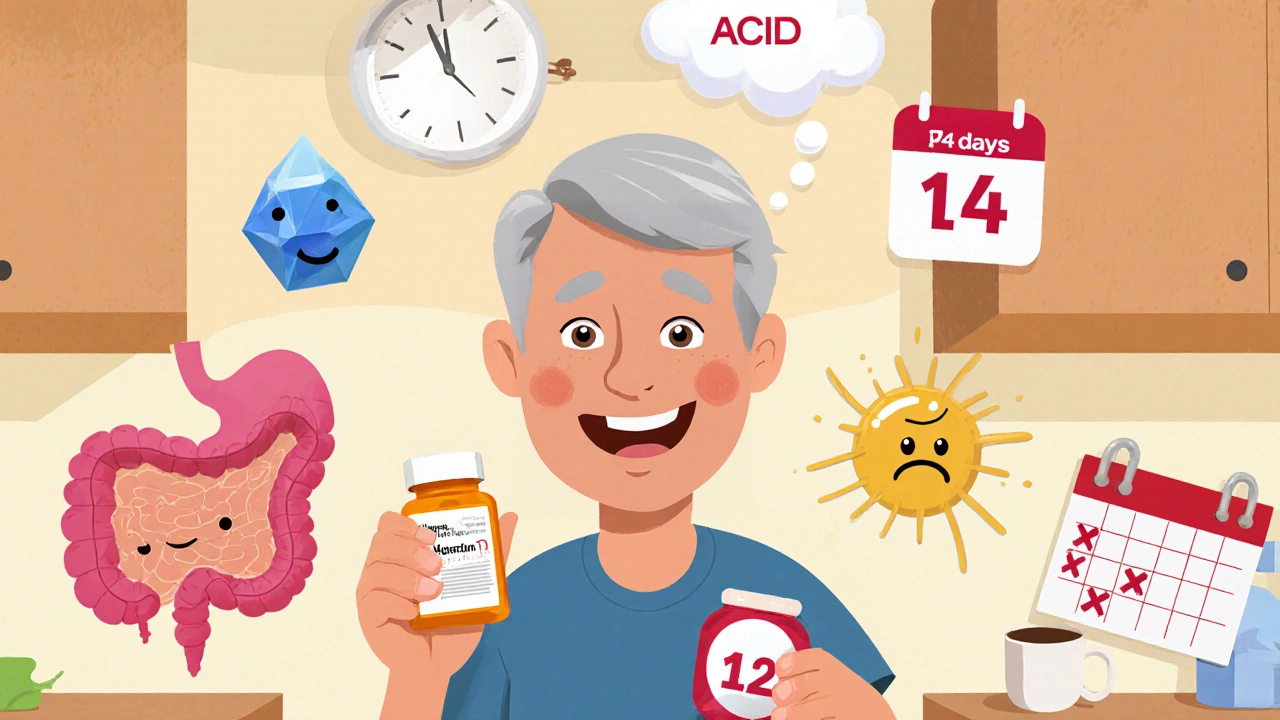
What happens when you stop? Your stomach ramps up acid production for weeks, sometimes months. That’s not a relapse — it’s a physiological response. But you can manage it. People who succeed use gradual tapering, dietary tweaks, and timing strategies like avoiding late meals. Some switch to H2 blockers like famotidine for short-term relief. Others find relief with simple changes: elevating the head of the bed, cutting out caffeine and spicy foods, or chewing gum to boost saliva (a natural acid neutralizer). The key isn’t to fight the rebound — it’s to ride it out safely.
There’s also a bigger picture. acid reflux, a condition where stomach contents flow back into the esophagus, causing burning and discomfort. Also known as GERD, it’s often overdiagnosed and overtreated. Many cases are mild and respond to lifestyle changes alone. If you’ve been on PPIs for more than a year, ask yourself: is this still helping, or just masking something else? Sometimes the real fix isn’t more medicine — it’s rethinking what’s triggering the reflux in the first place.
Stopping PPIs isn’t a quick fix — it’s a process. And it’s one you can do without going back to square one. The posts below show real strategies people used: how to wean off without crashing, what supplements might help, how to tell if your symptoms are truly reflux or something else, and why some doctors still push PPIs even when they’re not needed. You’ll find advice on managing withdrawal, dealing with rebound, and finding alternatives that actually work — not just another pill.
Proton Pump Inhibitors: Long-Term Risks and When to Stop
Proton pump inhibitors help with heartburn and ulcers, but long-term use carries real risks like bone fractures, kidney issues, and vitamin deficiencies. Learn when to stop and how to do it safely.