
Medication Flush Checker
Select a medication to see if it causes flushing and how to manage it.
When your face suddenly turns red and feels hot for no obvious reason, it’s easy to panic. Is it an allergic reaction? Am I having a stroke? Or worse-did I just take something dangerous? The truth is, facial flushing from medications is more common than most people realize. It’s not always an emergency, but it can be embarrassing, uncomfortable, and sometimes a sign that your treatment needs adjusting.
What Causes Medication-Induced Facial Flushing?
Facial flushing isn’t just blushing from embarrassment. It’s a physical reaction where blood vessels in your face, neck, and upper chest widen suddenly, letting more blood flow through. This makes your skin look red, feel warm, and sometimes even burn. It’s not an allergy in most cases-it’s a direct effect of how the drug works in your body. Some medications are designed to dilate blood vessels to lower blood pressure or improve circulation. That’s their job. But because the face has lots of small, sensitive blood vessels close to the surface, they’re often the first place you notice the effect. Other drugs trigger flushing by releasing histamine, messing with nerve signals, or interfering with how your body processes certain chemicals.Top Medications That Cause Flushing
Not all drugs cause flushing the same way. Here are the most common culprits, grouped by how they work:- Vasodilators: These drugs open up blood vessels on purpose. Examples include nitroglycerin (for chest pain), hydralazine, minoxidil, and amyl nitrite. Flushing is expected-sometimes even unavoidable-with these.
- Calcium channel blockers: Used for high blood pressure and angina, drugs like amlodipine, nifedipine, and diltiazem often cause flushing as a side effect. It’s not rare-it happens in up to 10% of users.
- Niacin (vitamin B3): If you’re taking niacin to lower cholesterol, you’ve probably experienced the infamous “niacin flush.” It feels like a wave of heat across your face and chest, sometimes with tingling. Aspirin can help a little, but only cuts it by about 30%.
- Opioids: Morphine, oxycodone, and other painkillers can trigger flushing by causing mast cells to release histamine. It’s not an allergy, but it can look and feel like one-sometimes with itching or hives.
- Vancomycin: This antibiotic can cause “red man syndrome,” a reaction that turns your face and chest red, especially if given too quickly. Slowing the IV drip usually prevents it.
- Cancer drugs: Tamoxifen, doxorubicin, and hormone therapies like leuprorelin or goserelin often cause flushing as part of their effect on estrogen pathways.
- Sildenafil (Viagra): It’s not just for erectile dysfunction. Sildenafil dilates blood vessels everywhere-including your face. Flushing is one of the most common side effects.
- Corticosteroids and immunosuppressants: Drugs like cyclosporine and prednisone can cause flushing through complex immune and vascular interactions.
Why Some People Flush More Than Others
Two people taking the same drug might have wildly different reactions. Why? Genetics, metabolism, and even ethnicity play a role. For example, many people of East Asian descent carry a genetic variation that makes it hard to break down alcohol. When they drink-or take certain antibiotics like metronidazole or chlorpropamide-it leads to a buildup of acetaldehyde, which causes intense flushing, nausea, and rapid heartbeat. This isn’t an allergy. It’s a metabolic quirk. Also, some people have more sensitive blood vessels or higher levels of prostaglandins (chemicals that cause inflammation and dilation). Niacin flush, for instance, is tied to a specific prostaglandin called PGD2. If your body makes more of it, you’re more likely to flush.
How to Relieve Flushing from Medications
There’s no one-size-fits-all fix, but here’s what actually works, based on the cause:- Take aspirin 30 minutes before your dose: For niacin flush, a low-dose aspirin (81 mg) can reduce the intensity. It won’t stop it completely, but it makes it bearable. Don’t use this with other NSAIDs unless your doctor says it’s safe.
- Slow down the infusion: If you’re getting vancomycin or another IV drug, ask the nurse to slow the drip. Red man syndrome often disappears with slower administration.
- Use antihistamines: For histamine-triggered flushing (like from opioids), taking an H1 blocker like cetirizine or diphenhydramine beforehand can help. Some doctors even combine H1 and H2 blockers (like famotidine) for better control.
- Try clonidine or beta-blockers: These aren’t approved for flushing, but they’re used off-label for severe cases. Clonidine reduces nerve signals that widen blood vessels. Beta-blockers like nadolol can calm the sympathetic nervous system and reduce flushing tied to anxiety or stress.
- Switch medications: If flushing is unbearable, talk to your doctor. Sometimes, switching from nifedipine to a different blood pressure med, or from niacin to a statin, can eliminate the problem without losing effectiveness.
Non-Drug Ways to Manage Flushing
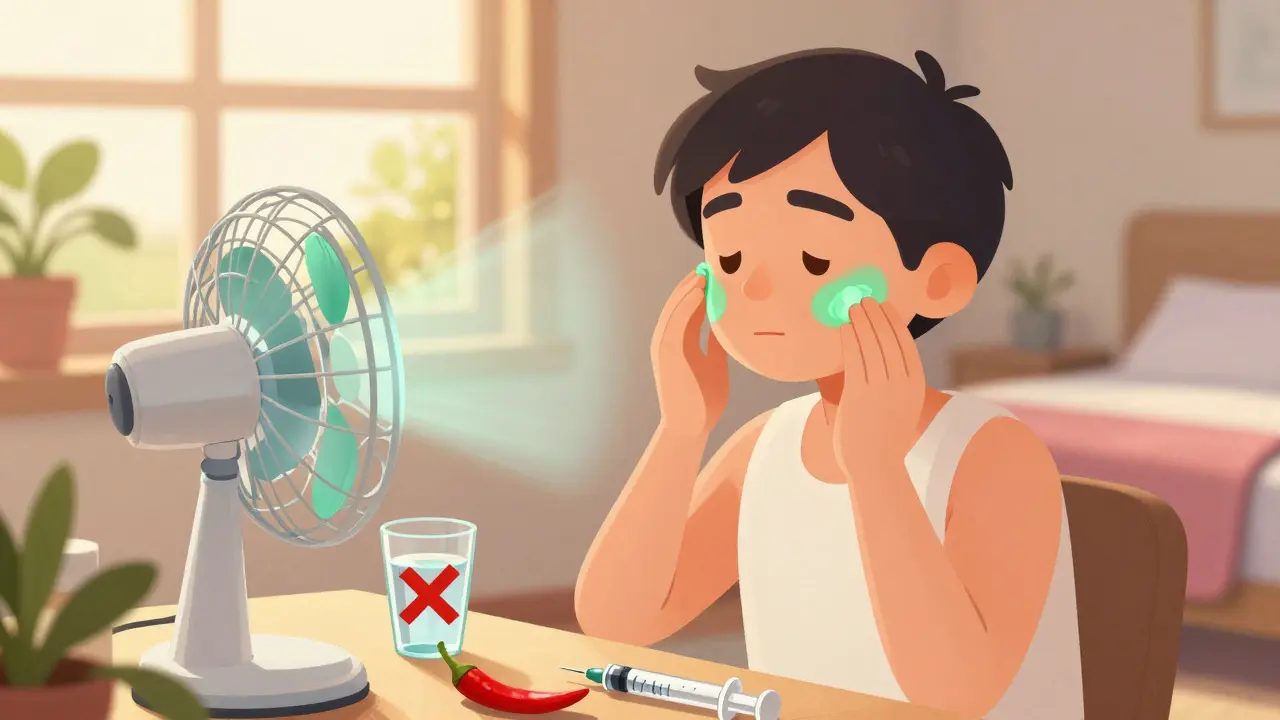
Medications aren’t the only trigger. Lifestyle factors can make flushing worse-or better.- Avoid heat and sun: Hot showers, saunas, and direct sunlight can make facial redness worse. Keep your environment cool.
- Skip spicy foods and alcohol: Capsaicin in chili peppers and alcohol both dilate blood vessels. If you’re prone to flushing, cutting these out helps.
- Watch for MSG: Monosodium glutamate can trigger flushing in sensitive people, especially when combined with alcohol or certain meds.
- Manage stress: Anxiety can trigger or worsen flushing. Deep breathing, mindfulness, or biofeedback training can help calm your nervous system.
- Use green-tinted makeup: For cosmetic relief, green-tinted primers can neutralize redness. It’s not a cure, but it can help with confidence.
When to Worry
Most medication-induced flushing is harmless. But if you notice any of these, call your doctor right away:- Flushing is accompanied by trouble breathing, swelling of the lips or tongue, or dizziness-signs of a true allergic reaction.
- Your skin turns purple or develops blisters.
- You feel faint, have chest pain, or your heart races uncontrollably.
- Flushing happens after starting a new drug and gets worse each time.
Long-Term Solutions
If flushing is constant and affecting your life, there are more advanced options:- Botox injections: Injected into the facial skin, Botox blocks nerve signals that cause blood vessels to widen. Effects last 4-6 months. It’s not for everyone, but it works for severe, treatment-resistant cases.
- Laser therapy: Vascular lasers target the small red blood vessels under the skin. Multiple sessions can reduce chronic redness. Side effects are mild-temporary swelling or bruising-but results vary.
- Treat the root cause: Sometimes, flushing is a symptom of something else-like carcinoid syndrome or menopause. Treating the underlying condition often makes the flushing fade.
Bottom Line: You’re Not Alone
Facial flushing from medications is frustrating, but it’s rarely dangerous. The key is figuring out what’s causing it-and then working with your doctor to find the right mix of adjustments, alternatives, and lifestyle changes. Don’t stop your medication just because you’re flushing. Talk to your prescriber. There’s almost always a way to manage it. Whether that’s taking aspirin before niacin, switching to a different blood pressure pill, or using a gentle laser treatment-it’s possible to live well without constant redness.Is facial flushing from medication dangerous?
In most cases, no. Medication-induced flushing is usually a harmless side effect caused by blood vessels widening. However, if it’s accompanied by trouble breathing, swelling, dizziness, or chest pain, it could signal a serious allergic reaction. Seek medical help immediately if you experience those symptoms.
Can I take aspirin to stop niacin flush?
Yes, taking 325 mg of aspirin about 30 minutes before your niacin dose can reduce flushing by about 30%. It doesn’t eliminate it, but it makes it much more tolerable. Avoid daily aspirin unless your doctor recommends it, especially if you have a bleeding disorder or stomach ulcers.
Why do I flush more when I drink alcohol while on medication?
Alcohol interferes with how your body breaks down certain drugs, especially antibiotics like metronidazole or diabetes drugs like chlorpropamide. This causes a buildup of acetaldehyde, a toxic byproduct that triggers intense flushing, nausea, and rapid heartbeat. It’s a chemical reaction-not an allergy-and can be dangerous. Always check medication labels for alcohol warnings.
Does Botox really help with facial flushing?
Yes, for some people. Botox injections into the facial skin block the nerve signals that cause blood vessels to dilate. Results last 4-6 months and are most helpful for severe, chronic flushing that hasn’t responded to other treatments. It’s not a cure, but it can significantly improve quality of life.
Can I switch my medication if it causes flushing?
Often, yes. Many drugs have alternatives that don’t cause flushing. For example, if niacin causes intolerable flushing, your doctor might switch you to a statin or ezetimibe for cholesterol. If a calcium channel blocker like nifedipine is the issue, switching to an ACE inhibitor or beta-blocker might help. Never stop a medication without talking to your doctor first.
Is facial flushing linked to menopause?
Yes. Hot flashes from menopause cause flushing that looks identical to drug-induced flushing. Hormone therapies like tamoxifen or aromatase inhibitors can make it worse. If you’re postmenopausal and taking medication that causes flushing, talk to your doctor about whether hormonal changes are contributing-and whether hormone replacement or non-hormonal options like gabapentin might help.
Can stress make medication-induced flushing worse?
Absolutely. Stress activates your sympathetic nervous system, which can trigger or amplify blood vessel dilation. If you’re already flushing from a drug, anxiety or emotional stress can make the redness stronger and last longer. Techniques like deep breathing, meditation, or biofeedback can help reduce this effect.

I’ve been on niacin for years and the flush used to be brutal-like walking into a sauna in winter. Taking 81 mg aspirin 30 mins before really made it bearable. Not perfect, but I can actually leave the house now without looking like I just ran a marathon in a sauna. Also, cool showers right after help. No magic, just practical tweaks.
Also, if you’re East Asian like me, avoid alcohol with metronidazole. I learned the hard way-flushing, nausea, heart racing. Not fun. Always check med labels.
And yes, stress makes it worse. I started meditating and it helped more than I expected. Just breathing slows the whole thing down.
Facial flushing isn't a 'side effect'-it's a signal. Your body is speaking in vasodilation. We treat symptoms, not systems. Why not ask why the vessel walls are so reactive? Maybe it's not the drug-it's the epigenetic stress load. We're treating molecules, not meaning.
bro i took niacin once and my face looked like a lobster that got into a fight with a lava lamp 😵💫
aspirin helped a lil but honestly i just switched to ezetimibe and life is peaceful now. no more red face, no more weird stares at the grocery store. also, don't drink tequila with it. learned that the hard way. 🤢
Anyone else notice how people act like flushing is some big mystery? It’s just blood vessels. You take a drug that opens them? Surprise, your face turns red. It’s not a conspiracy, it’s pharmacology 101. Stop acting like you’ve been diagnosed with a rare disease. Also, Botox for flushing? That’s like using a flamethrower to light a candle. 🤦♂️
I had this happen after my chemo. Tamoxifen turned my face into a damn sunset every damn time. I cried in the pharmacy because I looked like I’d been slapped by the sun. My sister bought me green tinted primer and said, ‘You’re not broken, you’re just glowing.’
That moment saved me. I don’t care if it’s just cosmetics-I wear it like armor now. And yes, stress made it worse. I started therapy. It didn’t fix the flushing, but it fixed how I felt about it. That’s worth more than any pill.
Vancomycin causes flushing? Newsflash: everything causes flushing. Also, aspirin doesn’t help. Just stop taking the drug if it bothers you. End of story.
Let’s be real-most of this is just anecdotal fluff wrapped in medical jargon. The article lists 8 drugs that cause flushing, but doesn’t mention that 70% of people who report it are actually just sensitive to heat, caffeine, or anxiety. The real issue? We’ve turned every minor physiological response into a ‘condition’ that needs a ‘solution.’
Also, Botox for flushing? That’s not treatment, that’s vanity. And laser therapy? $2,000 sessions to fix something that’s not broken? Wake up. The real fix is accepting your body’s natural reactions. Stop trying to chemically erase your blush. It’s not a flaw. It’s biology.
And don’t even get me started on the ‘green-tinted makeup’ suggestion. That’s not medicine, that’s performance art for people who think their face is a social liability. You’re not broken. You’re just alive.
Also, the author mentions ‘metabolic quirk’ for East Asians but doesn’t acknowledge that this same quirk protects against alcoholism. That’s evolutionary adaptation, not a defect. We’re pathologizing survival.
And why is everyone so quick to switch meds? Maybe the flushing is a warning sign your liver is overloaded. Instead of swapping drugs, maybe check your glutathione levels. Or your methylation status. But no, let’s just pop an aspirin and call it a day. Pathetic.
Ah yes, the sacred ritual of flushing. The modern-day oracle. Your face turns red, and suddenly you’re receiving divine transmissions from the vasculature.
Let me break this down for you, my neurochemical pilgrims: niacin flush? That’s not a side effect-it’s a spiritual awakening. PGD2 is the Holy Spirit of vasodilation, and your skin is the altar.
And Botox? Please. That’s not medicine, that’s the pharmaceutical-industrial complex’s answer to existential discomfort. You’re not treating a reaction-you’re silencing your body’s protest against modernity.
And don’t even get me started on the ‘green-tinted makeup.’ That’s not cosmetic-it’s the last gasp of a culture that would rather mask its biology than understand it. You’re not a malfunctioning machine. You’re a living archive of evolutionary compromise.
Meanwhile, the real question: why do we pathologize warmth? Why is redness a problem, not a poem?
Next time you flush, don’t reach for aspirin. Reach for your journal. Write down what you were thinking. What were you afraid of? Who were you trying to impress? The flush isn’t in your capillaries-it’s in your psyche.
And if you’re taking Botox for this? Honey, you’re not fixing your face. You’re erasing your soul’s signature.
Oh wow, so we’re recommending Botox for flushing now? Next they’ll be selling ‘flush-proof’ face masks on Amazon with 5-star reviews from people who ‘finally feel normal.’
And aspirin? For a drug that’s literally designed to make your blood vessels open? That’s like putting a Band-Aid on a volcano and calling it ‘management.’
Also, ‘green-tinted makeup’? That’s not relief-that’s a cry for help wrapped in Sephora branding. You’re not a glitch in the matrix, you’re a human being with a perfectly normal reaction to a perfectly normal drug. Maybe stop treating your face like a TikTok filter that needs editing.
And for the love of god, if you’re taking niacin because your cholesterol is ‘borderline,’ maybe just… eat less sugar? Just a thought. But no, let’s inject botulinum into your forehead and call it science.
Let’s cut through the noise: flushing isn’t about drugs. It’s about your liver. Your gut. Your stress hormones. You think aspirin helps? It’s masking the real issue: systemic inflammation. You’re taking niacin because your doctor told you to, but you’re not fixing why your body can’t handle it. You’re not ‘flushing’-you’re leaking toxins.
And Botox? That’s not treatment. That’s surrender. You’re paying $2k to shut down nerves so you don’t have to face the fact that your lifestyle is screaming at you.
Also, ‘green-tinted makeup’? That’s not a solution-it’s a symptom of a culture that values appearance over biology. You’re not broken. You’re just surrounded by people who don’t know how to listen to their bodies.
And the ‘East Asian metabolic quirk’? That’s not a quirk. That’s evolution. Your ancestors survived because they didn’t drink. You’re the one who’s out of sync. Stop blaming the drug. Look at your diet. Your sleep. Your cortisol. The flushing is just the tip of the iceberg.
And if you’re taking opioids and flushing? Maybe you’re not addicted. Maybe you’re just detoxing. Your body’s screaming. Listen.
Thanks for the deep dive, sam abas. You’re right-there’s more beneath the surface. I didn’t think about liver load until you mentioned it. I cut out processed sugar and alcohol for a month and my flushing dropped 50%. Not because of the aspirin. Because my body finally had a chance to breathe.
Also, I started walking in the morning. No phone. Just me and the air. The flushing still happens, but it doesn’t scare me anymore. Maybe it’s not the drug. Maybe it’s the noise around it.