Key Takeaways for Importers
- No More Free Passes: The "de minimis" exemption is gone; every FDA-regulated product is now reviewed regardless of value.
- Risk-Based Screening: 98% of entries are screened electronically, but a "flag" can lead to physical detention.
- The "Fast Lane": The Secure Supply Chain Pilot Program (SSCPP) can cut clearance times from 10 days down to 48 hours.
- Common Pitfalls: Incorrect product coding and labeling errors cause nearly 50% of all import delays.
How the FDA Screens Your Shipment
The FDA doesn't have the manpower to open every single box-they only physically examine about 1.2% of the 100 million+ drug shipments that arrive annually. Instead, they use a high-tech filter. Most shipments go through a five-stage process: Entry Submission, Entry Review, Examination and Sampling, Compliance Review, and the Final Admissibility Decision.
During the review phase, the agency uses risk-based analytics. If your shipment looks standard, it's cleared electronically. However, if you're flagged, you're likely in one of four buckets: high-risk profiles (15.7% of reviewed entries), incomplete paperwork (8.3%), products subject to Detention without Physical Examination or DWPE, where a shipment is held based on a known history of violations (12.1%), or specific targets for random examination (6.2%).
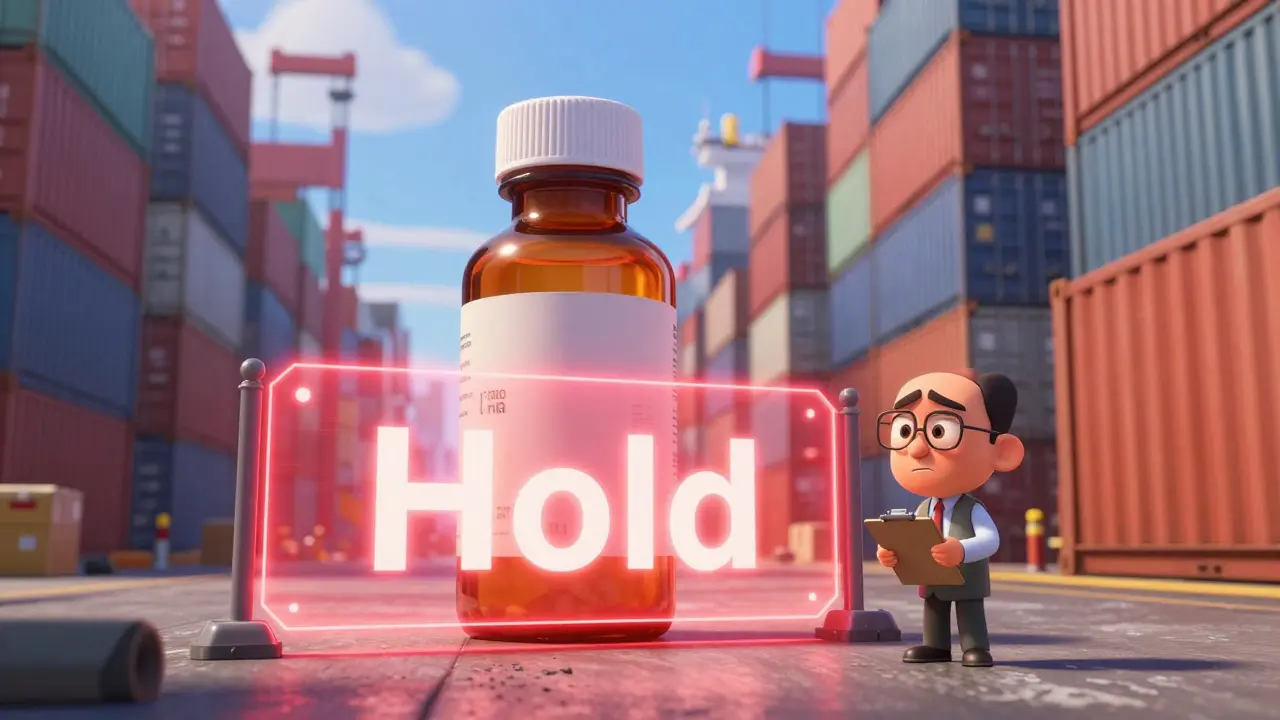
Once a product is flagged, the Office of Regulatory Affairs may coordinate a physical check. This can involve a field examination at the port, a label check to ensure it meets 21 CFR Part 201 requirements, or taking samples for lab testing. If you fail these, you're looking at a detention. In 2022, about 14.3% of physically examined drug shipments were detained, and a staggering 67.8% of those were eventually refused entry into the US.
The Secure Supply Chain Pilot Program (SSCPP): The Gold Standard
If you're a large manufacturer with a spotless record, you don't have to play the "luck of the draw" game at the border. The Secure Supply Chain Pilot Program is an expedited clearance initiative for manufacturers with rigorous internal controls. It's essentially a "trusted traveler" program for drugs.
For the lucky few in this program-which was limited to 27 participants as of late 2023-the difference in speed is massive. Instead of waiting 7 to 10 business days for clearance, SSCPP members often get their goods in 24 to 48 hours. For a company like Johnson & Johnson, this has improved just-in-time manufacturing efficiency by about 18%.
| Feature | Standard Import Process | SSCPP Fast Track |
|---|---|---|
| Average Clearance Time | 7-10 Business Days | 24-48 Hours |
| Inspection Level | Risk-based / Random | Minimal / Expedited |
| Eligibility | All registered importers | 3+ years of perfect compliance |
| Predictability | Low (Variable by port) | High (±8 hour window) |

Why Your Shipments Get Stuck: Common Pitfalls
Most delays aren't caused by the drug being dangerous; they're caused by bad paperwork. According to CBP data, 28% of delays are simply due to incorrect product coding. If the code on your invoice doesn't match the FDA's database, the system flags it. Registration gaps account for another 21% of issues, and labeling discrepancies make up 19%.
Another major shock came in October 2023 when the US Customs and Border Protection the agency responsible for managing trade and border security eliminated the "de minimis" exemption. Previously, shipments under $800 often sailed through with less scrutiny. Now, every single FDA-regulated product is reviewed. For biotech startups, this was a blow; some reported that biological sample import costs jumped by up to $420 per shipment, while adding nearly a week to their research timelines.
To avoid these traps, you need a rock-solid documentation package. You'll need a commercial invoice, bills of lading, CBP Entry Documents, and an Affirmation of Compliance (A of C). Even a tiny error here can lead to an average delay of nearly five business days. Pro tip: Don't just rely on a portal. Importers who build direct relationships with entry reviewers at their specific ports have seen processing times drop by up to 35%.
The Bigger Picture: Global Sourcing and Risks
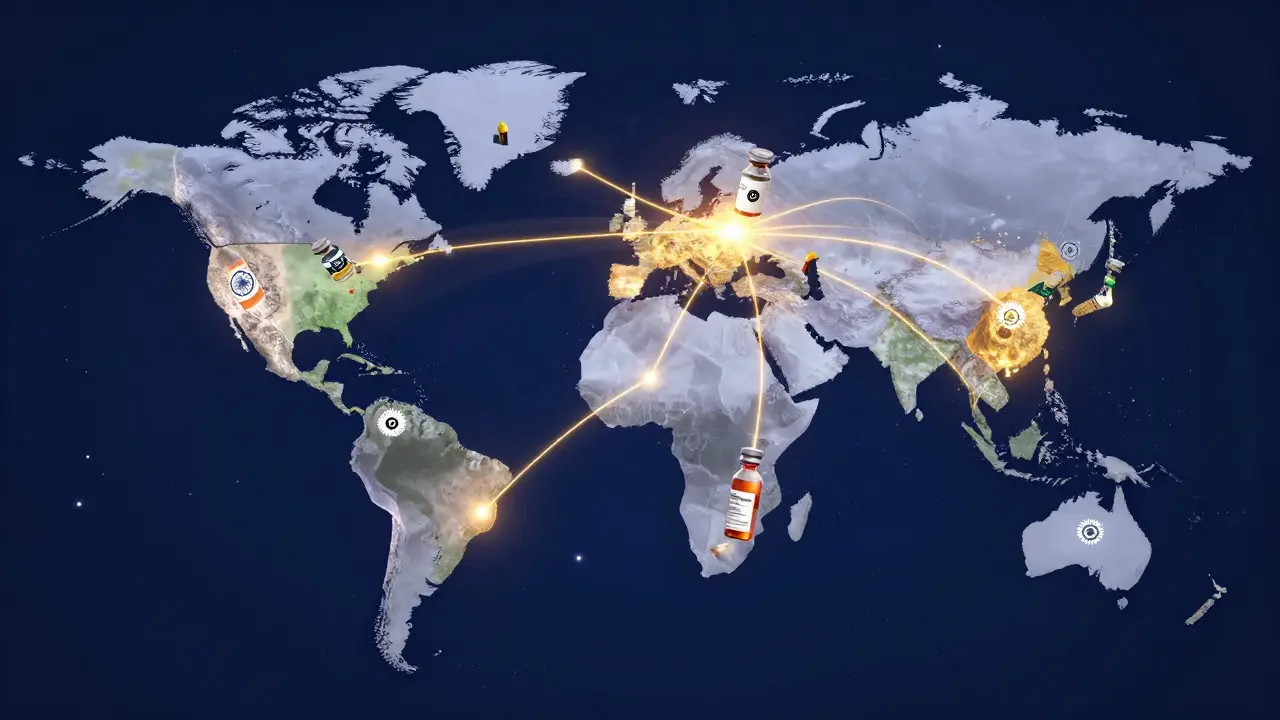
The US is heavily dependent on international markets, with 88% of Active Pharmaceutical Ingredients the raw chemical components used to produce a drug (APIs) sourced from abroad, primarily China and India. This creates a massive challenge for the FDA. While the system works well for brand-name drugs, pharmacy executives often argue that generic supply chains aren't monitored closely enough.
The risks are real. Consider the 2022 valsartan contamination incident. Substandard API entered the US through non-targeted shipments, proving that a risk-based system can occasionally miss the mark. Furthermore, the Partnership for Safe Medicines estimated that $4.3 billion worth of counterfeit meds entered the US in 2022 alone. A huge chunk of those came through those low-value de minimis shipments before the policy change.
To fight this, the FDA is moving toward AI-driven risk assessment and blockchain integration to verify supply chains. They're also working with the Pharmaceutical Inspection Co-operation Scheme an international instrument for cooperation between regulatory authorities (PIC/S) to make inspections more consistent across different countries.
Getting Your Strategy Right
If you're new to importing, don't expect to master this in a week. The learning curve is steep, usually taking 3 to 6 months to get a feel for the flow. Depending on your size, you have two real options: hire a third-party customs broker (averaging $285-$450 per entry) or build an internal compliance team. Large firms usually keep 3 to 5 full-time staff for every $100 million in imports just to keep the paperwork clean.
Regardless of your path, remember that records must be kept for three years. An infraction isn't just a one-time fine; it can trigger an Import Alert. Once you're on that list, every single shipment you send will be automatically detained, turning your supply chain into a bottleneck that can take months to clear.
What happens if my drug shipment is detained?
If a shipment is detained, it's held at the port of entry. The FDA will notify the importer, and you'll typically have to provide additional documentation or corrective action (like relabeling) to prove the drug isn't adulterated or misbranded. If the FDA decides the product is violative, it may be refused entry and must be exported back or destroyed.
Can small biotech companies join the SSCPP?
It's difficult. To qualify for the Secure Supply Chain Pilot Program, manufacturers must have perfect compliance records for at least three consecutive years and pass rigorous internal controls reviews. While the FDA is expanding the program to include contract manufacturing organizations, the high barrier to entry still favors larger pharmaceutical companies.
Why was the de minimis exemption removed?
The exemption allowed low-value shipments (under $800) to bypass heavy scrutiny. This created a vulnerability that was exploited to smuggle counterfeit medications, dangerous narcotics, and even pill presses into the US. By removing the exemption, the FDA ensures every regulated product is screened.
How often should I update my import documentation?
You should review your documentation for every shipment, but specifically check the Electronic Entry Interface Repository (EEIR) biweekly. FDA requirements and product codes can change, and using an outdated code is one of the most common reasons for shipment delays.
What is the difference between a physical examination and a label examination?
A label examination checks if the packaging, warnings, and dosage instructions meet 21 CFR Part 201 standards. A physical examination is more invasive, involving the actual inspection of the product's condition or the collection of 1-3 samples to be sent to a laboratory for chemical and safety testing.
Next Steps and Troubleshooting
For New Importers: Start by auditing your product codes. Cross-reference your current inventory with the latest FDA and CBP guidelines. If you're importing samples for research, factor in an extra 5 business days and higher brokerage fees to account for the lack of de minimis exemptions.
For Experienced Manufacturers: If you have a clean 3-year audit trail, apply for the SSCPP. The reduction in clearance variability (down to a ±8 hour window) can significantly lower your warehousing costs and allow for leaner inventory management.
Troubleshooting Detentions: If your shipment is flagged as DWPE, don't panic but act fast. Contact your port-specific FDA representative immediately. Providing a comprehensive Affirmation of Compliance (A of C) and a detailed explanation of why the previous violation occurred (and how it's been fixed) is the fastest way to release the hold.