Heart Medication Interaction Checker
Check Your Medication Safety
Enter your heart medication and potential interacting substance. This tool identifies FDA black box warnings and critical risks based on the latest research.
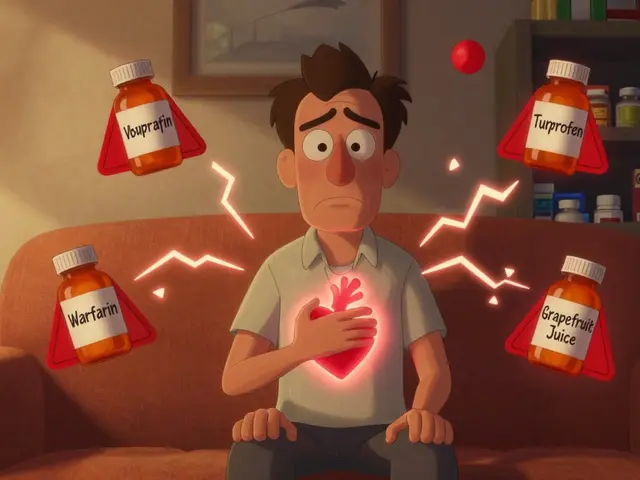
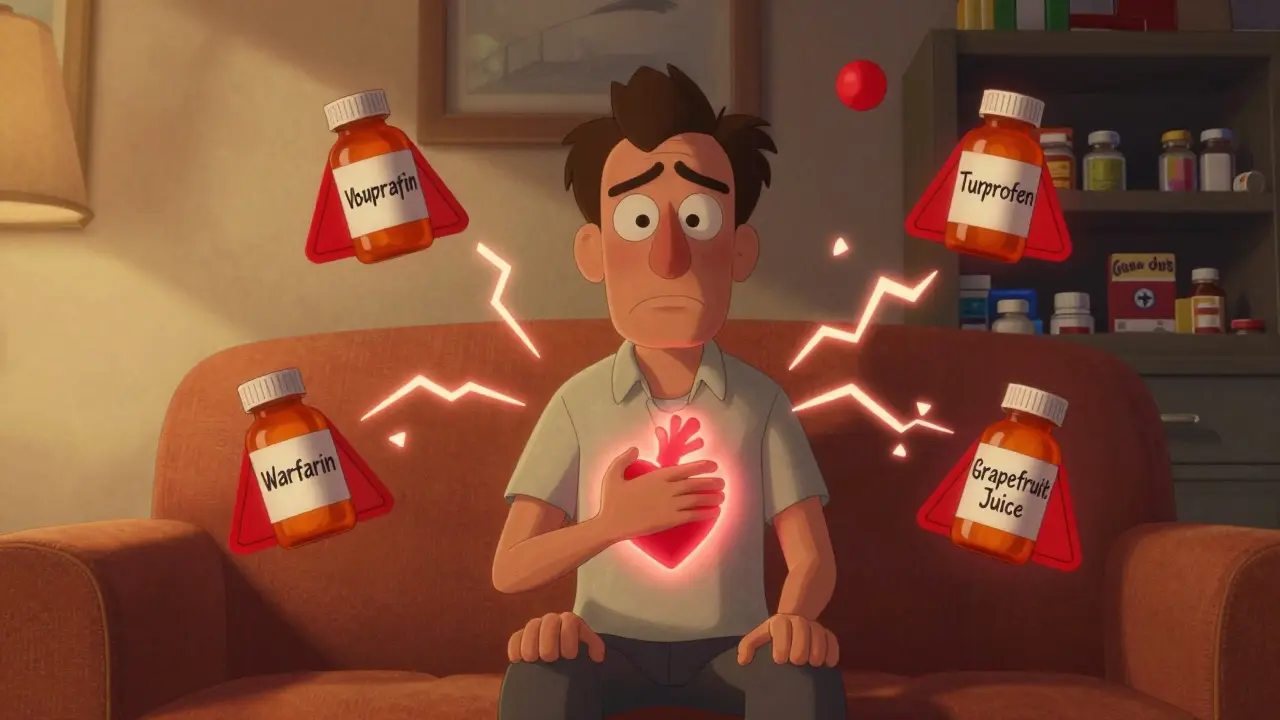
Every year, over 106,000 people in the U.S. die from adverse drug reactions-many of them avoidable. When you’re taking heart medications, even a simple over-the-counter painkiller can turn deadly. It’s not about being careless. It’s about not knowing what’s hiding in your medicine cabinet. You might think ibuprofen is harmless. You might think turmeric is just a spice. But when combined with your heart pills, they can trigger bleeding, kidney failure, or even cardiac arrest.
These Are the Most Dangerous Combinations
Some drug pairings are so risky they come with FDA black box warnings-the strongest alert the agency gives. Here are the top seven combinations you must avoid if you’re on heart medication.
- Warfarin and ibuprofen: Warfarin thins your blood. Ibuprofen irritates your stomach lining. Together, they raise your risk of gastrointestinal bleeding by 300%. One study found that patients on this combo had INR levels spike dangerously high, leading to uncontrolled bleeding during routine dental work or even minor falls.
- Warfarin and acetaminophen: You might think Tylenol is safe. But with chronic use, it can boost warfarin’s effect by 2-3 INR points. That’s like turning a safety valve into a full blast. No warning. No symptoms. Until you start bleeding internally.
- PDE-5 inhibitors (like Viagra) and nitrates: If you’re taking nitroglycerin for angina, never take sildenafil, tadalafil, or vardenafil. The combo can drop your systolic blood pressure below 70 mmHg. That’s a medical emergency. People have died from this combination-sometimes within minutes of taking both.
- Statins and amiodarone: Amiodarone is used for irregular heartbeats. Statins lower cholesterol. Together, they increase muscle damage risk by 400-500%. Symptoms? Severe muscle pain, dark urine, weakness. Left unchecked, this can lead to rhabdomyolysis, kidney failure, and death.
- ACE inhibitors and potassium supplements: ACE inhibitors help your heart by relaxing blood vessels. But they also cause your body to hold onto potassium. Add a potassium pill, salt substitute, or high-potassium diet, and your levels can jump past 5.5 mEq/L. That’s a heart-stopping level. One study found 18.7% of patients on this combo developed dangerous hyperkalemia-compared to just 4.2% who didn’t.
- Digoxin and verapamil: Verapamil slows your heart rate. Digoxin does too. But together, verapamil can push digoxin levels up by 60-75%. That’s not a small increase. It’s enough to cause nausea, confusion, vision changes, and fatal arrhythmias. This combo is so dangerous, many doctors refuse to prescribe both.
- NSAIDs and blood pressure meds: Diclofenac, naproxen, ketorolac-even ibuprofen-can reduce the effectiveness of ACE inhibitors, ARBs, and diuretics by 25-30%. They also cause fluid retention and raise blood pressure. For someone with heart failure, this means more swelling, more shortness of breath, and more hospital visits.
It’s Not Just Prescription Drugs
You might think your doctor knows everything you take. But they rarely ask about supplements. And most patients don’t think to mention them.
St. John’s wort, turmeric, garlic, ginkgo biloba-these are common. But they’re not harmless. St. John’s wort can slash warfarin levels by up to 50%, making your blood clot again. Turmeric acts like a blood thinner. Ginkgo biloba increases bleeding risk. A 2021 study found that 41% of heart patients had taken at least one dangerous supplement combination in the past year. And 62% said their doctor never warned them.
Even something as simple as grapefruit juice can be deadly. It blocks enzymes in your liver that break down statins, calcium channel blockers, and some beta blockers. The result? Toxic levels build up in your blood. One glass a day is enough to trigger muscle damage, low blood pressure, or kidney failure.
Why This Happens-And Why It’s Getting Worse
More than half of Americans over 65 take five or more prescriptions a week. Many see multiple doctors. One prescribes a beta blocker. Another prescribes an NSAID for arthritis. A third adds a supplement for memory. No one connects the dots.
According to research from the USC Schaeffer Center, taking just two medications with cardiovascular side effects increases heart attack, stroke, or death risk by 104%. With three? It jumps to 218%. That’s not a coincidence. It’s a cascade.
And the system isn’t catching it. Only 37% of primary care doctors routinely screen for dangerous combinations during medication reviews. Pharmacists can do better-but many patients don’t use the same pharmacy for all their meds. Without a full picture, the computer can’t flag the danger.
What You Can Do Right Now
You don’t need to be a doctor to protect yourself. Here’s what actually works.
- Keep a real-time medication list. Not a mental list. Not a scrap of paper. Write down every pill, patch, liquid, and supplement. Include the dose and how often you take it. Example: “Lisinopril 10 mg once daily,” not “blood pressure pill.” Update it every 30 days.
- Use one pharmacy. If you switch pharmacies, your history gets lost. One pharmacy has your full record. They can flag interactions before you even walk out the door.
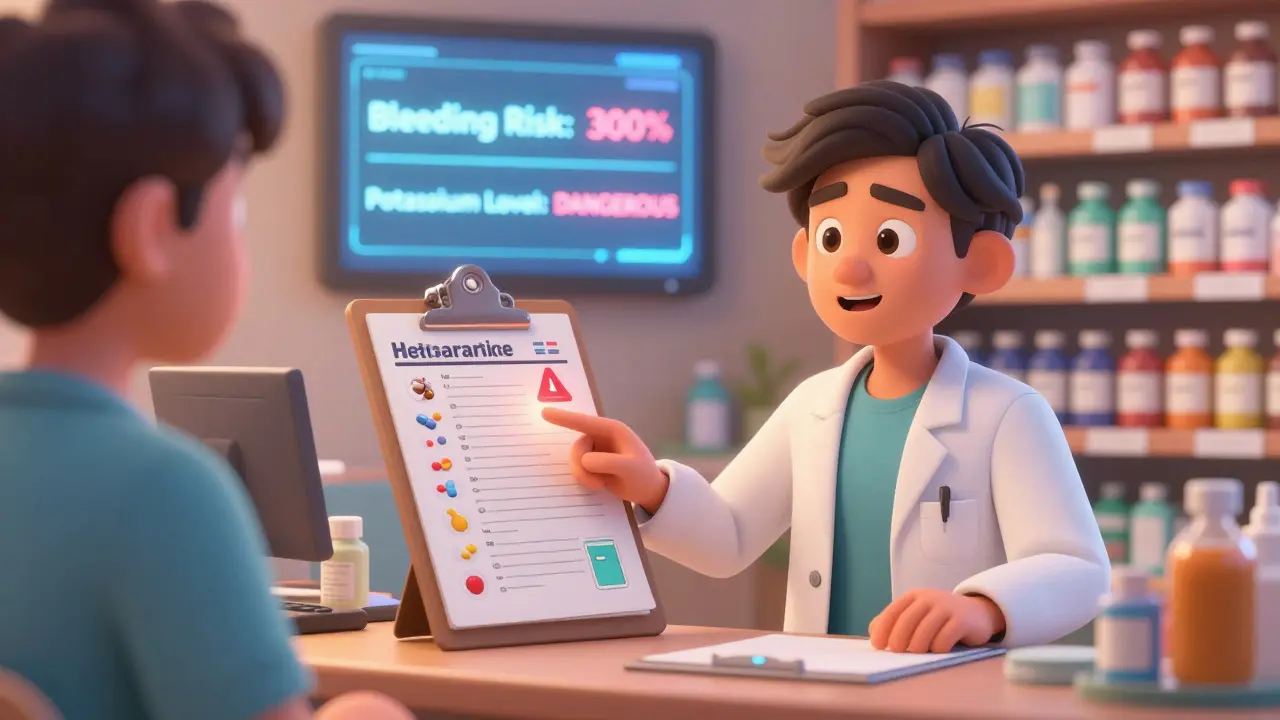
- Ask your pharmacist. Pharmacists are trained to spot dangerous combinations. Ask: “Is this new medication safe with everything else I’m taking?” Don’t wait for them to ask you.
- Bring your list to every appointment. Even if it’s for your knee pain. Even if it’s just a flu shot. Your heart meds matter in every visit.
- Check supplements like prescriptions. If you’re thinking of trying a new supplement, Google: “[Supplement name] interaction with [your heart medication].” If you’re unsure, don’t take it until you’ve asked your doctor.
What’s Changing-And What Gives Hope
The good news? Systems are catching up.
Since 2022, Medicare Part D covers full medication reviews by pharmacists-at no cost to you. These 20-30 minute sessions go through every pill, every herb, every OTC drug. They flag risks. They suggest alternatives. You’re eligible if you’re on Medicare and take three or more prescriptions.
Electronic health records now have clinical decision tools that flag dangerous combos with 85-92% accuracy. But only if they’re properly set up. And the FDA just mandated new black box warnings on 27 cardiovascular drugs-including NSAIDs for patients on blood thinners.
Even better? New fixed-dose combinations are coming. AstraZeneca’s 2024 launch combines dapagliflozin, sacubitril, and valsartan into one pill for heart failure patients. Fewer pills. Fewer interactions. Better adherence. And Northwestern University’s 2023 study showed these “polypills” reduced adverse events by 15%.
AI-powered screening tools are next. Within five years, they could cut dangerous combinations by 40-50%. But until then, the best tool you have is you.
When to Call Your Doctor Immediately
Some symptoms can’t wait. If you’re on heart medication and experience any of these, call your doctor or go to the ER:
- Sudden muscle pain, weakness, or dark urine (possible statin toxicity)
- Unexplained bruising, bleeding gums, or blood in stool (possible warfarin interaction)
- Severe dizziness, fainting, or heart palpitations (possible digoxin or potassium issue)
- Swelling in legs or sudden weight gain (possible NSAID-induced fluid retention)
- Confusion, vision changes, or irregular heartbeat (possible digoxin overdose)
These aren’t normal side effects. They’re red flags. And they’re often preventable.
Can I take ibuprofen if I’m on blood pressure medication?
No-not safely. Ibuprofen and other NSAIDs can reduce the effectiveness of ACE inhibitors, ARBs, and diuretics by up to 30%. They also cause fluid retention, raise blood pressure, and increase kidney stress. For someone with heart failure or high blood pressure, this can lead to hospitalization. Use acetaminophen instead, but even that can interfere with warfarin. Always check with your doctor before taking any pain reliever.
Is it safe to take St. John’s wort with warfarin?
Absolutely not. St. John’s wort speeds up how your liver breaks down warfarin, cutting its effectiveness by up to 50%. That means your blood can clot again, raising your risk of stroke or heart attack. Many patients don’t realize this supplement is dangerous because it’s sold as “natural.” But natural doesn’t mean safe. Stop taking it immediately if you’re on warfarin, and tell your doctor.
Can I drink grapefruit juice with my heart pills?
It depends-but most of the time, no. Grapefruit juice blocks enzymes that break down statins, calcium channel blockers, and some beta blockers. That means toxic levels build up in your blood. One glass a day can cause muscle damage, low blood pressure, or kidney injury. If you’re on any heart medication, avoid grapefruit juice entirely. Check your pill’s label or ask your pharmacist.
Why do I need to tell my doctor about my supplements?
Because supplements aren’t regulated like drugs. They can interact with your heart meds in ways no one expects. Turmeric, garlic, ginkgo, and even fish oil can thin your blood. Vitamin K can undo warfarin. Magnesium can lower your blood pressure too much. Your doctor can’t protect you if they don’t know what you’re taking. Always list every supplement-even ones you take only once a week.
What should I do if I accidentally took a dangerous combination?
Don’t panic, but act fast. Call your doctor or pharmacist immediately. If you’re having symptoms like dizziness, bleeding, chest pain, confusion, or trouble breathing, go to the ER. Bring your medication list. Don’t wait to see if it gets better. Many dangerous interactions build up slowly, but the damage can happen quickly. Early action saves lives.
Final Thought
You’re not alone. Millions of people take heart medications and supplements without knowing the risks. But you can change that. Start today. Write down every pill. Use one pharmacy. Ask your pharmacist. Don’t assume something is safe just because it’s sold over the counter. Your heart doesn’t care if it’s natural or prescription. It only cares if the combination is deadly. And now, you know which ones to avoid.