When you pick up a prescription for generic sertraline or metformin, you probably don’t think about how the price got so low. It’s not magic. It’s not charity. It’s the result of a carefully designed system that lets competition do the work - not government price setters. In the U.S., generic drugs make up 90% of all prescriptions filled, but they account for just 23% of total drug spending. That’s because once a brand-name drug’s patent expires, multiple companies jump in to make the same medicine, and prices crash - often by 80-90% within two years.
Why the Government Doesn’t Set Generic Drug Prices
You might assume the government steps in to cap prices on cheap generics. It doesn’t. And for good reason. The system already works. The Hatch-Waxman Act of 1984 created a shortcut for generic manufacturers to get FDA approval without repeating expensive clinical trials. All they need to prove is that their version is bioequivalent - meaning it works the same way in the body. That cut development costs from over $2 billion for a new drug to just $2-3 million for a generic.The result? A flood of competitors. In the U.S., there are, on average, 14.7 manufacturers for each generic drug. Compare that to Europe (8.2) or Japan (5.3). More companies mean more pressure to lower prices. The FDA approved 1,083 generic drugs in 2023 alone, and that number keeps rising. When three or more generics hit the market, prices stabilize at just 10-15% of the original brand price. No government agency needs to step in.
The Real Government Tools: Speed, Not Caps
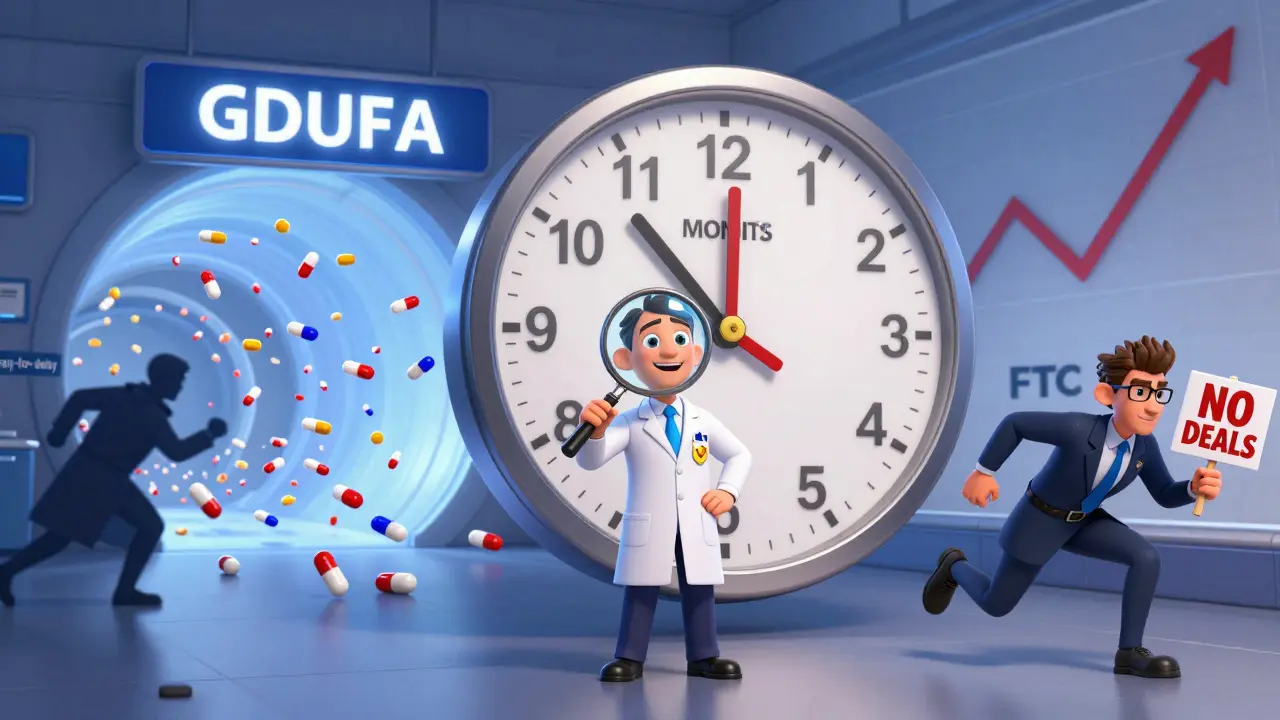
Instead of setting prices, the government focuses on removing roadblocks. The Generic Drug User Fee Amendments (GDUFA), reauthorized in 2022 with $750 million in industry fees, pushes the FDA to approve generics faster. Before GDUFA, approvals took 18 months on average. Now, they’re down to 10 months for standard generics. In 2023, the FDA met its 10-month target in 92% of cases.But not all generics are easy. Complex ones - like inhalers, injectables, or topical creams with tricky formulations - still take longer. That’s why the FDA created a special submission template in late 2023. Pilot programs using it saw review times drop by 35%. Faster approvals mean faster price drops.
Meanwhile, the Federal Trade Commission (FTC) watches for cheating. Brand-name companies sometimes pay generic makers to delay entry - a practice called “pay-for-delay.” In 2023, the FTC challenged 37 of these deals. Each one blocked competition and kept prices high. If those deals are stopped, consumers could save $3.5 billion a year.
Why Medicare Doesn’t Negotiate Generic Drug Prices
The Inflation Reduction Act of 2022 let Medicare negotiate prices for some high-cost brand-name drugs like Ozempic and Wegovy. But generics? Excluded. Why? The Department of Health and Human Services made it clear: they don’t need it.Medicare Part D plans already pay an average of 15% below the manufacturer’s list price for generics. They get additional rebates - 28% for preferred generics, 15% for others. That’s all negotiated by private insurers, not the government. A 2024 analysis by the Congressional Budget Office found that applying international price references to generics would save Medicare only $2.1 billion annually - just 0.4% of total generic spending. Meanwhile, negotiating brand-name drugs could save $158 billion.
Stanford Medicine’s 2024 white paper put it simply: extending price negotiation to generics would save only $1.2 billion a year. That’s less than 1% of what’s saved by targeting brand drugs. So the government focuses where it matters most.
What About Those Price Spikes?
You’ve probably heard stories - someone’s generic pill jumped from $4 to $45 overnight. It sounds terrifying. And yes, it happens. But it’s rare. The FDA’s 2023 Drug Shortage Report found that only 0.3% of generic drugs had major price hikes like that. Most of these spikes come from supply chain issues, not greed. When one manufacturer stops making a drug, and no one else is ready, prices can spike temporarily.That’s why the American Society of Health-System Pharmacists found that 18% of hospital pharmacists faced shortages of critical generics in 2024. And 43% said manufacturers had quit making certain drugs because the price was too low to cover costs. This isn’t about greed - it’s about economics. If a generic sells for $0.05 a pill and production costs $0.06, the company loses money. Eventually, they stop making it.
The solution? Don’t raise prices. Make sure more companies can enter the market. That’s why the FDA’s 2024-2026 plan prioritizes “authorized generics” - versions made by the brand company itself, sold under a generic label. These prevent brand manufacturers from blocking competition by launching their own cheap version right after patent expiry.
What Patients Actually Pay
Most people don’t notice the system working - because it works well. The 2024 KFF Consumer Survey found that 76% of Medicare Part D users pay $10 or less for their generic prescriptions. Only 28% pay that little for brand-name drugs. Satisfaction with generic affordability? 82%. For brand-name drugs? Just 41%.On Drugs.com, out of over 12,000 reviews of generic drugs from early 2024, 87% mentioned words like “affordable” or “cost-effective.” Only 5% complained about price. The system isn’t perfect, but for the vast majority, it delivers.
The Bigger Picture: Competition Works
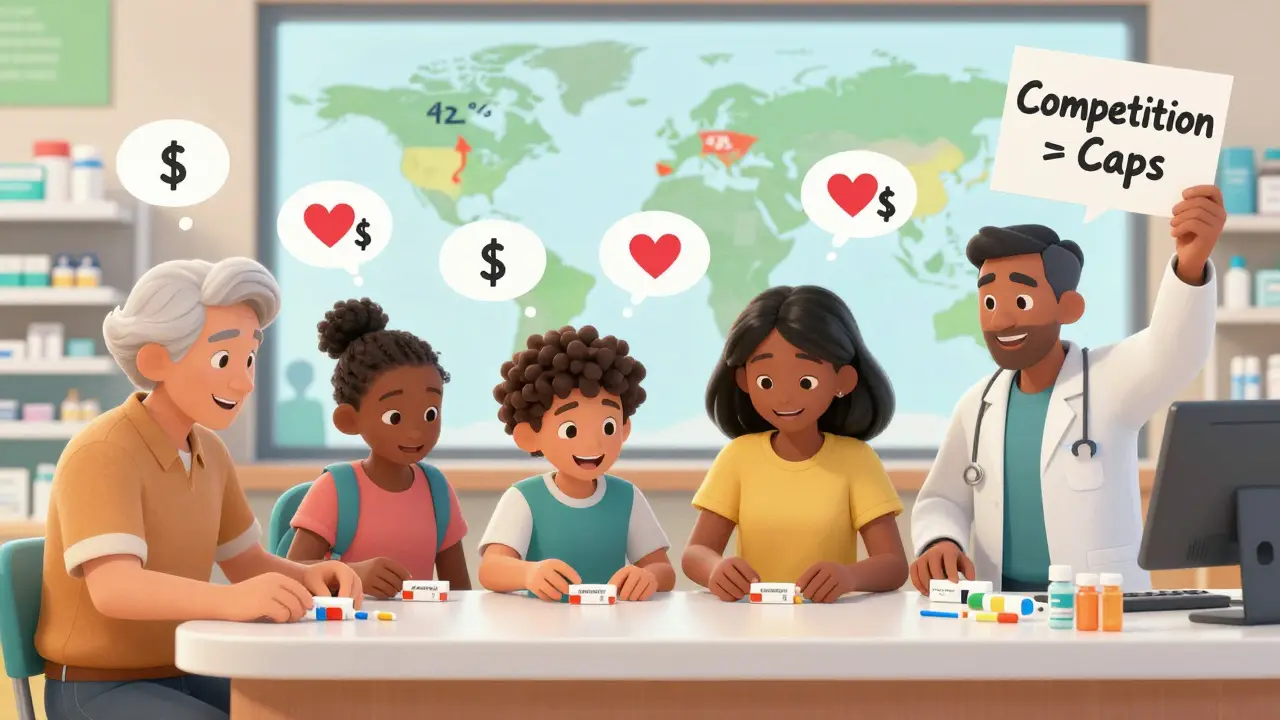
The global generic drug market hit $449.7 billion in 2023 and is growing faster than the branded drug market. The U.S. buys 42% of the world’s generic drugs by volume - but only 29% by value. Why? Because we have more competition. More companies. Lower prices.Experts agree. Dr. Aaron Kesselheim from Harvard told the Senate Finance Committee in 2024: “Generic drugs have demonstrated the ability to achieve substantial price reductions through competition alone, making additional price controls unnecessary and potentially counterproductive.” The FTC’s 2023 report said it plainly: “Generic drug markets generally function competitively without the need for price regulation.”
Government policy isn’t about setting prices. It’s about making sure the market can work. That means faster approvals, blocking anti-competitive deals, and keeping the door open for new manufacturers. It’s not sexy. But it’s effective.
What’s Next?
The FDA is now pushing to approve more complex generics - the kind that are harder to copy. The FTC is still blocking mergers that would reduce competition. In January 2024, they blocked the Teva-Sandoz merger over fears it would cut competition for 13 generic drugs. Meanwhile, Medicare is cracking down on insurers who force unnecessary prior authorization for generics - a practice that can delay access and drive up costs. The agency estimates this change will save beneficiaries $420 million annually.The future? Prices will keep falling. The Congressional Budget Office projects generic drug prices will drop 3.5% per year through 2030. Brand-name drugs? Only 0.8%. The system isn’t broken. It’s working. And the best part? You don’t need a government price cap to get there. You just need competition.