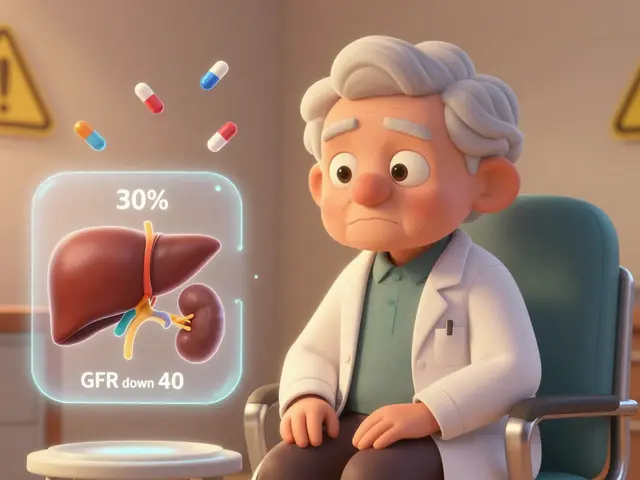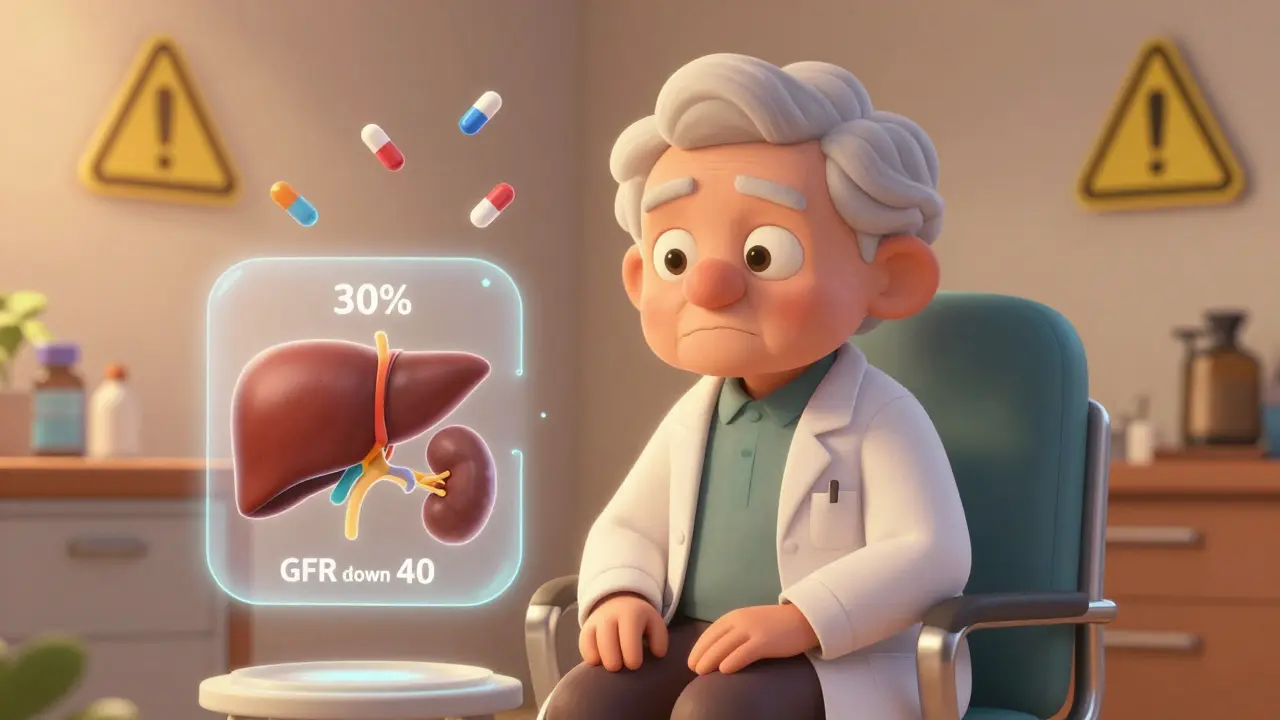
When you’re 70, your body doesn’t process medicine the way it did at 30. That’s not just a myth-it’s biology. The liver and kidneys, two of your body’s main detox systems, slowly change as you age. These changes don’t show up on a regular blood test, but they can turn a safe dose of medicine into a dangerous one. In fact, about 10% of hospital visits by older adults are caused by bad reactions to medications they were told to take. And it’s not because they’re noncompliant. It’s because their bodies can’t handle the same doses they used to.
What Happens to the Liver as You Age?
Your liver shrinks. Not dramatically, but enough to matter. Between ages 30 and 80, liver mass drops by about 30%. Blood flow through the liver also falls by nearly 40%. That means drugs move through your liver slower. If a drug is cleared by the liver, it stays in your system longer. That’s why a standard dose of a medication like propranolol or verapamil can cause dizziness, low blood pressure, or even heart rhythm problems in someone over 70.
Not all drugs are affected the same way. Some are flow-limited-meaning how fast they’re cleared depends mostly on blood flow. These include morphine, lidocaine, and propranolol. When liver blood flow drops, their clearance drops right along with it. For these, the dose needs to be cut by 20-40% in older adults, especially if they’re over 75.
Other drugs are capacity-limited. These are processed by enzymes in the liver, like CYP3A4 or CYP2D6. The good news? Many of these enzymes stay pretty active even in older age. Drugs like diazepam and phenytoin may only see a 10-15% drop in clearance. But here’s the catch: if someone has other health problems-like diabetes or heart failure-that can slow enzyme activity even more. So you can’t assume a drug is safe just because it’s capacity-limited.
There’s also something called first-pass metabolism. That’s when a drug gets broken down in the liver before it ever reaches your bloodstream. As the liver slows down, more of the drug slips through. That means drugs like propranolol can end up with 25-50% higher levels in the blood than expected. A pill that used to be perfectly safe now becomes a risk.
What Happens to the Kidneys as You Age?
The kidneys do something even more dramatic: they lose filtering power. Glomerular filtration rate (GFR)-the measure of how well your kidneys clean your blood-drops by 30-50% between age 30 and 80. That’s not just a number. It means drugs that leave your body through your kidneys stick around longer. And that’s a problem for a lot of common medications.
Drugs like metformin, digoxin, vancomycin, and lisinopril are cleared almost entirely by the kidneys. If your GFR drops to 40 mL/min (which is common in your 70s), you need a lower dose. But here’s where things get tricky: serum creatinine-a standard blood test used to estimate kidney function-often stays normal even when kidney function is declining. Why? Because older adults lose muscle mass. Less muscle means less creatinine, so the test looks fine even when the kidneys aren’t working well.
That’s why doctors now use formulas like the CKD-EPI equation instead of just creatinine levels. It factors in age, sex, and body size. The old Cockcroft-Gault formula still works, but it’s being phased out because it used race corrections that aren’t scientifically valid anymore.
And here’s something most people don’t know: bad kidney function can also slow down liver metabolism. When kidneys aren’t clearing toxins, those toxins build up and can interfere with liver enzymes. So even if a drug is mainly broken down by the liver, poor kidney function can still cause it to accumulate. It’s a one-two punch.
Why Some Drugs Are Riskier Than Others
Not all medications are created equal when it comes to aging. Some are just more dangerous in older bodies. The Beers Criteria, updated in 2019 by the American Geriatrics Society, lists drugs that should be avoided or used with extreme caution in people over 65. These include:
- Amitriptyline and other tricyclic antidepressants: cause dizziness, confusion, urinary retention.
- Benzodiazepines like diazepam: increase fall risk and memory problems.
- Nonsteroidal anti-inflammatories (NSAIDs) like ibuprofen: can cause kidney failure and stomach bleeds.
- Anticholinergics like oxybutynin: linked to dementia risk with long-term use.
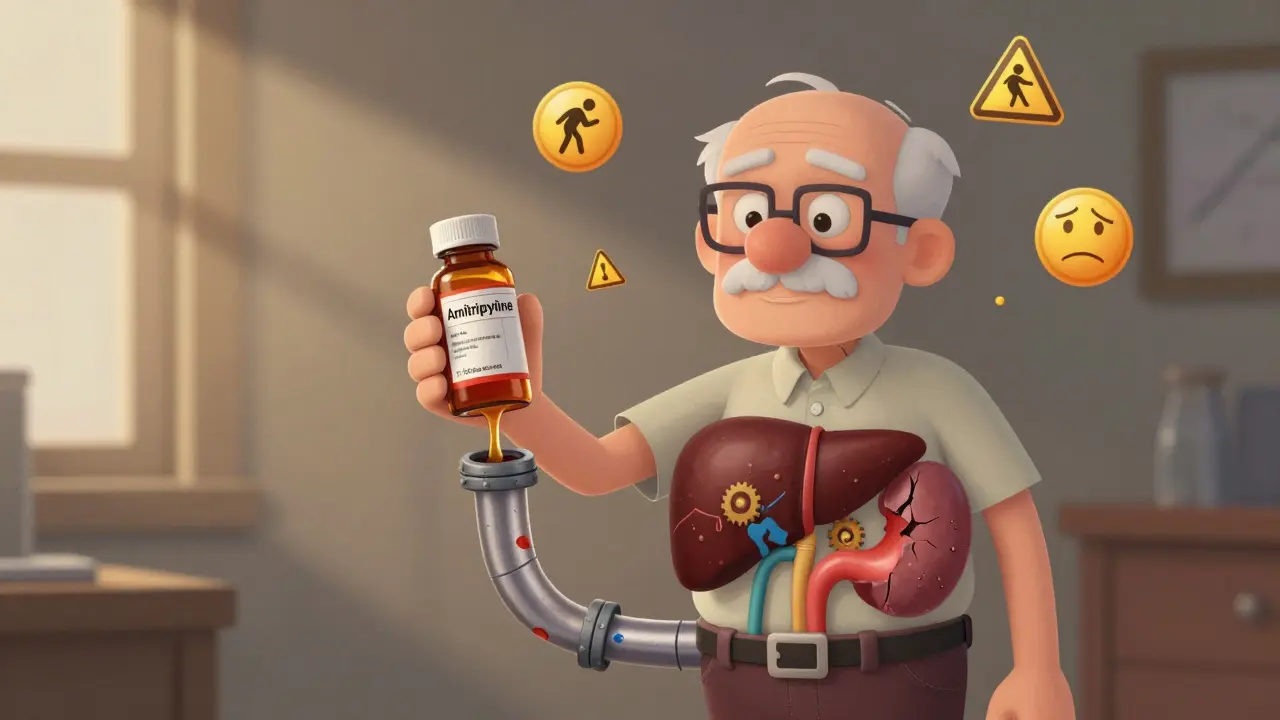
One real-world example: a 82-year-old woman in Massachusetts started taking a standard dose of amitriptyline for nerve pain. Within days, she was falling, confused, and barely able to walk. Her doctor later realized her liver couldn’t break it down. The dose was cut in half-and within two weeks, she was back to normal.
Even over-the-counter drugs can be risky. Acetaminophen (Tylenol) is the leading cause of acute liver failure in older adults. Why? Because it’s metabolized by the liver, and many seniors take it daily for arthritis. Combine that with alcohol, or other medications, and the liver gets overwhelmed. The Acetaminophen Hepatotoxicity Registry shows that half of all liver failure cases in seniors are linked to acetaminophen overuse.
What Doctors Should Do Differently
Doctors don’t always adjust doses for aging. Too often, they prescribe the same dose they’d give a 40-year-old. That’s dangerous. The solution isn’t just reducing doses-it’s thinking differently.
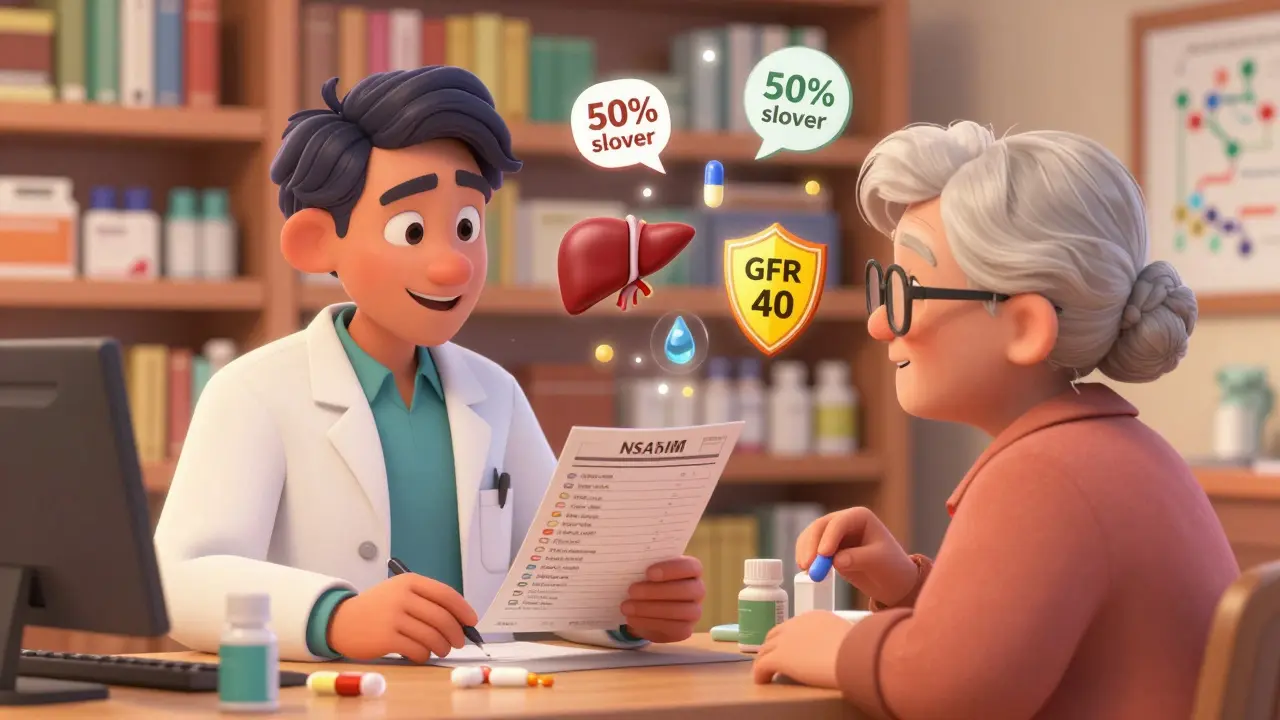
Start low, go slow. That’s the golden rule. For most drugs metabolized by the liver or kidneys, begin with 50% of the standard adult dose and increase only if needed. Monitor closely. Check kidney function every 3-6 months. Don’t wait for symptoms to show up.
Use tools like START and STOPP criteria. These are evidence-based checklists that help doctors spot inappropriate prescriptions. Studies show using them cuts adverse drug events by 22%.
And don’t forget drug interactions. Seniors often take five, six, or even ten medications. Each one adds risk. A simple interaction between a statin and an antibiotic can cause muscle damage. A blood thinner and an NSAID can cause internal bleeding. Every medication needs to be reviewed-not just prescribed.
What You Can Do as a Patient or Caregiver
You don’t need to be a doctor to protect yourself or a loved one. Here’s what works:
- Keep a full list of all medications-including vitamins, supplements, and OTC drugs. Bring it to every appointment.
- Ask: “Is this still necessary?” Every six months, ask your doctor to review each pill. Many seniors take drugs they no longer need.
- Ask about kidney and liver function. Don’t assume your creatinine level is enough. Ask for an estimated GFR.
- Watch for side effects. Dizziness, confusion, fatigue, or falls aren’t normal aging. They could be drug reactions.
- Use one pharmacy. That way, your pharmacist can check for dangerous interactions across all your meds.
One caregiver in Florida told me her 78-year-old father was taking 11 prescriptions. She asked the pharmacist to do a full review. They cut four meds, lowered doses on three others, and switched two to safer alternatives. Within a month, his energy improved, his blood pressure stabilized, and he stopped falling.
The Bigger Picture: Why This Matters
By 2050, one in five Americans will be over 65. Globally, the number of older adults will double-from 703 million to 1.5 billion. We’re not just talking about a few people getting sick. We’re talking about a public health crisis.
The U.S. spends $30 billion a year on hospital stays caused by bad medication reactions in older adults. That’s money that could go to care, not crisis. And the problem is worse because drug trials rarely include older people. Only 38% of participants in new drug trials are over 65. So we’re prescribing drugs based on data from people half their age.
That’s changing. The FDA now requires drug companies to include older adults in trials and analyze results by age. New tools like GeroDose v2.1 let doctors simulate how a drug will behave in a 75-year-old with kidney disease and liver shrinkage. And research into epigenetics is showing why two 80-year-olds might react totally differently to the same pill-because of how their genes have changed over time.
The future isn’t about age. It’s about function. We’re moving toward personalized dosing based on actual liver and kidney performance-not just a number on a birth certificate.
What’s Next?
If you or someone you care for is over 65 and taking more than three medications, here’s your action plan:
- Request a full medication review with your doctor or pharmacist.
- Ask for a GFR test-not just creatinine.
- Check if any drugs are on the Beers Criteria list.
- Start tracking side effects: dizziness, confusion, falls, nausea, sleep changes.
- Never stop a medication without talking to your doctor-but do question every one.
Medications can save lives. But in older adults, they can also end them-if we don’t adjust for how the body has changed. The science is clear. The tools are here. What’s missing is awareness. Don’t wait for a hospital visit to learn the hard way.
Why do older adults need lower doses of medication?
Older adults need lower doses because their liver and kidneys don’t work as efficiently. Liver mass and blood flow decrease, slowing drug breakdown. Kidneys filter blood slower, so drugs stay in the body longer. Even if blood tests look normal, these changes can cause medication levels to build up to dangerous levels.
Can kidney function be measured accurately in seniors?
Yes, but not with creatinine alone. Serum creatinine often stays normal in older adults because they lose muscle mass, which lowers creatinine production. The CKD-EPI equation is now preferred-it uses age, sex, and race-free estimates to calculate glomerular filtration rate (GFR) more accurately. Always ask for your estimated GFR, not just creatinine.
Are over-the-counter drugs safe for seniors?
Not always. Acetaminophen (Tylenol) is the leading cause of acute liver failure in seniors, especially when taken daily with alcohol or other liver-metabolized drugs. NSAIDs like ibuprofen can cause kidney damage and stomach bleeding. Even antacids and sleep aids can interact dangerously with prescription meds. Always check with a pharmacist before taking OTC drugs.
What are the Beers Criteria?
The Beers Criteria is a list of medications that are potentially inappropriate for older adults due to high risk of side effects. It’s updated every few years by the American Geriatrics Society. Drugs like amitriptyline, benzodiazepines, and anticholinergics are on the list because they increase fall risk, confusion, and dementia. Doctors use it to avoid harmful prescriptions.
How can I reduce the risk of bad drug reactions in an elderly parent?
Keep a full list of all medications-including vitamins and supplements-and bring it to every appointment. Ask the doctor or pharmacist to review every drug every six months. Watch for new symptoms like dizziness, confusion, or falls. Use one pharmacy so all meds are tracked together. Never assume a drug is safe just because it’s been taken for years.