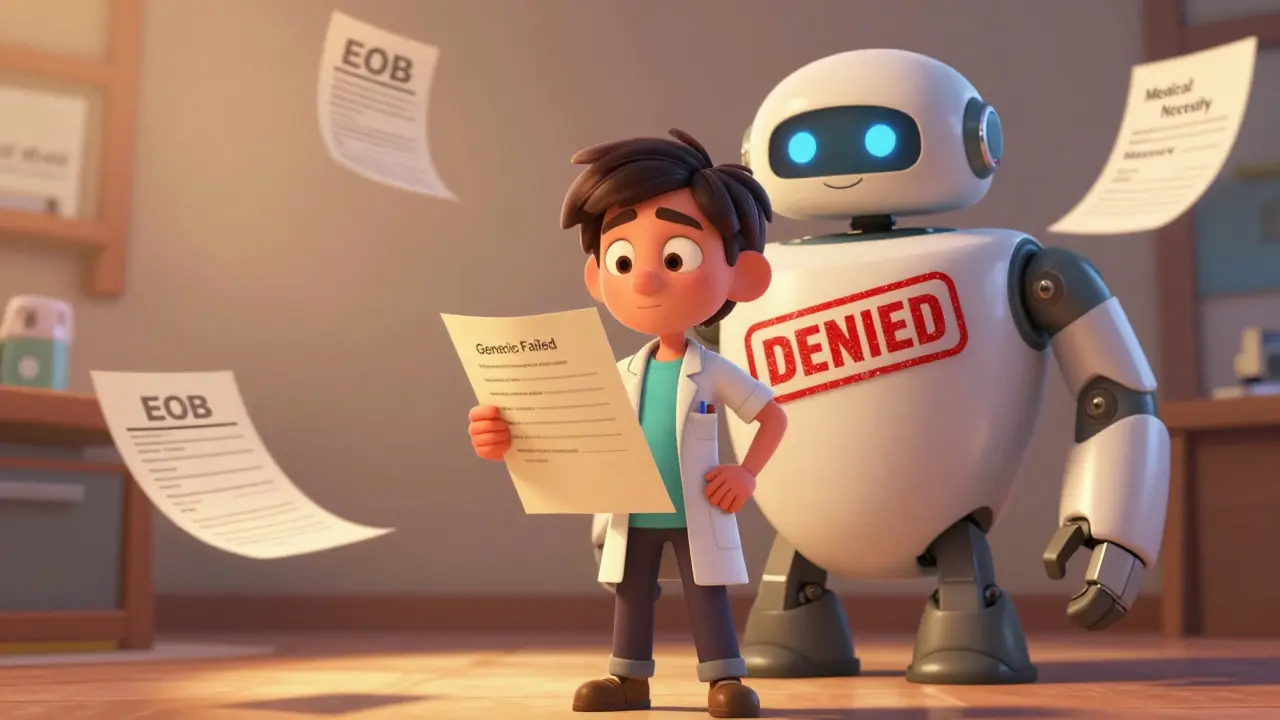
When your doctor prescribes a brand-name medication but your insurance says you must switch to a cheaper generic version - and you know it won’t work for you - you’re not alone. Every year, millions of people face this exact situation. Insurance companies use formularies and step therapy rules to cut costs, but sometimes those rules ignore medical reality. The good news? You can fight back. And if you do it right, you have a better than 70% chance of winning your appeal.
Why Your Insurance Wants You to Switch to a Generic
Insurance plans don’t randomly deny brand-name drugs. They follow strict formulary rules designed to save money. Generics cost 80-90% less than brand-name versions, and insurers push them hard. But here’s the catch: not all generics work the same for everyone. For some people, switching causes side effects, reduced effectiveness, or even dangerous reactions. That’s where the appeal process comes in.According to the American Medical Association, nearly 1 in 5 prior authorization requests are denied upfront. But 72% of those denials get overturned when patients and doctors appeal properly. The key isn’t arguing about cost - it’s proving medical necessity.
Step 1: Understand the Denial
Your first step after a denial is to read your Explanation of Benefits (EOB). This document isn’t just a bill - it’s your roadmap. Look for the denial reason. Common ones include:- “Generic substitution required”
- “Step therapy not completed”
- “Not medically necessary”
- “Formulary exclusion”
By federal law, insurers must include appeal instructions on the EOB. Note the deadline - you usually have 180 days to file an internal appeal for commercial insurance. Medicare gives you only 120 days. Miss the window, and your chance disappears.
Step 2: Get Your Doctor on Board
You can’t win this alone. Insurance companies don’t care about your opinion - they care about your doctor’s. The single biggest factor in a successful appeal? A detailed letter from your physician.Doctors need to include three things in their letter:
- Why the generic won’t work - For example: “Patient experienced severe nausea and dizziness with generic metformin, leading to non-adherence and uncontrolled HbA1c levels.”
- Proof of failed alternatives - “Patient tried two other generics over six months, both resulted in hospitalization due to hypoglycemic episodes.”
- Clinical guidelines - Reference a recognized source like the American Diabetes Association or American College of Rheumatology.
Studies show that appeals with this kind of documentation have a 78% success rate. Those without? Only 29% succeed. Don’t just ask your doctor to write a note - give them a template. Many patient advocacy groups offer free templates online.
Step 3: File the Formal Appeal
Once you have your doctor’s letter, submit it using your insurer’s official appeal form. Most insurers have a downloadable form on their website under “Member Services” or “Prior Authorization.” If you can’t find it, call customer service and ask for the “Prescription Drug Prior Authorization Exception Request Form.”Don’t just mail it in. Send it certified mail with return receipt, or upload it through your insurer’s secure portal. Keep copies of everything - the letter, the form, your EOB, and proof of submission.
Timeline matters. For medications you haven’t started yet, insurers have 30 days to respond. If you’re already on the drug and it’s being taken away, they have 60 days. For urgent cases - like if stopping the drug could cause hospitalization - request an expedited review. They must respond in 4 business days.
Step 4: Request a Peer-to-Peer Review
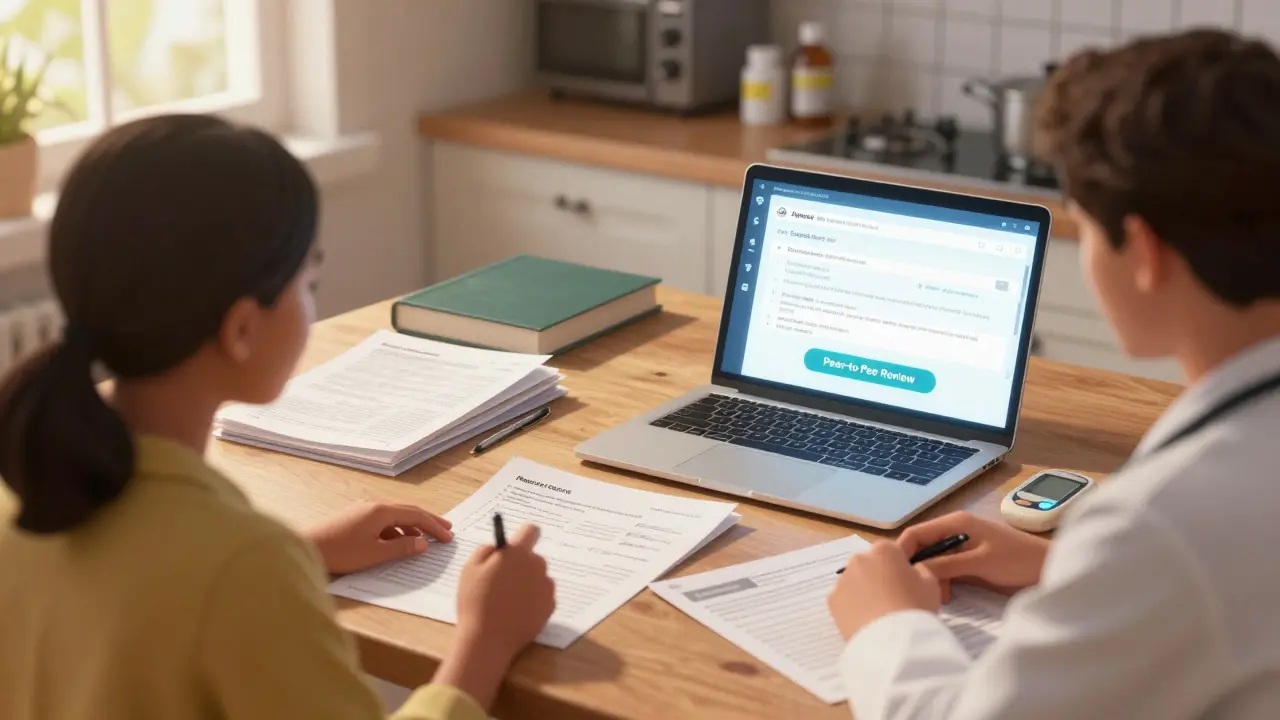
This is the secret weapon most patients don’t know about. When your appeal is reviewed, the insurer’s medical director will often talk to your doctor directly. That’s called a peer-to-peer review.It’s not automatic. You have to ask for it in writing. Say: “I request a peer-to-peer clinical review between my prescribing physician and your medical director.”
Research from California healthcare attorney Dr. Scott Glovsky shows peer-to-peer reviews have a success rate over 75%. Why? Because doctors speak the same language. A nurse or claims reviewer might not understand why your specific case needs the brand-name drug - but another doctor will.
Step 5: If You’re Still Denied, Go Higher
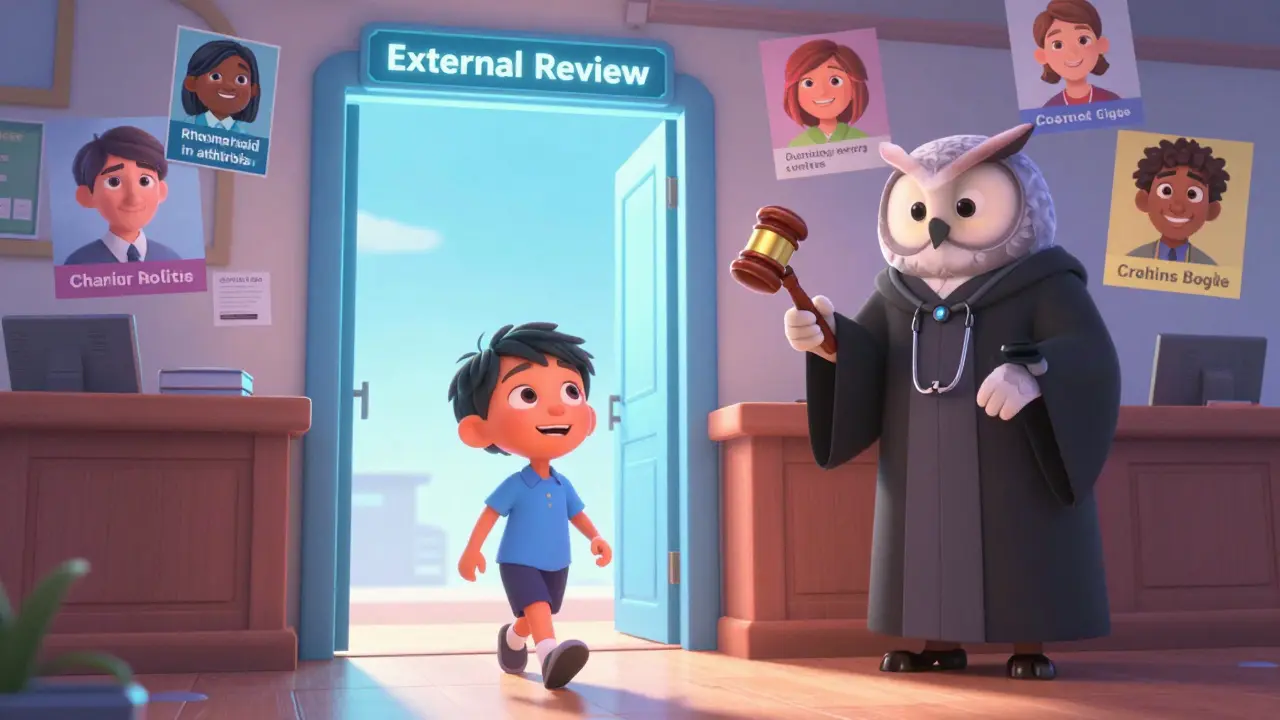
If your internal appeal fails, you move to external review. This is where an independent third party - not your insurer - looks at your case.For commercial insurance, you can request external review through your state’s insurance department. In California, the Department of Insurance resolves 92% of formal complaints within 30 days. In New York, they’re required to conduct peer reviews within 72 hours.
For Medicare Part D, you have five appeal levels. The second level - handled by an Independent Review Entity - overturns denials 63% of the time. Don’t skip steps. Each level builds on the last.
What Makes an Appeal Succeed? Real Examples
A 58-year-old woman with rheumatoid arthritis was denied her brand-name biologic after two generics caused severe skin rashes. Her doctor included lab results showing elevated CRP levels during generic trials and cited the American College of Rheumatology guidelines. Appeal approved.A teenager with Type 1 diabetes had semaglutide denied because the insurer said insulin was “sufficient.” Her endocrinologist submitted data showing five hypoglycemic episodes in three months on insulin, plus continuous glucose monitor logs. Appeal approved in 11 days.
A man with Crohn’s disease had his brand-name mesalamine denied after a generic caused rectal bleeding. His GI specialist attached endoscopy reports and cited the American Gastroenterological Association’s position on non-equivalent generics. Appeal approved.
These aren’t rare cases. The Crohn’s & Colitis Foundation found that 83% of successful appeals included documented treatment failures. And 68% of overturned denials involved documented adverse reactions to alternatives.
What Kills an Appeal
Not all appeals fail because the drug isn’t necessary. Most fail because of mistakes:- Missing or vague doctor’s letter
- Not including dates of prior failed attempts
- Waiting too long to file
- Not requesting a peer-to-peer review
- Using emotional language instead of clinical evidence
A Johns Hopkins study found that 41% of failed urgent appeals were due to paperwork errors - like mislabeling a request as “standard” instead of “urgent.”
Resources That Help
You don’t have to do this alone.- State Insurance Commissioner’s Office - All 50 states have one. They can help you navigate the process and even intervene. Average response time: 7.2 business days.
- Patient Advocate Foundation - Offers free appeal templates and case managers.
- Crohn’s & Colitis Foundation, T1D Exchange, American Diabetes Association - All have patient resources with proven appeal templates.
- GoodRx - Tracks real-world appeal outcomes and shares what worked.
Also check if your pharmacy can help. Many large chains have patient support specialists who file appeals for you.
What’s Changing in 2025
The system is slowly improving. In January 2024, the National Association of Insurance Commissioners updated its model rules to require insurers to review step therapy exceptions within 48 hours if clinical documentation is provided. The Biden administration is pushing Medicare to cut standard appeal times from 7 days to 3 for urgent cases.More insurers are moving to digital prior authorization systems. Providers using these platforms report a 62% higher success rate. That’s because digital forms reduce errors and speed up communication.
Still, the system is broken. Physicians spend an average of 16.3 hours a week on prior authorizations and appeals. The healthcare system wastes $16.7 billion a year on this bureaucracy. But until it’s fixed, knowing how to appeal is your best tool.
Final Tip: Don’t Give Up
It’s frustrating. It takes time. But if you’ve been told a generic won’t work for you - and your doctor agrees - you have the right to fight for the right medication.Success isn’t luck. It’s preparation. Document everything. Get your doctor involved. Know the rules. And keep pushing.
You’re not asking for special treatment. You’re asking for medically appropriate care. And that’s not just your right - it’s your health.
Can I appeal if my insurance denies coverage for a generic medication?
Yes. Insurance companies can deny coverage for brand-name drugs if they require you to try a generic first. But if the generic doesn’t work for you - or causes side effects - you can appeal. You’ll need a letter from your doctor explaining why the brand-name drug is medically necessary and evidence of failed alternatives.
How long do I have to file an insurance appeal?
For commercial insurance, you have 180 days from the date of denial to file an internal appeal. Medicare Part D gives you 120 days. Medicaid timelines vary by state. Always check your Explanation of Benefits (EOB) - it must list the deadline. Missing it means losing your right to appeal.
Do I need a letter from my doctor to appeal?
Yes. Insurance companies almost always deny appeals without a detailed letter from your prescribing physician. The letter must explain why the brand-name drug is necessary, list prior treatments that failed, and cite clinical guidelines. Appeals with this documentation have a 78% success rate.
What’s a peer-to-peer review, and how do I request one?
A peer-to-peer review is when your doctor talks directly to the insurance company’s medical director about your case. It’s one of the most effective ways to win an appeal. To request it, write: “I request a peer-to-peer clinical review between my prescribing physician and your medical director.” Include this in your appeal letter or call the insurer’s medical line.
What if my appeal is still denied after the internal review?
If your internal appeal is denied, you can request an external review. For commercial insurance, contact your state’s insurance commissioner. For Medicare Part D, you move to the next appeal level: an Independent Review Entity. External reviews are handled by independent organizations, not your insurer, and have a high success rate - especially if your doctor’s documentation is strong.
Can I get help filing an appeal?
Yes. Many organizations offer free help: the Patient Advocate Foundation, state insurance departments, and patient groups like the Crohn’s & Colitis Foundation or T1D Exchange. Some pharmacies also have patient support specialists who can help you complete forms and submit appeals. Don’t try to do it alone - help is available.
How long does the appeal process take?
Standard appeals take 30 to 60 days. Expedited appeals - for urgent cases - must be decided in 4 business days. External reviews can take 30 to 45 days. Some states, like New York, require peer reviews within 72 hours. Keep track of deadlines and follow up if you don’t hear back.
Are there any medications that are harder to appeal for?
Yes. Psychiatric medications have lower appeal success rates (around 47%) because insurers often argue generics are “equivalent.” Oncology drugs, on the other hand, have success rates over 80% because the clinical differences are clearer. The key is documentation - the more specific your evidence, the better your chance.
If you’ve been denied a medication you need, you’re not powerless. The system is stacked against you - but not unbeatable. With the right documentation, the right support, and the right timing, you can get the treatment you were prescribed. Start today. Your health depends on it.
OMG I JUST GOT DENIED FOR MY BRAND-NAME ANTIDEPRESSANT AGAIN AND I WAS ABOUT TO CRY IN THE PHARMACY LINE… BUT THEN I READ THIS AND TRIED THE PEER-TO-PEER THING?? LIKE, I JUST TEXTED MY DOCTOR AND SAID ‘SEND THE LETTER’ AND THEY ACTUALLY CALLED THE INSURANCE?? THEY APPROVED IT IN 3 DAYS?? I’M NOT KIDDING - THIS WORKED??
Yessssss, honey - you’re not crazy, you’re just fighting a system that thinks pills are interchangeable like cereal brands. I had the same battle with my RA med - generics turned me into a zombie with hives. My doc wrote a letter so detailed, it had graphs. They approved it. Moral of the story? Be annoying. Be thorough. Be relentless. And if they say no? File again. They hate it when you show up with paperwork. 💪
Documentation is everything. Not emotion. Not pleading. Not ‘I feel worse.’ Clinical records. Lab results. Dates. Names of failed generics. References to guidelines. That’s the language insurers understand. Skip any of that, and you’re just shouting into the void.
I appreciate this guide - it’s clear, well-structured, and grounded in real-world data. I work in healthcare administration, and I’ve seen how often appeals fail due to incomplete documentation. The peer-to-peer review step is especially critical - it’s the one thing that actually humanizes the process. Thank you for highlighting it.
Ugh. So now we’re supposed to beg for the meds we were prescribed? My insurance denies me because ‘it’s cheaper’ - but they don’t care if I end up in the ER. This isn’t healthcare - it’s corporate hostage-taking. And doctors? They’re too busy playing phone tag with insurance bots to help. I’m done being polite.
My cousin in Mumbai had the same issue with her epilepsy med - generic caused seizures. She fought for 8 months. She wrote letters, got her neurologist to call, emailed the state insurance office, even posted on Reddit (yes, really). She won. And now she helps others. If you’re reading this - don’t give up. You’re not alone. The system is broken, but people like you? You’re the repair crew. Keep going. Every appeal changes someone’s life. And if you need help filling forms? I’ve got templates. DM me. I’ll send them. No charge. We rise together.
While the procedural framework outlined here is commendable, it remains fundamentally flawed in its assumption that the average patient possesses the requisite time, literacy, and social capital to navigate this labyrinthine bureaucracy. The fact that a successful appeal requires not only clinical documentation but also the willingness to engage in administrative warfare reveals a deeper pathology within the American healthcare model - one that commodifies health and penalizes vulnerability.
Wow. So the system is rigged, but if you’re lucky enough to have a doctor who cares enough to write a novel, you win? That’s not justice. That’s a glitch in the matrix. I’m just glad I don’t need meds that cost $2,000 a month… but also, wow. This is terrifying.
Let’s be honest - this guide is just a Band-Aid on a hemorrhage. The real problem? Pharma and insurers are in cahoots. Generics aren’t ‘unsafe’ - they’re underfunded, under-tested, and over-prescribed because Big Pharma owns the formularies. This ‘appeal’ nonsense? It’s a distraction. Stop fighting the system. Start demanding it be dismantled.
From Indonesia, I just cried reading this. Here, we don’t even have generics covered properly - and you’re fighting for BRAND-NAME meds? I thought this was America. But you’re still fighting? You’re still writing letters? You’re still calling? I’m so proud of you. I don’t have your meds, but I have your courage. You are not alone. I am with you. 💛
You got this. I’ve been through this twice - once for my thyroid med, once for my anxiety med. It’s exhausting. It’s humiliating. But every time I sent in that doctor’s letter with the lab results and the dates? They blinked. They backed down. You’re not asking for a handout. You’re asking for your body to be respected. That’s not too much to ask. Keep going. You’re doing better than you think.
So let me get this straight - if you’re rich enough to have a doctor who’ll write a 5-page letter, you get your drug. If you’re poor, you get a generic that makes you vomit and hallucinate? And this is called ‘cost containment’? Brilliant. I’m starting a cult. It’s called ‘The Church of the Peer-to-Peer Review.’ We meet every Tuesday. Bring your EOBs and your rage.