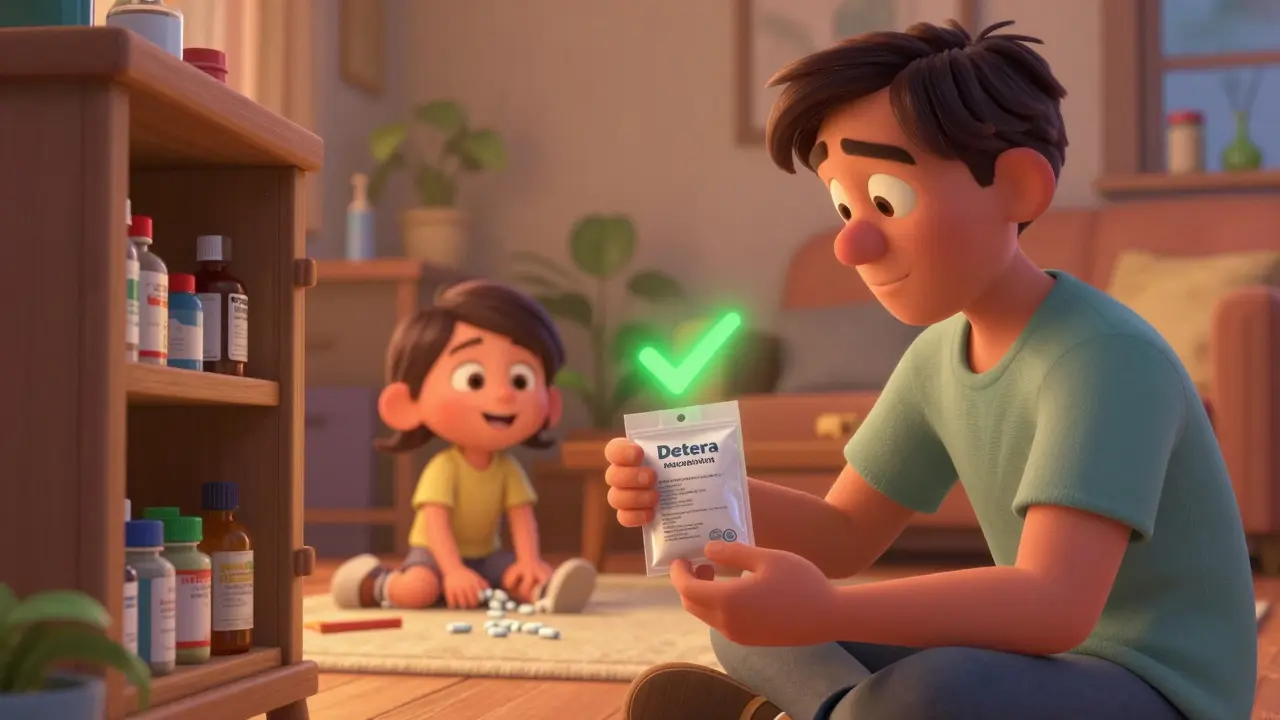
Every year, thousands of opioid-related overdoses happen because unused pills sit in medicine cabinets-easily accessible to kids, teens, or even well-meaning relatives who think they’re helping. The CDC reports that nearly 70% of misused prescription opioids come from family or friends’ homes. That’s not a coincidence. It’s a preventable crisis. If you’ve been prescribed opioids for pain after surgery or injury and still have pills left over, you’re not alone. But leaving them in the bathroom cabinet isn’t safe. Here’s exactly how to get rid of them the right way-so they don’t end up in the wrong hands.
Why Disposal Matters More Than You Think
- Over 20% of opioids prescribed go unused.
- One in five teens who misuse prescription painkillers get them from a relative’s medicine cabinet.
- Accidental overdoses in children under 12 spiked by 40% between 2015 and 2022, mostly from unsecured pills.
Four Safe Ways to Dispose of Unused Opioids
There are four proven methods to get rid of opioids safely. Not all are equally accessible, but one of them will work for you.
1. Drug Take-Back Programs (The Gold Standard)
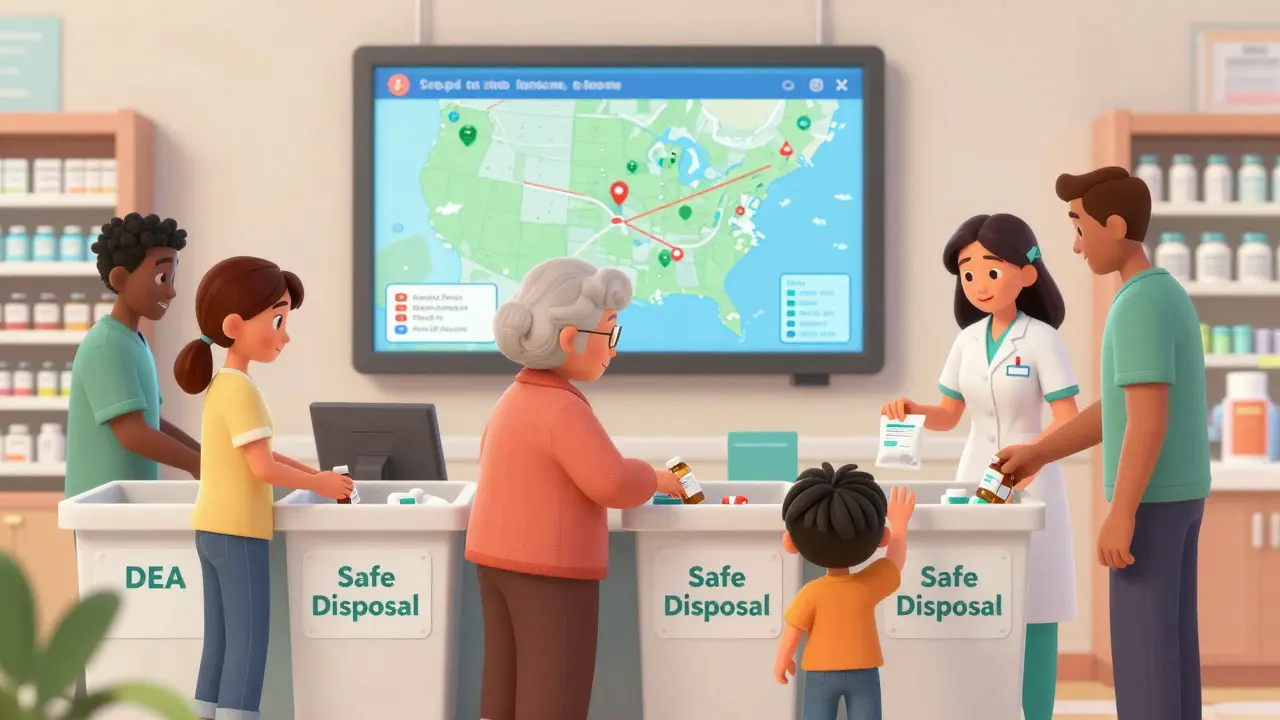
These are the most effective option. The DEA runs over 16,979 collection sites across the U.S., including pharmacies, hospitals, and police stations. At these locations, you can drop off unused pills, patches, or liquids in a secure bin. No questions asked. No ID needed. The drugs are then incinerated at over 1,800°F-completely destroyed.
Walmart and Walgreens alone have over 13,000 drop-off kiosks. Most operate during regular pharmacy hours. You can find your nearest location in under 30 seconds using the DEA’s online Disposal Locator. Just enter your ZIP code.
Take-back programs are 98% effective at preventing diversion. They’re the only method that guarantees zero chance of the medication being reused or leaked into the environment.
2. Deactivation Pouches (Best for Home Use)
If you don’t have a nearby take-back site, deactivation pouches are your next best bet. Brands like Deterra and SUDS use activated carbon and pH-balancing agents to neutralize opioids in under 30 minutes.
Here’s how they work:
- Put your unused pills or patches into the pouch.
- Add warm water (as instructed).
- Seal it and shake for 15 seconds.
- Throw the pouch in the regular trash.
Lab tests show these pouches deactivate 99.9% of opioids. They’re sold at 85% of major pharmacies, cost $2.50-$5 per pouch, and are FDA-recognized. Many pharmacies now offer them for free through state-funded programs.
Pro tip: Don’t try to activate them in the original bottle. That won’t work. Always use the pouch as designed.
3. FDA-Approved Household Disposal (When Nothing Else Is Available)
If you can’t get to a drop-off site or afford a pouch, this method works-but only if you follow it exactly.
Step-by-step:
- Remove pills from their original container.
- Mix them with an unappetizing substance-used coffee grounds, cat litter, or dirt. Don’t use sugar or candy; it might tempt someone to dig through it.
- Stir the mixture well so pills are fully covered.
- Seal it in a plastic bag or empty can.
- Scratch out your name and prescription info on the empty bottle with a permanent marker.
- Throw the sealed bag in the trash. Recycle the empty bottle separately.
This method reduces diversion risk by 82%, according to a 2020 Indiana health department study. But it’s easy to mess up. Skipping steps like obscuring your name or using too little absorbent material can leave pills recoverable.
4. Flushing (Only for Specific High-Risk Opioids)
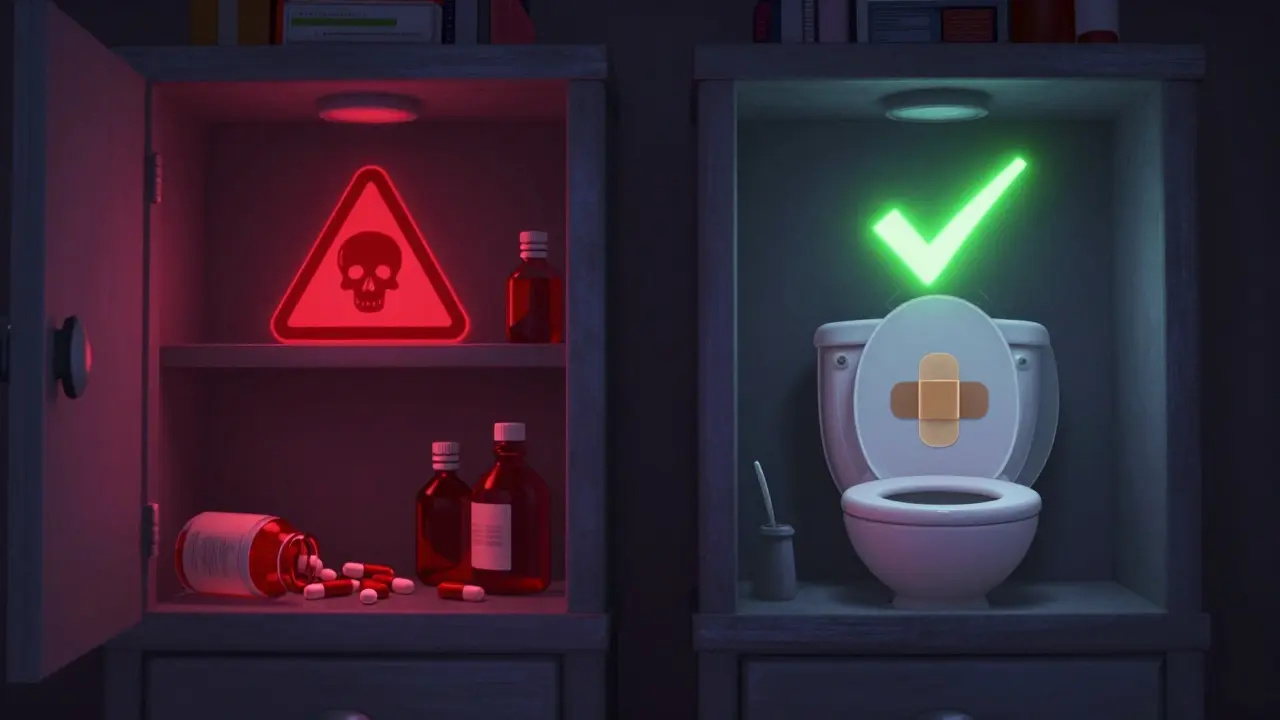
Only 15 opioids are approved for flushing. This includes fentanyl patches, oxycodone tablets, and morphine sulfate. These are the ones most likely to cause fatal overdoses if accidentally ingested.
The FDA maintains a Flush List. If your opioid isn’t on it, don’t flush it. Flushing other drugs pollutes waterways. But for these high-risk medications, flushing is the fastest way to remove them from the home-especially important if you have young children or someone with cognitive issues living with you.
Why flush instead of trash? Because accidental exposure to a single fentanyl patch can kill a child. Flushing removes it from the home immediately.
What Not to Do
Some habits seem harmless but are dangerous:
- Don’t pour pills down the sink. Even if it’s not on the flush list, it still contaminates water.
- Don’t give them to someone else. Even if they’re in pain, it’s illegal and risky.
- Don’t store them for "future use." Opioids degrade over time. They may not work later, and they’ll still be a hazard.
- Don’t rely on memory. If you don’t dispose of them within a week after finishing your prescription, you’re more likely to forget.
Who Should Act-and When
It’s not just patients who need to act. Caregivers, family members, and even doctors play a role.
- Patients: Dispose within 7 days of stopping your prescription. Don’t wait for "a better time."
- Family members: If an elderly relative is no longer taking opioids, check their medicine cabinet. They may not realize the danger.
- Doctors and pharmacists: A 2021 Johns Hopkins study found patients were 3.8 times more likely to dispose properly if they received a pouch and clear instructions at pickup.
Over 59% of Americans still have unused opioids at home. That’s over 120 million doses floating around. If you’re reading this, you’re part of the solution.
What’s Changing Now
New tools are making disposal easier:
- QR code pouches: Piloted in 12 states, these let users scan a code to confirm disposal-without sharing personal info. Early results show a 45% increase in compliance.
- State funding: Over $50 million from the 2022 Bipartisan Safer Communities Act is expanding take-back sites in rural areas.
- Pharmacy mandates: 92% of major chains now offer disposal, up from 35% in 2015.
By 2025, hospitals will be scored on how well they help patients dispose of opioids-part of a national push to make this routine, not optional.
Final Thoughts: It’s Simple, But It Matters
You don’t need to be a doctor or a policymaker to save a life. You just need to act.
Here’s your checklist:
- Check if your opioid is on the FDA Flush List.
- If yes, flush it.
- If no, use a deactivation pouch.
- If you can’t get a pouch, use the household method-carefully.
- If you have a take-back site nearby, use it.
One less pill in the cabinet means one less chance for someone to die. That’s not just responsible. It’s human.
Can I just throw unused opioids in the trash without mixing them with anything?
No. Unmixed pills in the trash can still be found and taken. Someone might dig through the garbage, especially if they’re struggling with addiction. The FDA recommends mixing opioids with something unappetizing like coffee grounds or cat litter and sealing them in a bag before throwing them out. This makes it harder-and less appealing-to recover the pills.
What if I live in a rural area and there’s no take-back site nearby?
You’re not alone. About 14 million Americans live more than 50 miles from a disposal site. In those cases, deactivation pouches are your best option. They’re available at most major pharmacies and can be mailed in some states. If pouches aren’t available, follow the FDA’s household disposal method exactly. Many rural health clinics now provide free pouches-call your local pharmacy or public health office to ask.
Is it safe to flush fentanyl patches?
Yes. Fentanyl patches are on the FDA’s official Flush List because they contain enough drug to be lethal if accidentally touched or ingested-even by children. Flushing them immediately removes the risk. While flushing can contribute to water contamination, the CDC and FDA agree that preventing accidental overdose outweighs environmental concerns in this specific case.
Do I need to remove the pills from the original bottle before disposal?
Yes. For take-back programs, you can leave pills in the bottle. But for household disposal or pouches, you must remove them. The bottle itself should be emptied, the label scratched out with a marker, and then recycled. Keeping pills in the original bottle during household disposal makes it easier for someone to identify and retrieve them.
Can I dispose of someone else’s opioids, like my parent’s or partner’s?
Absolutely. If someone you care about is no longer using opioids-whether they passed away, recovered, or switched treatments-you have the right and responsibility to dispose of their medication. You don’t need legal permission. Just follow the same steps: take-back, pouch, household method, or flush (if on the list). This could prevent a tragedy.
Are there free disposal options?
Yes. Many states use opioid settlement funds to provide free deactivation pouches at pharmacies, hospitals, and community centers. Some pharmacies offer them at no cost if you ask. Take-back events are always free. If you’re unsure, call your local pharmacy or health department-they’ll tell you what’s available in your area.
What if I’m not sure if my opioid is on the flush list?
Check the FDA’s official Flush List online or call your pharmacist. Common opioids on the list include fentanyl patches, oxycodone (OxyContin, Percocet), hydrocodone (Vicodin), and morphine sulfate. If you’re unsure, don’t flush. Use a pouch or household method instead. It’s better to be safe than sorry.
How do I know if a take-back site is still open?
The DEA’s Disposal Locator tool shows hours for each site. Many pharmacy kiosks are open during business hours. Police stations may only accept items during limited hours, like 9 a.m. to 4 p.m. on weekdays. Always call ahead if you’re unsure. Some sites only collect during National Prescription Drug Take Back Days (twice a year), but permanent kiosks are growing.
Next Steps
Right now, open your medicine cabinet. Look for any opioid prescriptions you or someone in your home hasn’t used in the last month. Check the name. Is it on the FDA Flush List? Do you have a pouch? Is there a drop-off site within 10 miles?
If you’re unsure where to start, call your pharmacy. They’ll guide you. It takes less than 5 minutes. And in that time, you might just prevent a death.
They want us to flush fentanyl patches like they’re toilet paper? Meanwhile, China’s flooding our streets with fentanyl powder, but we’re worried about a patch? This is performative activism. Real solution? Lock up every pharmacy and jail every doctor who overprescribes. Stop coddling people who can’t handle a pill bottle. We’re not babysitting adults.
And don’t get me started on these deactivation pouches. $5 to dispose of a $2 pill? That’s a scam. Taxpayer money wasted on feel-good gadgets while real addicts die in alleys. Fix the supply, not the trash can.
I’ve been thinking about this a lot lately-not just as someone who’s had opioids prescribed, but as someone who’s watched a cousin slip through the cracks. The real tragedy isn’t just the pills left in cabinets. It’s how little we talk about why people get prescribed them in the first place.
We treat pain like a math problem: take pill, fix pain. But chronic pain? It’s not a glitch. It’s a signal. And when we ignore the signal and just hand out opioids like candy, we’re not helping-we’re delaying the real work. The disposal methods? Vital. But they’re bandages on a hemorrhage.
What if we invested as much in physical therapy, acupuncture, mental health support, and community care as we do in disposal kiosks? Maybe then we wouldn’t have 20% of prescriptions left over. Maybe then people wouldn’t feel like they have nothing else to turn to.
I’m not saying don’t dispose. I’m saying let’s ask why we need to dispose in the first place.
Oh great. Another liberal pamphlet telling us how to throw away our medicine like we’re children. Next they’ll tell us to sing the national anthem before we flush the toilet.
Let me guess-you also think we should put locks on our refrigerators so kids don’t eat leftover lasagna? This is the same nonsense that led to banning aspirin in childproof bottles. People are responsible adults. Or they’re not. Stop treating us like we need a kindergarten class to handle a pill bottle.
And don’t even get me started on flushing. You want to pollute our waterways? Fine. But don’t pretend you’re saving lives. You’re just making yourself feel better while real addicts buy fentanyl off TikTok. Pathetic.
Flush the high-risk ones. Use pouches. Take-back sites are gold. Period.
Don’t overthink it. Don’t wait. Don’t rationalize. If you’ve got leftover opioids, act today. Five minutes. One less pill. One less chance for someone’s kid to die.
And yes-you can dispose of someone else’s. No permission needed. Just do it. You’re not stealing. You’re saving.
Really appreciate this guide. Had no idea about the deactivation pouches-just been hoarding mine since my surgery. Will check my local pharmacy tomorrow. Thanks for the clear steps. Also, didn’t know about QR code ones-sounds brilliant!
PS: Sorry for the typos, typing on phone with one hand while holding coffee. ☕️
OMG this is sooo important!! 🙌 Like, I’m literally crying reading this. I mean, imagine your toddler finding a fentanyl patch?? 😭💔 That’s not just tragic-it’s a moral emergency. And the fact that 59% of Americans still have these lying around?? 🤦♀️ We need a national PSA with Beyoncé narrating.
Also, I just used my Deterra pouch-so easy! Got mine free at CVS. 🌟 #DisposalIsDaring #OpioidAwareness
Interesting read. I’ve seen similar programs in India where unused medicines are collected at community centers. But here, the emphasis on environmental impact vs. overdose prevention is nuanced.
Flushing seems extreme, but if a child’s life is at stake, maybe it’s the lesser evil. Still, systemic change-like reducing overprescription-is what we need to focus on long-term.
From a public health systems perspective, the integration of deactivation pouches into pharmacy workflows represents a paradigm shift in pharmaceutical waste management. The utilization of activated carbon matrices for irreversible opioid neutralization aligns with WHO’s harm reduction protocols, particularly in low-access geographies.
Furthermore, the QR-enabled disposal verification architecture introduces a novel non-identifying compliance layer that mitigates stigma while enhancing auditability. This is a textbook case of behavioral nudging via infrastructural design.
It’s almost poetic, isn’t it? How we’ve turned something as primal as pain into a bureaucratic chore. We’ve got checklists, QR codes, and pouches-like we’re assembling IKEA furniture instead of saving lives.
I suppose it’s progress. But I can’t help but wonder if we’ve lost something essential along the way. The humanity of it. The quiet, unspoken act of caring for someone else’s safety, without needing a pamphlet to remind us.
Still… I’ll use the pouch. Because even if it’s performative, it’s better than nothing.
Just did it. Took my leftover oxycodone to the Walgreens kiosk. 3 minutes. No questions. Felt like I did something real today.
Also threw out my dad’s old fentanyl patches. He passed last year. Didn’t know what to do with them. Now I do. Thanks for this.
While the procedural guidelines presented herein are commendable from a utilitarian standpoint, one must acknowledge the epistemological underpinnings of pharmaceutical disposal as a socio-legal construct. The privileging of institutional disposal mechanisms over familial responsibility reflects a broader neoliberal trend toward externalizing moral accountability.
Furthermore, the assertion that disposal is a "human" act risks moralizing individual behavior while obscuring systemic failures in prescriptive practice and healthcare access. A more robust discourse is required.