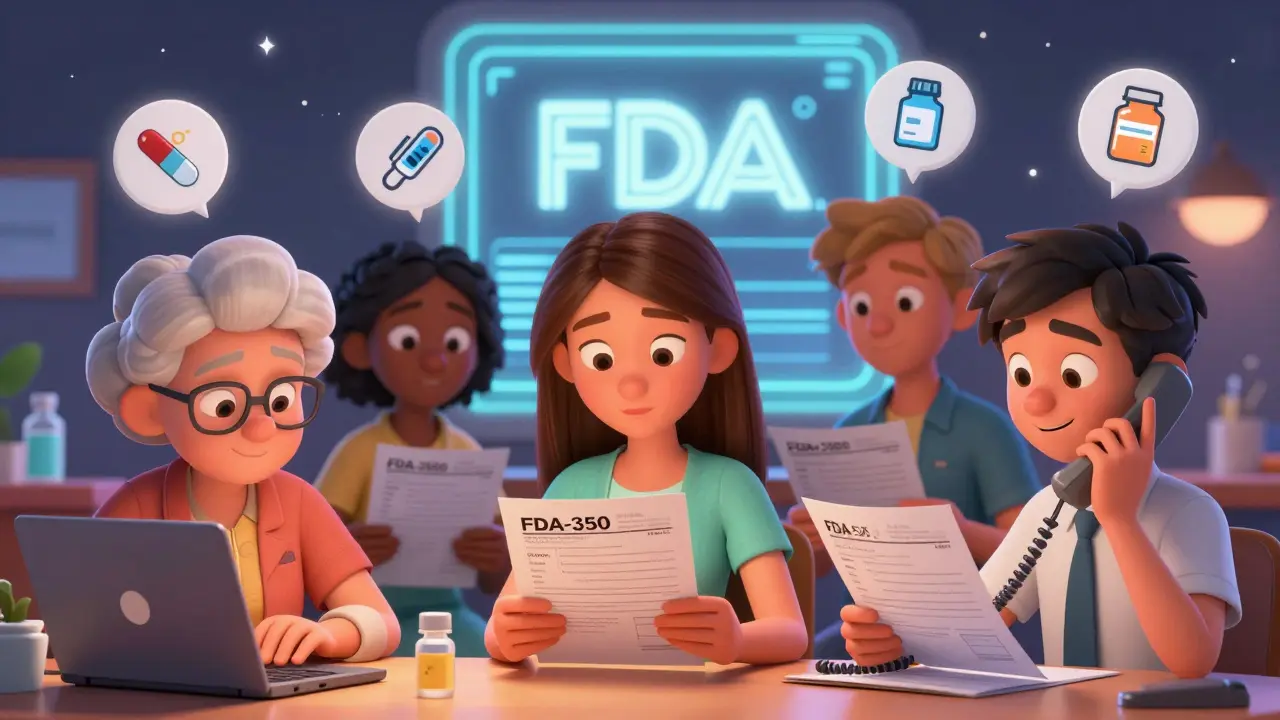
Every year, hundreds of thousands of patients experience unexpected side effects, product failures, or dangerous use errors with medications, medical devices, or supplements. But most never report them. If you’ve had a bad reaction to a drug, noticed a faulty insulin pump, or seen your child’s formula cause a severe rash, you’re not alone-and your report could help save someone else’s life. The U.S. Food and Drug Administration (FDA) lets you file a complaint directly, no doctor or hospital needed. This isn’t just a formality. It’s a critical part of how safety issues get found after a product hits the market.
What You Can Report
You don’t need to be a medical expert to report something. The FDA accepts complaints about any FDA-regulated product: prescription and over-the-counter drugs, vaccines, medical devices like pacemakers or glucose monitors, dietary supplements, infant formula, and even cosmetics. You can report:
- Adverse reactions: Unexpected side effects like severe dizziness, liver damage, or allergic shock
- Product quality issues: Broken packaging, wrong dosage, contaminated batches, or expired products
- Therapeutic failure: When a drug or device doesn’t work as it should-like a blood pressure pill that stops working after a week
- Use errors: Confusing labeling, missing instructions, or design flaws that lead to misuse
Even if you’re not sure it’s serious, report it. The FDA’s system is built to catch rare problems. Clinical trials test drugs on a few thousand people. But once millions start using a product, issues that affect 1 in 10,000 or even 1 in 100,000 can show up. That’s where your report matters.
How to Submit a Report
The FDA offers four ways to report. Choose the one that works best for you.
- Online: Safety Reporting Portal (SRP) - This is the fastest method. Go to www.fda.gov/safety/reporting-problems and fill out the electronic form. It’s designed for patients, not professionals. You’ll need basic info: your name (optional), the patient’s age and sex, product name, lot number, and a clear description of what happened. The form takes 15-20 minutes. Note: As of late 2024, the portal has had frequent crashes. If it fails, try again later or use another method.
- Paper form: FDA 3500 - Download the PDF from the FDA website. Fill it out by hand or on a computer, then mail or fax it. The form is free, and you can request a printed copy by calling 1-800-FDA-1088. This is the most reliable backup if the online portal is down.
- Spanish form: FDA 3500B - If you speak Spanish, use this version. It’s identical to the English form but translated and easier to understand for non-native speakers.
- Phone: 1-800-332-1088 - Available Monday-Friday, 8 a.m.-8 p.m. EST. An FDA representative will take your report over the phone and file it for you. This is helpful if you have trouble writing or describing symptoms.
Don’t wait. While there’s no strict deadline for patients, the sooner you report, the faster the FDA can act. Serious events-like hospitalizations or deaths-should be reported within 15 days if possible.
What Information Do You Need?
Having the right details makes your report more useful. You don’t need to be perfect, but the more you provide, the better.
- Product details: Name (brand and generic), manufacturer, lot number, expiration date. If the lot number isn’t on the packaging, check the receipt or pharmacy label.
- Patient info: Age, sex, weight (if known). You don’t need full medical records.
- What happened: Describe symptoms, when they started, how long they lasted, and what happened afterward (e.g., went to ER, recovered, hospitalized).
- Other products used: List all other medications, supplements, or devices you were using at the time. Even OTC painkillers or herbal teas matter.
- Your contact info: Optional, but if you want a confirmation email, include your name and email.
Many patients struggle to find lot numbers. In fact, only 62% of consumer-packaged products have them clearly printed. If you can’t find it, write "unknown"-your report still counts.
Why Your Report Matters
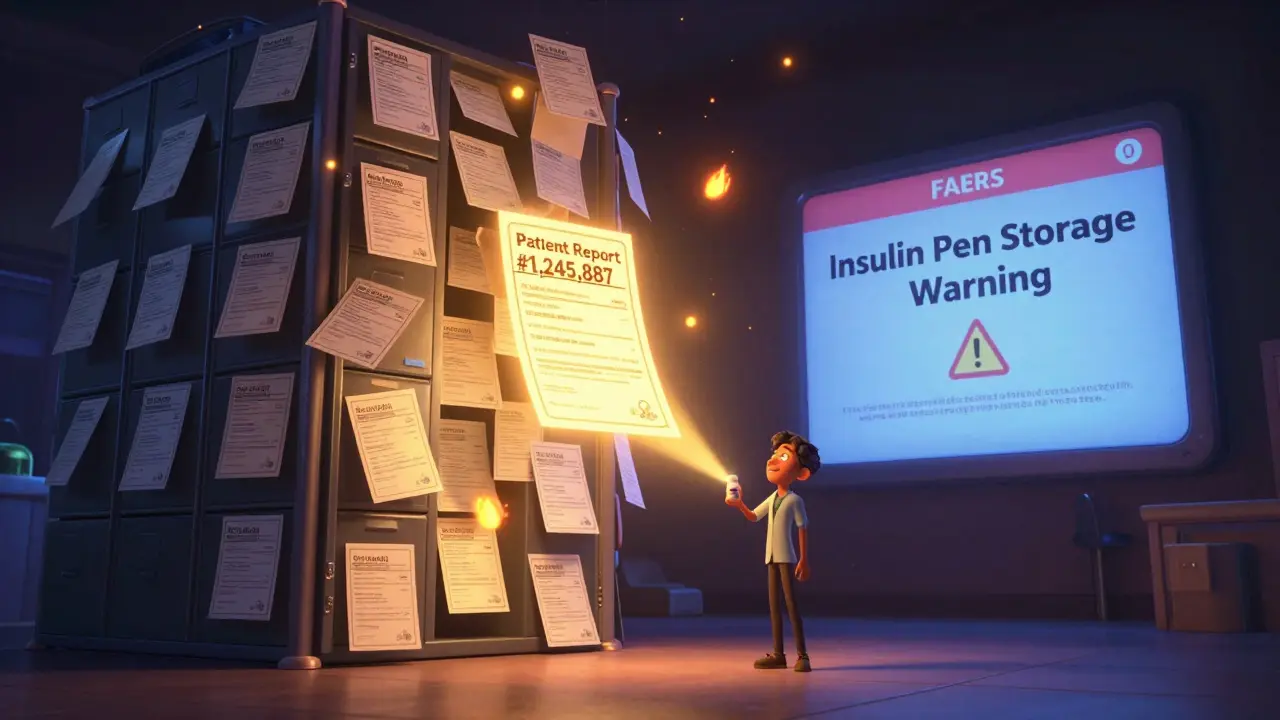
Most safety alerts start with patient reports. In February 2024, the FDA issued a safety notice about improper insulin pen storage after 287 patients reported their insulin was no longer working properly. None of the manufacturer’s internal reports flagged it. The FDA only saw the pattern because patients spoke up.
Studies show patient reports often contain richer details than those from doctors. One 2023 study found patient reports included 37% more information about symptom timing and 28% more about over-the-counter drug use. Why? Because patients live with the symptoms daily. They notice what doctors miss.
But there’s a catch. Experts estimate 90-95% of adverse events go unreported. That means for every one report the FDA gets, there are 10-20 others that never make it in. Your report fills that gap.
What Happens After You Submit
Your report goes into the FDA Adverse Event Reporting System (FAERS), which holds over 25 million reports since 1969. About 15-20% of those come from patients like you. The FDA doesn’t investigate every report individually. Instead, they look for patterns. If 10 people report the same reaction to the same drug, that’s a signal.
Since late 2024, the FDA has used AI tools to speed up review. What used to take 22 business days now takes about 9. They aim to cut it to 5 days by 2026. You won’t get a personal reply, but if your report helps trigger an investigation, you’ll see it in public safety notices.
Confidentiality is protected by law. The FDA cannot share your name or contact info without your permission. But only 32% of patients know this, according to a 2024 University of Michigan survey. You’re safe reporting.
Challenges and Fixes
It’s not perfect. The online portal has been unreliable since August 2024. Many users report crashes, timeouts, and lost data. If you’re frustrated, use the paper form or phone line. The FDA is working on a new system called NGSRS, launching in 2026, which will auto-fill lot numbers and translate reports into multiple languages.
Another issue? Lack of awareness. Only 34% of patients know they get a confirmation email within 5 days. If you provide your email, check your inbox-and your spam folder. If you don’t get one, your report still went through.
Some reports lack medical accuracy. A 2024 review found 27% of patient reports used vague terms like "felt weird" or "got sick." The FDA now offers a free Patient Reporting Toolkit with a symptom wizard that guides you through describing symptoms clearly. Use it. It cuts errors by a third.
What You Shouldn’t Do
Don’t delay because you think "it’s not that bad." If it affected your daily life, report it. Don’t assume your doctor will handle it-many don’t. Don’t wait to contact the manufacturer first. Their job is to defend their product. The FDA’s job is to protect the public.
And don’t give up if the portal crashes. Try again. Call. Mail it. Your report is still valid.
What’s Next?
The FDA plans to unify all reporting channels into one system by 2028. Right now, there are six separate portals for drugs, devices, supplements, etc. That’s confusing. The new system will let you report everything in one place.
Meanwhile, companies like Medtronic are now letting patients report directly to the FDA through their apps. That’s a step forward. More will follow.
Every report adds to the evidence. It’s how we make medicines safer-not just for you, but for everyone.
Can I report a reaction even if I’m not sure it was caused by the product?
Yes. The FDA encourages reports even if you’re unsure. They don’t need proof-just a clear description of what happened and when. Their job is to spot patterns across many reports. One report might seem minor, but if 50 others describe the same issue, it becomes a red flag.
Do I need to provide my real name?
No. You can report anonymously. The FDA is required by law (21 CFR 10.75) to protect your identity. Even if you give your name, they won’t share it with the manufacturer or the public without your consent. Your privacy is protected.
What if I don’t have the lot number or expiration date?
Write "unknown" or "not available." The FDA accepts reports without this info. Many products don’t print lot numbers clearly, especially supplements and cosmetics. Your description of the reaction and product name is more important than the lot number.
How long does it take for the FDA to act on a report?
There’s no fixed timeline. Most reports are reviewed within 9 business days thanks to new AI tools. But action-like a warning label or product recall-can take months or even years, depending on how many similar reports pile up. Your report is part of a larger pattern, not an individual investigation.
Can I report a problem with a dietary supplement?
Yes. Dietary supplements are covered under FDA’s reporting system. You can report allergic reactions, liver damage, or misleading claims. The FDA has limited authority over supplements compared to drugs, but patient reports help them identify dangerous products and push for regulatory action.
Is there a deadline to report?
No strict deadline for patients. But if the event was serious-like hospitalization, birth defect, or death-report within 15 days if possible. The sooner the FDA sees it, the faster they can act. For less serious issues, report as soon as you can. There’s no penalty for waiting.
Will I be contacted after I file a report?
Usually not. The FDA doesn’t follow up on individual reports unless they need clarification. If you provide an email, you’ll get a confirmation within 5 business days. Beyond that, you won’t hear back. But your report becomes part of a public database used to improve safety.
Been there. Took my kid’s formula off the shelf after he broke out in hives. Thought it was just bad luck. Then I found this guide. Filed the report in 15 mins. No doctor, no hassle. FDA sent a confirmation email. Didn’t expect that. Now I’m telling every new parent I know. Seriously, just do it. You think it’s not a big deal? It might be the one that stops the next kid from ending up in the ER.
Done it. Took 12 minutes. Form worked fine. No drama. Just facts. Report matters.
Let me guess-you’re one of those people who thinks the FDA is some kind of benevolent guardian? Please. They’re a bureaucratic graveyard where real problems go to die. I’ve seen reports languish for years. AI? More like AI-driven delay tactics. The system is broken. You think your little anecdote changes anything? It’s theater. Harmless theater for people who like to feel virtuous.
Wow. This is like spiritual awakening for the modern medicated soul 🌿✨ You think you're just reporting a rash? Nah. You're throwing a pebble into the ocean of corporate silence. That ripple? It becomes a wave. One day, some kid in Mumbai gets a safer formula because you typed 'lot unknown' and 'felt like fire in my veins.' That’s not data. That’s soul work. And you? You’re a quiet revolutionist. 🙏🫶
Reporting is not about the FDA. It’s about the silence we carry. Every unspoken symptom is a ghost haunting the system. We are not consumers. We are witnesses. The machine doesn’t care about your pain. But if enough witnesses speak, even machines must listen. This is not form-filling. This is testimony.
I just reported my mom’s reaction to a new blood pressure pill. She’s 78 and thought it was ‘just aging.’ I told her: ‘You’re not just saving yourself-you’re saving someone’s grandma.’ She cried. I cried. We hit submit together. If this helps even one person, it’s worth it. You’re not alone. We’re all in this together. Keep going. You’re doing amazing.
USA thinks it’s the only country with safety issues? LOL. In India, we don’t wait for bureaucracies to catch up. We use WhatsApp groups. We tag manufacturers. We boycott. We go viral. Your ‘report’ is cute. We fix things ourselves. The FDA? A luxury. Real people don’t wait for forms. We act.
Interesting. The article assumes reporting is a neutral act. But it’s not. It’s a transaction. You give your trauma. The FDA gets data. The manufacturer gets liability protection. The public gets a vague notice months later. Who benefits? Not you. Not me. The system is designed to absorb dissent, not fix it. I filed one. I won’t file another.
Look, I’ve read every word of this and I’m not impressed. You say ‘just fill out a form’ like it’s easy? Try finding a lot number on a $12 turmeric supplement from Amazon with no packaging. Try explaining to a 70-year-old grandmother why her ‘fuzzy feeling’ after a vitamin is worth reporting. You don’t get it. Most people don’t have time, energy, or literacy to navigate this. And now you want them to be data points? That’s not empowerment. That’s exploitation dressed as public service. The FDA should be doing outreach-not expecting patients to do their job for them.
Don’t be fooled. This isn’t about safety. It’s about control. The FDA doesn’t want your report because they care. They want it because it creates plausible deniability. ‘We received reports.’ Then they do nothing. Meanwhile, companies pay fines that are less than their quarterly marketing budgets. You think your story matters? It’s a footnote in a 200-page report no one reads. Don’t be a pawn.
Let’s be brutally honest. This entire system is a farce. You report. You get an auto-email. You wait. Nothing happens. The FDA has over 25 million reports. How many recalls? How many black box warnings? How many lives saved? Less than 0.1%. The rest? Dust in a database. You’re not helping. You’re feeding the machine. And worse-you’re making people believe they’re changing things when they’re just performing obedience. This isn’t activism. It’s compliance theater.
Thank you for this clear, actionable guide. I shared it with my patients at the clinic today. One woman, 62, had been ignoring her reaction to a supplement for two years. She just filed her report. She said, ‘I didn’t know I could.’ That’s why this matters. Not because it’s perfect-but because it’s possible. You made space for someone to speak. That’s the real win.