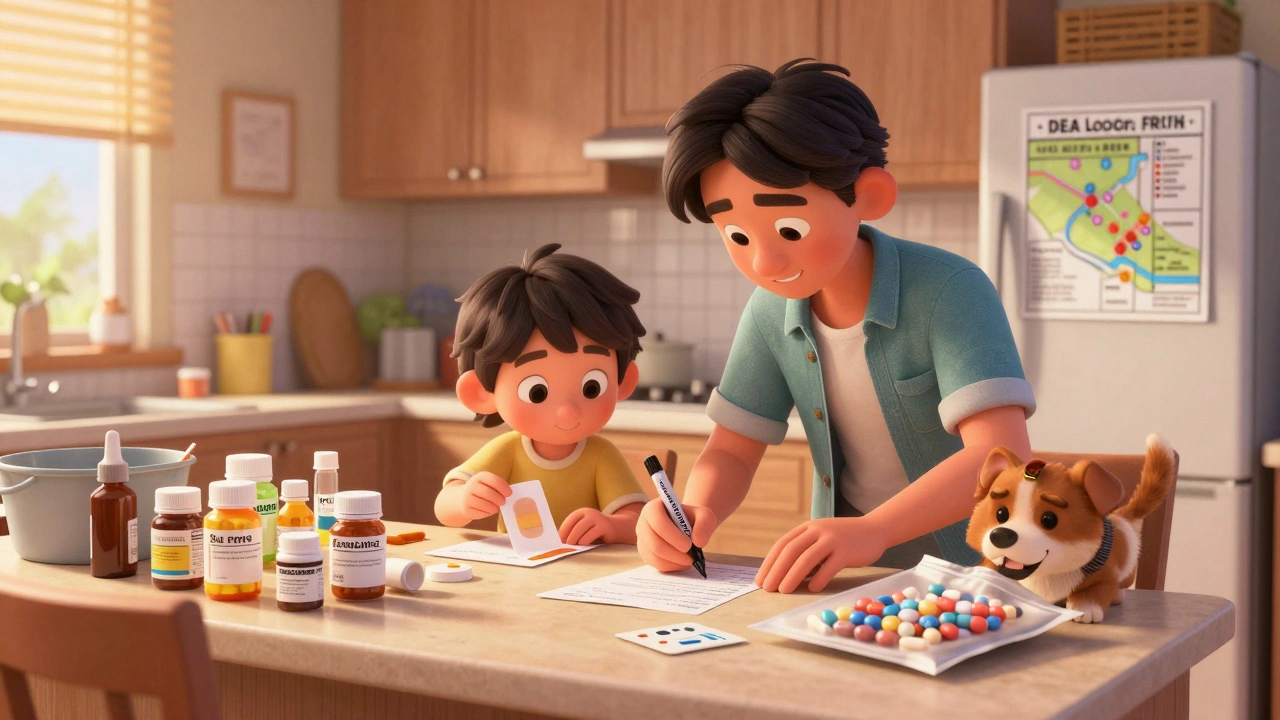
Every year, millions of unused pills sit in medicine cabinets across America-old antibiotics, leftover painkillers, expired vitamins. They’re not doing anyone any good. Worse, they’re dangerous. The medication disposal problem isn’t just about clutter. It’s about safety. In 2022, 18.4 million Americans misused prescription drugs, and most of those pills came from home cabinets, not pharmacies. That’s why take-back events matter. They’re the only safe, legal way to get rid of unwanted medications without polluting water or risking theft.
Why You Can’t Just Throw Them in the Trash or Flush Them
Flushing meds used to be common advice, but it’s not safe anymore. The EPA found that 80% of U.S. streams contain traces of pharmaceuticals. These aren’t just harmless traces-they’re active chemicals that can mess with fish, frogs, and even drinking water supplies. Throwing pills in the trash sounds easier, but it’s risky too. Curbside trash gets sorted, dumped, and sometimes dug through by people looking for drugs. Kids, pets, or strangers could find them. Take-back events solve both problems. Medications collected at these events are incinerated under strict federal controls. In 2024 alone, Stericycle, one of the biggest disposal companies, safely burned 29,800 tons of pharmaceutical waste. That’s the only way to make sure these drugs never get reused, leaked into water, or end up in the wrong hands.What You Can and Can’t Bring
Not everything in your medicine cabinet can go to a take-back event. Here’s what’s accepted at nearly every site:- Prescription pills and liquids (including controlled substances like oxycodone or Adderall)
- Over-the-counter drugs (pain relievers, cold meds, allergy pills)
- Patches (like fentanyl or nicotine patches)
- Topical ointments and creams
- Vitamins and supplements
- Pet medications
- Asthma inhalers or other aerosol cans (they’re pressurized and can explode)
- Hydrogen peroxide or alcohol-based solutions
- Iodine-based medications (like Betadine)
- Thermometers (especially mercury ones)
- Illicit drugs (like heroin or cocaine-these require law enforcement handling)
How to Prepare Your Medications
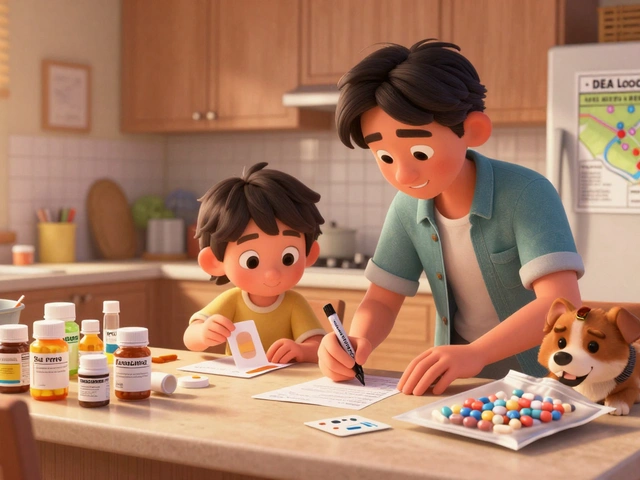
The biggest mistake people make? Overcomplicating it. You don’t need to sort pills by type, remove labels, or wash containers. Follow these three simple steps:- Keep medications in their original containers. Over 92% of collection sites require this. The pharmacy label helps staff identify what’s being dropped off and ensures proper handling. If the bottle is missing, put the pills in a small sealed plastic container or zip-top bag.
- Remove or cover personal information. Use a permanent marker to black out your name, address, and prescription number. Don’t just peel off the label-most sites won’t accept it if your info is still visible. This isn’t optional. It’s required by HIPAA rules to protect your privacy.
- Don’t mix different medications. Keep each drug in its own container. Mixing pills makes it harder for staff to verify what’s being collected and can cause delays or rejection.
- Liquid medications: Keep them in the original bottle. If it’s leaking, place it in a second sealed bag to avoid spills.
- Transdermal patches: Fold them in half with the sticky side inward. This prevents accidental skin contact and keeps them from sticking to other items.
- Insulin pens: These are tricky. Most hospital-based sites accept them, but only 32% of retail pharmacies do. Call ahead if you have these.
Regional Differences and What to Expect
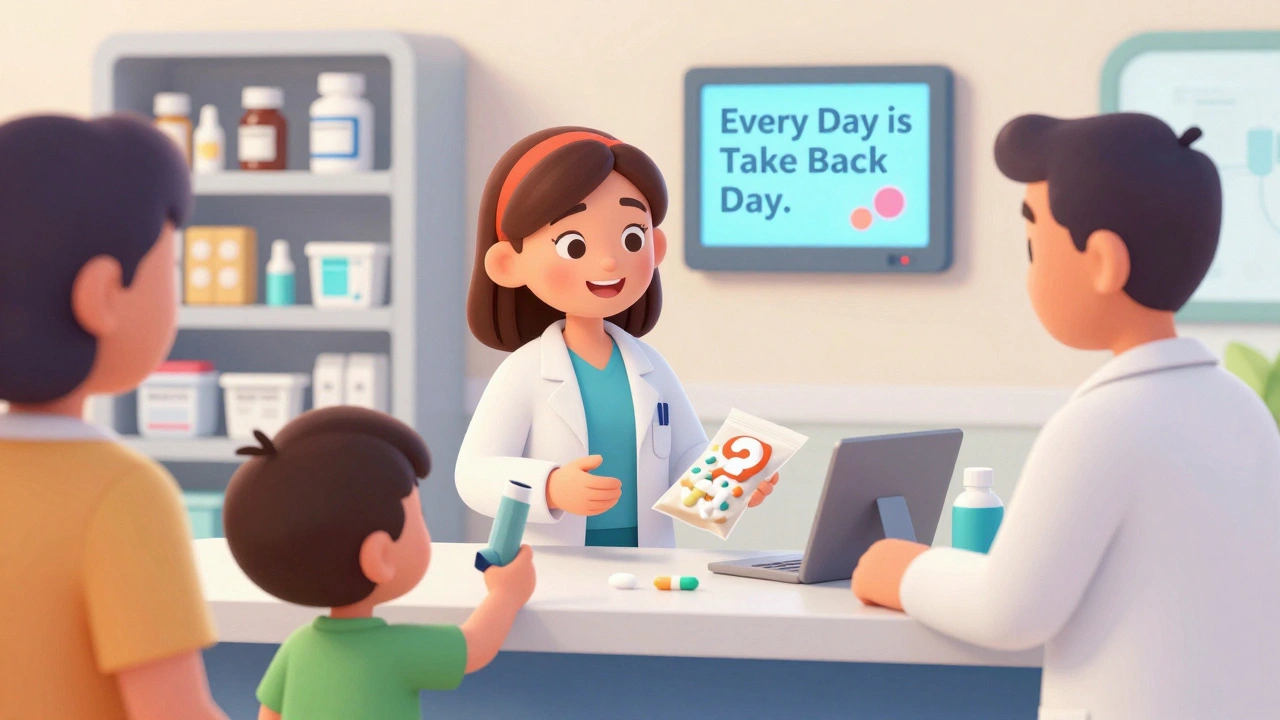
You might notice that rules vary depending on where you are. In California, every collection site insists on original containers. In Washington State, they’ll take meds in a sealed bag if the original bottle is gone. Walgreens kiosks are the easiest: just bring your meds, no container rules beyond privacy protection. This inconsistency causes confusion. A 2023 Johns Hopkins study found that 43% of people didn’t know how to prepare their meds properly-and 28% skipped take-back events because they were afraid of getting turned away. You’re not alone if you’ve been rejected before. One Reddit user brought liquid antibiotics in a sealed container, but the pharmacist said it had to be the original pharmacy bottle. That’s a real thing. The good news? The DEA launched “Every Day is Take Back Day” in January 2024 to standardize rules nationwide. While not all sites have fully adopted it yet, the goal is clear: make it simple so more people participate.What Happens After You Drop Them Off
You won’t see what happens next, but here’s the process:- Staff at the collection site check your meds for prohibited items and confirm personal info is removed.
- They place everything into secure, tamper-proof bins.
- Collected medications are shipped to licensed incineration facilities.
- They’re burned at temperatures over 1,800°F, destroying the chemicals completely.
- No ash or residue enters the environment.
Why Participation Still Stays Low
Despite all the sites and all the effort, only 15% of unused medications in the U.S. are properly disposed of. Why? Three reasons:- Confusion. People don’t know the rules, and rules vary by location.
- Convenience. If you have to drive 20 miles or wait in line, you’ll keep the pills.
- Forgetfulness. Medications sit in cabinets for years until someone finally notices.
Final Checklist Before You Go
Before you head to a drop-off site, run through this quick checklist:- ☑ All pills are in original containers (or sealed bag if originals are gone)
- ☑ Your name, address, and prescription number are covered with a permanent marker
- ☑ No liquids are leaking (double-bagged if needed)
- ☑ Patches are folded sticky-side-in
- ☑ No inhalers, aerosols, or thermometers included
- ☑ You’ve checked the DEA’s website to confirm the site accepts your meds
What If You Can’t Get to a Take-Back Site?
If you live in a rural area with no nearby drop-off location, the FDA has a backup plan. For certain dangerous drugs-like opioids or fentanyl patches-you can mix them with an unappealing substance like cat litter, coffee grounds, or dirt in a sealed bag before tossing them in the trash. This makes them unattractive and unusable. But this is a last resort. Always try a take-back event first.What’s Next?
Take-back events aren’t perfect. But they’re the best tool we have. And they’re getting better. More sites. Simpler rules. Better education. If you’ve held onto old meds for years, now’s the time to act. One trip. One bag. One less danger in your home.Can I bring expired vitamins to a take-back event?
Yes. Vitamins, supplements, and herbal products are accepted at nearly all authorized take-back sites. Just remove or cover your name on the bottle and place them in the original container or a sealed bag.
Do I need to remove the pills from the bottle?
No. Never remove pills from their original bottles unless the container is damaged or missing. Keep them inside. Staff need to see the prescription label to verify the medication type and ensure it’s safe to accept.
What if my medication bottle is broken or missing?
Place the pills in a small, sealed plastic container or a zip-top bag. Make sure your name and personal info are covered with a permanent marker. Most sites will accept this format, especially if the original bottle is unavailable.
Can I drop off medications for someone else?
Yes. You can bring medications for a family member or friend. Just make sure their personal information is removed from the containers. You don’t need to prove ownership-only that the meds are properly prepared and not prohibited items.
Are there any fees for using a take-back event?
No. All DEA-authorized take-back events are free. Pharmacies, hospitals, and police stations that host these events are funded by federal programs. You pay nothing to drop off your unused medications.
How do I find a take-back location near me?
Visit the DEA’s Diversion Control Division website and use their online locator tool. You can search by zip code or city. Over 70% of the U.S. population lives within five miles of a permanent collection site, so chances are there’s one close by.
Why can’t I just flush my pills down the toilet?
Flushing medications contributes to pharmaceutical pollution in 80% of U.S. streams and rivers. These chemicals can harm aquatic life and eventually enter drinking water supplies. Take-back events use incineration to destroy drugs completely, which is the only environmentally safe method.
What happens if I bring a prohibited item by mistake?
Staff will usually tell you right away and ask you to remove the item. They won’t turn you away entirely. If you brought an inhaler or aerosol, they’ll let you take it back. They’re there to help, not to punish. Just be prepared to separate the items before you arrive.
Proper medication disposal isn’t a chore-it’s a quiet act of responsibility. You’re protecting your family, your community, and the environment. And it’s easier than you think.
Just dropped off my grandma’s old painkillers at the Walgreens kiosk today. Took 2 minutes. No questions asked. She’s 82 and forgot she even had them. Good to know I didn’t have to scrub the labels or anything. Just marker over the name and done. 🙌
Finally, someone broke this down without the corporate fluff. I’ve been avoiding take-back events for years because I thought I needed to sort by class, remove caps, wash bottles-turns out, you literally just black out your name and toss it in. This is the clearest guide I’ve ever read. Thank you. 🙏
OMG I just realized I’ve been flushing my old Adderall for 3 years 😱 I thought it was fine bc it’s ‘just pills’… now I feel like a monster. Also, folding patches sticky-side in?? Genius. I’m going to do this tomorrow. 🌱💧
why do we even care? if someone wants to dig through trash for pills, let em. they’re dumb. also, who cares if fish get a little buzz? they’re fish.
While I commend the intent of this article, the structural presentation lacks the requisite rigor expected of public health advisories. The absence of peer-reviewed citations, coupled with the reliance on corporate entities such as Stericycle, introduces a significant conflict of interest. Furthermore, the assertion that incineration is 'the only safe method' is empirically dubious in light of emerging chemical neutralization technologies.
THEY’RE LYING TO YOU!!! The DEA doesn’t incinerate anything-they just ship it to Mexico and dump it in the desert. I know a guy who works at a ‘collection site’-he says they just repackage it and sell it back to pharmacies under new labels. That’s why they’re so insistent on the original bottles… so they can track what you had. You’re being manipulated. Check the FOIA logs. I’ve got screenshots.
why are we letting other countries tell us how to dispose of our meds? this is America. if i wanna flush my oxy, i will. we invented pharmaceuticals. we should be able to do what we want with them. also, why are there so many sites? i’m tired of this government overreach. #MakeMedicationDisposalGreatAgain
In India, we don’t have these programs-but we have a different solution. Families often keep old medicines for ‘just in case’-and if someone gets sick, they use it. It’s not perfect, but it’s rooted in resourcefulness. Still, I admire the U.S. effort. The privacy protection step? Brilliant. In many places, we don’t even think about that. This guide could help us too.
why bother? if you’re not using it, why not just throw it out? it’s not like anyone’s gonna find it. also, i’ve seen people bring like 10 bottles to drop off. that’s just weird.
I’ve been thinking about this for a while. I used to hoard meds like they were gold-just in case I needed them again. But after my cousin overdosed on leftover oxycodone from her grandma’s cabinet, I realized how dangerous this is. It’s not about being tidy-it’s about preventing tragedy. I’ve started telling everyone I know about this. Even my uncle who thinks everything’s a government plot-he’s now bringing his stuff in. It’s small, but it matters.
i just threw mine in the trash with coffee grounds like the article said. hope i did it right. i think i forgot to mark out the name tho. oops. oh well.
original bottle? sure. marker? ok. done. 5 min. next.
This is the kind of post that reminds me why I still believe in community. I’ve been helping my elderly neighbors dispose of their meds for years-sometimes driving them to the pharmacy, sometimes just sitting with them while they mark out their names. It’s not glamorous. But it’s quiet, powerful work. I’ve seen people cry because they didn’t realize their late husband’s painkillers were still there. You’re not just cleaning out a cabinet-you’re honoring someone’s memory. Thank you for making this so simple. I’m printing this out and handing it to every senior center in my county.