
Moisture doesn’t just ruin your socks or books-it can wreck your pills and capsules too. If your medicine feels sticky, smells odd, or looks discolored, it’s not just old. It’s moisture-damaged. And that’s not just a waste of money-it can be dangerous. In the U.S., nearly two-thirds of medication shortages tied to quality issues are caused by moisture exposure. Aspirin turns sour. Vitamin C loses power. Antibiotics break down into irritants. This isn’t theoretical. People are getting sick because their meds stopped working.
Why Moisture Destroys Pills and Capsules
Pills and capsules aren’t just sugar and powder. They contain active ingredients that are chemically unstable when they meet water. Even tiny amounts of humidity trigger hydrolysis-a chemical reaction where water breaks apart molecules. That’s why aspirin turns into vinegar and salicylic acid. That’s why vitamin C, a common supplement, oxidizes and turns yellow. And that’s why antibiotics like amoxicillin/clavulanic acid lose potency fast.It doesn’t take a flood. Just leaving a bottle open on your bathroom counter while you shower is enough. Every time you open the cap, moist air rushes in. A typical 500-pill bottle gets exposed to air over 250 times before it’s empty. Each time, moisture slips in. Over weeks, that adds up. The core of the pill absorbs water. The coating swells. The medicine inside degrades.
How Pharmaceutical Companies Protect Medications
You might think the bottle you get from the pharmacy is enough. It’s not. Most bottles are made of HDPE or polypropylene-plastic that blocks liquid water but lets vapor pass through like a sieve. That’s why manufacturers don’t rely on packaging alone.The real protection starts inside the pill. Advanced film coatings, especially those made from polyvinyl alcohol (PVA), create a nearly waterproof shield. Brands like Opadry® amb II are used on antibiotics and other moisture-sensitive drugs. Studies show these coatings cut moisture penetration by 30-40% compared to older coatings made from HPMC. In one test, uncoated tablets lost all their active ingredient in 10 days outside their bottle. PVA-coated ones? Still fully potent.
But coating alone isn’t enough. That’s why every bottle of amoxicillin, doxycycline, or even some vitamin D supplements includes a little white packet. That’s a desiccant-usually silica gel. Silica gel can absorb up to 40% of its own weight in moisture. In long-term testing, adding the right-sized desiccant kept moisture levels in pills from rising more than 0.3% over two years. Without it? Moisture jumped nearly 1% in just six months under hot, humid conditions.
What You Can Do at Home
You can’t control how your pills were coated. But you can control how you store them. Here’s what actually works:- Keep pills in their original bottle. That bottle was designed with the coating and desiccant in mind. Transferring pills to a pill organizer, Tupperware, or a Ziploc bag removes all protection. You’re exposing them to air every time you open it.
- Never store pills in the bathroom. Humidity levels there can hit 70-90% during showers. The medicine cabinet isn’t a safe spot. Store them in a cool, dry bedroom drawer instead.
- Don’t refrigerate unless the label says so. Cold air holds less moisture, but when you take a cold bottle out, condensation forms on the outside-and seeps inside. That’s worse than room temperature.
- Close the cap tightly after every use. Even a loose cap lets in more moisture than you think. Twist it until it clicks.
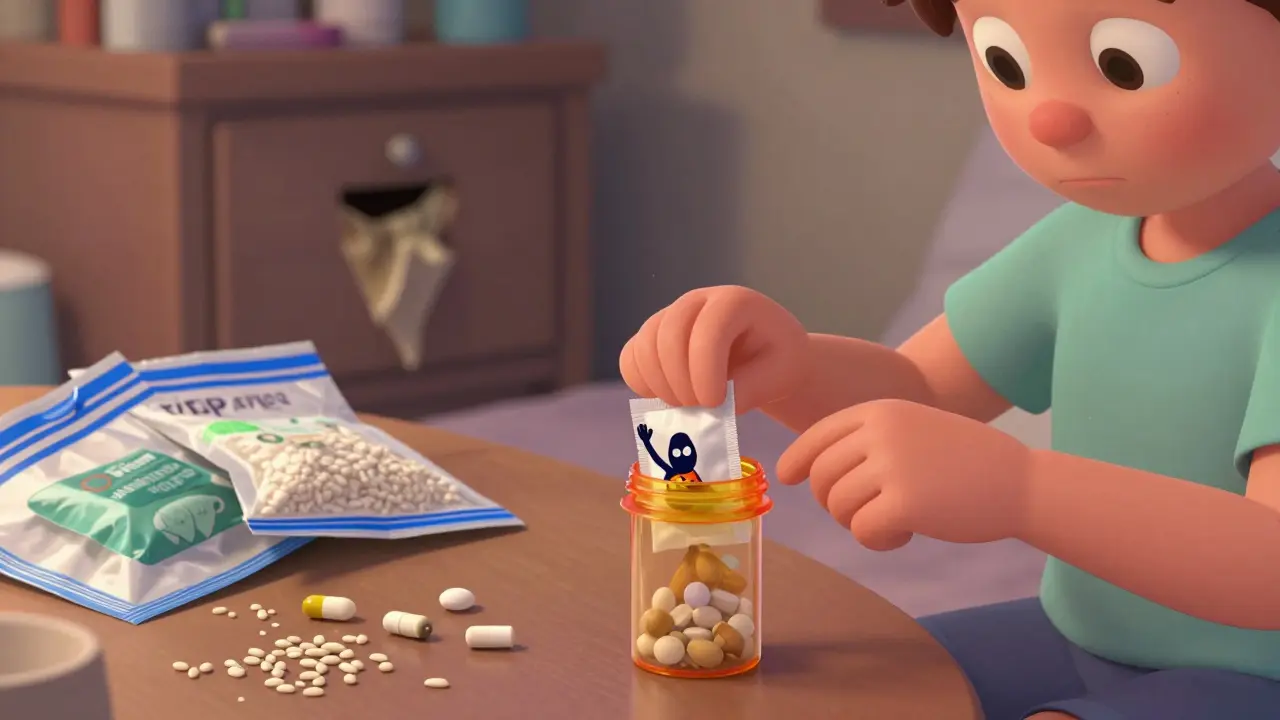
- Don’t remove the desiccant packet. That little packet isn’t trash. Leave it in the bottle. It’s still working, even if the bottle is half-empty.

What Doesn’t Work
There are a lot of myths out there. Here’s what to ignore:- Plastic bags. Ziploc bags don’t stop vapor. They’re for groceries, not medicine.
- Silica gel bought online. Unless it’s pharmaceutical-grade and sized correctly, it won’t help. Generic desiccants from Amazon may be too small or contain impurities.
- Freezing pills. Freezing causes condensation. It’s a common mistake that leads to more damage.
- Adding rice to the bottle. Rice absorbs moisture, yes-but it’s slow, messy, and can shed particles. It’s not sterile. It’s not safe.
Signs Your Pills Are Damaged
If you notice any of these, don’t take them:- Tablets that crumble or stick together
- Capsules that feel soft, sticky, or swollen
- Medication that smells sour, musty, or chemical
- Pills that changed color-especially yellowing or dark spots
- Expiration date passed by more than a few months
Even if the pill looks fine, if it’s been stored badly for months, it might be less effective. That’s especially risky with antibiotics, blood pressure meds, or insulin. A 10% drop in potency can mean the difference between treatment and failure.
What to Do With Damaged Pills
Never flush them or toss them in the trash. Many pharmacies offer take-back programs. If yours doesn’t, mix them with kitty litter or coffee grounds in a sealed bag before throwing them out. This makes them unappealing to kids or pets and prevents environmental contamination.If you’re unsure whether your pills are still good, call your pharmacist. They can check the stability data for your specific drug. Don’t guess. A failed antibiotic can lead to a worse infection. A weakened heart pill can trigger a crisis.
Why This Matters More Than You Think
Moisture damage isn’t just a manufacturer’s problem. It’s a patient safety issue. In 2022, the FDA issued warning letters to two companies for recalls caused by undersized desiccants. Pharmacists in humid regions like Florida, Texas, and Southeast Asia report up to 40% more returns of degraded meds. Patients stop taking their pills because they look or smell wrong-even if the problem was poor storage.One pharmacist on Reddit said after switching to PVA-coated antibiotics, complaints dropped from five per month to almost zero. That’s not magic. That’s science.
The best protection? It’s not expensive. It’s not complicated. It’s just consistent: keep the cap tight, keep the bottle dry, keep it out of the bathroom. That’s the real pharmacy-grade advice.
Final Thought: Your Medicine Deserves Better Than a Bathroom Cabinet
You wouldn’t leave your phone in the shower. You wouldn’t leave your wallet in the rain. Your medicine is just as important. It’s keeping you alive. It’s worth a drawer, not a steamy cabinet.Can I transfer my pills to a pill organizer?
Only if you’re using them within a week. Pill organizers expose medication to air and humidity every day. If you need to organize your meds for the week, fill the organizer from the original bottle each morning. Never store pills long-term in an organizer. Always return unused pills to their original container with the desiccant packet inside.
Are all desiccants the same?
No. Pharmaceutical-grade silica gel is specially designed to be non-toxic, non-reactive, and sized to handle the exact moisture load of a medication bottle. Generic silica gel from hardware stores may contain additives or be too small. Never replace the original desiccant with a store-bought one unless it’s labeled for pharmaceutical use.
What if my pill bottle doesn’t have a desiccant?
Some older or low-cost medications still skip desiccants. If you live in a humid climate or store meds in a warm area, ask your pharmacist if your medication is moisture-sensitive. If it is, they may recommend switching to a brand that uses PVA coating and includes a desiccant. Don’t assume all pills are equally protected.
Can I reuse the desiccant packet?
No. Once a silica gel packet has absorbed moisture, it’s saturated. Some packets turn color when full, but many don’t. Even if it looks dry, it can’t absorb more. Reusing it gives you false security. Always use a fresh packet from the original bottle.
Is it safe to store pills in the fridge?
Only if the label says to. Most pills are fine at room temperature. Refrigeration causes condensation when you take them out. That moisture gets trapped inside the bottle and can damage the pills. If you’re unsure, check the package insert or call your pharmacist.
How do I know if my medicine is still effective?
You can’t tell by looking alone. Even if the pill looks fine, moisture can reduce potency without visible signs. If you suspect damage-especially with antibiotics, heart meds, or insulin-don’t take it. Contact your pharmacist. They can check stability data or help you get a replacement.
Do expiration dates matter if the pills look fine?
Yes. Expiration dates are based on stability testing under proper storage conditions. If your pills were stored in a humid bathroom, they may have degraded before the expiration date. If they were stored well, they might still be safe for a short time after. But never assume. When in doubt, replace them.
Man this post saved my life lol. I was storing my antibiotics in the bathroom and they got all sticky-I thought they were just old. Now I know better. Thanks for the heads up! 🙏
Okay but why is no one talking about how ridiculous it is that we have to be scientists just to store pills properly? 🤦♀️ My grandma didn’t need a desiccant packet to take her blood pressure meds. This over-engineering is exhausting. Also-STOP USING EMOJIS IN MEDICAL ADVICE. It’s not a TikTok.
It’s funny how we treat medicine like it’s fragile porcelain when it’s literally designed to survive the digestive tract. But then again, maybe that’s the point-the body’s chaos is one thing, but humidity in a bathroom is another kind of slow erosion. We’re not just preserving chemistry; we’re preserving trust. If your pill looks like it’s sweating, how can you trust it to save you?
Love this so much! I’ve been telling my mom for years not to keep her meds in the bathroom and she just rolled her eyes. Now I’m printing this out and taping it to her cabinet. Also-YES to leaving the desiccant in! I used to toss them like trash until I learned they’re tiny moisture ninjas. 🌟
Let’s be honest-this is basic pharmacology 101. If you’re storing medication in anything other than a climate-controlled, airtight, amber-glass container with a silica gel packet calibrated to your drug’s hygroscopic threshold, you’re not just negligent-you’re irresponsible. The fact that this even needs explaining is a testament to the erosion of public health literacy. And please, for the love of science, stop using pill organizers. They’re glorified plastic trays with zero barrier protection. If you need one, use it for a single day’s dosage and return the rest to the original bottle. Otherwise, don’t bother.
Wait-so you’re telling me I can’t just throw my pills in a Ziploc like everyone else? That’s it? That’s the whole post? I’ve been doing this for 15 years and my blood pressure’s fine. You’re overcomplicating this. Also, who even uses PVA coating? Sounds like a sci-fi movie. And why are you acting like silica gel is magic? I’ve seen people put it in their shoes to stop stink-why is it suddenly holy for pills?
Thank you for writing this. I just realized I’ve been keeping my insulin in the bathroom since last winter. I feel awful. I’m moving it tonight. Also-why does no one talk about how scary it is to not know if your meds are still working? Like, you take them every day and just hope… I’m so glad someone laid this out clearly. 💙
One thing people miss: even if your bottle has a desiccant, it only works if the cap is sealed. I’ve seen people open the bottle, take a pill, then just loosely twist the cap back on. That’s like leaving your front door open during a monsoon. The desiccant can’t keep up. Tighten it until it clicks. No exceptions.
I’ve been storing my antidepressants in my purse for months. They’re fine. You’re all overreacting. Why are you so scared of your own medicine?
Excellent breakdown. I’d only add one thing: if you live in a tropical climate like India, humidity doesn’t just creep in-it floods in. Even a drawer in a non-air-conditioned room can hit 70% RH by noon. For high-risk meds like insulin or antibiotics, consider a small, sealed container with a fresh desiccant packet inside your bedroom cabinet. And never, ever use rice. It’s a bacterial incubator. Stick to pharmaceutical-grade silica gel. Your body will thank you.