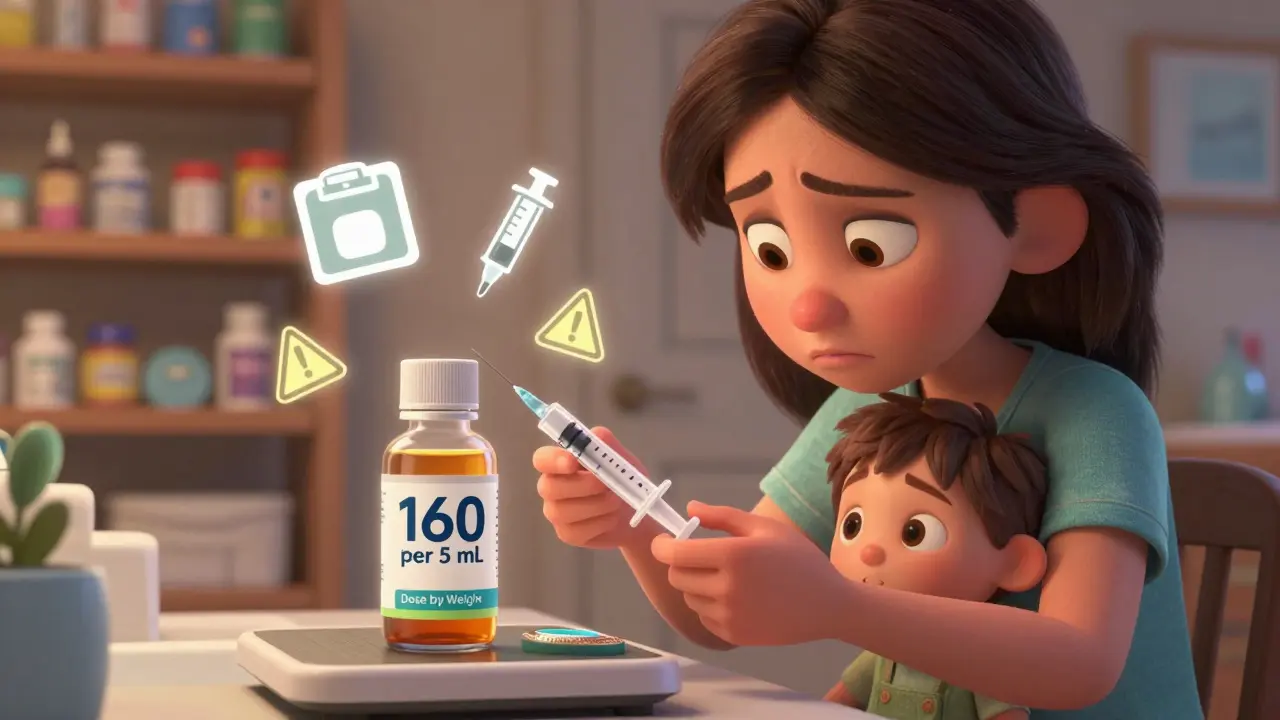
Every year, over 1.4 million children in the U.S. end up in emergency rooms because of medication errors - and most of them happen at home. The problem isn’t usually that parents are careless. It’s that the labels on children’s over-the-counter (OTC) medicines are confusing, even when they’re meant to be clear. If you’ve ever stared at a tiny bottle, wondering whether to give 5 mL or 7.5 mL, you’re not alone. The good news? You can read these labels correctly - and keep your child safe - if you know what to look for.
Why Weight Matters More Than Age
You’ve probably seen those charts on medicine bottles: "For children 2-3 years, give 5 mL." But here’s the truth: weight is the real guide, not age. A 2-year-old who weighs 40 pounds needs a different dose than a 2-year-old who weighs 20 pounds. Age is just a rough estimate. Studies show that using age instead of weight leads to dosing errors in 23% of cases - 15% of the time, kids get too little; 8% of the time, they get too much.The American Academy of Pediatrics (AAP) says this clearly: "The correct dose for your child is based on their weight, not their age." If you don’t know your child’s exact weight, use age as a backup - but always try to weigh them first. A simple bathroom scale works. Just hold your child and step on, then subtract your own weight.
What to Look for on the Label
OTC children’s medicine labels aren’t random. They follow strict rules set by the FDA. Here’s what every label must show:- Active ingredient: Is it acetaminophen? Ibuprofen? Benadryl? Never assume. Two different bottles can have the same name but different strengths.
- Concentration: This is critical. Liquid acetaminophen is now standardized at 160 mg per 5 mL. Ibuprofen is 100 mg per 5 mL. But older bottles or specialty products might be different. Always check.
- Dosing by weight: Look for a chart. It usually breaks down into weight ranges like 12-17 lbs, 18-23 lbs, 24-35 lbs, and so on. If your child’s weight falls between two ranges, always go with the lower dose.
- Dosing by age: This is listed too, but it’s secondary. If you don’t know weight, use age - but don’t rely on it.
- How often to give it: Acetaminophen can be given every 4 hours. Ibuprofen every 6-8 hours. Never mix them unless a doctor says so.
- Maximum daily dose: Acetaminophen? No more than 5 doses in 24 hours. Ibuprofen? No more than 4 doses.
- Warnings: "Do not use for children under 6 months" (for ibuprofen). "Do not give with other medicines containing acetaminophen." These aren’t suggestions - they’re safety rules.
Acetaminophen vs. Ibuprofen: Know the Difference
Parents often think these two are interchangeable. They’re not.Acetaminophen (like Tylenol) is the go-to for fever and mild pain. It’s safe for babies as young as 2 months - but only with a doctor’s okay under 3 months. The danger? Too much. Acetaminophen overdose is the #1 cause of acute liver failure in kids. That’s why the FDA now requires a bold "Liver Warning" on all children’s products.
Ibuprofen (like Advil or Motrin) works better for inflammation and swelling. But it’s not for babies under 6 months. It’s also harder on the stomach, so never give it on an empty stomach. And here’s a key point: even though both are 5 mL per dose for a 24-35 lb child, the amount of medicine inside is different. Acetaminophen has 160 mg per 5 mL. Ibuprofen has 100 mg per 5 mL. That means if you swap them, you’re giving the wrong dose - even if the spoon looks the same.
Never Use a Kitchen Spoon
This is one of the most common mistakes. A "teaspoon" isn’t 5 mL if it’s from your kitchen. A standard teaspoon holds 4.93 mL - but household spoons vary by 20-30%. One parent in a pediatric clinic survey gave their child 15 mL thinking it was 5 mL - because they used a tablespoon instead of a teaspoon.Always use the dosing tool that comes with the medicine: a syringe, a cup, or a dropper. If you lose it, go to the pharmacy and ask for a new one - they’ll give it to you free. Never guess. If the label says "5 mL," use a syringe marked in milliliters. No exceptions.
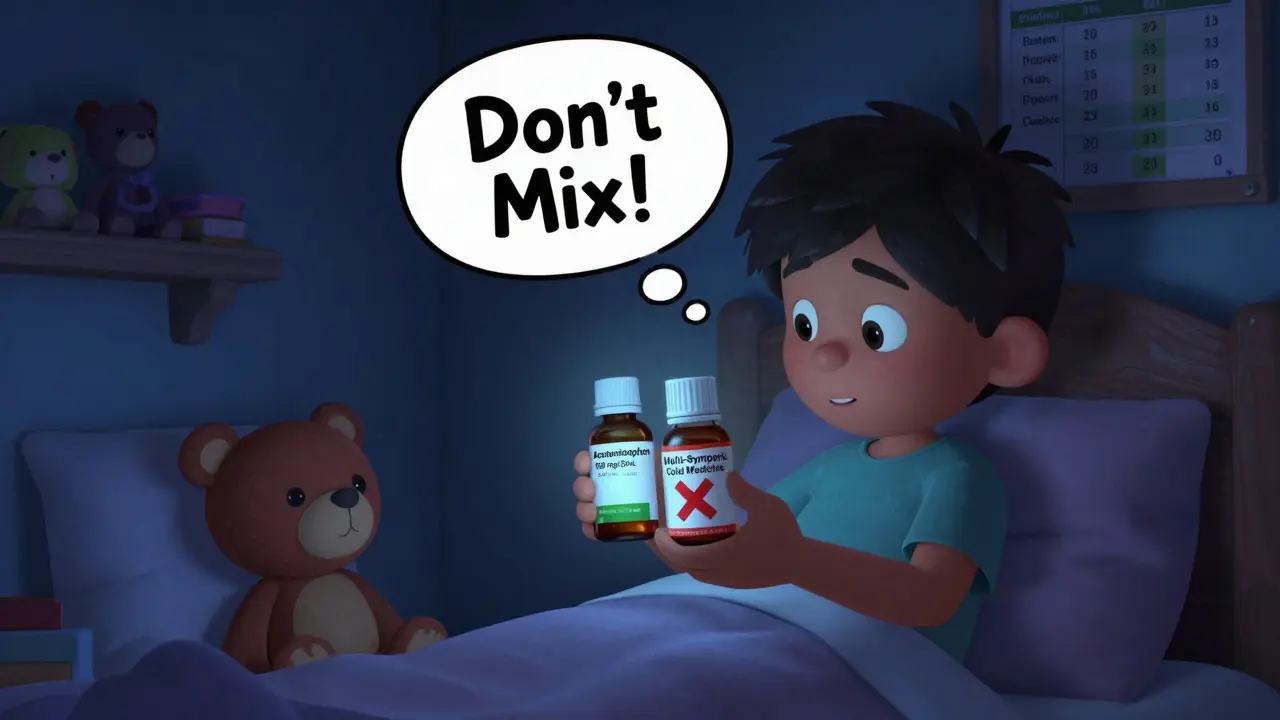
Watch Out for "Multi-Symptom" Medicines
Cold and flu medicines often say "fever reducer + cough suppressant + decongestant" on the bottle. That’s a red flag. Many of these contain acetaminophen - so if you’re already giving Tylenol for fever, you’re doubling up. That’s how accidental overdoses happen.Here’s a simple rule: Never give two medicines with the same active ingredient. Always read the "Active Ingredients" section on every bottle. If both say "acetaminophen," don’t combine them. Even if one is "for kids" and the other is "for adults," they can still have the same chemical.
What About Chewables and Tablets?
Chewable tablets aren’t the same as liquids. A children’s chewable acetaminophen tablet is 80 mg. A regular children’s tablet is 160 mg. If you give two chewables thinking they’re the same as one tablet, you’re giving the right dose - but if you think they’re the same as a liquid, you might give too little. Always check the mg amount, not the shape or color.Benadryl is another trap. Liquid Benadryl is 12.5 mg per 5 mL. The tablets are 25 mg each. The AAP warns: "Do not give Benadryl to children under 2 unless your doctor says so." Even for older kids, it can cause drowsiness or agitation. Don’t use it just to make them sleep.
How to Measure Correctly
Here’s a quick cheat sheet:- 1 mL = 1 cubic centimeter (cc) - they’re the same.
- 1 teaspoon (tsp) = 5 mL
- 1 tablespoon (tbsp) = 15 mL
- Always use the syringe or cup that came with the medicine.
- Hold the syringe at eye level when measuring. Don’t tilt it.
- If the label says "give 7.5 mL," use a syringe with 0.5 mL markings. Don’t guess.
Many parents struggle with pounds vs. kilograms. Just remember: 1 kg = 2.2 lbs. So a 10 kg child is about 22 lbs. Most dosing charts use pounds, so convert if needed. But again - if you’re unsure, round down.
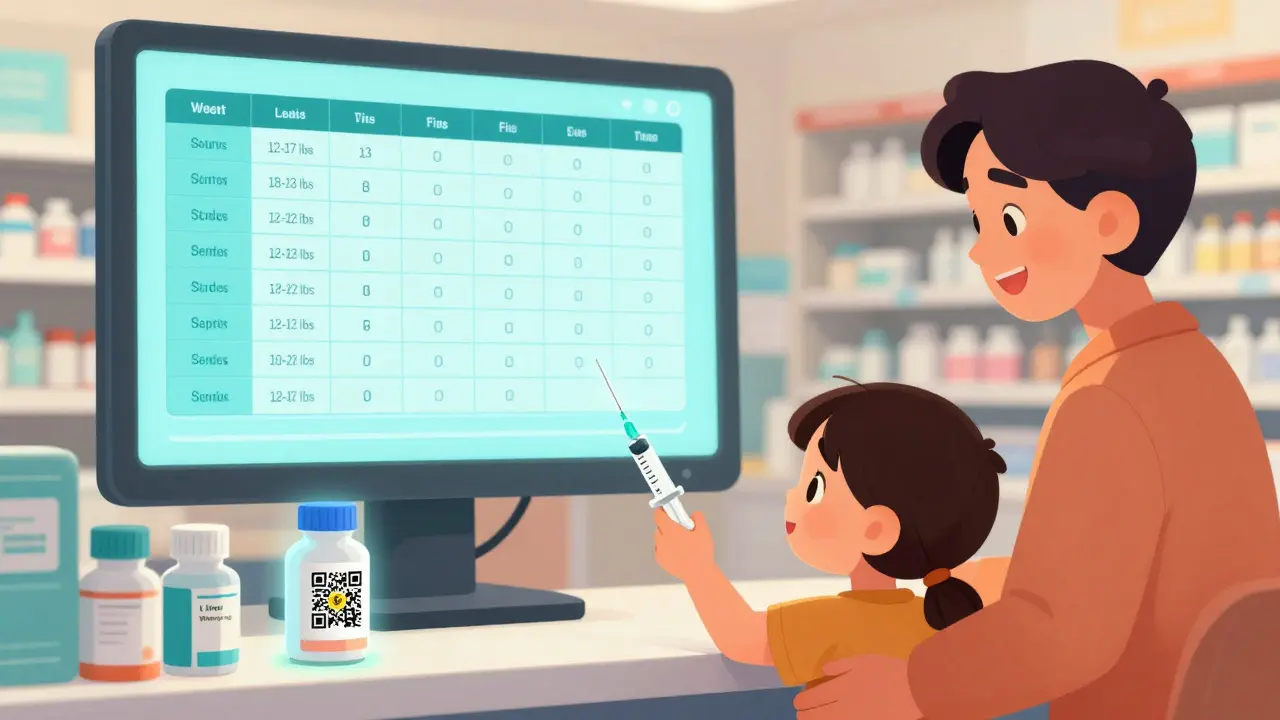
What If Your Child’s Weight Isn’t Listed?
Dosing charts don’t cover every weight. If your child weighs 41 pounds and the chart only goes up to 35 lbs and then jumps to 48 lbs, always use the lower range. Give the dose for 36-47 lbs, not the next one up. It’s safer. Overdosing is far more dangerous than underdosing - especially with acetaminophen.Also, if your child is under 2 years old and you’re unsure, call your pediatrician before giving anything. Even if the label says it’s okay, your child’s health history matters. Fever in a 3-month-old? Call right away. Don’t wait to give medicine.
What’s Changed Recently?
The rules got stricter in the last few years:- Since 2011, all liquid acetaminophen must be 160 mg per 5 mL - no more "infant drops" with different strengths.
- Since 2020, ibuprofen labels must say "Do not give to children under 6 months."
- Since 2024, all acetaminophen labels must have a bold "Liver Warning" for kids under 12.
- By 2025, most brands will include QR codes that link to video dosing instructions.
These changes are there to help. But they won’t fix everything if you don’t read the label carefully.
What to Do If You’re Still Confused
You’re not supposed to figure this out alone. If the label doesn’t make sense:- Call your pharmacist. They’re trained to explain this stuff.
- Visit HealthyChildren.org - it’s run by the AAP and has free, up-to-date dosing charts.
- Use a trusted digital dosing calculator. Some hospitals, like Hyde Park Pediatrics, have one online that’s been used over 17,000 times with 98% accuracy.
- Take a picture of the label and show it to your pediatrician at the next visit.
There’s no shame in asking. Medication safety isn’t about being perfect - it’s about being careful. And the best way to be careful is to double-check.
Can I give my child ibuprofen if they’re under 6 months old?
No. Ibuprofen is not approved for infants under 6 months of age. Even if your child has a fever, do not give ibuprofen unless your pediatrician specifically tells you to. For babies under 6 months, acetaminophen may be used with a doctor’s approval, but only after ruling out serious causes of fever. Always call your doctor first for infants under 3 months with a fever.
What if I give my child the wrong dose by accident?
If you suspect you’ve given too much acetaminophen, call Poison Control immediately at 1-800-222-1222 (U.S.) or your local emergency number. For ibuprofen, watch for vomiting, drowsiness, or stomach pain. Don’t wait for symptoms. Even a small overdose can be dangerous. Keep the medicine bottle handy - the poison control team will ask for the concentration and amount given.
Is it safe to give children’s Tylenol and a cold medicine together?
Only if the cold medicine does not contain acetaminophen. Most multi-symptom cold medicines for kids include acetaminophen already. Giving Tylenol on top of that can lead to a dangerous overdose. Always check the "Active Ingredients" list on both bottles. If both say "acetaminophen," do not combine them. Use only one medicine at a time.
Why do some labels say "mL" and others say "tsp"?
Since 2011, the FDA requires all children’s liquid medicines to list doses in milliliters (mL) only. Any "tsp" or "tbsp" on the label is for reference only and should not be used for measuring. The reason? Household teaspoons vary in size. A "tsp" on a label means 5 mL - but your kitchen spoon might hold 7 mL. Always use the dosing syringe or cup provided with the medicine.
How do I know if my child’s medicine is expired or unsafe?
Check the expiration date on the bottle. If it’s passed, throw it out. Also, look at the liquid. If it’s cloudy, has particles, or smells odd, don’t use it. For chewables or tablets, check for cracks, discoloration, or stickiness. Never use medicine that’s been stored in a hot car or damp bathroom. Keep it in a cool, dry place out of reach of children.
If you’re ever unsure, pause. Don’t guess. Call your pediatrician. Use a trusted online tool. Or visit a pharmacy. Medication safety isn’t about memorizing charts - it’s about asking questions until you’re sure. Your child’s health depends on it.
Weight-based dosing isn't just recommended-it's non-negotiable. I've seen parents wing it with age charts and end up in the ER with their kid. The AAP's stance isn't opinion-it's evidence. If your child weighs 18 lbs, give the 18-23 lb dose. Period. No exceptions. The difference between 5 mL and 7.5 mL isn't a guess-it's a potential liver failure.
Let me tell you something they don't want you to know. The FDA doesn't care about your child's safety-they care about pharmaceutical profits. Why did they standardize acetaminophen to 160mg/5mL? Because it made the dosing confusing enough to keep parents buying new bottles every time. And those QR codes? They're not for education-they're tracking your device, your location, your habits. They want you dependent. Always check the active ingredient yourself. Never trust a label. Always question the system.
It’s worth noting that the original post contains a grammatical error in the second paragraph: the closing
tag is misplaced after the first sentence of the H2 section. Additionally, "Do not give with other medicines containing acetaminophen" should be "Do not administer with other medications containing acetaminophen" for formal clarity. These aren’t trivial nitpicks-accuracy in medical communication saves lives. Sloppy language invites sloppier decisions.Just wanted to say thank you for writing this. I used to panic every time I had to give my daughter medicine. I’d double-check three apps, call my mom, and still second-guess myself. This broke it down so clearly-especially the part about not using kitchen spoons. I literally threw out all my old dosing cups after reading this. Now I keep a syringe in the fridge with the meds. Small change, huge peace of mind.
As someone who’s worked in pediatric clinics across three countries, I can confirm: this is the most accurate, practical guide I’ve seen. In India, parents often use medicine from older siblings or neighbors-no labels, no weights. In the U.S., it’s the multi-symptom traps. Everywhere, it’s the kitchen spoon. This post nails the cultural and practical barriers. Share this with every new parent you know. Seriously.
My daughter was 14 months and had a fever. I gave her Tylenol based on age because the weight chart wasn’t clear. Turned out she was 22 lbs-the chart said 18-23. I gave the right dose, but I almost didn’t because I trusted age over weight. This post saved me from future mistakes. I keep a printed copy taped to the medicine cabinet now. No more guessing. Ever.
Stop using age. Weight is everything. End of story. If you don’t know your kid’s weight, get a scale. Don’t be lazy. Your kid’s liver doesn’t care if you’re busy.
It is a matter of grave concern that the general public continues to rely on anecdotal guidance rather than standardized, evidence-based protocols for pediatric pharmacotherapy. The American Academy of Pediatrics has issued unequivocal directives regarding weight-based dosing, yet widespread noncompliance persists due to cognitive laziness and an alarming erosion of scientific literacy among caregivers. The FDA’s regulatory interventions-while commendable-are insufficient without mandatory public education campaigns. One cannot entrust life-saving pharmacological decisions to parents who cannot distinguish between milliliters and teaspoons. This is not a parenting issue-it is a public health crisis.
I’m a pharmacist in Vancouver, and I see this every week. Parents come in with two different bottles of "children’s cold medicine," both containing acetaminophen, and ask if they can mix them for "better results." I have to explain that it’s like pouring two different types of gasoline into your car and hoping it runs better. It doesn’t. It explodes. Please, just read the label. We’re here to help-no judgment.
...And yet, despite all these "rules," the FDA still permits the sale of "infant drops" with misleading labeling (even if standardized now)-and allows manufacturers to use "tsp" as a "reference"-which, of course, is precisely what parents use. The system is designed to confuse. The real solution? Ban all liquid OTC pediatric meds. Require prescriptions. Let the pharmaceutical industry lose billions. That’s the only way to force accountability.
ok so i just found out my 2 yr old got 10ml of ibuprofen bc i thought the syringe was 1 tsp = 5ml but it was actually 10ml?? i thought they were the same?? now im paranoid every time i give her anything. is she gonna die??
Bro this is life or death. 🚨 I used to use a kitchen spoon until my cousin’s kid ended up in the hospital. Now I keep a syringe in my wallet. Literally. If you’re not measuring in mL with the tool that comes with it, you’re playing Russian roulette with your kid’s liver. 🤯
Good guide. In India, we often use medicine from older children or from relatives. I didn’t know about the concentration differences. I thought all children’s Tylenol was the same. Thank you for explaining the 160 mg per 5 mL. I’ll check the bottle next time before giving anything.
Just wanted to add-when I was a new dad, I called my pharmacist at 2 a.m. because I was scared I’d given too much. She walked me through it. Didn’t judge. Didn’t rush. Just helped. If you’re unsure? Call them. They’re trained for this. You don’t have to be a medical expert to be a good parent-just a careful one.