Statin Dose Adjustment Calculator
Manage Statin Side Effects
This tool helps you determine the best dose adjustment or statin switch to manage muscle pain while maintaining heart health benefits.
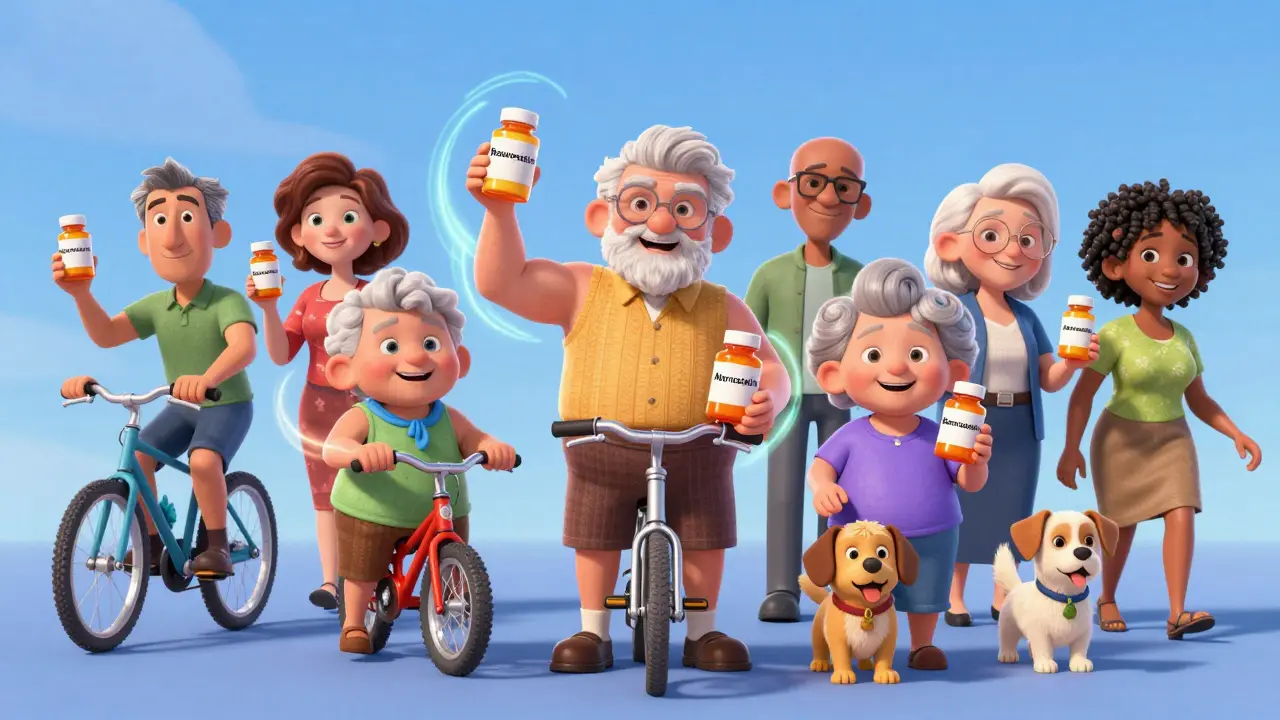
Statin medications have saved millions of lives by lowering bad cholesterol and reducing heart attacks and strokes. But for a lot of people, the side effects make them stop taking them. Muscle pain, weakness, or fatigue are the most common reasons. If you’re one of them, you’re not alone - and you don’t have to quit statins for good. The good news? There are proven ways to manage these side effects without giving up the benefits. It’s not about luck. It’s about smart adjustments - changing the dose, changing the schedule, or switching to a different statin.
Why Do Statins Cause Side Effects?
Not everyone gets side effects from statins. In fact, most people tolerate them just fine. But for those who do, the issue isn’t always the drug itself. Studies show that up to 90% of people who think they can’t handle statins actually have similar symptoms when taking a sugar pill. This is called the nocebo effect - when you expect to feel bad, you do. Still, some people really do experience real muscle discomfort. That’s called statin-associated muscle symptoms, or SAMS. It’s usually mild - aching legs, tired arms - but it’s enough to make people stop taking their medicine. And that’s dangerous. Stopping statins without a plan increases heart attack risk by 30% over five years.
The real culprits behind true side effects? Age, gender, and other health conditions. Women over 65, people with thyroid problems, kidney disease, or those taking multiple medications are more likely to have issues. Simvastatin, especially at doses above 20mg, is the most likely to cause muscle pain. That’s why many doctors now avoid it unless absolutely necessary.
Dose Adjustment: Less Can Be More
You don’t always need to take a statin every day. For some statins, taking them less often works just as well. Rosuvastatin and atorvastatin have long half-lives - meaning they stick around in your body for days. That opens up options. Instead of 20mg daily, try 20mg every other day. Or even twice a week. Clinical trials show this can cut LDL cholesterol by 20-40%, which is still a big win for heart health.
Here’s how it works in practice. A patient on 40mg simvastatin who gets muscle pain might switch to 10mg rosuvastatin every Monday and Thursday. Within four weeks, their cholesterol drops, and their muscles feel better. This isn’t guesswork. The American College of Cardiology recommends this approach for patients who can’t tolerate daily dosing. The key is patience. Don’t rush. Give the new schedule at least four weeks to settle in before deciding if it works.
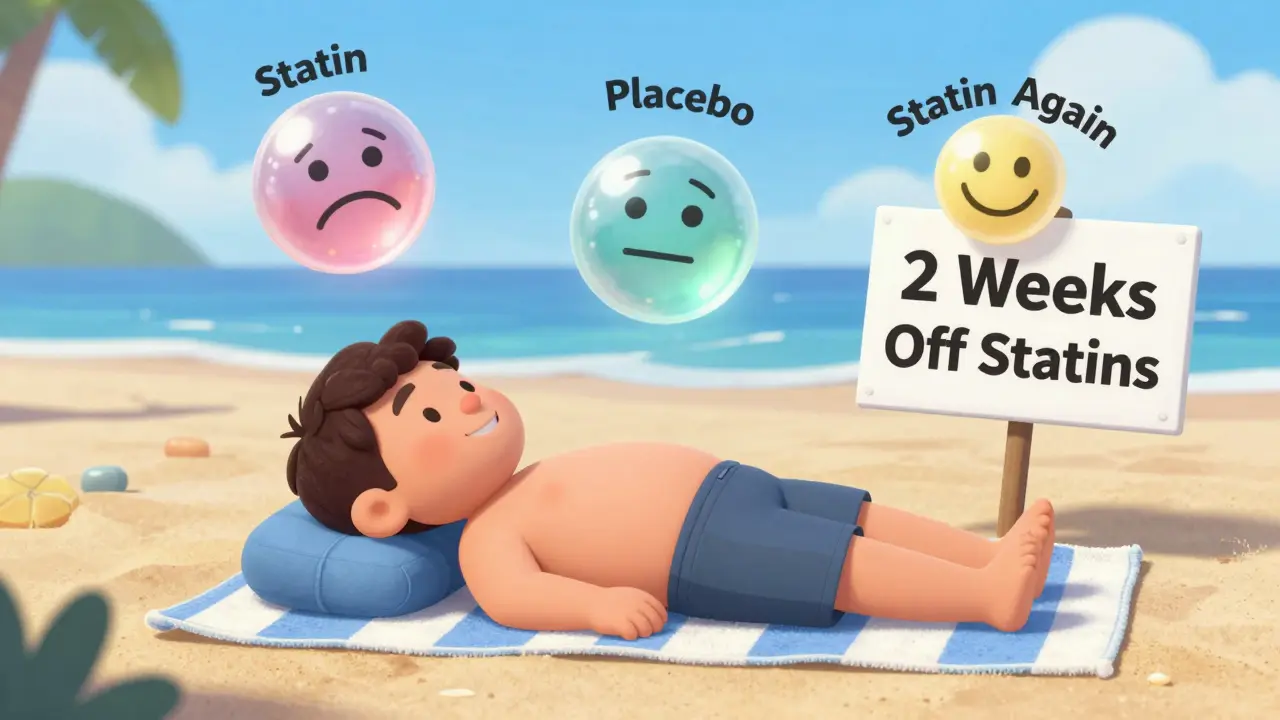
Another trick? Take a short break. If muscle pain starts, stop the statin for two weeks. If the pain goes away, that’s a clue it’s related. Then restart at a lower dose or less frequent schedule. This method, called a "drug holiday," helps confirm the cause and gives your body time to reset. Many patients find they can stay on therapy long-term this way.
Switching Statins: It’s Not One-Size-Fits-All
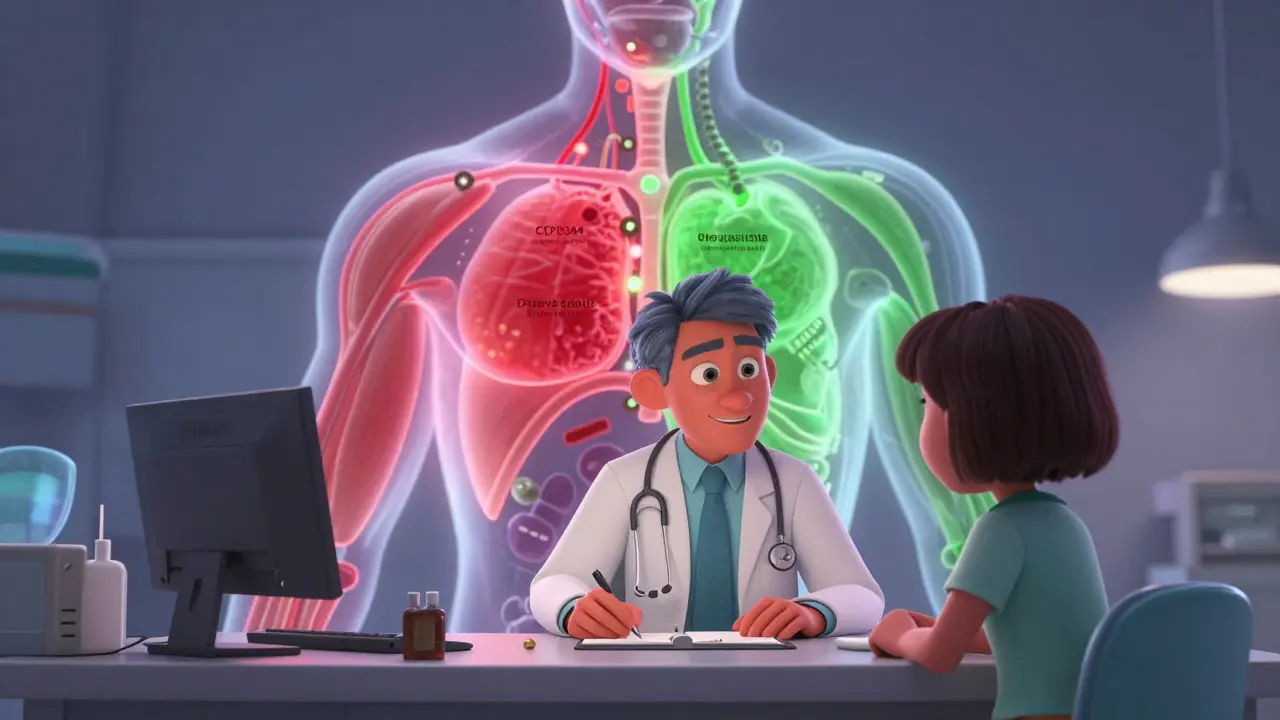
Not all statins are created equal. Some are processed by the liver using the CYP3A4 enzyme. That includes simvastatin, lovastatin, and atorvastatin. If you’re taking other drugs that interact with this enzyme - like certain antibiotics, antifungals, or grapefruit juice - your body can’t clear the statin properly. That raises the risk of side effects.
Switching to a statin that doesn’t use CYP3A4 makes a big difference. Pravastatin, rosuvastatin, and fluvastatin are cleared through different pathways. That’s why switching from simvastatin to rosuvastatin works for about 75% of people who had muscle pain. Real-world data from Geisinger Health shows that among over 12,000 patients who switched, most were able to stay on therapy without symptoms.
Start low. If you were on 20mg of one statin, begin with 5mg or 10mg of the new one. Wait four weeks. Check your cholesterol. Check how you feel. If everything’s stable, you can slowly increase. Some patients do fine on 5mg rosuvastatin twice a week. Others need 10mg every other day. There’s no universal dose - it’s personal.
What About Alternatives to Statins?
If dose changes and switching don’t work, there are other options - but none are as effective as statins for reducing heart events.
Ezetimibe is the first alternative most doctors recommend. It blocks cholesterol absorption in the gut. It lowers LDL by about 20-25%, which is good, but not as strong as even a low-dose statin. It’s safe, cheap (generic), and doesn’t cause muscle pain. Many patients take it with a low-dose statin to get better results.
PCSK9 inhibitors - like evolocumab and alirocumab - are injectables that cut LDL by 50-70%. They’re powerful. But they cost over $5,800 a year. Insurance often requires proof you tried and failed statins before approving them. They’re not a first-line fix - they’re for people who truly can’t take statins at all.
Bile acid resins like cholestyramine lower cholesterol too, but they cause bloating, gas, and constipation in up to 40% of users. They’re rarely used today unless someone has a rare reason to avoid everything else.
And what about Coenzyme Q10? Many people swear by it. Surveys show nearly 60% of users say it helps their muscle pain. But there’s no solid proof. Large studies haven’t confirmed it. The Mayo Clinic says it’s fine to try - but don’t expect miracles. It’s not a substitute for a well-managed statin plan.
What to Do When Nothing Seems to Work
Some people - about 1 in 3 - still can’t tolerate any statin, even at the lowest dose or least frequent schedule. For them, the path forward is more complex. First, rule out other causes of muscle pain. Hypothyroidism? Vitamin D deficiency? Arthritis? These are common and often mistaken for statin side effects. A simple blood test can check for them.
Second, try a blinded rechallenge. This sounds strange, but it’s powerful. In the SAMSON trial, patients who thought they couldn’t handle statins were given pills labeled as statin, placebo, or statin again - without knowing which was which. Most reported symptoms during all three phases. That means their pain wasn’t caused by the drug. It was their brain expecting pain. When they realized this, many were able to restart statins successfully.
Third, work with a lipid specialist. Not every doctor knows how to tweak statin regimens. A cardiologist or lipid expert can help design a personalized plan - combining low-dose statins with ezetimibe, lifestyle changes, and monitoring. The goal isn’t perfection. It’s sustainability. Keeping you on therapy long-term matters more than hitting a perfect cholesterol number.
Real-Life Examples: What Works
One woman in her 70s was on 40mg simvastatin. She developed leg cramps and couldn’t walk her dog without stopping. She switched to 10mg rosuvastatin every other day. Within three weeks, her cramps vanished. Her LDL dropped from 130 to 75. She’s been on this schedule for two years.
A man in his 60s tried three different statins. Each one gave him muscle pain. His doctor suggested 5mg rosuvastatin twice a week. He took it on Monday and Thursday. His cholesterol stayed controlled. His muscles felt fine. He now takes it with a daily ezetimibe pill. No side effects. No discontinuation.
Another patient, a 58-year-old man with diabetes, had muscle pain on every statin. His doctor checked his thyroid and vitamin D. His vitamin D was low. After supplements, he restarted atorvastatin at 10mg every third day. The pain didn’t return. He’s been stable for 18 months.
These aren’t rare cases. They’re common outcomes when doctors take the time to adjust, not just prescribe.
Key Takeaways
- Statin side effects are common, but often manageable - you don’t have to quit.
- Switching from simvastatin to rosuvastatin or pravastatin resolves muscle pain in 75% of cases.
- Intermittent dosing (every other day or twice weekly) works for many people and keeps cholesterol low.
- Always rule out other causes of muscle pain - thyroid, vitamin D, arthritis.
- Coenzyme Q10 may help some, but it’s not proven. Don’t rely on it alone.
- Statin intolerance is often psychological. A blinded rechallenge can change everything.
- Even low-dose statins cut heart attack risk. Don’t give up without trying adjustments first.
Can I just stop taking my statin if I have muscle pain?
No. Stopping statins without a plan increases your risk of heart attack or stroke. Instead, talk to your doctor about adjusting the dose, switching to another statin, or trying a less frequent schedule. Most people can stay on therapy with the right changes.
Which statin has the fewest side effects?
Rosuvastatin and pravastatin generally have the best tolerability profiles. They’re less likely to interact with other medications and cause muscle pain. Simvastatin, especially at high doses, is the most likely to cause side effects. That’s why many doctors avoid it unless needed.
How long should I wait before restarting a statin after stopping?
Wait at least two weeks after stopping to make sure symptoms have fully cleared. Then restart at a lower dose or less frequent schedule. Don’t jump back into your old dose - that’s how symptoms come back.
Is it safe to take statins every other day?
Yes, for certain statins like rosuvastatin and atorvastatin. Their long half-lives mean they stay active in your body for days. Studies show this approach lowers cholesterol by 20-40% and reduces side effects. It’s a proven strategy endorsed by major guidelines.
What if I still have muscle pain after switching and adjusting?
Get checked for other causes - thyroid problems, low vitamin D, or joint issues. If those are ruled out, consider a blinded rechallenge under medical supervision. Many people who think they’re intolerant actually tolerate statins when they don’t know they’re taking them. Work with a lipid specialist to find a plan that works for you.
Oh wow, another medical article that sounds like it was written by a pharmaceutical rep who took a creative writing class once. 'Switching statins solves everything'? Yeah, right. Next they'll tell us the cure for cancer is just a different brand of aspirin. I've been on simvastatin for years and my legs feel like lead weights. Tried everything. Still can't walk my dog. Thanks for the pep talk, doc.
People just need to stop being weak. 😔 I mean, if you can't handle a little muscle ache while saving your life, maybe you're not ready for adulthood. Statins are a miracle. If you're complaining, you're probably just lazy or eating too much pizza. 🍕
There's something profoundly human about how we respond to medical advice - the fear, the skepticism, the hope. The nocebo effect isn't just a buzzword; it's a window into how our minds shape our physical reality. Many of us experience pain not because the drug is wrong, but because we've been conditioned to expect it. That doesn't make the pain less real - but understanding its origin can be the first step toward healing. This post reminds us that medicine isn't just chemistry. It's psychology. It's patience. It's listening.
Let me guess - this was funded by AstraZeneca. Rosuvastatin? Funny how that's the one they push the hardest. And don't get me started on 'blinded rechallenges'. Sounds like a cult experiment. You know what they say - if you can't measure it, they're hiding something. CoQ10 works. I know people who swear by it. The FDA won't admit it because Big Pharma doesn't make money off supplements. Wake up.
I come from a place where medicine is not always accessible. But I have seen people here in India manage statin side effects with simple things - turmeric, yoga, walking daily. Not because it's trendy, but because it works. Sometimes the answer isn't another pill. It's rhythm. It's routine. It's respect for your body's signals. I'm glad this article mentions lifestyle. Too many forget that.
This is exactly why I stopped trusting doctors. They give you a pill, then another pill, then another pill - and when you complain, they tell you it's 'in your head'. The nocebo effect? Please. I have real pain. Real fatigue. Real life. And now I'm told I'm 'increasing my heart attack risk' because I refused to take a drug that made me feel like a zombie. Who benefits? Not me. Not my body. Definitely not my sleep.
Okay I'm gonna say this real nice and slow since y'all seem confused. I was on 40mg simvastatin and my thighs felt like they were full of cement. I switched to 10mg rosuvastatin every other day. Took 3 weeks. No cramps. No brain fog. LDL went from 140 to 80. I'm not a doctor. I'm just a woman who googled 'statin muscle pain reddit' and found this exact article. I'm alive. I'm walking. I'm not dying. And I didn't need to take a pill every day to prove I care about my health. Stop acting like there's only one right way. There isn't. We're not lab rats. We're people.
Statins are just another way for the system to keep us docile. You think your cholesterol's the problem? Nah. It's the processed food, the stress, the lack of sleep. They sell you a pill so you don't have to change your life. And now they're telling you to take it every other day? That's not a solution - that's a loophole. They want you addicted to the system. Don't fall for it.
I just want to say - thank you for writing this. I've been so scared to talk about my muscle pain because everyone says 'just take it'. But I did the every-other-day thing with rosuvastatin and it changed everything. I'm not cured. But I'm not giving up either. And that's enough for today.
It's fascinating how the body responds to expectation. I had a friend who swore she couldn't tolerate any statin - until she was given a double-blind challenge. She had symptoms during placebo, statin, and placebo again. She cried when she realized it wasn't the drug. It was the fear. That's not weakness. That's neuroscience. And if we can reframe the narrative - not as 'you're broken' but 'your brain is misfiring' - we might finally stop the cycle of abandonment. This isn't about pills. It's about trust. Trust in science. Trust in yourself. Trust in your doctor. That's the real treatment.
Wait - so if you think you feel pain from statins, but it's just your brain... then what about all the people who die from heart attacks because they stopped? Are they just 'imagining' their risk? Are we supposed to trust a study that says 'you think you're sick, but you're not'? What if the study is wrong? What if the placebo group had hidden heart disease? What if the 'statin' group was secretly given higher doses? Who funds these trials? Who owns the data? I don't trust any of this. I'm not taking a pill unless I can see the lab report. And even then... I'm still not sure.
It is imperative to recognize that the pharmacokinetic profiles of hydrophilic statins such as rosuvastatin and pravastatin are fundamentally distinct from those of lipophilic statins such as simvastatin and lovastatin. The former are less dependent upon CYP3A4 metabolism and therefore exhibit reduced potential for drug-drug interactions. Furthermore, intermittent dosing regimens have been validated in multiple randomized controlled trials, including the STAMINA trial and the INTERVAL study, demonstrating non-inferiority in LDL-C reduction with significantly improved tolerability. To dismiss these findings as anecdotal is to ignore the empirical evidence base that underpins modern lipid management guidelines.