Supplement & Medication Interaction Checker
Check Your Risk
Select medications and supplements to see if dangerous interactions exist. Based on evidence from the article and clinical studies.
People turn to natural remedies and supplements hoping to ease side effects from medications, manage chronic conditions, or just feel better. But here’s the problem: just because something is labeled ‘natural’ doesn’t mean it’s safe-or even effective. In fact, many of these products come with hidden risks that most users never see coming.
What You’re Really Taking
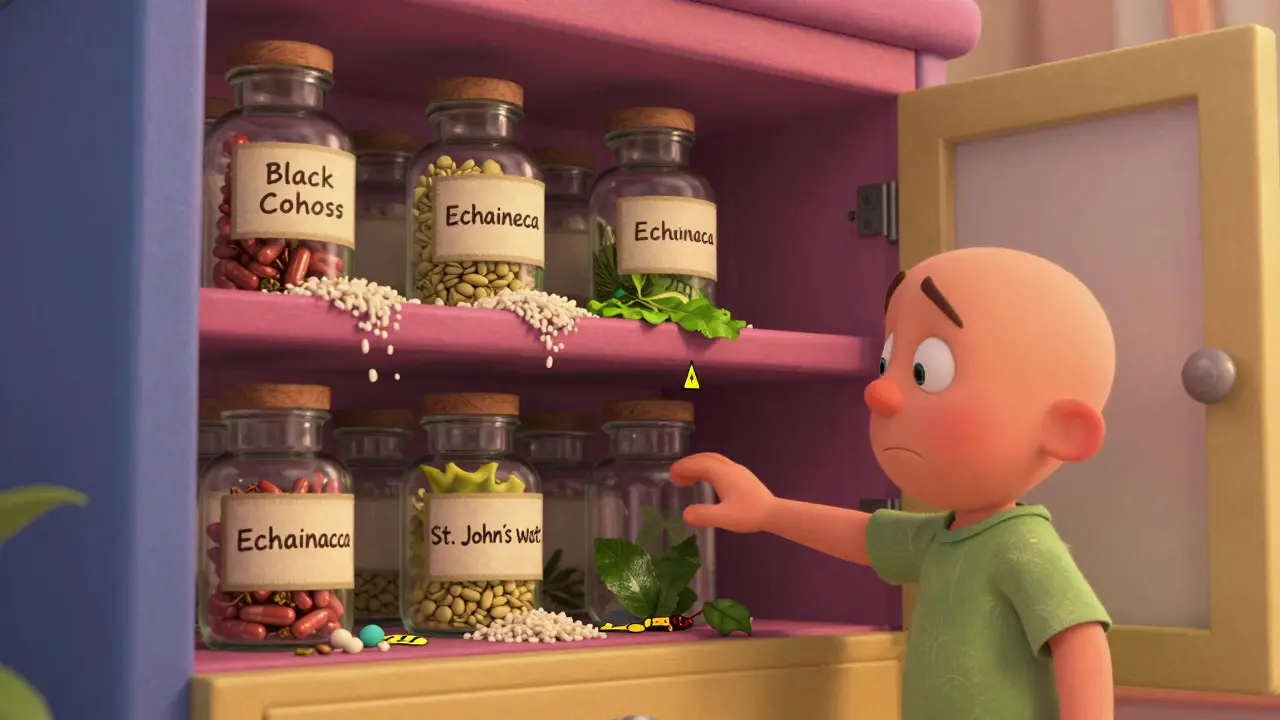
When you buy an herbal supplement, you’re not getting a standardized medicine like a prescription drug. You’re getting a product that could contain anything. A 2015 study by the Botanical Adulterants Prevention Program found that nearly 2 in 5 herbal supplements were contaminated or mislabeled. One product sold as echinacea was actually powdered rice. Another labeled as black cohosh contained no black cohosh at all-just unrelated plants that can cause liver damage.
The U.S. doesn’t require supplement makers to prove safety or effectiveness before selling their products. The Dietary Supplement Health and Education Act of 1994 (DSHEA) lets companies market supplements without FDA approval. That means the label might say ‘pure black cohosh,’ but the capsule could contain heavy metals, pesticides, or even synthetic drugs. The FDA has investigated over 800 adverse events linked to ephedra alone between 1995 and 1999. Many of those cases involved heart attacks, strokes, and deaths-even in people under 40.
Common Supplements and Their Real Risks
Let’s look at a few popular ones and what the science actually says.
Black cohosh is often used for hot flashes during menopause. Some studies suggest it might help, but only if it’s a specific, well-made brand like Remifemin®. Even then, it’s not risk-free. There are rare reports of liver damage, though it’s unclear if the herb itself is to blame-or if it’s contamination. The Cleveland Clinic advises women with a history of breast cancer to talk to their doctor before using it, even though recent evidence doesn’t show it acts like estrogen.
Echinacea is widely promoted for colds and flu. But most high-quality studies show it doesn’t prevent or shorten illness. It’s generally safe for short-term use, but if you’re allergic to ragweed, daisies, or chrysanthemums, you could get a serious reaction. People with autoimmune diseases like lupus or multiple sclerosis should avoid it entirely-it may trigger flare-ups.
St. John’s wort is one of the most dangerous supplements you can take with other medications. It speeds up how your body breaks down drugs, which can make them useless. If you’re on birth control, it can drop hormone levels by 15-24%, leading to unplanned pregnancy. It also reduces the effectiveness of antidepressants, HIV meds, and even some cancer drugs. The risk isn’t theoretical-it’s been documented in clinical studies since 2000.
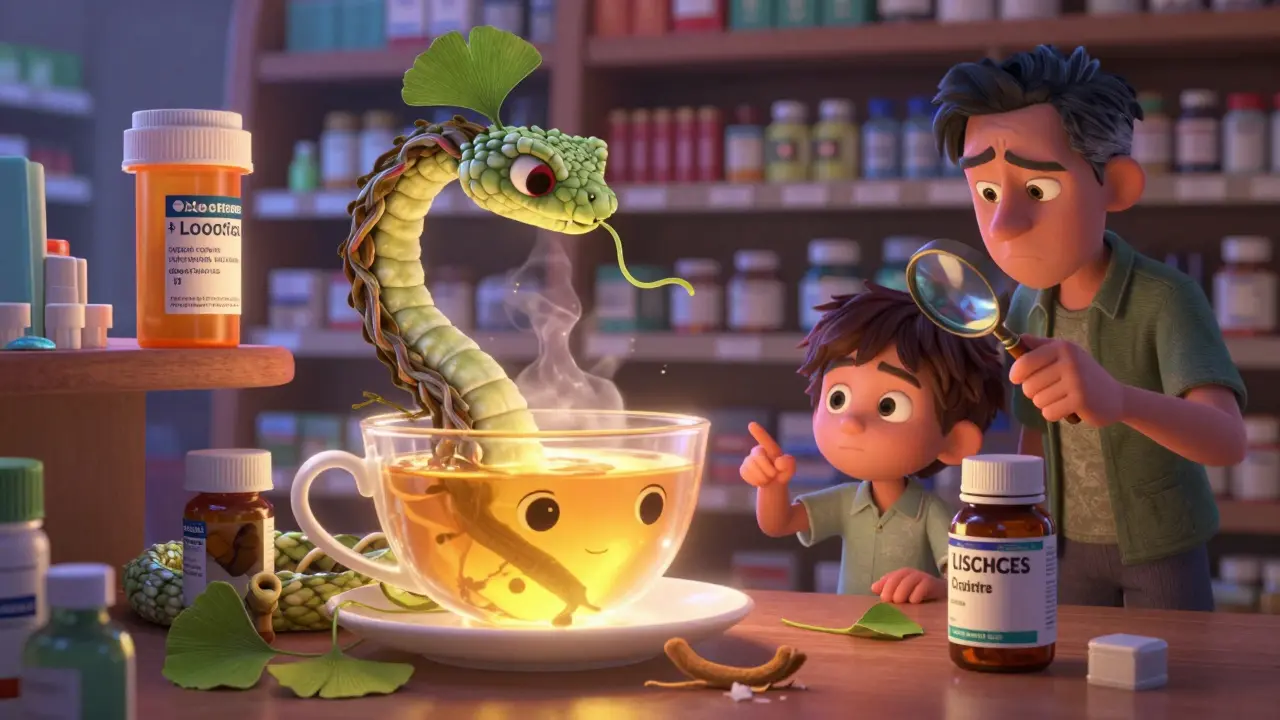
Ginkgo biloba and cranberry are both marketed for circulation and urinary health. But they can increase bleeding risk, especially when taken with blood thinners like warfarin or aspirin. A single dose of ginkgo can interfere with clotting for days. There are documented cases of brain bleeds in older adults who took ginkgo along with daily aspirin.
Liquorice root is in 75% of Japanese herbal formulas. It might sound harmless, but it can cause pseudohyperaldosteronism-a condition that leads to high blood pressure, swelling, low potassium, and even seizures. The NHS says up to 3% of people who regularly consume liquorice develop this. It’s not rare. It’s underreported.
Who’s Most at Risk?
Older adults are especially vulnerable. As we age, our liver and kidneys don’t clear substances as efficiently. That means herbal compounds stick around longer, building up to toxic levels. A 70-year-old taking turmeric for joint pain might not realize their body is holding onto it-leading to unexpected nausea, dizziness, or even liver stress.
People on multiple medications are another high-risk group. A 2023 review in JAMA found that over 60% of adults over 65 take at least five prescription drugs. Add a few supplements on top, and you’re playing Russian roulette with your liver, kidneys, and heart. St. John’s wort alone interacts with more than 50 common medications.
Even healthy people aren’t immune. A Reddit thread from 2023 collected over 1,200 reports from users who took herbal supplements for energy or sleep. Nearly 37% reported gastrointestinal issues-nausea, diarrhea, cramps-that they didn’t expect. Many didn’t connect the dots until they stopped taking the supplement.
The Interaction Trap
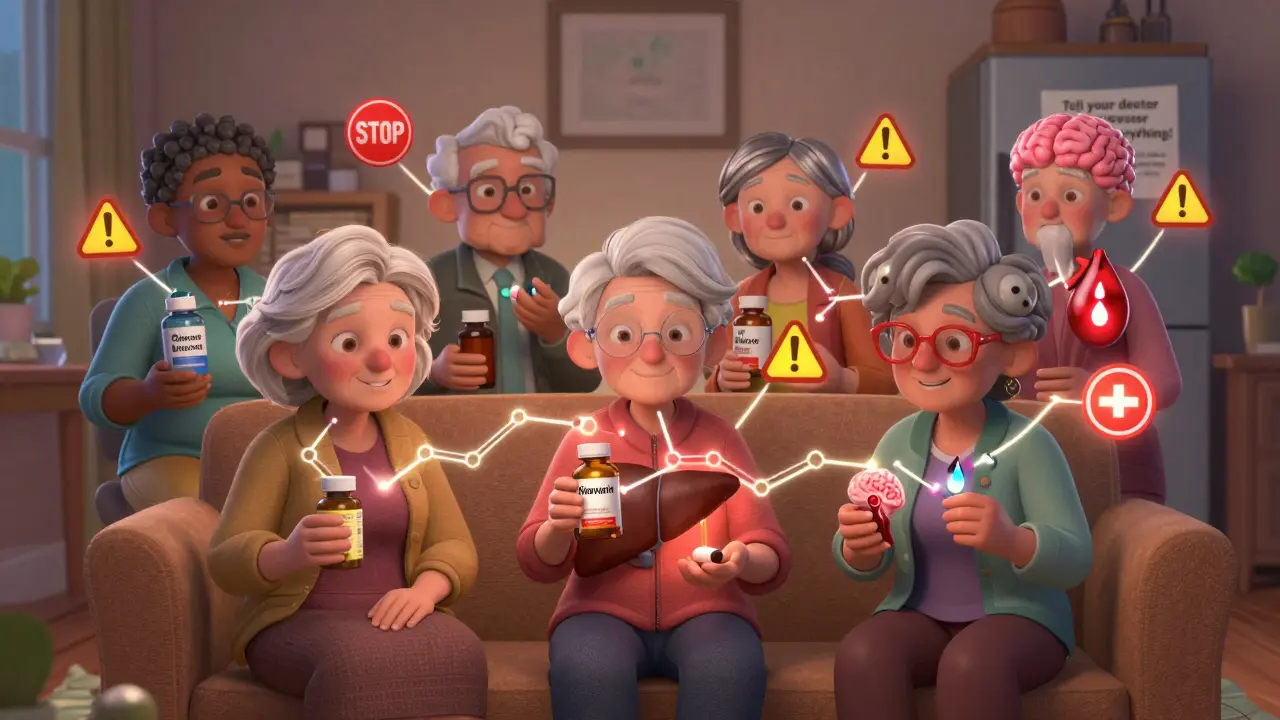
Most people don’t realize that supplements can interact with prescription drugs, over-the-counter meds, and even other herbs. You might take ginger for digestion and turmeric for inflammation, not knowing they both thin your blood. Add a daily aspirin, and you’re at risk of internal bleeding.
Here’s what you need to know about the most common dangerous combos:
- St. John’s wort + birth control, antidepressants, or HIV meds → drug failure
- Ginkgo + warfarin or aspirin → bleeding risk
- Black cohosh + tamoxifen → unclear interaction, avoid unless cleared by oncologist
- Liquorice + diuretics or blood pressure meds → dangerous electrolyte shifts
- Echinacea + immunosuppressants → can trigger autoimmune flare-ups
There’s no reliable app or website that tracks all these interactions. Pharmacists are your best bet-but only if you tell them everything you’re taking. Most people don’t. A 2022 survey found that 68% of supplement users never mention them to their doctor.
Why ‘Natural’ Doesn’t Mean Safe
The idea that natural equals safe is a myth built on marketing, not science. Plants produce toxins to protect themselves. Foxglove contains digitalis-a heart medication that can kill you if dosed wrong. Deadly nightshade contains atropine. Even chamomile can trigger anaphylaxis in people with ragweed allergies.
The Japanese Ministry of Health found that herbal remedies caused interstitial pneumonia in 1 out of every 25,000 users. Liver damage occurred in 1 to 5 out of every 10,000-mostly in women over 50. These aren’t rare outliers. They’re documented cases.
And the problem isn’t just the herbs themselves. It’s the lack of quality control. A 2019 analysis by the Drug-Induced Liver Injury Network found that only 13% of suspected herbal liver injuries could be proven to come from the herb. The rest? Contaminants, mislabeling, or undisclosed pharmaceuticals added to boost ‘effectiveness.’
What Actually Works?
Some natural remedies have solid evidence-but only for specific uses, and only with the right product.
Pumpkin seed oil has been shown in clinical trials to help with overactive bladder symptoms in men. It’s not a cure, but it can reduce nighttime trips to the bathroom.
Probiotics (specific strains like Lactobacillus rhamnosus GG) can reduce antibiotic-associated diarrhea. Not all probiotics do this. Only certain strains. And only if taken at the right time.
Omega-3 fatty acids from fish oil can help lower triglycerides. But they don’t prevent heart attacks in most people. And they can increase bleeding risk if you’re on blood thinners.
None of these are magic. They’re tools-with limits, side effects, and interactions. That’s why they’re studied, regulated, and prescribed in clinical settings.
What You Should Do
If you’re taking supplements to manage side effects, here’s what to do:
- Tell your doctor. Every single one. Not just the big ones. Even ginger, garlic pills, or melatonin.
- Stop assuming safety. Just because it’s in a health food store doesn’t mean it’s been tested.
- Check the label. Look for third-party testing seals: USP, NSF, or ConsumerLab. These don’t guarantee effectiveness, but they do check for contaminants.
- Watch for new symptoms. If you start feeling dizzy, nauseous, or have unexplained bruising after starting a supplement, stop it and talk to your doctor. It might be the supplement.
- Don’t combine without advice. Two herbs you think are harmless together might be dangerous.
The European Medicines Agency requires herbal products to prove safety and traditional use before approval. The U.S. doesn’t. That’s why you’re on your own when you buy a bottle off a shelf.
Final Thought
Natural remedies aren’t evil. Some have real benefits. But they’re not harmless. They’re powerful substances with unpredictable effects. Treating them like tea or vitamins is like treating gasoline like water. You might get lucky. Or you might end up in the hospital.
The best way to protect yourself? Be informed. Be honest with your care team. And remember: if something sounds too good to be true, it probably is.

So let me get this straight - you’re telling me that the ‘miracle cure’ I bought for $12 at Whole Foods might be powdered rice with a side of lead? Cool. Thanks for the heads up, I guess. I’ll just keep taking my vitamins and praying to the goddess of FDA oversight.
I’ve been taking turmeric for my knees since 2018. No side effects, feel great. But now you’re telling me it could be laced with pesticides or worse? I’m not mad, just disappointed. I bought the ‘organic’ bottle with the leafy green label. Turns out that’s just marketing fluff. I’ll start checking for USP seals now. Honestly, I wish more people talked about this stuff before they dropped cash on snake oil.
Wow. So your liver is basically a ticking time bomb if you’ve ever taken a supplement. Congrats, you’re now a walking pharmaceutical liability. Hope you enjoyed that ‘natural energy boost’ from the guy who thinks ‘herbal’ means ‘unregulated poison.’
Don’t panic. Just be smart. If you’re on meds, tell your doctor every single thing you put in your body - even ginger tea. And if it doesn’t have a USP or NSF stamp, leave it on the shelf. Simple as that.
I’m 58 and take fish oil, magnesium, and melatonin. I never thought about interactions until my doctor asked me last week. I almost cried because I realized I’d been hiding stuff from her. Thanks for reminding me it’s okay to be honest - even if it feels awkward.
USA thinks it’s above regulation? LOL. In Nigeria, if you sell herbal medicine without approval, you go to jail. Your ‘freedom’ is killing people. My aunt died from liver failure after taking ‘African herbal remedy’ from Amazon. No one checked. No one cared. 🇳🇬💔
People are too lazy to read labels and too entitled to accept that nature doesn’t owe them wellness. You don’t get to treat poison like a smoothie just because it comes in a glass bottle with a smiling sun on it.
Of course the FDA doesn’t regulate supplements. Why would they? They’re too busy protecting Big Pharma’s $200 billion profit margin. Meanwhile, we’re all guinea pigs in a libertarian experiment called ‘Your Body, Your Funeral.’ 🤡
Japan’s got it right. Traditional herbs, regulated like medicine. No guesswork. No rice powder. Just science with roots. We could learn a lot.
It is imperative that individuals engaged in the consumption of dietary supplements demonstrate due diligence by consulting with qualified healthcare professionals prior to initiating any regimen. The absence of regulatory oversight necessitates a heightened level of personal accountability.
My mom took St. John’s wort for depression and stopped her antidepressant. Three weeks later she was in the ER with a serotonin storm. She didn’t even know it could do that. I’m glad someone finally said it out loud.
The epistemological rupture between ‘natural’ and ‘safe’ is a symptom of late-stage capitalist ontological confusion. We’ve commodified the phytomedicinal sublime into a neoliberal wellness fetish, wherein the body becomes a site of performative healing, stripped of ecological and pharmacological context. The regulatory void isn’t accidental - it’s structural. You’re not just taking supplements. You’re participating in a bio-political apparatus of neoliberal self-governance.
I appreciate the thorough breakdown. I’ve been skeptical of supplements for years, but this is the first time I’ve seen all the risks laid out so clearly - especially the liver damage stats and the contamination rates. I’ll be bringing my supplement list to my next appointment. Knowledge is power, and this is a powerful reminder.
Look, I get it - you want to feel better without pills. But if you’re taking something to ‘fix’ your body, you owe it to yourself to know what’s actually in it. I used to take ginkgo for memory. Then I read about the bleeding risk and stopped. My doctor said, ‘Good call.’ No judgment, just facts. That’s the kind of conversation we need more of.
So the FDA lets companies sell ‘black cohosh’ that’s actually a liver bomb… but you can’t buy a vape without a government ID? Sounds about right.