Diarrhea is one of those things no one talks about until it hits - sudden, urgent, and inconvenient. You’re not alone. Nearly 40% of adults in the U.S. reach for an over-the-counter (OTC) remedy like Imodium or Pepto-Bismol within hours of the first loose stool. These meds work fast, but they’re not harmless. Knowing when to use them - and when to stop and call a doctor - can mean the difference between a quick recovery and something serious.
What OTC Diarrhea Treatments Actually Do
There are two main types of OTC diarrhea meds you’ll find on the shelf: loperamide and bismuth subsalicylate. They work in completely different ways.
Loperamide (sold as Imodium, Diamode) slows down your gut. It binds to receptors in your intestines, reducing how fast food moves through. That means fewer bathroom trips. In clinical studies, it cuts stool frequency by about 60% within 24 hours. It starts working in 30 to 60 minutes. Most people feel relief quickly - which is why it’s the top-selling OTC diarrhea treatment in the U.S.
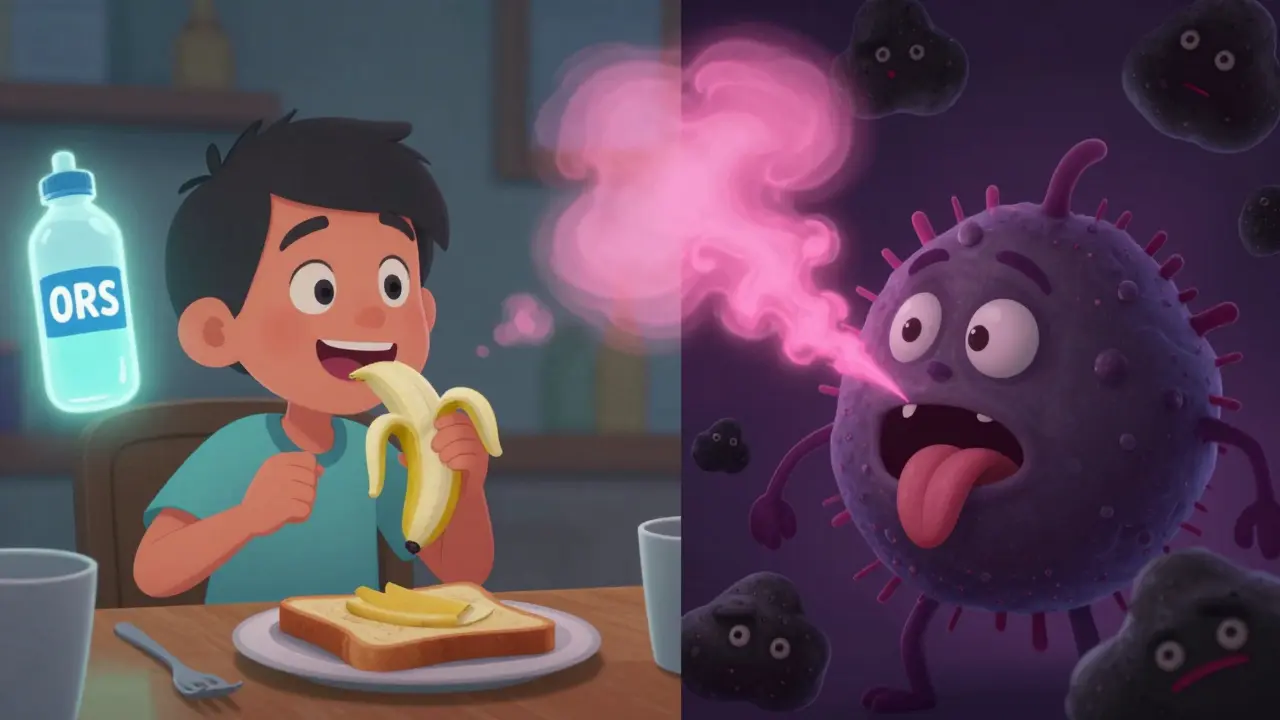
Bismuth subsalicylate (Pepto-Bismol, Kaopectate) does more than just slow things down. It coats your gut lining, reduces inflammation, kills certain bacteria like E. coli, and even helps with nausea and cramps. It’s the only OTC option that tackles multiple symptoms at once. But it comes with a visible trade-off: your stool turns black, and your tongue might too. Don’t panic - it’s harmless and goes away in a day or two.
Who Should Use Which One?
Not all diarrhea is the same. The best choice depends on what’s causing it.
- If you’re traveling and just feel queasy with watery stools - go with bismuth subsalicylate. It’s been shown to reduce the risk of traveler’s diarrhea by 65% if taken before meals.
- If you’re stuck at home with sudden, urgent, watery diarrhea and no fever - loperamide is your best bet for fast relief.
- If you’ve got cramps, nausea, or bloating along with diarrhea - Pepto-Bismol covers more bases.
But here’s the catch: neither works if your diarrhea is caused by an infection that needs antibiotics. And using them in those cases can trap the bad bacteria inside you, making things worse.
When to Stop - The Red Flags
OTC meds are great for short-term relief, but they’re not a cure. And using them too long or in the wrong situation can be dangerous.
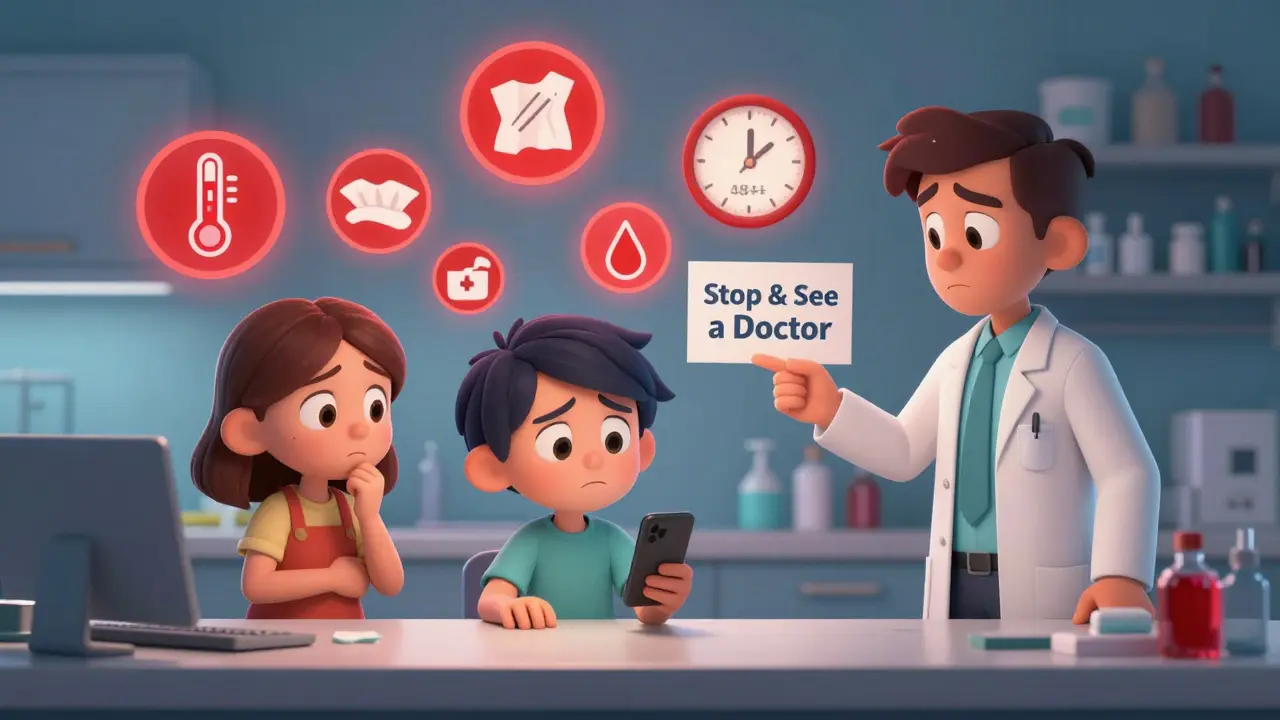
Stop taking any OTC diarrhea medicine and call a doctor if you have:
- Blood or black, tarry stools
- Fever over 101.3°F (38.5°C)
- Severe stomach pain or swelling
- Diarrhea lasting more than 48 hours
- Signs of dehydration: dry mouth, dizziness, little or no urine, or feeling faint
- Weight loss of more than 5% of your body weight
These aren’t just "maybe" signs. They’re clear indicators your body is fighting something serious - like an infection, inflammatory bowel disease, or even a toxin. The CDC says 15-20% of diarrhea cases involve fever or blood, and those need medical evaluation - not a pharmacy aisle.
Dosing Rules You Can’t Ignore
Most people use these meds correctly… at first. But then they get impatient.
For loperamide (Imodium):
- Take 4mg (two 2mg caplets) after the first loose stool.
- Then take 2mg after each subsequent loose stool.
- Do NOT exceed 8mg in 24 hours.
- Stop after 48 hours - even if symptoms aren’t gone.
For bismuth subsalicylate (Pepto-Bismol):
- Take 30mL liquid or two chewable tablets every 30 to 60 minutes as needed.
- Do NOT take more than eight doses in 24 hours.
- Stop after 48 hours.
Here’s what goes wrong: people take extra doses because they think "more is better." That’s how you get constipation - or worse. The FDA has documented over 170 cases of heart rhythm problems linked to loperamide misuse between 2011 and 2019. Some people even take 50-100mg a day to manage opioid withdrawal - and end up in the ER with cardiac arrest.
One user on Drugs.com wrote: "Took 6 caplets in 4 hours - ended up in the ER with severe constipation." That’s not rare. About 19% of reported adverse events involve overdose.
What to Do Alongside the Medicine
Medicine alone won’t fix diarrhea. Hydration is the real hero.
Drink oral rehydration solutions (ORS) - the kind with the right balance of salt and sugar. WHO-recommended ORS contains 75mmol/L sodium. You can buy packets at pharmacies or make your own: 1 liter of clean water + 6 teaspoons sugar + 1/2 teaspoon salt.
For the first 24 hours, avoid:
- Dairy (it worsens diarrhea if you’re temporarily lactose intolerant)
- Fatty or spicy foods
- High-fiber foods like beans, broccoli, or whole grains
- Caffeine and alcohol
Instead, stick to the BRAT diet: bananas, rice, applesauce, toast. These are bland, low-fiber, and easy to digest. A 2022 survey found 92% of pediatricians still recommend this for kids - and adults too.
Who Should Avoid These Meds Altogether?
Some people shouldn’t use OTC diarrhea treatments without talking to a doctor first.
- Children under 6: Loperamide isn’t approved for kids under 6. Pepto-Bismol isn’t safe for kids under 12 because of salicylate risks.
- Pregnant or breastfeeding women: Talk to your provider before taking either. Bismuth subsalicylate contains aspirin-like compounds, and loperamide’s safety isn’t fully established.
- People with liver disease: Loperamide is processed by the liver. If your liver is already struggling, even normal doses can build up.
- Those on certain medications: Loperamide can interact with antidepressants, antifungals, and some heart meds. Always check with a pharmacist if you’re on other prescriptions.
The Bigger Picture
OTC diarrhea treatments are a $1.2 billion market in the U.S. - and most of it’s driven by people who just want to feel normal again. But the medical community is shifting. The American College of Emergency Physicians now advises against routinely giving anti-diarrheals in ERs. Why? Because rehydration is more important than stopping the stool. In fact, in many cases, letting diarrhea run its course helps flush out the infection.
Still, for most healthy adults with mild, short-term diarrhea - these meds are safe and effective when used right. The key isn’t avoiding them. It’s knowing their limits.
Diarrhea is rarely dangerous. But pretending it’s just a "minor inconvenience" when it’s not? That’s where the risk lives.
Can I take Imodium and Pepto-Bismol together?
No. Don’t combine them. Pepto-Bismol contains salicylates, which are similar to aspirin. Taking it with other medications - including loperamide - increases your risk of side effects like stomach bleeding or kidney strain. Pick one and stick with it. If one doesn’t help after 48 hours, see a doctor instead of doubling up.
Is it safe to use OTC diarrhea meds for kids?
For children under 6, avoid loperamide entirely. For kids 6-12, only use the liquid form of Imodium under a doctor’s direction. Pepto-Bismol is not approved for children under 12 because of the risk of Reye’s syndrome, a rare but serious condition linked to salicylates. For kids, focus on hydration with pediatric electrolyte solutions like Pedialyte. Call a pediatrician if diarrhea lasts more than 24 hours or if there’s a fever, vomiting, or signs of dehydration.
Why does my stool turn black after taking Pepto-Bismol?
That’s normal. Bismuth subsalicylate reacts with sulfur in your digestive tract and turns black. It’s harmless and temporary - your stool and tongue will return to normal within a day or two after stopping the medication. But if you see black, tarry stools without having taken Pepto-Bismol, that’s a sign of internal bleeding. Seek medical help immediately.
Can I use OTC diarrhea medicine for food poisoning?
It depends. If you have vomiting, fever, or bloody diarrhea with suspected food poisoning, don’t use loperamide or Pepto-Bismol. These meds can slow down your body’s ability to flush out the toxins or bacteria. Instead, focus on fluids and rest. Most food poisoning cases resolve in 1-3 days. If symptoms are severe or last longer than 48 hours, see a doctor - you might need testing or antibiotics.
How long should I wait before seeing a doctor?
Wait no longer than 48 hours. If your diarrhea hasn’t improved by then, or if you develop any red flag symptoms - fever, blood in stool, dizziness, or extreme fatigue - see a doctor. Even if you feel "just a little off," persistent diarrhea can lead to dehydration or mask something more serious like Crohn’s disease, C. diff infection, or colon issues. Don’t wait until you’re weak - get checked.
Are there natural alternatives to OTC meds?
Hydration is the most effective natural treatment. Probiotics - like those in yogurt or supplements - may help shorten diarrhea by a day or two, especially after antibiotics. But don’t rely on herbal teas, apple cider vinegar, or charcoal. There’s no strong evidence they work, and some can interfere with medications. Stick to proven methods: fluids, rest, BRAT diet, and OTC meds only if appropriate and used correctly.
Final Thoughts
OTC diarrhea treatments are useful tools - not magic pills. They give you back control when your gut’s out of sync. But they’re not meant to be a long-term fix. The real goal isn’t to stop diarrhea. It’s to let your body heal - safely and quickly.
Use the medicine when it makes sense. Stop when it doesn’t. Hydrate. Rest. And if things don’t improve in two days - don’t guess. See a doctor. Your gut will thank you.