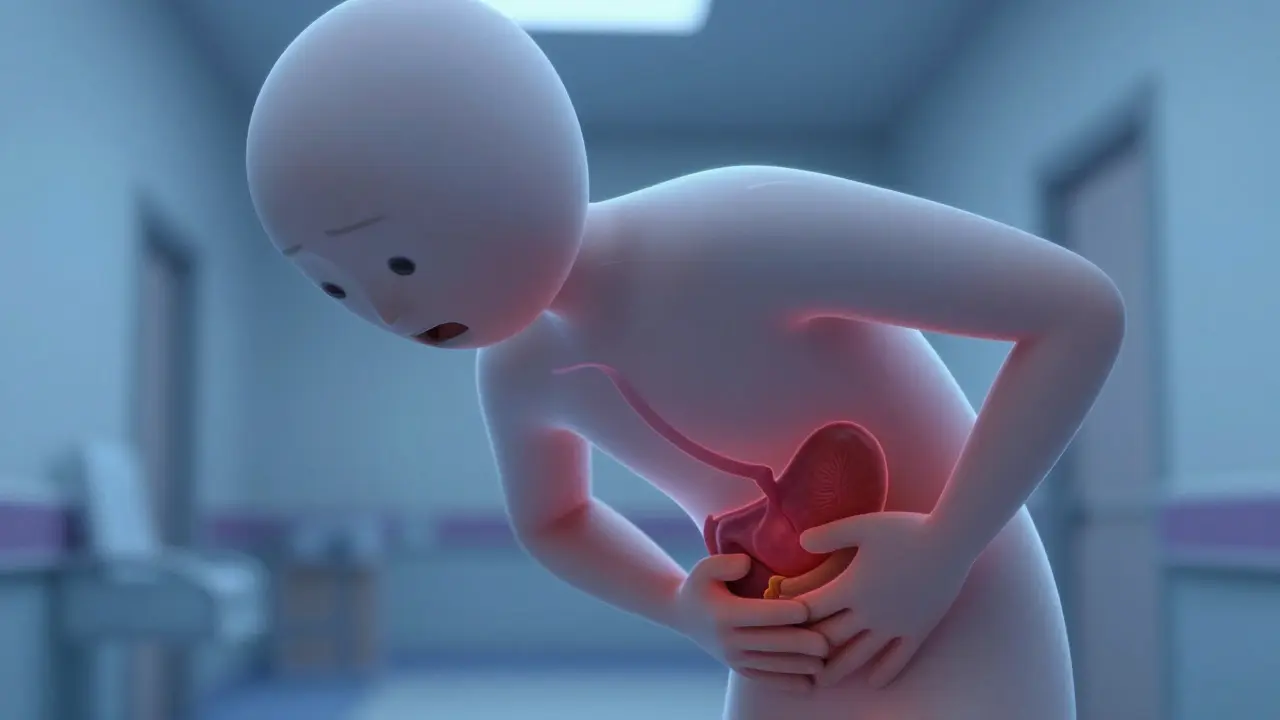
Your abdomen suddenly twists into a knot of pain that refuses to let go. It might radiate through to your back, leaving you doubled over. This isn't just indigestion; it’s inflammation attacking your digestive powerhouse. Pancreatitis is inflammation of the pancreas, an organ located behind the stomach that produces digestive enzymes and hormones regulating blood sugar. When this organ turns on itself, the results can range from a scary few days in the hospital to lifelong dietary changes. Understanding whether you are dealing with an acute episode or managing chronic damage is the first step toward recovery.
The Sharp Divide Between Acute and Chronic Types
Many people lump these conditions together, but the reality is quite different. Think of acute pancreatitis as a sudden storm-intense and damaging, but often passing with the right treatment. Acute Pancreatitis represents sudden inflammation typically resolving within days to weeks. According to the National Institute of Diabetes and Digestive and Kidney DiseasesNIDDK, this affects approximately 275,000 hospitalizations annually in the United States alone. Most mild cases clear up in three to seven days. However, if the inflammation causes necrosis (tissue death) and organ failure, the stakes rise dramatically.
On the other side of the spectrum, you have the slow burn. Chronic Pancreatitis involves permanent structural damage and progressive functional impairment that persists over months to years. Here, the tissue scars over, leading to fibrosis. Instead of a single flare-up, this is a long-term battle. While acute cases might leave some weakness, chronic cases lead to irreversible loss of function. About 50% of those with chronic pancreatitis develop diabetes within 12 years because the insulin-producing cells get destroyed along the way.
| Feature | Acute Pancreatitis | Chronic Pancreatitis |
|---|---|---|
| Onset | Sudden, severe epigastric pain | Recurrent pain, often after meals |
| Duration | Days to weeks | Years, permanent |
| Mortality Risk | 1% (mild) to 20% (severe) | 70% survival at 10 years |
| Imaging Signs | Edema (swelling) on CT scan | Calcifications and duct damage |
| Primary Cause | Gallstones, alcohol abuse | Long-term alcohol use, genetics |
Reading the Diagnostic Signals
How do doctors know what is happening inside? They rely on specific markers that scream distress. In an acute setting, your serum lipase levels will likely spike to more than three times the upper limit of normal. This happens because the pancreas is leaking its own enzymes into the bloodstream instead of sending them to the gut. If you walk into a clinic with classic pain and high enzyme levels, the diagnosis is straightforward.
For chronic cases, blood tests might look less dramatic. Instead, doctors look for evidence of malabsorption. Are your stools greasy and floating? That is steatorrhea, a sign that you aren't breaking down fats. Imaging plays a huge role here too. While an acute scan shows swelling, a chronic scan reveals calcifications-hard stones forming inside the organ-and dilation of the pancreatic ducts. Under the Revised Atlanta Classification system updated in 2012, severity is categorized by how long organ failure lasts. If it resolves in 48 hours, it is transient; beyond that, it is persistent and signals a much higher risk.
Nutrition During the Acute Phase
If you are currently suffering through an attack, food becomes an enemy-at least temporarily. Your pancreas stops wanting to produce enzymes, so eating triggers more pain and inflammation. The goal shifts to aggressive hydration and early nutritional support. Older practices suggested keeping the gut totally empty, but modern guidelines say otherwise.
Research shows that initiating enteral nutrition (feeding via tube directly to the intestine) within 24 to 48 hours reduces infection rates significantly compared to parenteral nutrition (IV feeding). Why? Keeping the gut lining healthy prevents bacteria from migrating into the sterile inflammatory zones. If you can tolerate food by mouth, start small. You want a low-fat diet initially, aiming for about 30 to 35 kilocalories per kilogram of body weight per day. Protein intake is critical too; target around 1 to 1.5 grams per kilogram daily to prevent muscle wasting while your body heals.
- Avoid: Alcohol completely until fully cleared.
- Avoid: Heavy red meats or fried foods.
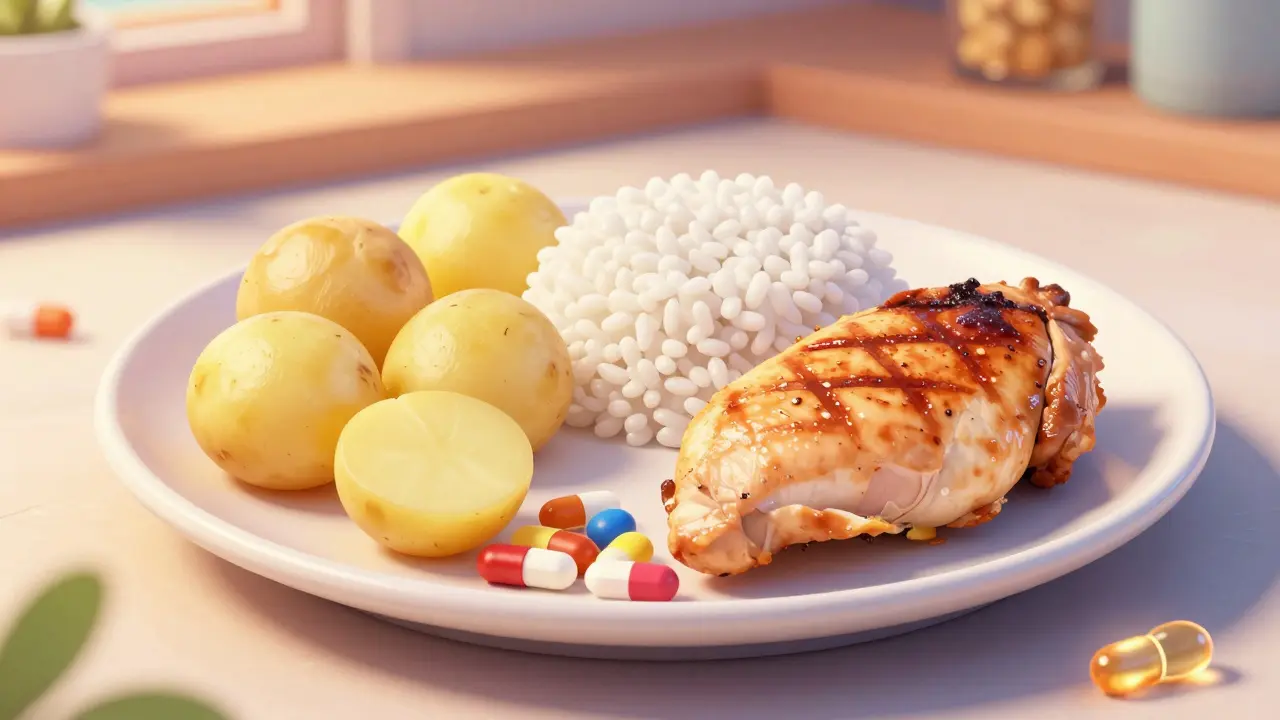
- Incorporate: Clear broths, boiled potatoes, rice, and skinless poultry once tolerance returns.
Drinking enough water is non-negotiable. Experts note that early aggressive fluid resuscitation within the first 24 hours can reduce pancreatic necrosis by 35%. Stay ahead of thirst.
Eating for Life With Chronic Pancreatitis
When the diagnosis settles into chronic territory, the kitchen becomes your medicine cabinet. You cannot fix the scarred tissue, but you can manage the digestion process. Since your pancreas isn't producing enough enzymes, you need to supply them externally. This is where Pancreatic Enzyme Replacement Therapy comes in. These capsules contain lipase, protease, and amylase to help break down what you eat.
Dosing is precise. Guidelines suggest starting with 40,000 to 90,000 units of lipase per main meal and smaller doses for snacks. It sounds complicated, but consistency matters more than perfection. Take the pills right at the start of eating. Don't wait until half-way through the meal. Monitor your success by tracking your weight and stool habits. If you are still losing weight or seeing fatty stools, you might need to adjust the dose upward.
Fat management is tricky. Completely cutting out fat leads to nutrient deficiencies and poor energy absorption. Instead of total elimination, aim for moderate restriction. For chronic maintenance, 40 to 50 grams of fat per day is often sustainable. To bypass the need for pancreatic enzymes, swap standard oils for Medium-Chain Triglycerides. MCT oil doesn't require the same enzymatic breakdown, making it easier for your gut to absorb the calories.

Vitamin Deficiencies to Watch
Because your body struggles to digest food, it misses out on essential vitamins. You aren't just missing calories; you are missing the building blocks of health. Studies indicate that 85% of chronic patients have low vitamin D levels, which impacts bone health. Vitamin B12 is also frequently low (around 40% of cases), affecting nerve function and energy. Vitamin A deficiency occurs in nearly a quarter of patients.
You cannot fix this with diet alone. Regular supplementation is necessary. Blood work every six months is wise to catch drops before symptoms appear. Without intervention, osteoporosis becomes a real threat down the line.
Managing Pain and Quality of Life
Pain is the shadow that follows chronic pancreatitis. It limits daily activities for most patients. About 65% report needing opioid medications, which brings its own set of risks. Dependence issues arise in roughly 30% of patients within five years of diagnosis. The strategy here involves breaking the cycle of pain-induced stress, which worsens digestion.
Patient communities highlight the frustration of finding knowledgeable doctors. Wait times for specialists can stretch to four months. Multidisciplinary centers offer the best path forward. A team involving gastroenterologists, pain specialists, and dietitians works better than a solo practitioner trying to juggle everything.
Smoking cessation remains the single most impactful intervention you can control. Continuing to smoke accelerates disease progression and increases cancer risk. Quitting slows the decline significantly, potentially buying you years of better function. It is hard, but the statistical benefit is undeniable.
Can acute pancreatitis turn into chronic pancreatitis?
Repeated episodes of acute pancreatitis can lead to chronic damage. However, a single mild case often resolves without lasting harm. If you have had multiple attacks or severe necrosis, the risk of transitioning to chronic scarring increases significantly.
What is the best diet for someone recovering from a flare?
Start with a clear liquid diet and progress to low-fat, bland solids. Prioritize complex carbohydrates and lean proteins. Introduce fats slowly only when stool output stabilizes, aiming for 20-30g per day initially.
Do I need to take pancreatic enzymes forever?
If you have chronic exocrine insufficiency, yes. These enzymes replace the function your damaged pancreas lost. Stopping them often leads to malnutrition and severe digestive distress.
Is there a link between pancreatitis and cancer?
Yes, chronic inflammation increases risk. Patients have a 15 to 20-fold increased risk of pancreatic adenocarcinoma. Annual MRI surveillance is recommended for high-risk individuals.
Why does alcohol trigger these issues?
Alcohol creates toxic metabolites that activate digestive enzymes prematurely inside the pancreas rather than the gut. This causes the organ to literally begin digesting itself.
It is absolutely crucial that we prioritize hydration during those initial storm phases of inflammation!!! You simply cannot underestimate how water impacts your organ function during a flare-up!! Remember that enteral nutrition is often better than IV feeds because gut lining integrity matters so much!! We need to avoid alcohol completely until the pancreas is fully healed!! Fats can be reintroduced slowly but you have to watch the grams carefully!! MCT oil is a lifesaver for energy without taxing the enzymes too hard!! Vitamin D levels drop precipitously in chronic cases so supplementation is non-negotiable!! Your stool consistency tells you everything about fat absorption efficiency!! If stools are floating then enzyme dosing needs immediate adjustment!! Don't wait until half way through a meal to take the pills!! Protein intake prevents muscle wasting while you heal from the trauma!! Pain management requires breaking the stress cycle that worsens digestion further!! Specialists are harder to find than general practitioners unfortunately!! Community support helps when waiting times stretch to four months!! Multidisciplinary centers provide far better outcomes than solo practitioners trying alone!! Hydration remains critical for survival during acute events!!! 💗🍉🍉🕙😺🏤💕
Dietary modification remains the cornerstone of effective long term management strategies for exocrine insufficiency conditions
Honestly people really need to stop drinking before things get this bad. 🍵🔣 Do you even track your intake daily or just ignore the warning signs until pain strikes. Most patients deny their own lifestyle choices cause this damage constantly. 😴 You should probably quit smoking immediately because cancer risk doubles fast.
staying positive helps you fight through the pain barriers better than any pill ever could! Keep pushing forward every single day! You can learn to manage the symptoms effectively with practice!
While your moralizing is noted the clinical reality involves enzyme kinetics rather than simple lifestyle policing. Steatorrhea manifests precisely because lipase activity falls below metabolic demand thresholds. Ignoring the biochemical cascade leads to inevitable malnutrition regardless of moral posturing. Nutritional deficiencies become silent killers when calcium and vitamin D plummet unnoticed.
Its so sad wat happens when bodies rebel like this!!! One day ypu drink and next ur in agony. I kno someone who lost weight super fast and got scared. Doctors dont always listen to patients enough about pain levels. 🙂
Totally agree with the hydration tips above :) Focus on listening to what your body signals you instead of forcing food. Recovery is a marathon not a sprint :D
hopelessness feels crushing when chronic pain takes over your life yet resilience grows stronger with every passing month fighting back against the odds
keep your spirit alive amidst the struggle because healing is possible even slowly
Exocrine pancreatic insufficiency necessitates rigorous adherence to lipase dosing protocols relative to caloric intake composition. Medium chain triglycerides bypass the micellar solubilization step typically required for long chain fatty acid hydrolysis. Monitoring fecal elastase levels provides a reliable biomarker for assessing residual functional capacity within the glandular tissue. Early enteral intervention mitigates bacterial translocation risks significantly compared to parenteral support systems.