
When your breathing stops repeatedly while you sleep, your body doesn’t just feel tired the next day-it’s under constant stress. Sleep apnea isn’t just snoring. It’s a dangerous disruption in your breathing that can lead to low oxygen levels, high blood pressure, and even respiratory failure if left untreated. For millions of people, the solution isn’t a pill or surgery. It’s a small machine that blows air into your nose at night. That machine is CPAP. But how does it actually work? And when does oxygen therapy come into play?
What Happens When You Have Sleep Apnea?
Obstructive sleep apnea (OSA) happens when the muscles in your throat relax too much during sleep. Your airway collapses like a straw being squeezed shut. Each time this happens, you stop breathing for 10 seconds or longer. Your brain jolts you awake just enough to restart breathing-but not enough for real rest. This cycle can repeat hundreds of times a night. You don’t remember it. But your body does.Every time you stop breathing, your blood oxygen drops. Your heart rate spikes. Your blood pressure climbs. Over time, this wears down your cardiovascular system. Studies show that untreated OSA increases the risk of heart attack, stroke, and irregular heart rhythms. In severe cases, it can lead to chronic respiratory failure-when your lungs can’t keep up with your body’s oxygen needs, even when you’re awake.
CPAP: The Gold Standard for Obstructive Sleep Apnea
In 1981, a doctor in Australia invented something simple but revolutionary: a device that gently blows pressurized air through a mask to keep your airway open while you sleep. That device became CPAP-Continuous Positive Airway Pressure. Today, it’s still the most effective treatment for moderate to severe OSA.CPAP doesn’t cure sleep apnea. It manages it. The air pressure acts like a splint, holding your throat open so you can breathe normally. For people who use it correctly, CPAP reduces apnea events by 90%. That means fewer oxygen drops, less strain on your heart, and better sleep.
But here’s the catch: CPAP only works if you use it. Studies show that between 17% and 85% of people stick with it long-term. Why do so many quit? Masks that leak. Dry noses. Claustrophobia. Noise. Travel hassles. One survey of 12,500 users found that 42% stopped because of mask discomfort. Another 28% were later found to have central sleep apnea-a different type that CPAP doesn’t fix well.
When Is Oxygen Therapy Used?
Oxygen therapy sounds like the obvious fix for low oxygen. But it’s not the right first step for most people with obstructive sleep apnea. Why? Because oxygen doesn’t stop your airway from collapsing. It just gives you more oxygen while you’re still struggling to breathe.Oxygen therapy is usually reserved for people with both OSA and another lung condition-like COPD or pulmonary fibrosis. In these cases, the problem isn’t just blocked airways. The lungs themselves can’t move oxygen into the blood efficiently. Here, CPAP might still be used to keep the airway open, while supplemental oxygen is added to raise blood levels.
For pure obstructive sleep apnea, adding oxygen to CPAP doesn’t improve outcomes. The real goal is to fix the airway, not mask the symptoms. The American Thoracic Society and American Academy of Sleep Medicine both agree: CPAP alone is the standard. Oxygen therapy is a backup, not a replacement.
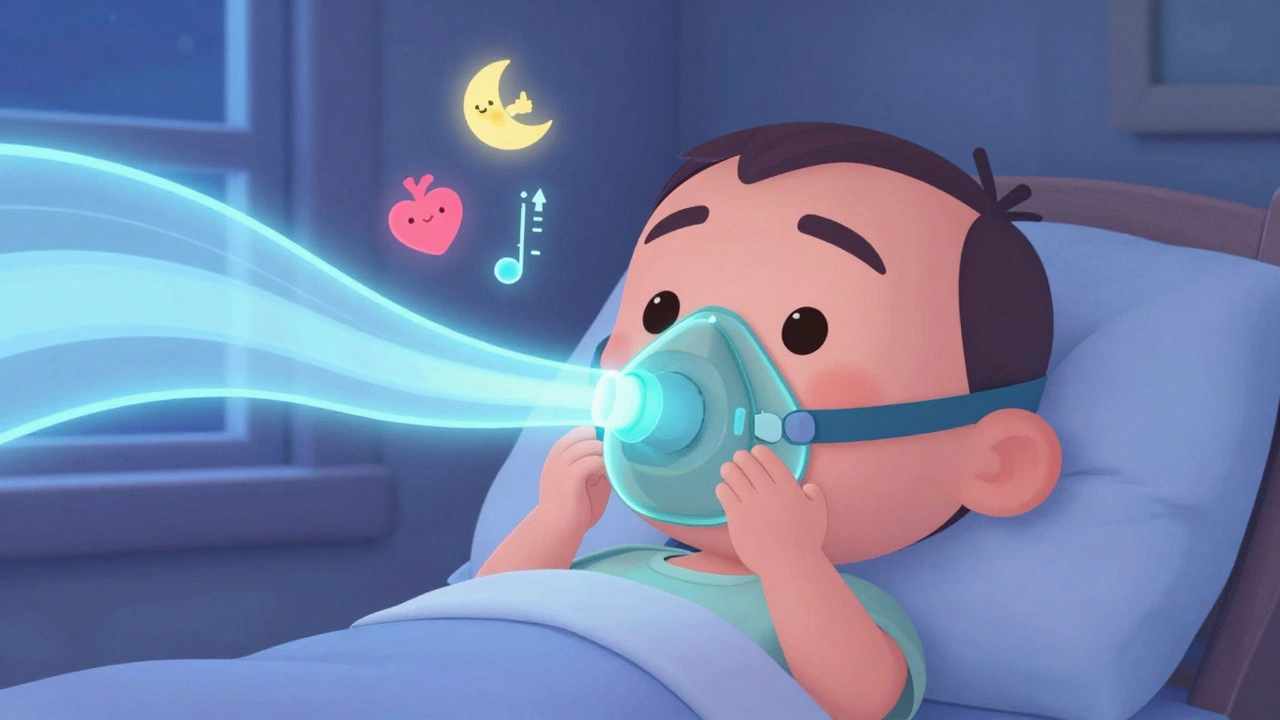
CPAP vs. Other Treatments
You might have heard about mouthpieces, surgery, or even implants. Let’s cut through the noise.- Mandibular advancement devices (MADs): These are custom mouthguards that pull your jaw forward to open your airway. They work better for mild OSA and have higher adherence rates than CPAP-but they’re less effective for severe cases. CPAP reduces apnea events to under 5 per hour in 90% of users. MADs do it in about half.
- Surgery: Procedures like uvulopalatopharyngoplasty (UPPP) remove excess tissue. Success rates vary widely. Many patients still need CPAP afterward.
- Hypoglossal nerve stimulators: These are implants that stimulate the tongue muscle to keep the airway open. Approved in 2023, they show 79% adherence at one year-much higher than CPAP’s average. But they’re expensive, require surgery, and aren’t for everyone.
For most people with moderate to severe OSA, CPAP remains the safest, most proven option. The key isn’t finding the perfect device-it’s finding the one you’ll actually use.
How to Make CPAP Work for You
Using CPAP isn’t just about plugging in a machine. It’s about learning how to use it right.First, mask fit matters more than you think. Nasal pillows (small prongs that sit at the nostrils) are preferred by 73% of users because they’re less bulky. Full-face masks are better if you breathe through your mouth. A chin strap can help if you keep your mouth open during sleep.
Second, humidity helps. Heated humidifiers reduce dryness and congestion. In user reviews, 73% of people who added humidification said it made a big difference.
Third, start slow. Don’t try to wear CPAP all night on day one. Begin with 2 hours while watching TV. Add 30 minutes each night. Most people who succeed with CPAP report gradual acclimation as their key to sticking with it.
Fourth, get support. People who had an in-person setup with a sleep technician had 32% higher adherence after six months than those who only got instructions online. Follow-ups at 72 hours and 30 days make a measurable difference.
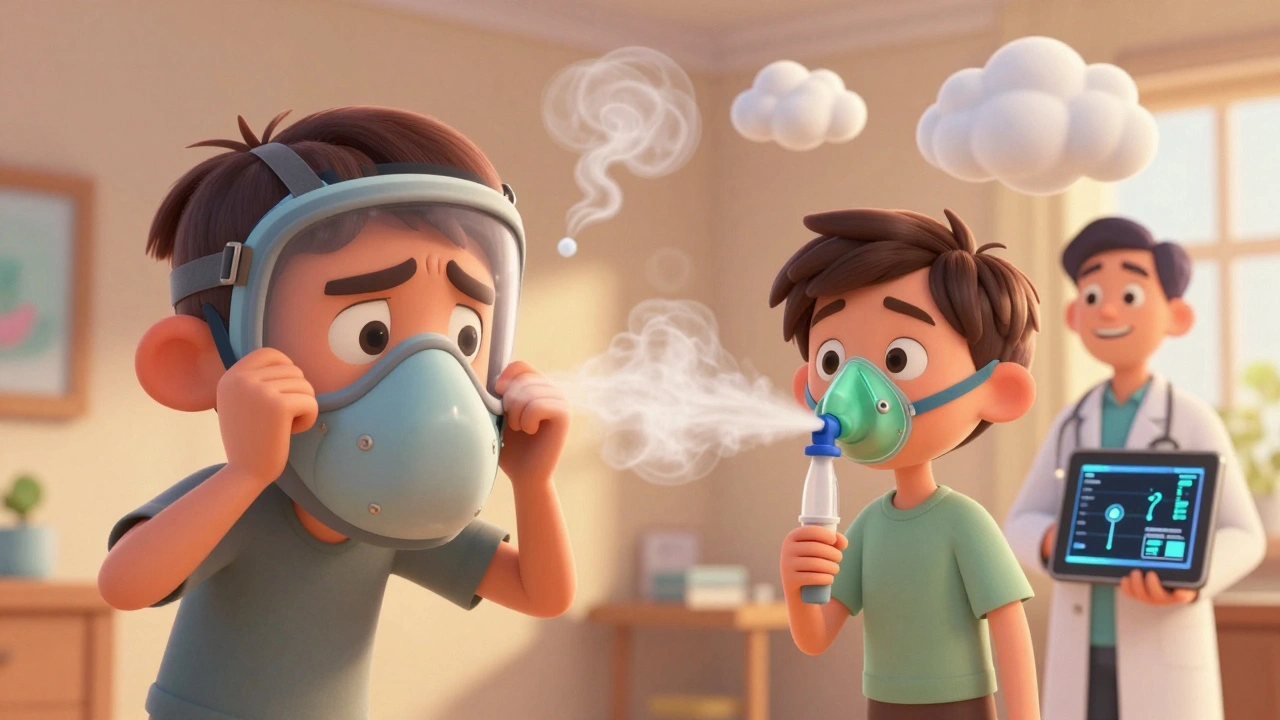
What About Respiratory Failure?
Respiratory failure happens when your body can’t get enough oxygen or can’t get rid of carbon dioxide. In people with severe OSA and heart or lung disease, this can happen during sleep-or even during the day.When respiratory failure is acute, doctors often turn to non-invasive ventilation (NIV), which is like an advanced version of CPAP. NIV gives you different pressures when you inhale and exhale. It’s used in hospitals for COPD flare-ups and can reduce the need for intubation by 20-30%.
But NIV isn’t for home use in most OSA cases. CPAP is still the tool for sleep. If you’re being treated for respiratory failure at night, your doctor will likely start with CPAP, then add oxygen or switch to BiPAP if needed.
New Tech Is Changing the Game
Today’s CPAP machines aren’t what they were 10 years ago. Nearly all new models have:- Auto-adjusting pressure (APAP) that responds to your breathing
- Remote monitoring so your sleep doctor can see your usage
- Smart features like leak detection and pressure ramping
ResMed’s AirView platform, for example, has cut follow-up visits by 27%. Insurance companies now require proof of use-4+ hours a night, 70% of nights-to keep covering your device. That’s because studies show that people who meet this threshold cut their risk of heart problems by nearly half.
And now, the FDA has approved alternatives. The Inspire implant, which stimulates the nerve controlling your tongue, has shown better long-term use than CPAP in trials. But it’s not for everyone. It requires surgery, and it’s only approved for people who can’t tolerate CPAP.
What’s Next?
The future of sleep apnea treatment isn’t about one device. It’s about matching the right tool to the right person. Your doctor should look at your apnea severity, your health history, your lifestyle, and-most importantly-your willingness to stick with treatment.CPAP still saves lives. It lowers blood pressure. It improves memory. It reduces daytime fatigue. But it only works if you use it. If you’ve tried and quit, don’t give up. Talk to your sleep specialist. Try a different mask. Add humidification. Use a travel CPAP. Explore alternatives. The goal isn’t perfection-it’s progress.
And if you’re using oxygen therapy? Make sure it’s not replacing CPAP-it’s supporting it. The airway must stay open first. Then, the oxygen can do its job.
Can oxygen therapy treat sleep apnea on its own?
No. Oxygen therapy can raise blood oxygen levels, but it doesn’t stop your airway from collapsing during sleep. For obstructive sleep apnea, CPAP is the only treatment that keeps the airway open. Oxygen may be added to CPAP in people with lung disease, but it should never replace CPAP for OSA.
How long does it take to see results from CPAP?
Many users report feeling more alert within 1-2 weeks. Sleep quality often improves faster than you expect. But full benefits-like lower blood pressure and reduced heart strain-take months. Consistency matters more than perfection. Even 4 hours a night, 5 nights a week, can make a difference.
Why do some people stop using CPAP?
The top reasons are mask discomfort, dry mouth or nose, claustrophobia, and noise. Some people feel the pressure is too strong. Others struggle with travel or find the machine bulky. But most of these issues can be fixed-with a different mask, humidification, pressure ramping, or better setup support. Don’t quit without trying adjustments first.
Is CPAP covered by insurance?
Yes, in the U.S., Medicare and most private insurers cover CPAP devices. Medicare pays about $209.74 per month for rental, covering 80% of the cost after your deductible. But insurers now require proof of use-typically 4+ hours per night on 70% of nights-to continue coverage. This is called adherence monitoring.
Can I use CPAP if I have heart failure?
Yes-CPAP is often recommended for heart failure patients with sleep apnea. Studies show it can improve heart function by 4-6% in left ventricular ejection fraction. But if you have central sleep apnea linked to heart failure, CPAP may not be enough. In those cases, adaptive servo-ventilation (ASV) was once used, but it’s now avoided in severe heart failure due to increased risk of death. Always consult your cardiologist before starting any sleep device.
Do I need to replace my CPAP machine every few years?
Most insurers will replace your CPAP machine every 5 years. But you should replace the mask, tubing, and filter much more often-every 3 to 6 months. Worn-out parts leak air and reduce effectiveness. Also, newer machines have better features like auto-adjusting pressure and quieter motors. If your device is over 5 years old, talk to your provider about upgrading.
Okay but what if CPAP is just a Big Pharma scam to keep us hooked on machines? I read on a forum that the sleep industry makes billions off people who can't sleep because they're too stressed from using the mask. They don't want you to cure it-they want you to rent it forever. I tried it for three nights and woke up gasping like a fish. Coincidence? I think not.
It's fascinating, really-how we've come to treat a physiological phenomenon as a mechanical problem, rather than a symptom of deeper disconnection: from rhythm, from stillness, from the natural world. CPAP fixes the symptom, yes-but what if the root is our 24/7 hyper-stimulation? Our screens, our caffeine, our fear of silence? The machine breathes for us... but who's breathing for our souls?
Western medicine is so lazy! In India, we’ve been treating sleep disorders for centuries with Ayurveda-herbs like Ashwagandha, pranayama breathing, and sleeping on the left side. Why are we outsourcing our biology to plastic masks and air pumps? This CPAP obsession is just colonial science pretending to be innovation. You think your machine is helping? It’s just a Band-Aid on a wound caused by processed food and screen addiction.
Thanks for this thorough breakdown. I’ve been using CPAP for six years now, and I can say without exaggeration-it changed my life. I used to fall asleep at my desk. Now I hike on weekends. The key is patience and finding the right mask. I went through five before I landed on nasal pillows. Also, humidifier? Non-negotiable. If you’re struggling, reach out to your sleep clinic-they’re there to help, not judge.
cpap is just a fancy air pump frfr. why are we all acting like its magic? i tried it and felt like i was being suffocated by a plastic ghost. also oxygen therapy? sounds like something from a sci fi movie where people get hooked up to tubes in the year 2087. wake up people.
Hey, if you're reading this and you're thinking about quitting CPAP-please don't. I was right there with you. Mask felt like a space helmet, the noise drove me crazy, I hated it. But I kept trying little things: different straps, a chin strap, a new humidifier. After two months, I woke up feeling like a human again. You're not broken. You just haven't found your fit yet. Keep going. You've got this.
What if the real villain isn’t sleep apnea-but the way we’ve weaponized sleep against ourselves? We starve it of darkness, drown it in blue light, and then slap a machine on our faces like it’s a bandage for a bullet wound. CPAP is brilliant engineering, yes-but it’s also a monument to our collective refusal to slow down. I wonder: if we slept like our ancestors-under stars, without screens, in silence-would we even need this?
For anyone new to CPAP: don’t panic if it feels weird at first. It’s like learning to ride a bike-you’re not failing, you’re just adjusting. Start with 20 minutes a night. Watch a show. Get used to the sound. Then add 10 more each night. I had a tech come to my house for setup-best $0 I ever spent. Also, try the ResMed AirMini if you travel. Tiny, quiet, life-changing. You’re not alone in this.
CPAP is just capitalism breathing for you. Also, oxygen therapy? Cute. But what if the real problem is that we’re all just… too tired to be alive?
OMG I HATE CPAP SO MUCH. I threw mine out last week. I don't care if I die. I'd rather sleep on my stomach and snore like a chainsaw than wear a plastic mask that feels like a haunted vacuum. My dog sleeps better than I do. At least he doesn't have a machine judging him.
Rebecca, I get your frustration-but CPAP isn’t the enemy. The system is. The lack of support, the one-size-fits-all masks, the insurance hoops. But the tech itself? It’s saved thousands. I’ve seen patients go from gasping to hiking mountains. If you’re struggling, find a sleep coach, not a conspiracy. You deserve rest. Don’t let bad experiences make you give up on the solution.
Everyone’s so obsessed with machines. I just sleep on my side now. No mask. No noise. No drama. And guess what? My snoring stopped. My wife stopped sleeping in the guest room. Maybe the real solution is… not using a machine at all? Maybe we’re overcomplicating a simple problem.
My dad used CPAP for 12 years. He said it was the best thing he ever did. He lived to 89. Don’t give up. Find your fit. Your future self will thank you.