Personalized Heartburn Trigger Calculator
How Spicy Foods and Medications Affect Your Heartburn
This calculator uses medical data from the article to estimate your personal heartburn risk based on your habits.
Your Personal Heartburn Risk
Your Personalized Recommendations
Heartburn isn’t just an annoying burn after a spicy meal-it’s often a sign that something deeper is going on. If you’re taking medications for high blood pressure, arthritis, or even just popping antacids after every taco night, you might be setting yourself up for a cycle of discomfort that’s harder to break than you think.
Why Spicy Food Makes Heartburn Worse
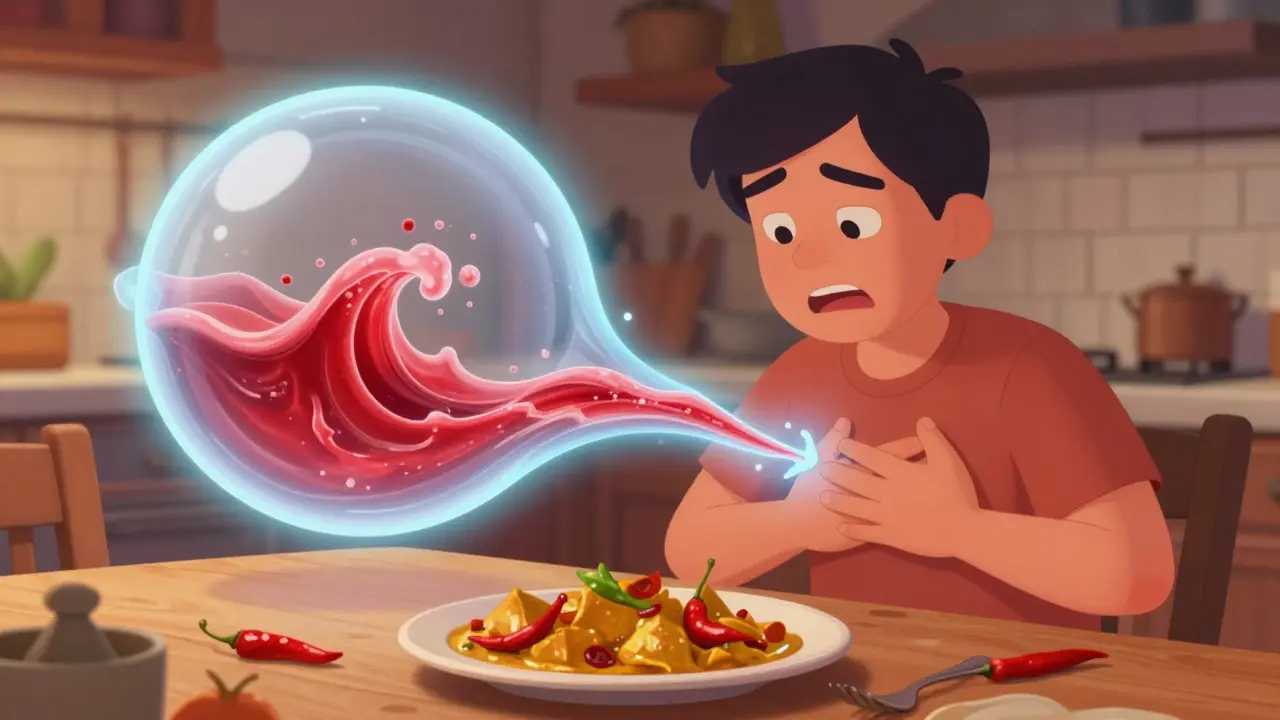
It’s not just about heat. The real culprit in spicy foods is capsaicin, the compound that gives chili peppers their punch. Capsaicin doesn’t burn your stomach-it relaxes the muscle that’s supposed to keep stomach acid where it belongs: the lower esophageal sphincter (LES). When this muscle loosens, acid sloshes back up into your esophagus, causing that burning feeling that climbs from your chest to your throat.
Studies show this relaxation can drop LES pressure by 30-40% in sensitive people within 30 minutes of eating spicy food. That’s fast. And it’s not just hot sauce-curries, salsas, even spicy wings can trigger it. But here’s the twist: not everyone reacts the same way. Some people can eat ghost peppers with no issue, while others get heartburn from a dash of paprika. This isn’t random-it’s personal.
Medications That Make Heartburn Worse
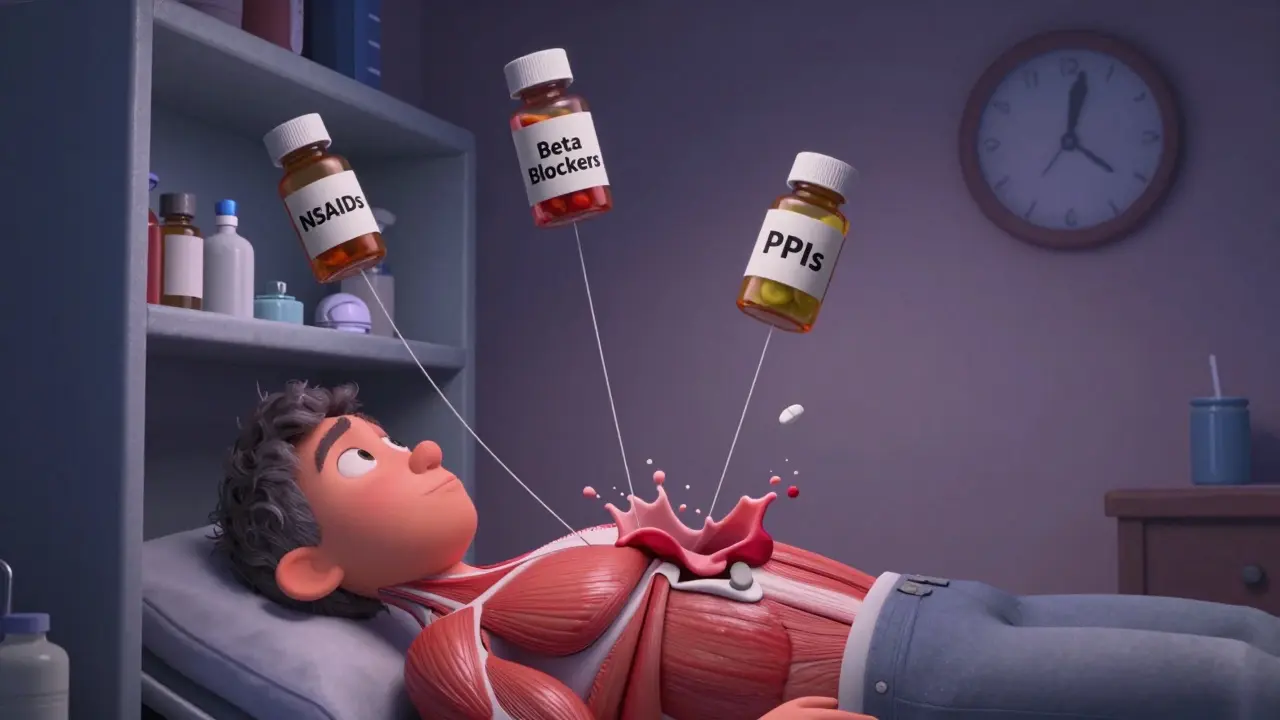
Many common meds aren’t just treating one problem-they’re making another one worse. You might not realize your blood pressure pill, arthritis painkiller, or even motion sickness tablet is contributing to your reflux.
- NSAIDs like ibuprofen and aspirin can irritate the lining of your esophagus and stomach, leading to erosive damage in 15-30% of regular users.
- Beta blockers, used for heart conditions, increase GERD risk by 22% according to the Framingham Heart Study.
- Anticholinergics (for allergies, overactive bladder, or motion sickness) relax the LES in nearly 70% of users.
- Nitrates (for chest pain) and theophylline (for asthma) can drop LES pressure by up to 45%.
- Bisphosphonates (for osteoporosis) are notorious for causing esophagitis if not taken with enough water and upright posture.
And if you’re on a proton pump inhibitor (PPI) like pantoprazole to control acid, here’s a hidden problem: spicy foods, fatty meals, coffee, and chocolate can cut its absorption by 18-23%. That means your pill isn’t working as well as it should.
Antacids Aren’t the Answer
You reach for Tums or Rolaids after a spicy dinner. It helps-for a while. But relying on antacids every time you eat something hot is like putting a bandage on a leaky pipe. They work fast (2-5 minutes), but they last less than an hour. And if you’re using them more than twice a week, you’re risking side effects: electrolyte imbalances, kidney strain, and even reduced absorption of antibiotics like tetracycline or ciprofloxacin.
Even worse, frequent antacid use can mask serious conditions. A hiatal hernia, Barrett’s esophagus, or even early signs of esophageal cancer might be going unnoticed because your symptoms keep disappearing. That’s why doctors warn against using antacids as a long-term fix.
How to Actually Fix This
The best solution isn’t more pills-it’s smarter timing and smarter habits. Here’s what actually works:
- Identify your triggers-not everyone’s triggers are the same. Try cutting out spicy foods, caffeine, chocolate, and alcohol for 3-7 days. Then add them back one at a time. Keep a simple log: what you ate, when, and how bad the heartburn was. After a couple of weeks, patterns emerge.
- Time your meds right-PPIs like pantoprazole should be taken 30-60 minutes before your first meal. Antacids work best 1 hour after eating or at bedtime. Never take antacids within 2 hours of other medications. If you’re on antibiotics, space them out by at least 4 hours.
- Don’t lie down after eating-gravity is your friend. Wait at least 3 hours after a meal before lying down or going to bed. This alone cuts nighttime reflux by 60%.
- Elevate your head-put 6-8 inches of blocks under the head of your bed. It’s cheap, simple, and reduces symptoms by 45%.
- Space your meals-eating every 3 hours gives your stomach time to empty, reducing pressure that pushes acid upward.
The New Science: You Don’t Have to Give Up Spice Forever
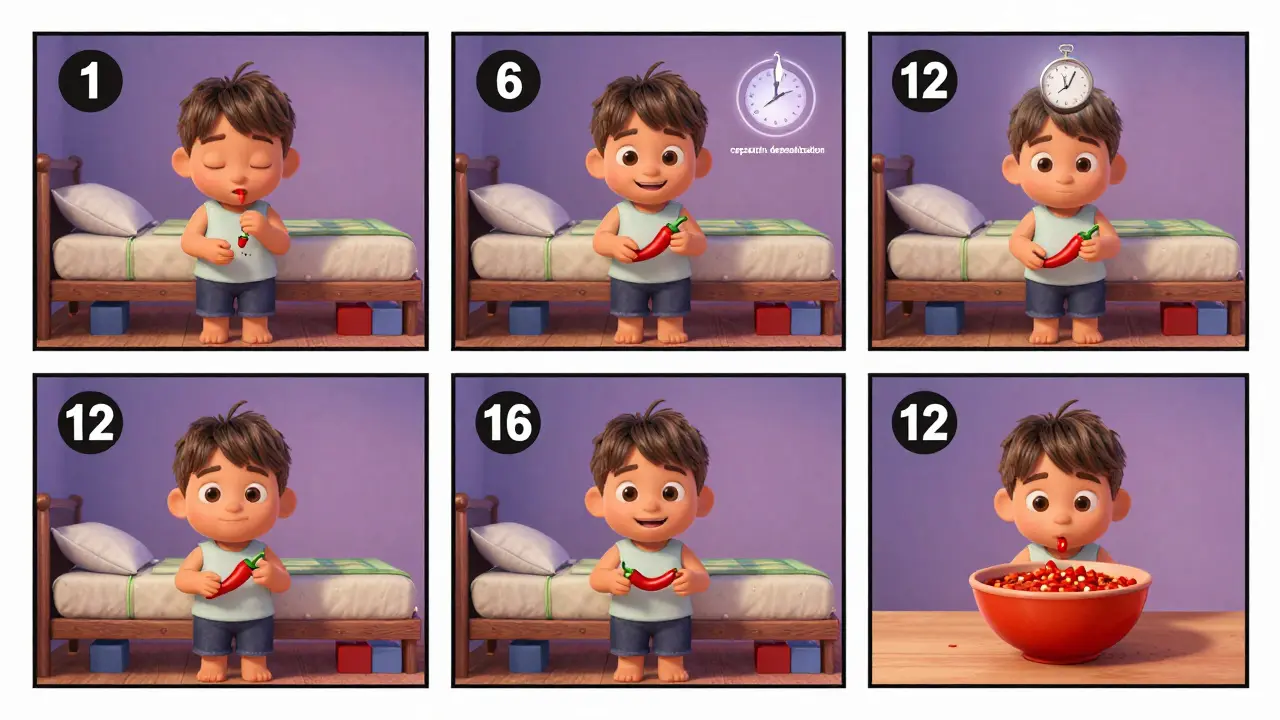
Forget the old advice that says “never eat spicy food if you have GERD.” A 2023 NIH review found no strong evidence to ban spicy foods for everyone. In fact, research from Johns Hopkins showed that 65% of participants who slowly reintroduced capsaicin over 12 weeks built up tolerance without worsening symptoms. This is called “capsaicin desensitization”-your body can adapt.
So if you love chili, you don’t have to quit. Start with small amounts. Use milder peppers. Pair spicy meals with a PPI taken correctly and avoid lying down afterward. Use antacids as backup, not crutches.
What’s Changing in GERD Treatment
The market for heartburn meds is huge-$12.5 billion in the U.S. alone in 2022. But things are shifting. Long-term PPI use is being questioned due to risks like kidney damage, bone loss, and possible heart issues. Meanwhile, the FDA approved a new drug in 2023-Vonoprazan (Voquezna)-that works better than traditional PPIs and isn’t affected by genetic differences in how people metabolize drugs.
Hospitals are also changing. 68% now include dietitians in GERD care. Patients who get personalized plans-based on food logs, medication timing, and lifestyle changes-see 33% better outcomes and 27% lower medication costs than those who just get a prescription.
Real Talk: What Works for Real People
On Reddit’s r/GERD, users share stories that match the science. One person eliminated spicy food for three weeks, kept taking pantoprazole, and got complete relief. When they slowly added back mild spices with antacids on standby, they stayed symptom-free. Another user realized their heartburn only flared after eating pizza at night-and switching to morning meals fixed it.
The pattern? It’s not about perfection. It’s about awareness. You don’t need to be a food scientist. You just need to pay attention.
When to See a Doctor
See a gastroenterologist if:
- Heartburn happens more than twice a week
- You have trouble swallowing or feel food sticking
- You’re losing weight without trying
- Antacids stop working
- You’ve been on PPIs for more than 6 months without a doctor’s review
Chronic reflux can lead to Barrett’s esophagus-a condition that increases cancer risk. Early detection saves lives.
Can spicy food cause GERD, or just make it worse?
Spicy food doesn’t cause GERD-it makes existing GERD worse. GERD is usually caused by a weak lower esophageal sphincter, hiatal hernia, or obesity. But capsaicin in spicy foods relaxes that sphincter further, letting acid rise. So if you already have GERD, spicy food is a major trigger. If you don’t have GERD, spicy food alone won’t give it to you.
Do antacids interfere with other medications?
Yes. Aluminum- and calcium-based antacids can block absorption of antibiotics like tetracycline (by 50%) and fluoroquinolones like ciprofloxacin (by 30-90%). They can also reduce the effectiveness of thyroid meds, iron supplements, and some antifungals. Always take antacids at least 4 hours before or after other medications. If you’re unsure, check with your pharmacist.
Is it safe to take PPIs long-term?
Long-term PPI use (over a year) is linked to higher risks of kidney disease, bone fractures, low magnesium, and vitamin B12 deficiency. The FDA also warns of possible increased heart attack risk, though more research is needed. Never stop PPIs suddenly-this can cause rebound acid hypersecretion. Always work with your doctor to taper off if possible, and explore lifestyle changes to reduce reliance.
Can I still eat spicy food if I take pantoprazole?
Yes-but not without caution. Spicy foods can reduce pantoprazole’s absorption by 18-23%, making it less effective. Take your pill 30-60 minutes before your first meal of the day, avoid spicy meals right after, and don’t lie down for 3 hours after eating. If you still get symptoms, try milder spices and keep a food log. Some people can tolerate small amounts; others can’t. Only you can find your threshold.
What’s the best way to track my heartburn triggers?
Keep a simple 2-week food and symptom diary. Write down everything you eat and drink, the time, and your heartburn level (0-10). Note if you took any meds, when, and whether you lay down afterward. After 14 days, look for patterns. Did heartburn spike after curry? After coffee at 3 p.m.? After taking ibuprofen? This log is more accurate than any app and gives your doctor real data to work with.
Why do some people tolerate spicy food and others don’t?
It comes down to genetics, gut health, and past exposure. Some people have more sensitive LES muscles or slower gastric emptying. Others have a history of chronic acid exposure that’s made their esophagus more reactive. Research also shows capsaicin sensitivity varies widely-from 10 mg to 100 mg of equivalent chili per meal before symptoms appear. Plus, gut bacteria play a role. People with healthier microbiomes may handle irritants better. That’s why personalized approaches are replacing one-size-fits-all advice.
Final Thought: Control, Don’t Avoid
You don’t need to live a bland life to feel better. The goal isn’t to eliminate spice or stop all meds-it’s to understand how they interact with your body. With smart timing, mindful eating, and a little patience, you can enjoy your favorite foods without the burn. And if you’re still struggling, a dietitian who specializes in GI health can help you build a plan that actually works-no guesswork needed.
Also, elevating my bed? Best $10 I ever spent. Just used some old books under the legs. No more midnight burning.
Also, never take antacids with your antibiotics. Learned that the hard way.
Newsflash: your body isn’t a vending machine. You don’t pop a pantoprazole and magically become immune to physics. Gravity still exists. Your LES still relaxes. Your stomach still makes acid.
And yes, I’ve read the NIH review. And no, ‘desensitization’ doesn’t mean you can eat a whole ghost pepper burrito at 2 a.m. and expect to sleep.
Real solution? Time your meds. Don’t lie down. Stop treating your esophagus like a trash can.
And for god’s sake, stop using antacids like they’re popcorn. You’re not snacking on relief-you’re poisoning your gut microbiome.
It’s not just about avoiding spice-it’s about understanding how your nervous system, medication metabolism, and circadian rhythm interact.
The 2023 NIH data on capsaicin desensitization is revolutionary. We’ve been fear-mongering for decades. The body adapts. We just have to give it the right conditions.
And elevating the bed? It’s not a gimmick. It’s biomechanics. Simple. Elegant. Effective.
Switched to eating it at noon. Stopped lying down. Took my pill before breakfast.
Three months later? No meds. No burning. Just me, my tacos, and a bed that’s flat.
You don’t need to give up food. You just need to stop fighting your own body.
And people who say 'take a pill' are worse.
Real solution? Figure out what your body actually tolerates.
Also, Vonoprazan is great. But you're not special. You don't need it.
Stop buying into pharmaceutical marketing.
And stop using emojis. You're not a teenager.
There’s a reason they pushed PPIs for 20 years-profit.
Now they’ve got a new drug that doesn’t rely on CYP2C19 metabolism-so they can sell it to everyone, regardless of genetics.
And suddenly, 'long-term PPI use is dangerous' is in the news? Coincidence?
They don’t want you to fix your gut-they want you to buy their next product.
And the dietitians? They’re not there to help you-they’re there to keep you dependent on their 'personalized plans' so you never leave the system.
Spicy food? It’s not the enemy. The system is.
Don’t be fooled.
Also, I stopped taking ibuprofen for back pain and switched to turmeric + ice. No more reflux spikes.
Biggest win? I stopped using antacids entirely. My stomach actually feels normal now.
Turns out, my body was screaming for me to slow down. I just didn’t know how to listen.
What about the glyphosate in your food? The EMFs from your phone? The fluoride in your water?
They’re all weakening your LES.
And the PPIs? They’re making your gut pH rise-which allows candida to thrive. And candida? It releases toxins that cause inflammation. And inflammation? It causes more reflux.
It’s a cycle.
They want you to think it’s just ‘spicy food.’
It’s not.
It’s the system.
Wake up.
It worked.
Simple.
Why didn’t anyone just say that?
The science is finally catching up.
But here’s the real lesson: healing isn’t about the latest drug. It’s about rhythm. Timing. Respect for your body.
And yes-spicy food can be part of your life. Just not at 11 p.m. with your phone in one hand and your burrito in the other.
As if the average person has the time or patience to track every bite of their 3 a.m. nacho run.
And let’s not pretend that 'capsaicin desensitization' is some kind of miracle. You’re not a ninja. You’re a guy who ate 7 ghost peppers and now thinks he’s invincible.
Meanwhile, the real issue-medication interactions, gut dysbiosis, and circadian disruption-is buried under 12 bullet points and a 'personalized plan' that costs $200/hour.
Stop selling wellness as a hobby. It’s a medical crisis.
Let’s not forget: the entire pharmaceutical industry is built on the idea that you’re broken and need fixing.
So they give you a pill. Then another. Then a third.
And now? We’re told to 'log your meals' like we’re in a 1970s diet cult.
The truth? You don’t need a log. You need to stop eating processed food, stop taking unnecessary drugs, and stop lying down after meals.
None of that requires a PhD.
Just common sense.
Which, apparently, is now a radical concept.