Every year, over 5.8 billion prescription drug packages move through the U.S. supply chain. Most reach patients safely. But not all. Counterfeit drugs - fake pills, diluted formulas, or stolen products repackaged as new - have been a quiet threat for decades. What’s changed isn’t the danger. It’s the system built to stop it.
How the System Works: Serialization and Traceability
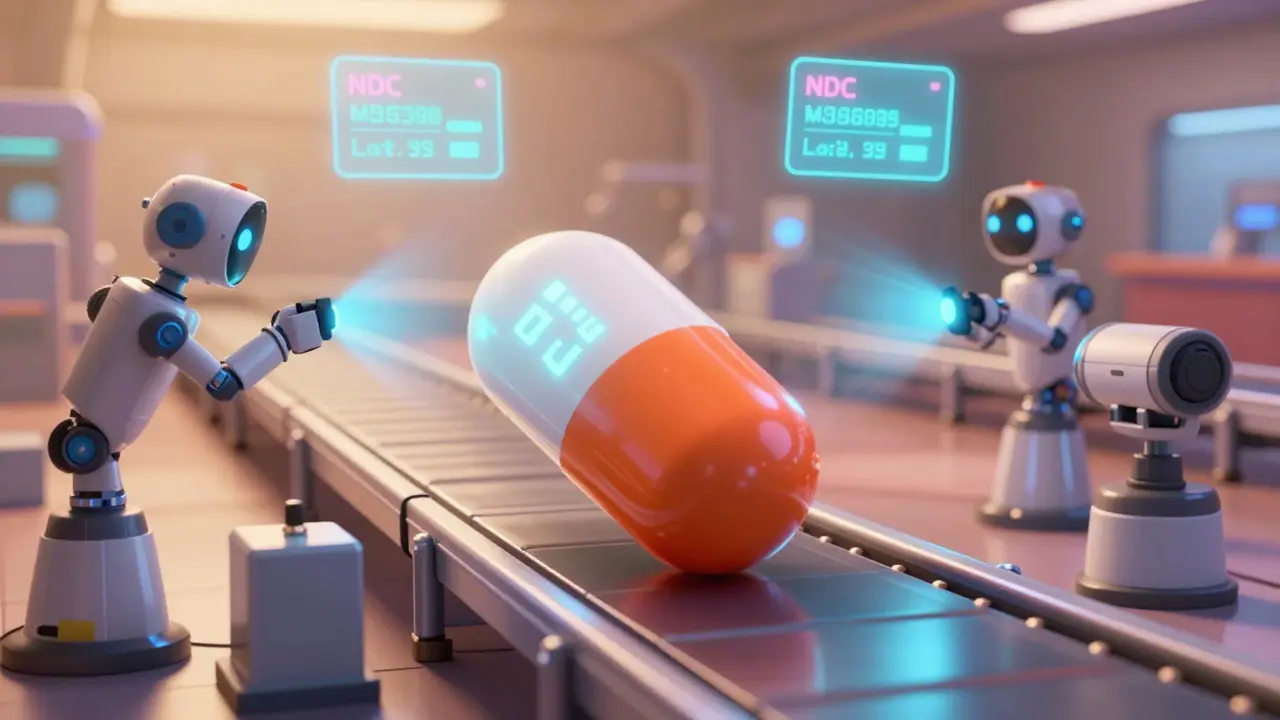
At the heart of modern drug protection is something simple but powerful: a unique code on every package. This isn’t just a barcode. It’s a digital fingerprint. Each prescription bottle, blister pack, or vial now carries a 2D Data Matrix code containing four key pieces of information: the National Drug Code (NDC), a unique serial number, the lot number, and the expiration date. That’s 1.2 million unique identifiers generated every day across the U.S. This system didn’t appear overnight. It was built under the Drug Supply Chain Security Act (DSCSA), signed into law in 2013. The goal? Make every step of the drug’s journey trackable. From the manufacturer’s factory floor to the pharmacy shelf, each handoff must be recorded electronically. When a package moves from a wholesaler to a hospital, the transaction details - who sent it, who received it, when, and what it was - are shared instantly. No more paper logs. No more guesswork. The technology behind this is called EPCIS, a global standard developed by GS1. It’s the language all trading partners now speak. A manufacturer doesn’t just print a code - they upload its details into a secure digital system. Wholesalers scan it when they receive it. Pharmacies scan it again before handing it to a patient. If something looks off - a mismatched serial number, a product that shouldn’t be in the system - the system flags it immediately.Verification: Catching Fakes Before They Reach You
Scanning a code is only half the battle. The real power comes from verification. When a pharmacy scans a package, it doesn’t just record the scan. It checks that serial number against the manufacturer’s official database. If the code is fake, duplicated, or already used, the system rejects it. This isn’t theoretical. In 2022, over 12,000 suspect products were caught and quarantined before reaching patients. This process happens in under a minute. Merck’s global serialization team reported that after upgrading to EPCIS 2.0, their verification time dropped from 15 minutes to just 47 seconds. That speed is critical. The faster a fake is flagged, the fewer people are at risk. But verification isn’t perfect. False positives happen. One pharmacy tech on Reddit noted an 8.3% false alarm rate - meaning some legitimate packages get flagged because of a glitch or misread barcode. That creates extra work. But it’s better than letting a dangerous drug slip through.Who’s in the Chain? Authorized Trading Partners
Not everyone can handle prescription drugs. The DSCSA requires every company in the chain - manufacturers, repackagers, wholesalers, distributors, and dispensers - to be verified as an Authorized Trading Partner (ATP). The FDA runs a central verification service that checks each company’s credentials before allowing them to exchange data. In 2023, this system processed over 50,000 verification requests daily with a 99.8% success rate. But here’s the catch: not everyone follows the rules. An FDA audit in 2022 found only 47% of wholesale distributors were doing required ATP checks. That’s a gap. A single unverified distributor can introduce a counterfeit batch into the system. That’s why pharmacies, especially small ones, are on the front lines. They’re the last checkpoint. A community pharmacy might only handle 500 prescriptions a day, but if they skip verification, they’re the weak link. And they’re the ones most affected by cost. Independent pharmacies report spending $18,500 a year on software and scanners - over 3% of their net profit. For some, it’s a struggle to stay compliant.
How the U.S. Compares to the Rest of the World
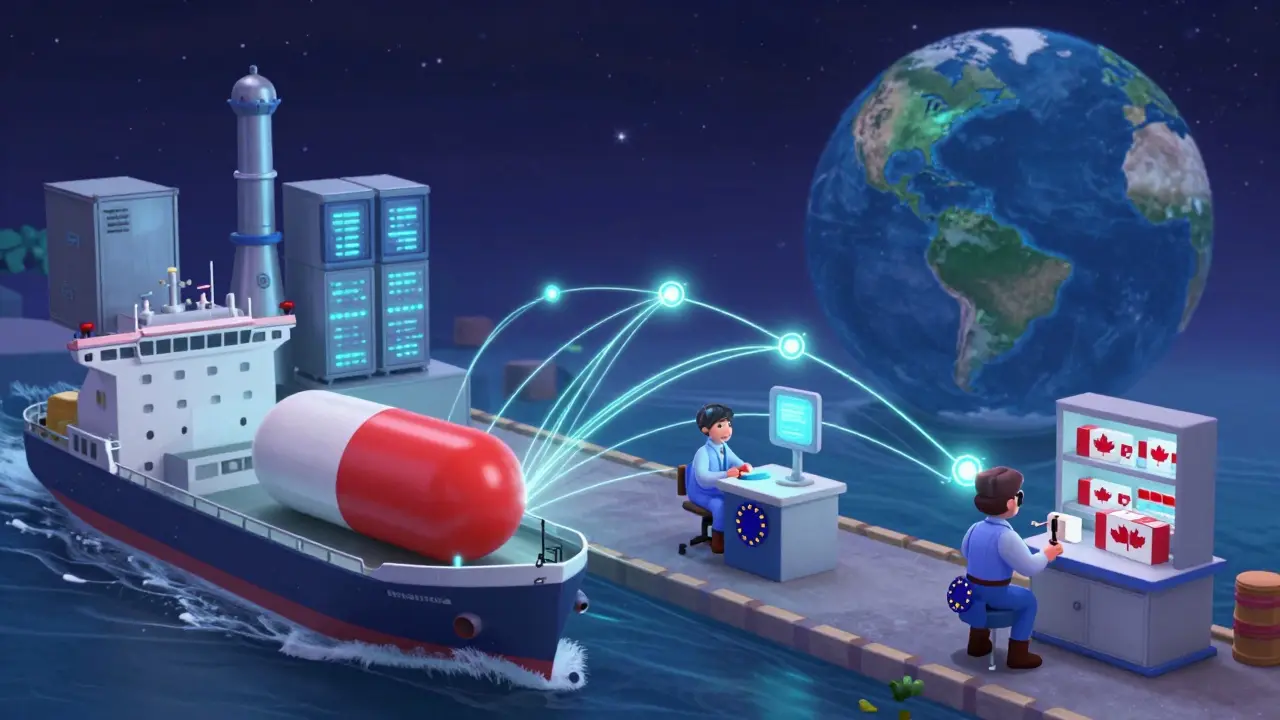
The U.S. isn’t alone in fighting fake drugs. The European Union uses the Falsified Medicines Directive (FMD). It’s similar in goal but different in execution. Instead of decentralized data exchange like the U.S., the EU uses a centralized system. Every prescription drug must have a unique identifier and an anti-tamper seal. When a pharmacist dispenses the drug, they must scan it and “decommission” it - meaning it’s removed from the system entirely. The EU system handles 1.8 million verifications daily across 32 countries. It’s effective. But it’s also rigid. The U.S. system is more flexible. It allows companies to choose their own software as long as it meets EPCIS standards. That’s why the U.S. market for DSCSA compliance tools hit $2.3 billion in 2023, with companies like TraceLink, SAP, and Movilitas leading the pack. The problem? No global standard. A drug made in Germany and sold in the U.S. must meet both FMD and DSCSA rules. That means double labeling, double scanning, double costs. Global pharmaceutical companies pay 22% more to comply with multiple systems than U.S.-only firms, according to PwC.What’s Next? The Road to Full Interoperability
The DSCSA isn’t done. The final deadline is November 2027. By then, every single transaction - from the factory to the pharmacy - must be exchanged electronically, in a fully interoperable format. That means no more paper, no more manual entries, no more fragmented systems. Right now, 14% of transactions still rely on paper documents. That’s a vulnerability. The 2023 Change Healthcare cyberattack showed how fragile the system can be - when one major data hub went down, 35% of U.S. pharmacies couldn’t verify drugs for 72 hours. The FDA is pushing hard. By November 2025, all data must be in EPCIS 2.0 using JSON format - a faster, more reliable standard than the old XML. Companies that haven’t upgraded are already behind. Emerging tech is helping. Some companies are testing blockchain to create tamper-proof logs. Others use AI to spot unusual patterns - like a sudden spike in returns from one distributor, or a batch of drugs showing up in a region where they’re not sold. IoT sensors in cold-chain shipments now monitor temperature and shock, ensuring drugs like insulin or vaccines stay safe during transport.