Antibiotic Mechanisms: How Antibiotics Kill Bacteria and Why It Matters
When you take an antibiotic, a type of drug designed to kill or stop the growth of bacteria. Also known as antibacterial agents, they don’t work on viruses—only on bacterial infections like pneumonia, strep throat, or urinary tract infections. But not all antibiotics work the same way. Some tear open bacterial walls, others jam their protein factories, and some block DNA copying. Knowing how they work helps you understand why your doctor picks one over another—and why taking them wrong can make them useless.
The real problem today isn’t just that antibiotics kill bacteria—it’s that bacteria learn to fight back. This is called bacterial resistance, when bacteria evolve to survive exposure to antibiotics. It’s not magic. It’s evolution, happening faster than we can make new drugs. Some strains of staph, for example, now resist nearly every antibiotic we have. That’s why understanding antibiotic classes, groups of drugs that share similar structures and ways of working. Also known as antibiotic types, they include penicillins, cephalosporins, tetracyclines, and fluoroquinolones matters. If you’ve had a bad reaction to one penicillin, you might react to others in the same class. If one antibiotic failed before, your next one might need to come from a different group.
Antibiotic mechanisms aren’t just textbook stuff—they affect your daily choices. Taking an antibiotic for a cold (a virus) doesn’t just waste your time—it trains bacteria to resist. Skipping doses or stopping early lets the toughest bacteria survive and multiply. Even your gut health can change: antibiotics don’t pick and choose. They wipe out good and bad bacteria alike, which is why diarrhea is a common side effect. That’s why some people end up needing probiotics after a course.
What you’ll find below are real stories and science-backed explanations about how these drugs behave in your body, how they interact with other meds, and why some stop working. You’ll read about when antibiotics are necessary, when they’re not, and how misuse turns simple infections into life-threatening ones. These aren’t abstract ideas—they’re the reason your doctor asks about your last antibiotic use, why labs test for resistance, and why pharmacies track your history. This collection gives you the facts you need to ask better questions, avoid unnecessary risks, and use antibiotics the way they were meant to be used: carefully, correctly, and only when they’ll actually help.
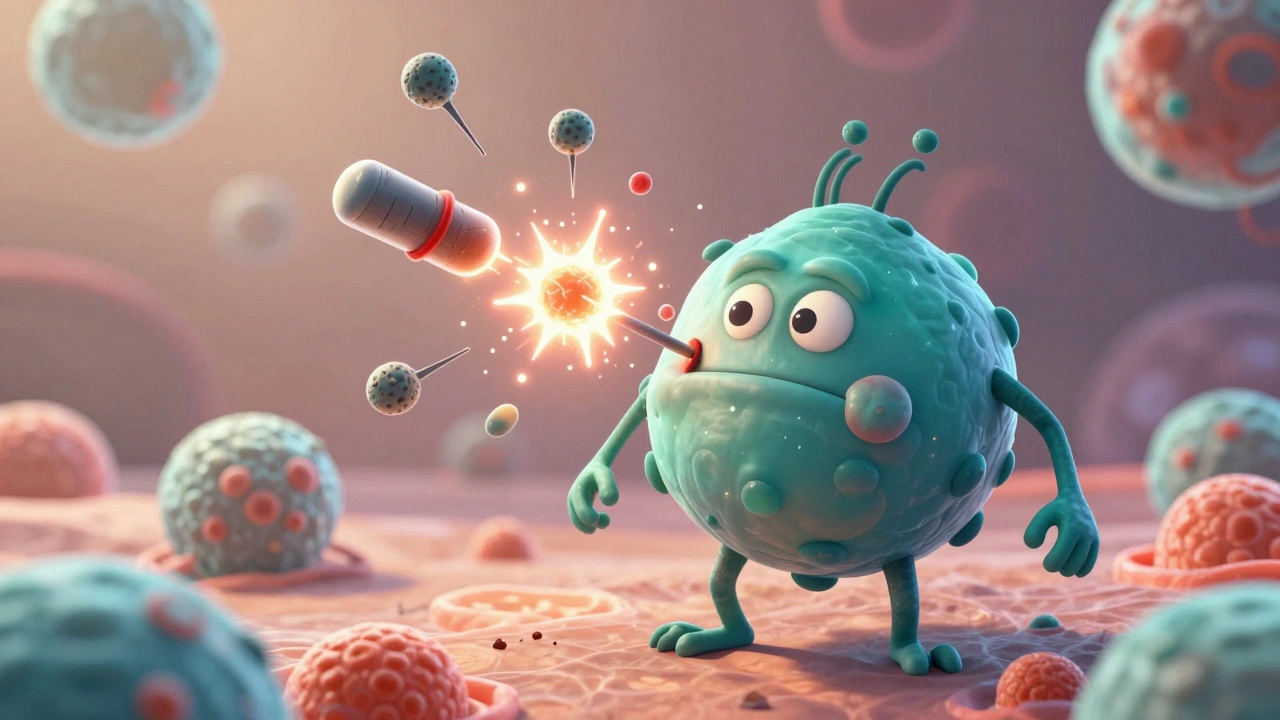
Antibiotics for Bacterial Infections: Classes and How They Work
Antibiotics fight bacterial infections by targeting specific parts of bacteria-cell walls, protein factories, or DNA. Learn how the main classes work, why resistance is growing, and what you can do to help.