Calcium Carbonate: What It Is, How It Works, and What You Need to Know
When you take a calcium supplement or reach for an antacid like Tums, you’re likely consuming calcium carbonate, a naturally occurring compound used to boost calcium levels and neutralize stomach acid. Also known as CaCO3, it’s one of the most common forms of calcium in pills and chewables because it’s cheap, effective, and packed with elemental calcium — about 40% by weight. But it’s not just for bones. Calcium carbonate also shows up in many over-the-counter heartburn remedies, acting fast to calm acid reflux by neutralizing excess stomach acid.
It’s not the only calcium out there — you’ve got citrate, gluconate, and lactate — but calcium carbonate is the go-to for most people because it delivers the most calcium per pill. That said, it needs stomach acid to be absorbed properly. If you’re on proton pump inhibitors for heartburn, or you’re older and produce less acid, you might not get the full benefit. That’s why some doctors recommend taking it with meals, when stomach acid is highest. And if you’re taking it for bone health, you’ll want to pair it with vitamin D — your body can’t use calcium without it.
Calcium carbonate doesn’t work in isolation. It interacts with other minerals, especially magnesium, a mineral that helps regulate muscle and nerve function, and often competes with calcium for absorption. Too much calcium carbonate can throw off your magnesium levels, leading to cramps or fatigue. It can also interfere with thyroid meds, antibiotics like tetracycline, and iron supplements if taken at the same time. That’s why spacing them out by a couple of hours matters.
Some people use it as a cheap source of calcium for plants or even as a food additive — but if you’re taking it daily for health, watch out for side effects. Constipation is the most common. Kidney stones? Possible, especially if you’re already prone to them. And while it’s not a drug, long-term use without medical supervision can mask underlying issues like low stomach acid or vitamin D deficiency.
There’s a reason calcium carbonate shows up in so many of the posts here — it’s everywhere. From antacids to bone supplements, from interactions with heart meds to how it affects nutrient absorption, it’s a simple compound with complex consequences. You’ll find posts that dig into how it plays with other drugs, what to do if you’re taking it long-term, and why some people need to avoid it altogether. Whether you’re managing heartburn, protecting your bones, or just trying to understand what’s in that little white pill, this collection gives you the real talk — no fluff, no marketing, just what you need to know to use it safely.
Antacids and Kidney Disease: What You Need to Know About Phosphate Binders and Risks
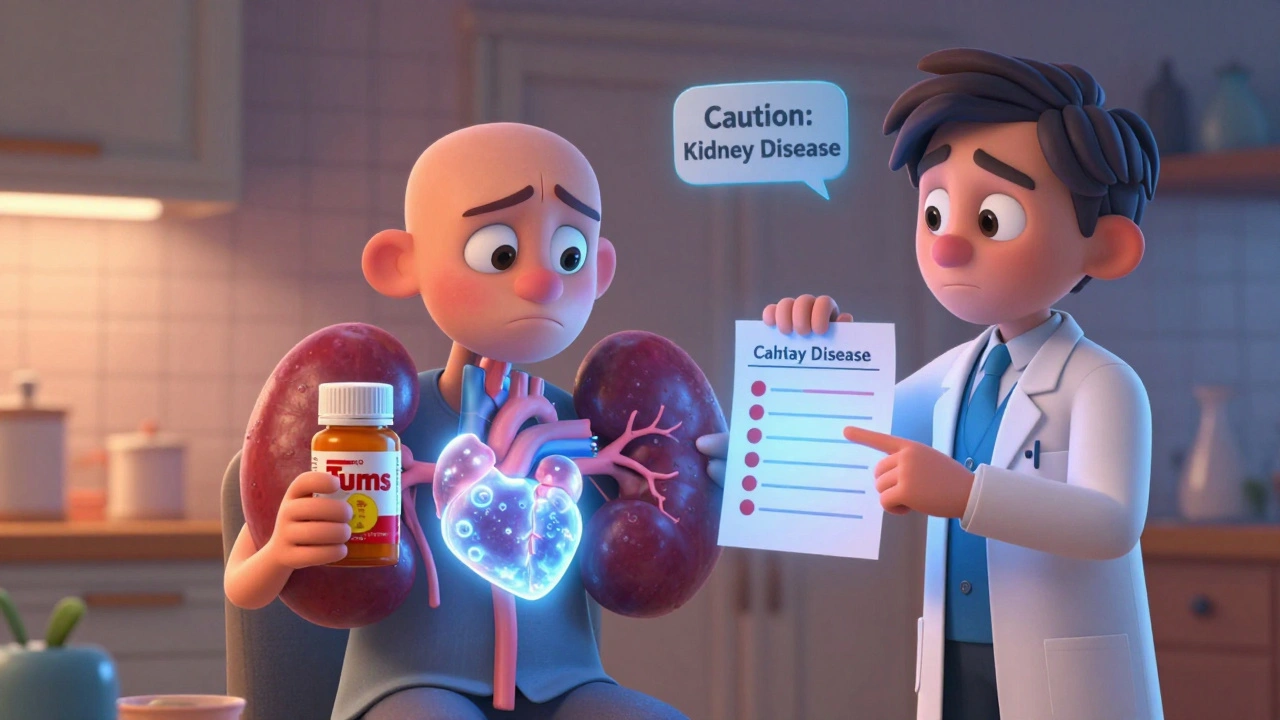
Antacids like Tums and Milk of Magnesia are common for heartburn, but for people with kidney disease, they can be dangerous. Learn how calcium, aluminum, and magnesium in these drugs affect phosphate levels, kidney function, and heart health.