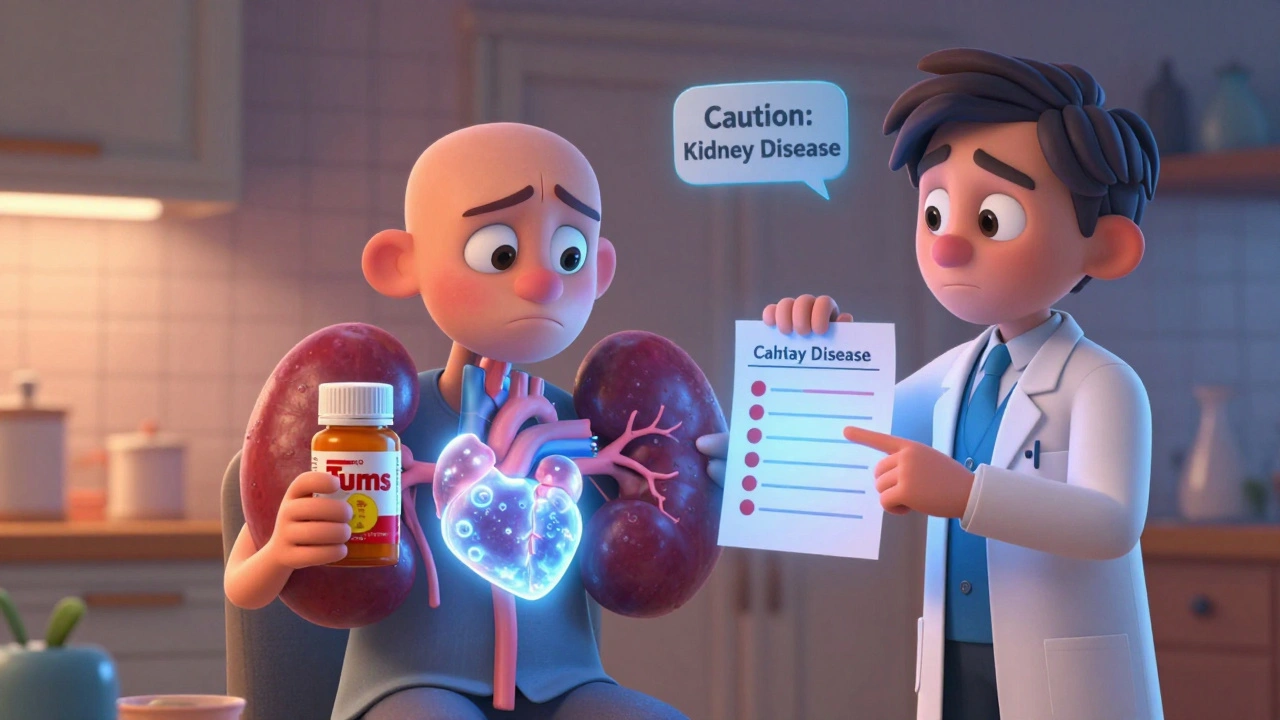
Antacid Safety Checker for Kidney Disease
Check Antacid Safety
Select your kidney disease stage and antacid type to see if it's safe to use.
This medication is generally safe for kidney patients at this stage, but requires regular blood monitoring.
Consult your nephrologist immediately for alternative options.
Many people reach for antacids like Tums or Milk of Magnesia when they feel heartburn. It’s simple, cheap, and available at any drugstore. But if you have kidney disease, what seems like a harmless fix could be dangerous - even life-threatening. The problem isn’t just heartburn. It’s what those antacids do inside your body when your kidneys can’t keep up.
Why Antacids Are Used in Kidney Disease
When your kidneys start to fail, they lose the ability to remove phosphate from your blood. Too much phosphate builds up, leading to weak bones, itchy skin, heart problems, and even calcification of your blood vessels. That’s where antacids come in - not as heartburn relief, but as phosphate binders. Calcium carbonate (Tums) and aluminum hydroxide don’t just neutralize stomach acid. They bind to phosphate in your food before it gets absorbed. That’s why nephrologists sometimes prescribe them - especially in early-stage kidney disease. They’re affordable, easy to get, and effective at lowering phosphate levels when used correctly. But here’s the catch: not all antacids are safe for kidney patients. And using them without guidance can cause more harm than good.The Three Types of Antacids - And Their Risks
There are three main types of antacids used as phosphate binders. Each has a different risk profile, especially for people with kidney disease.- Calcium-based antacids (like Tums and calcium citrate) bind phosphate well. But they also add calcium to your system. In healthy people, that’s fine. In kidney disease, your body can’t regulate calcium properly. Too much can lead to hypercalcemia - blood calcium levels above 10.2 mg/dL. That raises your risk of heart attacks, strokes, and hardening of the arteries. Studies show CKD patients on calcium-based binders have a 30-50% higher chance of cardiovascular events compared to those on non-calcium options.
- Aluminum-based antacids (like Alu-Cap or Maalox) are very effective at binding phosphate. But aluminum doesn’t get cleared by damaged kidneys. It builds up in your bones and brain. Levels above 40 mcg/L can cause bone pain and fractures. Above 60 mcg/L, it can trigger dialysis dementia - confusion, memory loss, seizures. The FDA has warned since 1990 that aluminum antacids should never be used long-term, especially if your creatinine clearance is below 30 mL/min.
- Magnesium-based antacids (like Milk of Magnesia) are common for constipation. But magnesium also builds up in kidney disease. Levels above 2.6 mg/dL are dangerous. Above 4 mg/dL, you can get muscle weakness, low blood pressure, and slow breathing. At 10 mg/dL or higher, it can stop your heart. The National Kidney Foundation says magnesium antacids should be avoided entirely in stage 4 or 5 kidney disease.
Prescription Phosphate Binders vs. Over-the-Counter Antacids
Prescription phosphate binders like sevelamer (Renagel), lanthanum carbonate (Fosrenol), and sucroferric oxyhydroxide (Velphoro) were designed specifically for kidney patients. They don’t add calcium or aluminum. They’re safer - but expensive.| Medication | Active Ingredient | Phosphate Reduction | Monthly Cost | Key Risk |
|---|---|---|---|---|
| Calcium carbonate (Tums) | Calcium | 15-25% | $10 | Hypercalcemia, vascular calcification |
| Sevelamer (Renagel) | Polymers | 25-35% | $2,000-$2,500 | Gastrointestinal upset |
| Lanthanum carbonate (Fosrenol) | Lanthanum | 25-35% | $2,500-$3,500 | Chewing difficulty, nausea |
| Sucroferric oxyhydroxide (Velphoro) | Iron-based | 25-30% | $4,000 | Stool discoloration |
| Aluminum hydroxide | Aluminum | 20-30% | $15 | Neurotoxicity, bone disease |
| Magnesium hydroxide | Magnesium | 10-20% | $8 | Hypermagnesemia, cardiac arrest |
For many patients, cost is the deciding factor. Generic calcium carbonate costs about $10 a month. Sevelamer can run over $2,000. Insurance often doesn’t cover the expensive binders unless you’ve tried cheaper options first. That’s why so many patients end up using Tums - sometimes for years.
But that’s risky. A 2018 study in the New England Journal of Medicine found that CKD stage 4 patients on calcium carbonate had a 40% higher risk of hypercalcemia than those on sevelamer. And once vascular calcification starts, it can’t be reversed.
Who Should Use Antacids - And Who Should Avoid Them
Not all kidney disease patients are the same. Your stage of disease determines what’s safe.- Stage 3 CKD (GFR 30-59): Calcium carbonate may be used under supervision. Dose: 600-1200 mg elemental calcium per meal. Monitor blood calcium monthly. Avoid aluminum and magnesium entirely.
- Stage 4-5 CKD (GFR <30): Avoid all over-the-counter antacids as phosphate binders. Use only prescription binders. Even calcium carbonate should be limited to rare heartburn relief - and never taken at the same time as your phosphate binder.
- Dialysis patients: No aluminum. No magnesium. Calcium-based binders are used cautiously, if at all. Newer binders like tenapanor (Xphozah) are becoming preferred because they reduce phosphate absorption without binding it - meaning no risk of calcium or aluminum buildup.
The American Society of Nephrology recommends that if you must use calcium carbonate for heartburn, take it at least two hours before or after your phosphate binder. Otherwise, it interferes with absorption and makes your treatment less effective.
Medication Interactions You Might Not Know About
Antacids don’t just affect phosphate. They mess with how your body absorbs other drugs.- They reduce absorption of antibiotics like ciprofloxacin and tetracycline by up to 90%.
- They lower levels of thyroid medication (levothyroxine) and seizure drugs like phenytoin by 30-40%.
- They interfere with iron supplements - a common need in kidney disease.
The Cleveland Clinic advises taking other medications at least one hour before or four hours after antacids. But most patients don’t know this. A 2022 review in the Clinical Journal of the American Society of Nephrology found that 57% of ER visits for antacid complications in kidney patients were due to timing errors or drug interactions.

What Patients Are Really Experiencing
Real stories show how dangerous this gap in knowledge can be.One patient in a kidney forum shared that she took Tums daily for heartburn for six months. Her nephrologist found her calcium level was 11.2 mg/dL - dangerously high. A CT scan showed new calcium deposits in her arteries. She had to switch to an expensive prescription binder and now has to avoid dairy and nuts to keep phosphate low.
Another Reddit user took Milk of Magnesia for constipation. He ended up in the ER with a magnesium level of 8.7 mg/dL. His legs were paralyzed. He spent days in intensive care.
A 2022 survey by the American Association of Kidney Patients found that 68% of kidney patients couldn’t tell the difference between prescription phosphate binders and over-the-counter antacids. Nearly half had used antacids without telling their doctor.
What You Should Do
If you have kidney disease and use antacids:- Don’t assume they’re safe just because they’re sold over the counter.
- Check the active ingredient. If it’s aluminum or magnesium, stop using it unless your nephrologist says otherwise.
- If you’re using calcium carbonate, ask your doctor to check your blood calcium and phosphate levels every month.
- Never take antacids at the same time as your phosphate binder, iron pills, or antibiotics.
- Learn the warning signs: confusion, muscle weakness, nausea, irregular heartbeat, bone pain. These could mean your phosphate or mineral levels are out of control.
There’s no shame in needing help with heartburn. But there’s huge risk in treating it without knowing how your kidneys are affected. The goal isn’t just to feel better - it’s to stay alive.
What’s Changing in 2025
New guidelines are coming. The FDA is pushing for clearer labeling on antacids - including warnings specific to kidney disease. The NIH is funding a five-year study tracking 5,000 patients to find the safest ways to use antacids in different kidney stages.Meanwhile, AI tools are being tested in nephrology clinics to predict the best binder for each patient based on their GFR, diet, lab results, and genetics. The future is personalized. But until then, the safest rule is simple: if you have kidney disease, talk to your nephrologist before taking any antacid - even if it’s just for one day.
Can I take Tums if I have kidney disease?
You can, but only under specific conditions. If you’re in early-stage kidney disease (stage 3), calcium carbonate (Tums) may be used as a phosphate binder, but only with your doctor’s approval and regular blood tests. In stage 4 or 5, avoid it unless it’s for occasional heartburn - and even then, take it at least two hours before or after your phosphate binder. Never use it as a long-term solution.
Is Milk of Magnesia safe for kidney patients?
No. Milk of Magnesia contains magnesium hydroxide. In kidney disease, your body can’t remove excess magnesium. This can lead to hypermagnesemia - a condition that causes muscle weakness, low blood pressure, breathing problems, and even cardiac arrest. The National Kidney Foundation advises avoiding all magnesium-containing antacids if your GFR is below 30 mL/min.
What’s the safest phosphate binder for kidney disease?
For most patients with advanced kidney disease, non-calcium, non-aluminum binders like sevelamer (Renagel) or lanthanum carbonate (Fosrenol) are safest. They don’t raise calcium or aluminum levels. Tenapanor (Xphozah), a newer drug approved in 2023, works differently - it blocks phosphate absorption without binding it, reducing pill burden and avoiding mineral buildup entirely. Always follow your nephrologist’s recommendation.
How do I know if my antacid is causing harm?
Watch for symptoms: nausea, confusion, muscle weakness, irregular heartbeat, bone pain, or swelling. These could signal high calcium, magnesium, or aluminum. The only way to know for sure is through regular blood tests - calcium, phosphate, magnesium, and aluminum levels. If you’re on antacids and haven’t had these checked in the last 30 days, ask your doctor.
Why do doctors still prescribe calcium carbonate if it’s risky?
Cost and access. Prescription binders cost thousands per month. Many patients can’t afford them, and insurance often requires trying cheaper options first. Calcium carbonate is effective and cheap - $10 a month. So, it’s used as a first-line option in early kidney disease, with close monitoring. But once kidney function drops below 30%, the risks outweigh the benefits, and safer alternatives are required.
Can antacids cause kidney damage?
Antacids themselves don’t directly damage kidneys. But the complications they cause - like hypercalcemia, vascular calcification, or electrolyte imbalances - can worsen kidney function over time. For example, high calcium levels can lead to kidney stones or calcification in the kidneys themselves. In patients with existing kidney disease, these complications accelerate decline.
If you’re managing kidney disease, your medications need more than a label check. They need understanding. What seems like a quick fix for heartburn could be quietly harming your heart, bones, or even your ability to survive. Always talk to your nephrologist before using any antacid - even if you’ve used it for years.


bro i just took tums for heartburn like 3x this week and i got stage 3 ckd… i thought it was just antacid lol. now im sweating thinking about my calcium levels. my doc never said no to tums. wtf.
It’s critical to understand that over-the-counter medications are not inherently safe for individuals with chronic kidney disease, regardless of their accessibility or perceived mildness. Calcium carbonate, while effective as a phosphate binder, introduces a significant risk of hypercalcemia and vascular calcification when used without serum monitoring. The clinical guidelines from the National Kidney Foundation are unequivocal: patients with an estimated glomerular filtration rate below 30 mL/min should avoid all non-prescription phosphate binders. This is not a suggestion-it is a life-preserving protocol.
you ever wonder why the FDA lets this happen? big pharma doesn’t want you to know that a $10 pill can replace $3000/month drugs. they push the expensive binders because they make billions. your nephrologist? probably gets kickbacks. i read a leaked email once… aluminum’s not the problem, it’s the profit margin. they’d rather you die than lose revenue.
It’s almost tragic, isn’t it? We live in a world where a man can buy a $10 antacid to soothe his stomach, unaware that he’s slowly calcifying his own arteries. The irony is that we’ve engineered medicines to extend life, yet we still treat the body like a machine you can fix with a quick fix. We forget that kidneys aren’t just filters-they’re the quiet architects of balance. And when we ignore their whispers, they don’t scream. They just… stop.
my grandma took milk of magnesia for years for constipation she had stage 4 and no one told her it was dangerous now she’s on dialysis and i think it made it worse idk maybe im overthinking but why do doctors not warn people like this
if you're using tums without a blood test you're an idiot. no one cares how cheap it is. you're risking your life for $10. stop being lazy and get your labs done. your kidneys don't care about your budget.
just got my calcium levels back… 10.8 😳 i’ve been taking tums daily for 8 months. i’m switching to renagel tomorrow. thanks for the wake up call 🙏💊
It is a well-documented fact that the pharmaceutical industry has long prioritized profit over patient education, particularly in the realm of chronic kidney disease management. The disparity in cost between generic calcium carbonate and novel phosphate binders is not merely economic-it is a moral indictment of a healthcare system that allows patients to be exposed to preventable harm due to financial constraints. The fact that patients are forced to choose between financial ruin and physiological collapse speaks volumes about the failure of systemic care.
hey everyone just wanted to say you’re not alone i was scared too but my doc helped me switch to velphoro and honestly its not that bad. yes its pricey but my calcium is normal now and i feel way better. you got this 💪❤️
im so glad someone posted this i thought i was the only one taking tums and feeling guilty. my nephrologist said its ok if i take it once a week for heartburn but i never told her i was taking it every day… oops. gonna book an appt now. thanks for the nudge 😊
Interesting. All this fear-mongering about antacids. But have we considered that vascular calcification is inevitable in advanced CKD regardless of binder choice? The real issue is the lack of true innovation in renal pharmacology. We’re just swapping one toxin for another. Maybe we should be asking why we’re not developing drugs that restore kidney function instead of managing the symptoms of their failure.
i used to take milk of magnesia every other day… then my legs went numb for 10 minutes. i thought it was just tiredness. now i know it was my magnesium climbing. i cried in the pharmacy aisle reading this. thank you for writing this. i’m telling my whole family.
listen if you're in stage 4 and still using over the counter antacids you are literally playing russian roulette with your heart. the data is clear. the guidelines are clear. your doctor isn't lying. you're just ignoring the truth because it's inconvenient. stop blaming the system. start taking responsibility.
i’ve been taking tums for 12 years. i’m 62. my kidneys are bad. my doctor said it’s fine. now i’m scared. what if i’ve been poisoning myself? i don’t want to die because i trusted someone who didn’t know better. this post broke me.
just checked my tums bottle… aluminum hydroxide. i’ve been using this for 3 years. oh god.