FDA Orphan Designation: What It Means for Rare Disease Medications
When a drug gets FDA orphan designation, a special status given by the U.S. Food and Drug Administration to medicines targeting rare diseases affecting fewer than 200,000 people in the U.S., it’s not just a paperwork win—it’s a lifeline. This designation exists because pharmaceutical companies often won’t invest in developing treatments for tiny patient groups. Without it, drugs for conditions like certain forms of muscular dystrophy, rare cancers, or inherited metabolic disorders might never reach the market. The FDA gives companies tax credits, fee waivers, and seven years of market exclusivity to make it worth their while.
That exclusivity means no other company can sell the same drug for the same condition during that time, even if they develop it independently. It’s not a guarantee the drug works better—it’s a guarantee it’ll be available. This system has led to over 600 approved orphan drugs since 1983, up from just 10 before the law passed. Many of these drugs, like those for cystic fibrosis or spinal muscular atrophy, were once unthinkable. But orphan designation doesn’t mean the drug is safe or effective yet—it just means the FDA is fast-tracking its review. You’ll still find posts here about how these drugs interact with other meds, their side effects, or how insurance denies coverage despite the designation.
Related entities like orphan drugs, medications approved under the Orphan Drug Act for rare conditions. often show up in insurance appeal stories, like the one about challenging denials for brand-name meds. They’re also tied to rare disease drugs, treatments developed specifically for conditions with very small patient populations. These aren’t just niche products—they’re often the only option for people with no alternatives. And because they’re expensive, you’ll see discussions about total therapy costs beyond copays, or how comorbidities make using them riskier. The FDA doesn’t stop at approval; it tracks long-term safety, which is why posts on PPI risks, amiodarone toxicity, or acetaminophen liver damage matter here too. These drugs often get used for years, and their side effects can be more severe because patients are sicker and take more meds.
What you’ll find below aren’t just random articles—they’re real-world stories from people navigating this broken system. From how to appeal a denial for a rare disease drug, to understanding why a generic version might not be available, to spotting dangerous interactions with supplements like green tea extract or SAMe. These posts don’t sugarcoat it. They show you what happens when a drug gets orphan status but still costs $300,000 a year. Or when a patient skips doses because they can’t afford it. Or when a side effect gets mislabeled as an allergy, and the wrong treatment is given. This is the messy reality behind the label.
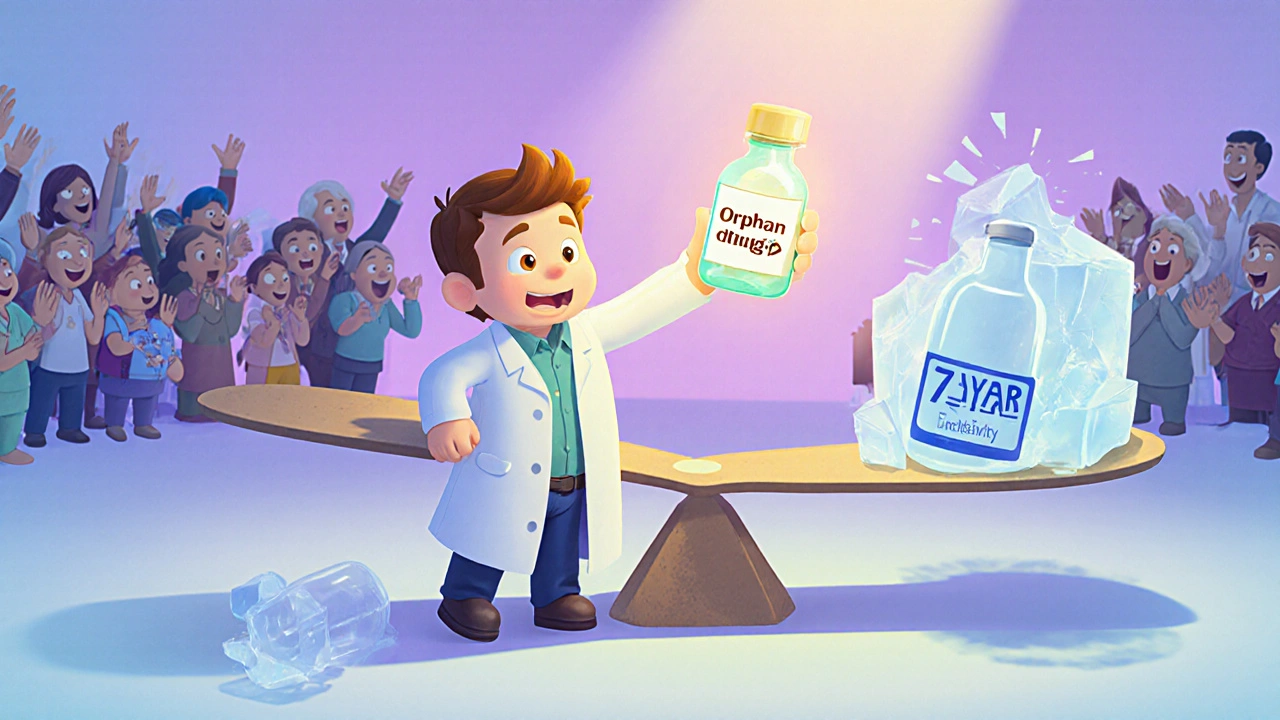
Orphan Drug Exclusivity: How Rare-Disease Medicines Get Market Protection
Orphan drug exclusivity gives pharmaceutical companies seven years of market protection for rare-disease treatments, encouraging development where profits would otherwise be impossible. Here's how it works, who benefits, and why it's changing.