Kidney Disease: Causes, Risks, and How Medications Affect Your Kidneys
When your kidney disease, a condition where the kidneys lose their ability to filter waste and fluid from the blood. Also known as chronic kidney disease, it often creeps up silently, with few symptoms until damage is serious. Your kidneys work nonstop—cleaning your blood, balancing salts, making urine, and helping control blood pressure. But if they’re damaged, toxins build up, fluid swells in your legs, and your heart gets stressed. Many people don’t know they have it until their doctor runs a simple blood test.
What causes kidney disease? The biggest culprits are diabetes, a condition where high blood sugar slowly damages tiny blood vessels in the kidneys and high blood pressure, which forces the kidneys to work too hard, wearing them down over time. But meds can play a role too. Long-term use of proton pump inhibitors, common heartburn drugs like omeprazole, has been linked to kidney damage in some studies. Even over-the-counter painkillers like ibuprofen, if taken daily for months, can hurt kidney function. And if you’re on multiple meds—say, for heart disease, diabetes, or arthritis—the risk adds up fast. This is why people with comorbidities, multiple chronic conditions that interact and worsen each other need extra monitoring.
You don’t need to wait for symptoms to act. If you’re on long-term meds, have diabetes, or are over 60, ask your doctor for a urine test and a blood test for creatinine. These catch early signs before you feel anything. Cutting back on salt, staying hydrated, and avoiding unnecessary painkillers can help. And if your kidneys are already weak, some drugs become riskier—like certain antibiotics, contrast dyes for scans, or even herbal supplements. Knowing what’s safe and what’s not can keep you off dialysis.
Below, you’ll find real-world guides on how common medications interact with kidney health, what to watch for, and how to protect yourself without panic or guesswork. These aren’t theoretical—they’re based on what people actually experience, and what doctors recommend when the stakes are high.
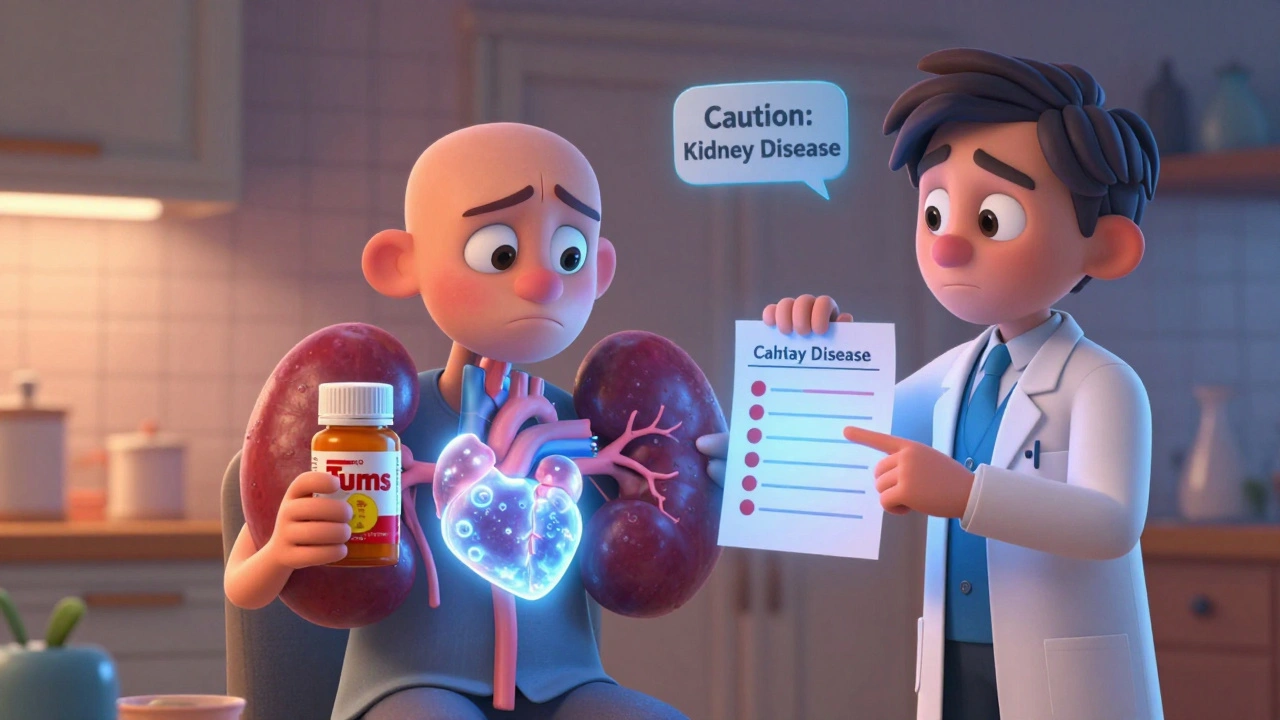
Antacids and Kidney Disease: What You Need to Know About Phosphate Binders and Risks
Antacids like Tums and Milk of Magnesia are common for heartburn, but for people with kidney disease, they can be dangerous. Learn how calcium, aluminum, and magnesium in these drugs affect phosphate levels, kidney function, and heart health.