Orphan Drug Law: What It Means for Patients and Medication Access
When a disease affects fewer than 200,000 people in the U.S., it’s called orphan drug law, a U.S. federal program that gives companies financial incentives to develop treatments for rare diseases. Also known as the Orphan Drug Act, it was passed in 1983 because pharmaceutical companies had little reason to invest in drugs for tiny patient groups—until the law changed the rules. Before this, hundreds of rare conditions had no approved treatment at all. Today, over 600 rare disease drugs have been approved because of it.
This law doesn’t just help patients—it reshapes how drugs get made. Companies get seven years of market exclusivity, a period where no other company can sell a similar drug for the same condition, tax credits for clinical trial costs, and help from the FDA, the U.S. agency that reviews and approves these drugs with special guidance for rare disease treatments. These perks make it financially possible to develop drugs that would otherwise be ignored. For patients with conditions like Duchenne muscular dystrophy, Niemann-Pick disease, or certain rare cancers, this isn’t just policy—it’s their only shot at treatment.
But the law isn’t perfect. Some companies have used loopholes to extend exclusivity or rebrand common drugs as "orphan" for minor new uses. Still, the overall impact is clear: more options exist today than ever before. The orphan drug law turned a broken system into one that saves lives, even if those lives are few. And that’s why it still matters.
Below, you’ll find real stories and practical guides from patients and providers who’ve navigated this system—how to get approved for these expensive meds, how insurance fights back, and what to do when your rare disease drug gets pulled from the market. These aren’t theory pieces. They’re the tools people actually use to survive.
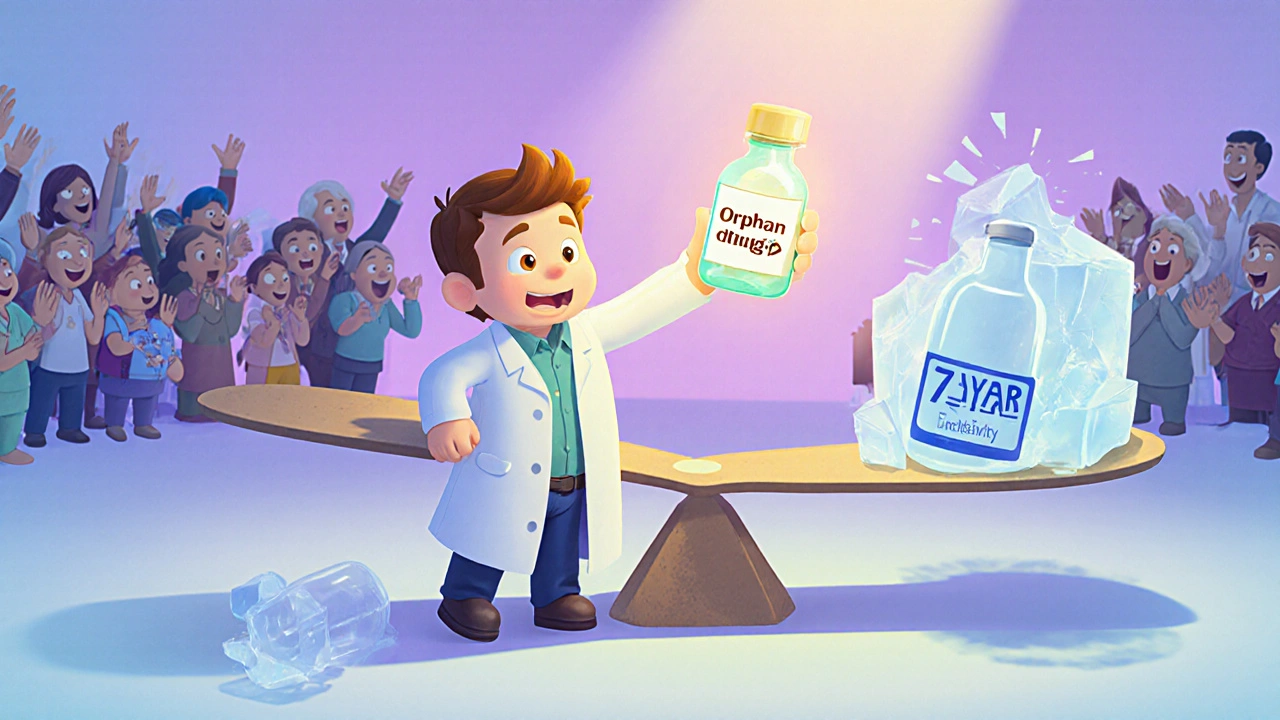
Orphan Drug Exclusivity: How Rare-Disease Medicines Get Market Protection
Orphan drug exclusivity gives pharmaceutical companies seven years of market protection for rare-disease treatments, encouraging development where profits would otherwise be impossible. Here's how it works, who benefits, and why it's changing.