Rare Disease Drugs: What They Are, Who Needs Them, and How to Navigate Access
When a condition affects fewer than 200,000 people in the U.S., it’s called a rare disease, a medical condition affecting a small percentage of the population, often with limited treatment options. Also known as orphan disease, it’s not uncommon for these illnesses to go undiagnosed for years because even doctors rarely see them. The drugs made to treat them — rare disease drugs, medications developed specifically for conditions with small patient populations, often called orphan drugs — are expensive, hard to find, and sometimes the only hope for survival. These aren’t just pills for minor symptoms. They’re life-changing, sometimes life-saving, treatments for things like Duchenne muscular dystrophy, Huntington’s disease, or certain types of inherited metabolic disorders.
Why are these drugs so costly? Because companies develop them for tiny markets. There’s no economy of scale. One drug might cost $500,000 a year because only 500 people in the country need it. That’s why insurance denials are so common — and why appealing insurance denials, the process of challenging a health plan’s refusal to cover a prescribed medication becomes a full-time job for many families. You’re not just fighting bureaucracy; you’re fighting the reality that the system wasn’t built for people with rare conditions. And it’s not just about price. Many rare disease drugs require special handling, cold shipping, or frequent monitoring. Some need genetic testing just to confirm you’re the right patient for them. That’s why knowing how to report rare side effects, documenting unexpected or severe reactions to medications, especially those not listed on the label matters — these reports help regulators and researchers understand risks in small populations where clinical trials are too small to catch everything.
There’s no single fix. But there are paths. Some patients get access through expanded use programs. Others find help through patient advocacy groups that negotiate discounts or connect people with foundations offering co-pay aid. Some rare disease drugs are now being made as authorized generics, medications made by the original brand company under a generic label, often at lower cost, which can cut prices without sacrificing quality. And while many of these treatments are still new, the science behind them — from gene therapy to targeted protein modulators — is advancing faster than ever. What used to be impossible is now just difficult.
Below, you’ll find real-world guides from people who’ve walked this path. Whether you’re trying to get a prescription covered, tracking down a drug that’s out of stock, or learning how to spot a dangerous interaction between a rare disease drug and a common supplement, these posts give you the tools to ask the right questions and push back when the system says no.
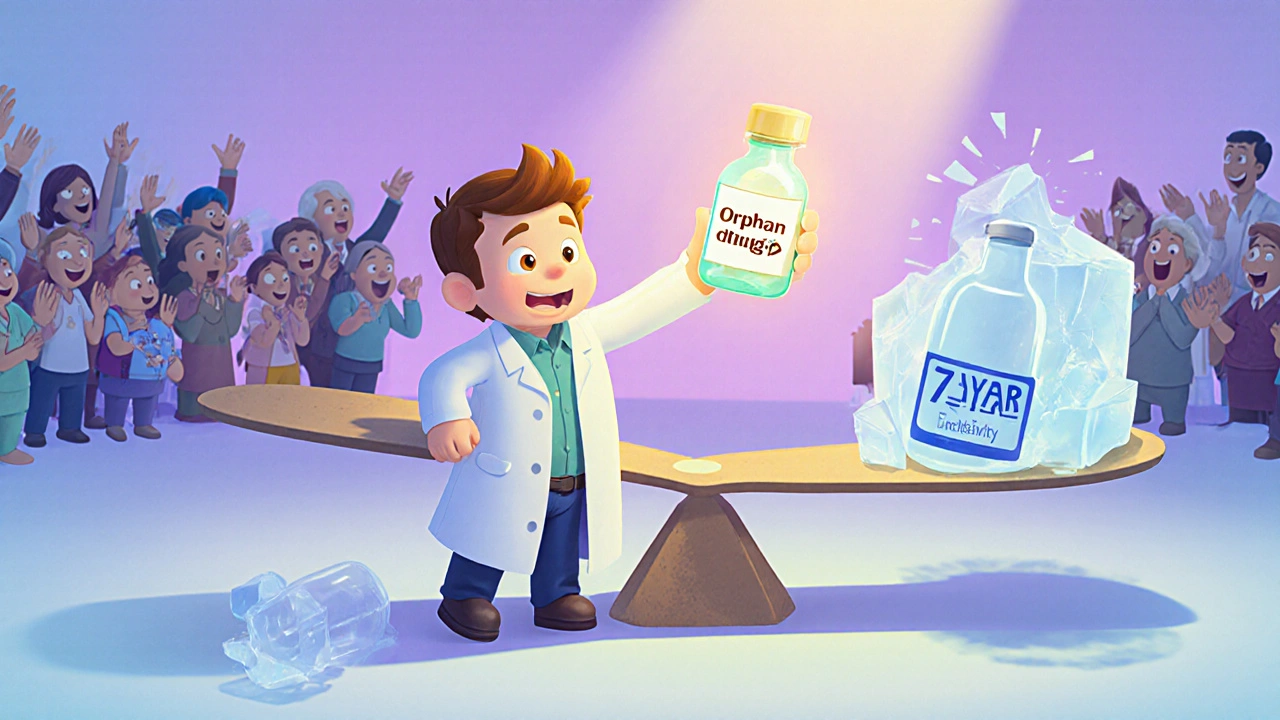
Orphan Drug Exclusivity: How Rare-Disease Medicines Get Market Protection
Orphan drug exclusivity gives pharmaceutical companies seven years of market protection for rare-disease treatments, encouraging development where profits would otherwise be impossible. Here's how it works, who benefits, and why it's changing.