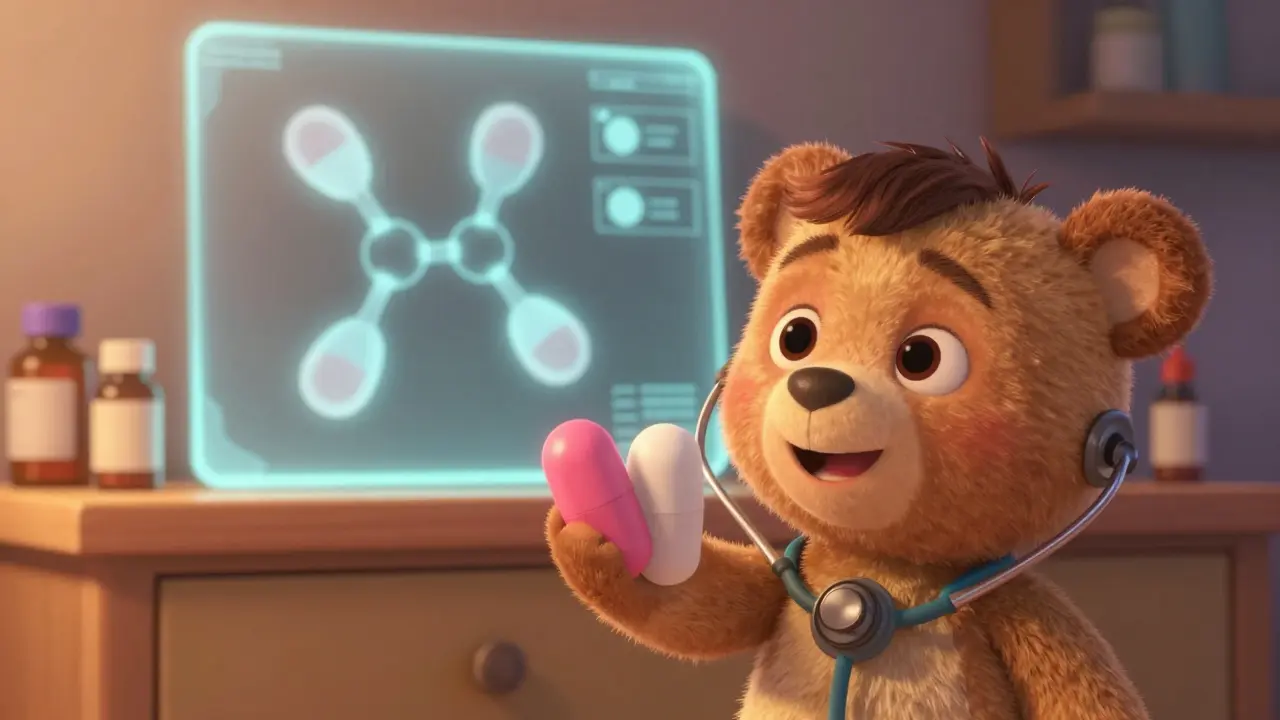
Most kids know the difference between a candy and a pill. But do they know that two pills can look totally different and still do the same thing? That’s where teaching children about generic drugs comes in. It’s not about making them pharmacists. It’s about giving them simple, clear tools to understand their own health - and to feel safe when they see a new medicine at home.
Every day, parents open a medicine cabinet and find a pill they’ve never seen before. The brand name is gone. The color is different. The shape is weird. And suddenly, there’s confusion: ‘Is this the same? Is it weaker? Did they switch to something unsafe?’ Kids notice this. They ask questions. And if we don’t answer them in a way they understand, they start making up their own stories - like ‘This medicine is fake’ or ‘The doctor doesn’t care anymore.’
Why Generic Drugs Are Safe - and Why Kids Need to Know
Generic drugs are not cheaper because they’re worse. They’re cheaper because the company didn’t pay to invent the medicine. The original brand spent years and millions testing it. Once that patent runs out, other companies can make the same medicine - same active ingredient, same dose, same effect. The FDA requires them to match the brand in strength, safety, and how the body uses it. That’s not a guess. That’s a rule.
Think of it like this: a chocolate bar from a big brand and a store brand both have cocoa, sugar, and milk. One might have a fancy wrapper. The other might be plain. But if you eat both, your tongue tastes the same thing. Your body gets the same energy. Generic medicines work the same way.
Teaching kids this early stops fear. It stops stigma. And it helps them understand why their mom or dad might say, ‘Let’s use the generic one - it saves money for the family.’
How to Talk to Young Kids (Ages 3-7)
For little ones, it’s not about science. It’s about pictures, stories, and play.
- Use toy medicine kits. Let them ‘prescribe’ a red pill for a teddy bear’s tummy ache - then swap it for a blue one. Say: ‘See? Both make the bear feel better. One just costs less.’
- Read picture books like The Medicine Box (available free from Generation Rx) that show two versions of the same medicine with different colors and shapes.
- Play ‘Medicine Detective.’ Hide two bottles (empty, of course) - one brand, one generic. Ask: ‘Which one has the same magic inside?’ Let them match the names on the label. ‘See? Both say “ibuprofen.” That’s the magic ingredient.’
At this age, they don’t need to know about patents or FDA. They just need to know: Same inside, different outside. Both are okay.
For Older Kids (Ages 8-12): Building Understanding
By third or fourth grade, kids can handle a bit more detail. They’re curious. They’ve seen commercials. They know ‘brand’ means ‘expensive.’
Use real-life examples:
- ‘Remember when we switched from the pink bottle to the white one for your allergies? The medicine inside is exactly the same. The company just stopped paying for the fancy design.’
- Compare prices. Show them the receipt. ‘This one costs $5. The other one costs $20. Same medicine. Same dose. Which one helps us save for the zoo trip?’
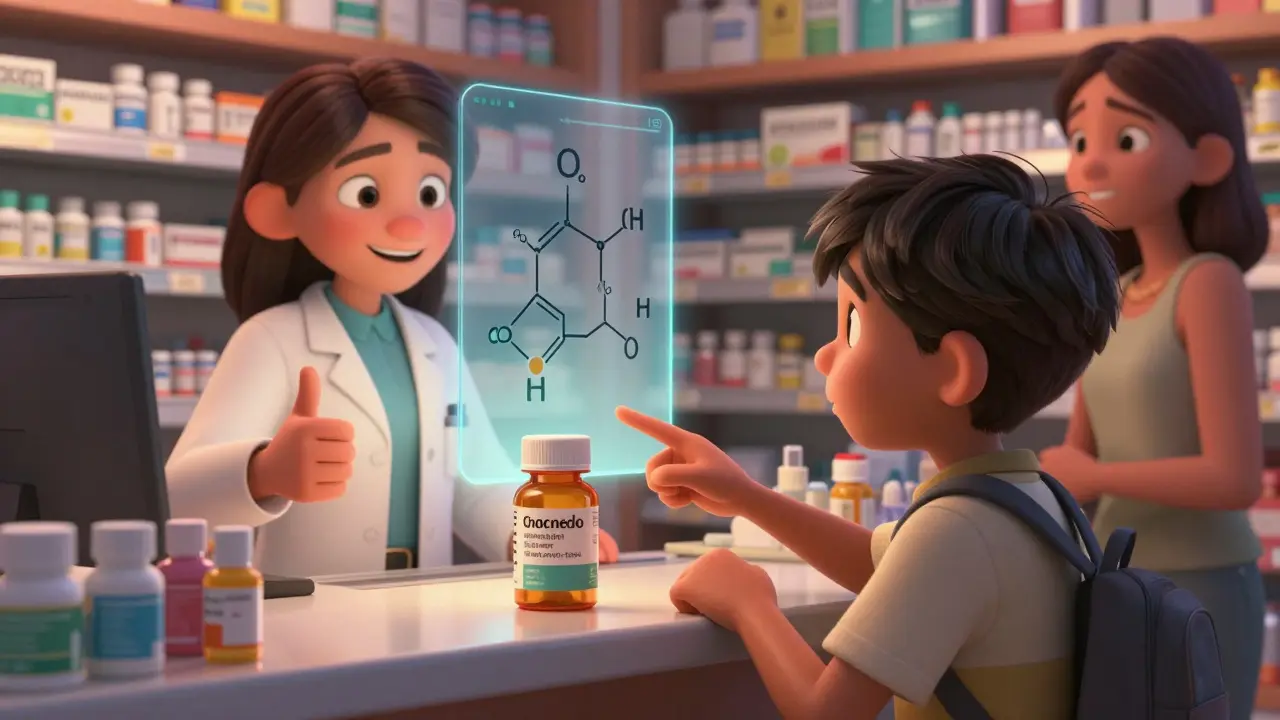
- Let them help pick the medicine at the pharmacy. Ask: ‘Which one has the same name on the label?’ Make it a game.
Introduce the word ‘active ingredient.’ It sounds fancy, but it’s just the part that does the work. You can write it on a sticky note: Active Ingredient: Ibuprofen. Put it on both bottles. Show them it’s the same.
Some kids will ask: ‘Why do they make it look different?’ That’s a great question. Answer: ‘So people know which company made it. Like how your drawing has your name on it - but the crayons you used are the same as everyone else’s.’
What Not to Say
Don’t say: ‘This is the cheap one.’ That makes kids think cheap = bad.
Don’t say: ‘The doctor chose this one.’ That makes them feel powerless.
Don’t say: ‘It’s just as good.’ That’s vague. Kids need specifics.
Instead, say: ‘This medicine has the same medicine inside as the name brand. It’s been tested just as much. It’s safe. And it helps us save money so we can do other fun things.’

Why This Matters Beyond the Medicine Cabinet
Teaching kids about generic drugs isn’t just about saving money. It’s about building critical thinking.
When they learn that two things can look different but be the same - they start questioning other things too. Ads. Social media. Labels on food. ‘Is this really organic?’ ‘Does this brand actually work better?’
It’s a tiny lesson in evidence. In logic. In trusting science over marketing.
And when they grow up, they won’t be afraid to ask their pharmacist: ‘Is there a generic version?’ They’ll know how to read a label. They’ll know what ‘active ingredient’ means. And they’ll be less likely to fall for scams or believe myths about ‘better’ medicines.
Real Stories from Real Families
In Bristol, a teacher named Lisa started a simple classroom activity: ‘Medicine Match-Up.’ She brought in empty bottles of brand and generic ibuprofen. Kids had to find the matching active ingredient. After three weeks, 92% of her students could correctly identify the generic version - and 78% told their parents they wanted to use it at home.
One mom wrote: ‘My 9-year-old asked the pharmacist, ‘Is this the same as the blue one?’ The pharmacist smiled and said yes. My son walked out like he’d solved a mystery.’
Another dad shared: ‘We switched to generic for my daughter’s asthma inhaler. She noticed the color changed. I didn’t explain it. She asked, ‘Is this the real one?’ I said, ‘Let’s look at the label.’ She read it out loud: ‘Albuterol sulfate.’ Then she said, ‘It’s the same. Cool.’ I didn’t teach her that. She figured it out.’
What Schools and Pharmacies Can Do
Programs like Generation Rx offer free lesson plans for teachers. They include coloring sheets, matching games, and simple videos that show how generic drugs are made. Schools in the UK are starting to use them in science and health classes - especially around age 8-10.
Pharmacies can help too. Some now give out small cards with the active ingredient written clearly on them. ‘This is what the medicine does,’ it says. ‘This is what it’s called. This is the generic version.’ Kids can take them home.
It’s not about pushing generics. It’s about making sure kids aren’t scared of them.
Starting Today: 3 Simple Steps
You don’t need a degree. You don’t need a fancy program. Just do this:
- Look at the label. When you pick up a prescription, point to the active ingredient. Say: ‘This is what makes it work.’
- Compare two bottles. Show them the brand and the generic side by side. Ask: ‘What’s the same? What’s different?’
- Let them help. Give them the job of choosing which one to buy - if both are safe. Let them feel like they’re part of the decision.
That’s it. No lectures. No fear. Just clear, honest, everyday moments.
What Happens When You Don’t Teach This
Children who aren’t taught about generic drugs often grow up thinking:
- Expensive = better
- Generic = fake or weak
- Doctors are hiding something
That mindset leads to bigger problems later: skipping medicine because it’s ‘too cheap,’ avoiding refills because they think it’s ‘not real,’ or trusting online sellers who claim to sell ‘premium generics’ - which are often dangerous fakes.
Teaching kids early builds confidence. It builds trust. It builds smart health habits that last a lifetime.
Final Thought: It’s Not About Drugs. It’s About Trust.
When kids understand that a white pill can be just as powerful as a pink one - they learn something deeper: that things aren’t always what they seem. That labels can be misleading. That science, not marketing, should guide decisions.
That’s not just medicine education. That’s life education.
Are generic drugs really as safe as brand-name drugs?
Yes. Generic drugs must meet the same strict standards as brand-name drugs. The same active ingredient, same strength, same way the body absorbs it. The FDA requires them to work the same way. The only differences are the color, shape, or inactive ingredients like dyes or fillers - which don’t affect how the medicine works.
Can children tell the difference between generic and brand-name medicine?
They can tell the difference in appearance - color, size, shape - but not in effect. That’s why teaching them to look at the active ingredient (like ‘ibuprofen’ or ‘amoxicillin’) is key. Once they learn to read that label, they stop being confused by the packaging.
Why do generic drugs cost less?
Brand-name companies spend millions developing a new drug and testing it for years. Once the patent expires, other companies can make the same medicine without those costs. They don’t need to pay for ads or fancy packaging. So they can sell it for much less - while still being just as effective.
Should I let my child choose between brand and generic medicine?
If both are safe and prescribed by a doctor, yes. Letting them choose builds responsibility. Ask: ‘Which one has the same medicine inside?’ If they pick the generic, praise them for being smart. It teaches them to think beyond the label.
What if my child is scared of the generic version?
Start by validating their fear: ‘It looks different, doesn’t it?’ Then show them the active ingredient on the label. Use a simple analogy: ‘It’s like your favorite shoes - one pair is red, one is blue. But they both keep your feet warm.’ If they still feel uneasy, stick with the brand for now - but keep gently teaching them over time.
Next time you hand your child a pill, don’t just say ‘Take this.’ Say: ‘This is the medicine that helps you feel better. It’s called [active ingredient]. And guess what? There’s another one just like it - but cheaper.’ You’re not just giving them medicine. You’re giving them power.

Just simple, real talk.
What if the real lesson here isn't about pills, but about learning to see through the noise?
That's the kind of thinking that changes the world.
Still, for most OTC meds, it's negligible. But parents should know the nuance.
Teaching kids to be smart about meds? That's not just health. That's respect.
Yeah. We're doing okay.