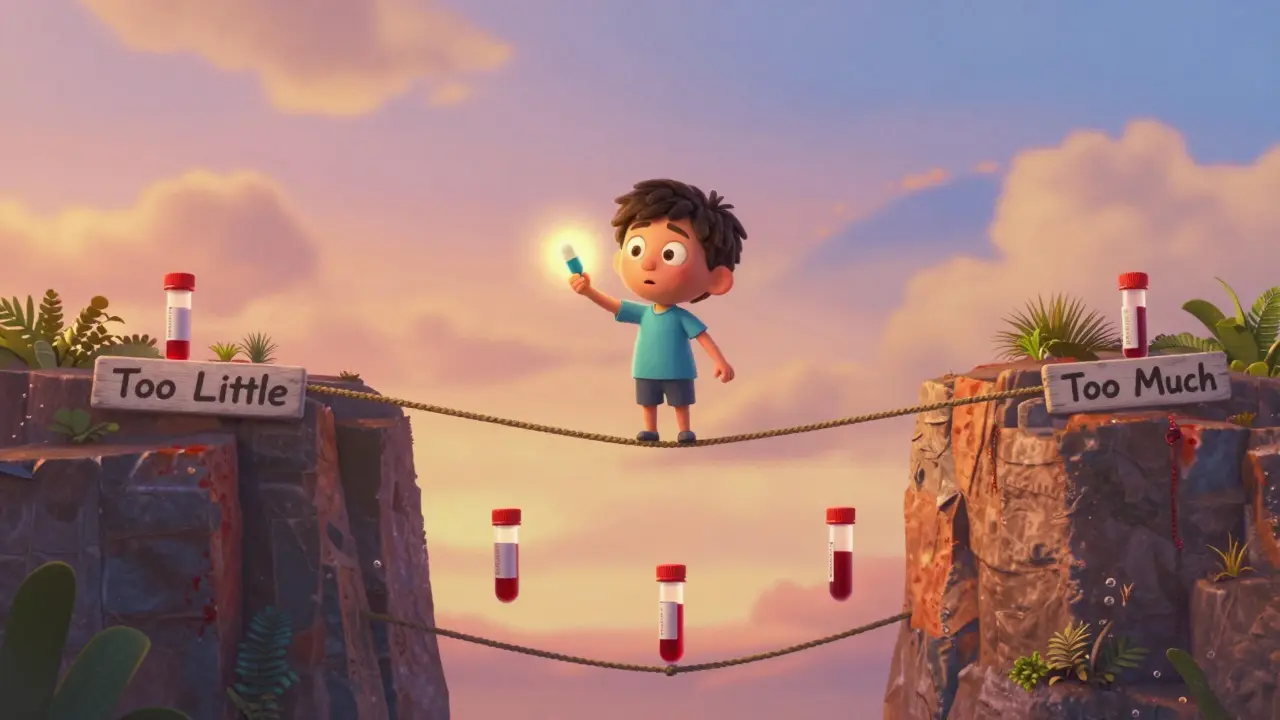
When a drug has a narrow therapeutic index (NTI), even tiny differences in how it’s absorbed or processed by the body can mean the difference between healing and harm. These are not ordinary medications. Drugs like warfarin, phenytoin, digoxin, and levothyroxine sit right on the edge - too little and they don’t work; too much and they become toxic. That’s why generic versions of NTI drugs don’t get approved the same way as other generics. They need something extra: bridging studies.
Why NTI Generics Can’t Follow the Same Rules
Most generic drugs are approved based on standard bioequivalence studies. These tests compare how quickly and how much of the drug enters the bloodstream compared to the brand-name version. The acceptable range? 80% to 125% for two key measures: Cmax (peak concentration) and AUC (total exposure). For most drugs, that’s enough. But for NTI drugs, that range is dangerously wide. The FDA defines NTI drugs as those where the difference between the minimum effective dose and the minimum toxic dose is no more than two-fold. Many require regular blood tests to monitor levels. Doses are adjusted in small increments - sometimes just 0.1 mg at a time. A 10% difference in absorption might be fine for an antibiotic. For warfarin, it could trigger a stroke or a dangerous bleed. That’s why regulators don’t accept the usual 80%-125% window for NTI generics. Instead, they demand a tighter range: 90.00% to 111.11%. That’s a 30% narrower margin of error. It’s not a suggestion. It’s a requirement.What a Bridging Study Actually Looks Like
A standard bioequivalence study for a regular generic might involve 24 healthy volunteers, two doses (brand and generic), and a two-week timeline. Simple. Efficient. Cheap. A bridging study for an NTI generic? It’s a different world. It’s a four-way, fully replicated crossover design. That means each participant gets four different treatments: the brand-name drug twice, the generic twice - in random order, with washout periods in between. Why? Because NTI drugs often show high variability between individuals. A single dose might not capture how the body really handles the drug. Repeating doses helps account for that. The study needs at least 30 to 40 participants - sometimes more. That’s because dropout rates are higher. The study lasts 8 to 12 weeks, not two. Costs? Around $2.5 million to $3.5 million. Compare that to $1.5 million for a standard generic. That’s not a small bump. It’s a wall. And the analysis? It’s not just averaging results. It uses reference-scaled average bioequivalence (RSABE). This method adjusts the acceptance range based on how variable the drug is in the population. If the brand drug itself shows high variability, the standard 80%-125% range is too rigid. RSABE lets regulators be smart - not just strict.The Real-World Cost of Getting It Right
Developing an NTI generic takes 3 to 5 years. For standard generics? 2 to 3. The bioequivalence study alone takes 12 to 18 months - twice as long as for non-NTI drugs. Why? Because the stakes are higher. The FDA rejected 37% of NTI generic applications between 2018 and 2022 because the bridging study design was flawed. For non-NTI generics? Only 12% got rejected for that reason. Manufacturers don’t just need money. They need expertise. Fewer than 35% of generic drug companies have in-house statisticians who know how to run RSABE models. Most have to hire consultants or partner with specialized CROs. Training a team to do this properly takes 18 to 24 months. And it’s not just the science. Recruiting participants is hard. Healthy volunteers don’t want to spend 12 weeks in a clinic getting blood drawn multiple times. Patients who need these drugs are often elderly or have complex conditions - harder to enroll, harder to keep in the study.
Why Only 6% of Generic Approvals Are for NTI Drugs
NTI drugs make up about 14% of all small-molecule medications. But between 2018 and 2022, only 18 NTI generics were approved by the FDA - compared to over 1,000 non-NTI generics. That gap isn’t because no one wants to make them. It’s because the path is so long, so expensive, and so risky. Only a handful of companies even try. Teva, Sandoz, and a few others have invested in the infrastructure. Smaller players? They walk away. The result? Generic market share for NTI drugs is only 42%. For non-NTI drugs? It’s 85%. That means millions of patients are still paying full price for drugs like levothyroxine or digoxin - even though the patent expired years ago. The global NTI drug market is worth $78.5 billion. The potential savings if generics captured even half of that? Over $30 billion. But the system isn’t built to deliver that yet.Regulatory Shifts and What’s Coming Next
The FDA didn’t always require this level of scrutiny. The rules tightened in 2012, then again in 2017 and 2019. In March 2023, they expanded the list of NTI drugs requiring special studies from 12 to 27. That includes common drugs like carbamazepine, cyclosporine, and tacrolimus. The European Medicines Agency is working to align with the FDA. The ICH - the global body that sets drug standards - is finalizing new guidelines (E18) to address ethnic differences in NTI drug response. That’s important. A drug that behaves the same in white patients might not in Asian or African populations. Bridging studies need to account for that. There’s hope on the horizon. Physiologically-based pharmacokinetic (PBPK) modeling is being tested. Instead of running a full clinical trial, companies could simulate how the drug behaves in different people using computer models. The FDA’s 2022 pilot with warfarin showed promising results. But regulators are cautious. They still say: “For the foreseeable future, clinical data remains essential.” Until PBPK becomes fully accepted, companies will keep spending millions on four-way crossover studies. And patients will keep paying more than they should.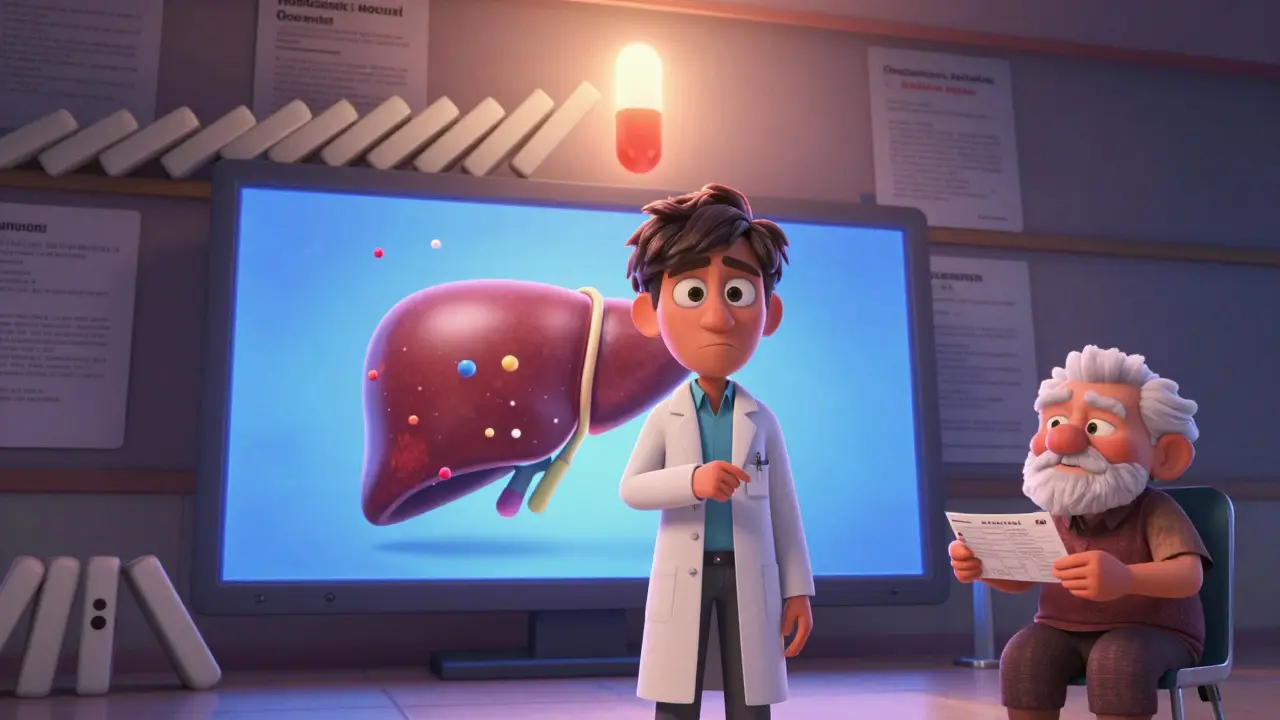

Okay, but let’s be real-why are we still using blood tests to monitor warfarin in 2025? We have wearable biosensors that can track coagulation markers in real-time, and yet we’re asking patients to drive to a clinic every other week like it’s 1998? The FDA’s ‘bridging studies’ are basically a 1980s solution to a 2020s problem. And don’t get me started on the 90%-111% range-why not 95%-105%? Why not 98%-102%? We’re treating NTI drugs like they’re made of glass, but the science isn’t even consistent across labs. One lab’s ‘high variability’ is another’s ‘normal fluctuation.’ And who’s auditing these CROs? No one. No one is auditing them. And yet, we’re spending millions on four-way crossovers that could be replaced by a $500 algorithm if anyone had the guts to try.
In India, we have patients taking levothyroxine generics for decades without incident. The cost difference is not a footnote-it is the difference between life and death for millions. The FDA’s standards are excellent, but they are not universal. A patient in rural Bihar cannot afford a $3.5 million bridging study. We need tiered regulatory pathways-not one-size-fits-all. The science must adapt to the patient, not the other way around.
So if a generic passes the stricter test, is it really safer? Or just more expensive? I’ve seen people switch and feel worse-even though the numbers say it’s fine. Maybe the body remembers the brand. Or maybe it’s the placebo effect. Either way, if someone’s stable on Synthroid, why change? Not all generics are equal, but not all patients need the same level of precision.
Imagine if we treated love like we treat NTI drugs: ‘I need a 90%-111% compatibility match with my partner, verified by a four-way emotional crossover study over 12 weeks, with 40 participants and a $3M budget.’ 😅 We’d all be alone. But here we are-spending billions to ensure a pill doesn’t vary by 10% in absorption… while we’re still arguing about whether coffee causes cancer. The irony is beautiful. We’re so scared of tiny differences in chemistry that we ignore the massive, screaming differences in how we treat each other. 🤔
Y’all are overthinking this. The real problem isn’t the science-it’s the profit model. If a generic company can sell a $5 pill instead of a $50 pill and still make money, they’ll do it. But if the FDA makes it cost $25 million to get approved, only the giants can play. So we get monopoly prices disguised as ‘safety.’ The system isn’t broken-it’s designed that way. Let’s just admit it and fix the incentives, not the math.
NTI generics are expensive because the FDA makes them expensive. End of story.
Wait-so the FDA rejected 37% of NTI generics because of flawed studies… but only 12% of regular generics? That’s not ‘rigorous’-that’s bureaucratic gaslighting. The real reason so few NTI generics exist is that regulators don’t want to be blamed if someone dies. So they demand impossible precision, then act shocked when no one can meet it. It’s not science-it’s liability avoidance dressed in white coats. And don’t even get me started on how they list carbamazepine as NTI but ignore lithium. That’s not pharmacology. That’s politics.
The 90-111% range is statistically arbitrary. The real issue is that the FDA’s NTI list is outdated, underpowered, and inconsistently applied. You can’t claim to be a scientific regulator while using a 2012 cutoff for a drug class that evolved in 2015. This isn’t medicine. It’s regulatory fossilization.
Hey-if you’re on levothyroxine and your doctor says ‘switch to generic,’ ask them: ‘Did this generic pass a four-way crossover with RSABE?’ If they don’t know, ask for a blood test after 4 weeks. Seriously. Your TSH isn’t just a number-it’s your metabolism, your mood, your energy. Don’t let cost-cutting be your doctor’s default answer. And if you’re a manufacturer reading this: yes, it’s expensive. But if you build a bridge that saves lives, people will pay for it. Just make sure it’s solid. We’re not asking for miracles. Just competence. And maybe a little transparency.