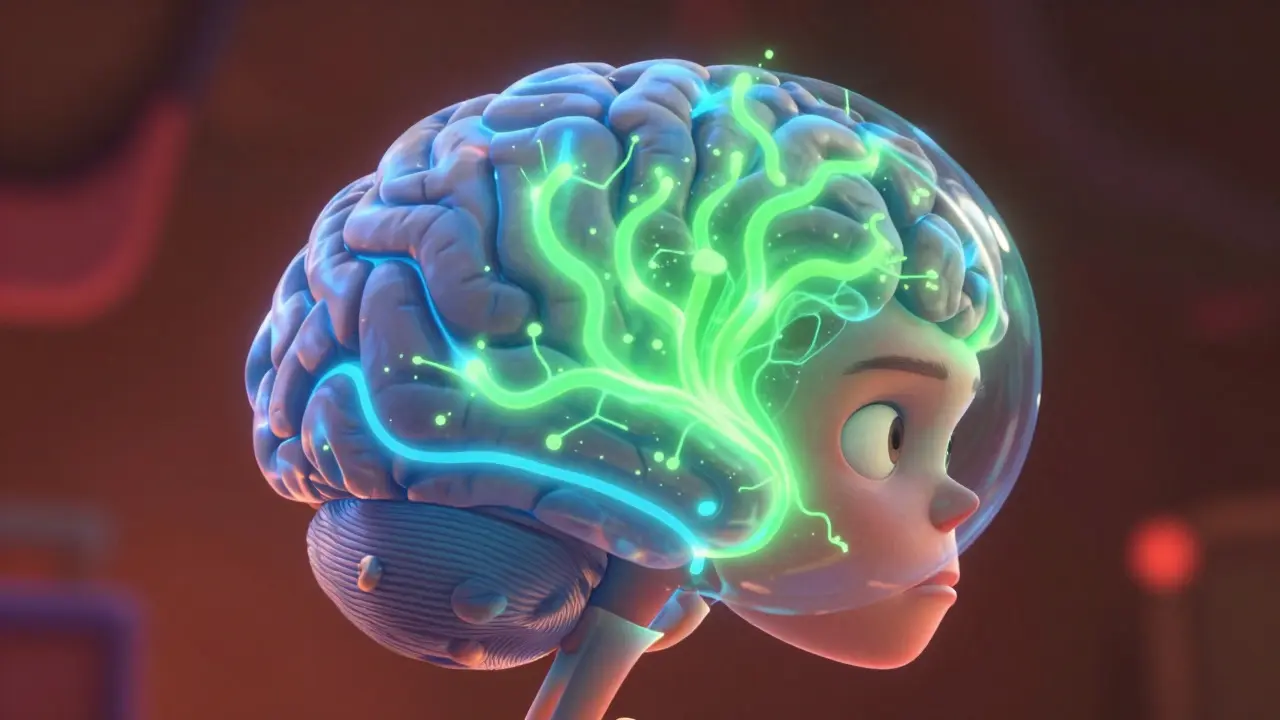
Tramadol & Serotonin Syndrome Risk Assessment Tool
This tool helps assess your risk of developing serotonin syndrome when taking tramadol. Based on your medications, dosage, age, and other factors, it provides a personalized risk assessment. Remember: serotonin syndrome is a medical emergency that requires immediate attention.
Key Symptoms to Watch For
Serotonin syndrome can develop rapidly and requires immediate medical attention:
- Shivering or uncontrollable muscle twitching (clonus)
- High body temperature (over 104°F)
- Fast heart rate and high blood pressure
- Agitation, confusion, or hallucinations
- Severe muscle stiffness
Most people think of opioids like morphine or oxycodone as painkillers that work in one way-by binding to opioid receptors in the brain. But tramadol isn’t like the others. It’s a sneaky one. It does the opioid thing, sure, but it also messes with serotonin, a brain chemical tied to mood, sleep, and muscle control. That dual action is why tramadol can trigger something dangerous: serotonin syndrome. And it’s not rare. People on regular doses, even without mixing drugs, have ended up in the ER with fever, muscle rigidity, and confusion-all because of tramadol alone.
Why Tramadol Is Different From Other Opioids
Traditional opioids-like hydrocodone, codeine, or fentanyl-mainly just activate opioid receptors. They don’t touch serotonin much. Tramadol? It’s built differently. Developed in the 1970s and approved in the U.S. in 1995, it was originally marketed as a safer alternative. But here’s the catch: its chemical structure lets it block the reuptake of serotonin and norepinephrine, just like some antidepressants do. That’s why it’s sometimes used for nerve pain, like diabetic neuropathy. But that same feature makes it a ticking time bomb when combined with other drugs-or even on its own.
Studies show that about 7% of white people are poor metabolizers of tramadol because of a genetic quirk in the CYP2D6 enzyme. That means their bodies can’t break down tramadol properly, so levels of the active, serotonin-boosting part of the drug build up. One 2015 study in JAMA Internal Medicine found that people taking tramadol with an SSRI like sertraline had a 3.6 times higher risk of serotonin syndrome than those on SSRIs alone. And it’s not just about mixing drugs. There are documented cases of people developing full-blown serotonin syndrome after taking just two 50 mg tramadol tablets-no other meds involved.
What Serotonin Syndrome Actually Looks Like
Serotonin syndrome isn’t just feeling a little off. It’s a medical emergency. Symptoms can show up within hours and escalate fast. The classic signs include:
- Shivering or uncontrollable muscle twitching (clonus)
- High body temperature-sometimes over 104°F
- Fast heart rate and high blood pressure
- Sweating, dilated pupils, or eye movements you can’t control (ocular clonus)
- Agitation, confusion, or hallucinations
- Muscle stiffness so severe it feels like rigidity
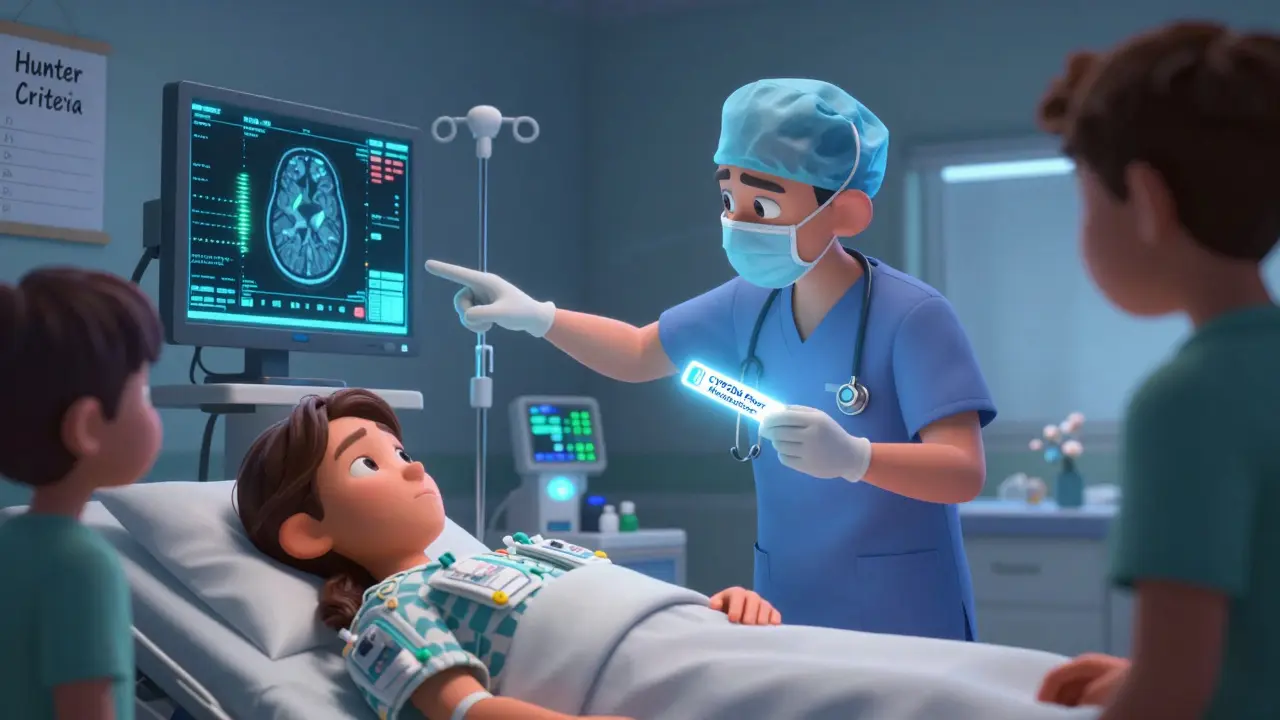
These symptoms are often mistaken for infections, heatstroke, or even opioid withdrawal. That’s why many cases go undiagnosed. A 2021 study estimated that only about 28% of tramadol-related serotonin syndrome cases are correctly identified in emergency rooms. The Hunter Serotonin Toxicity Criteria, used by poison control centers and ER teams, is the most reliable way to spot it. You need at least one of these: spontaneous clonus, inducible clonus with fever or sweating, or tremor plus hyperreflexia. If you see two or more of these, especially after starting or increasing tramadol, don’t wait-get help.
The Real Danger: Mixing Tramadol With Antidepressants
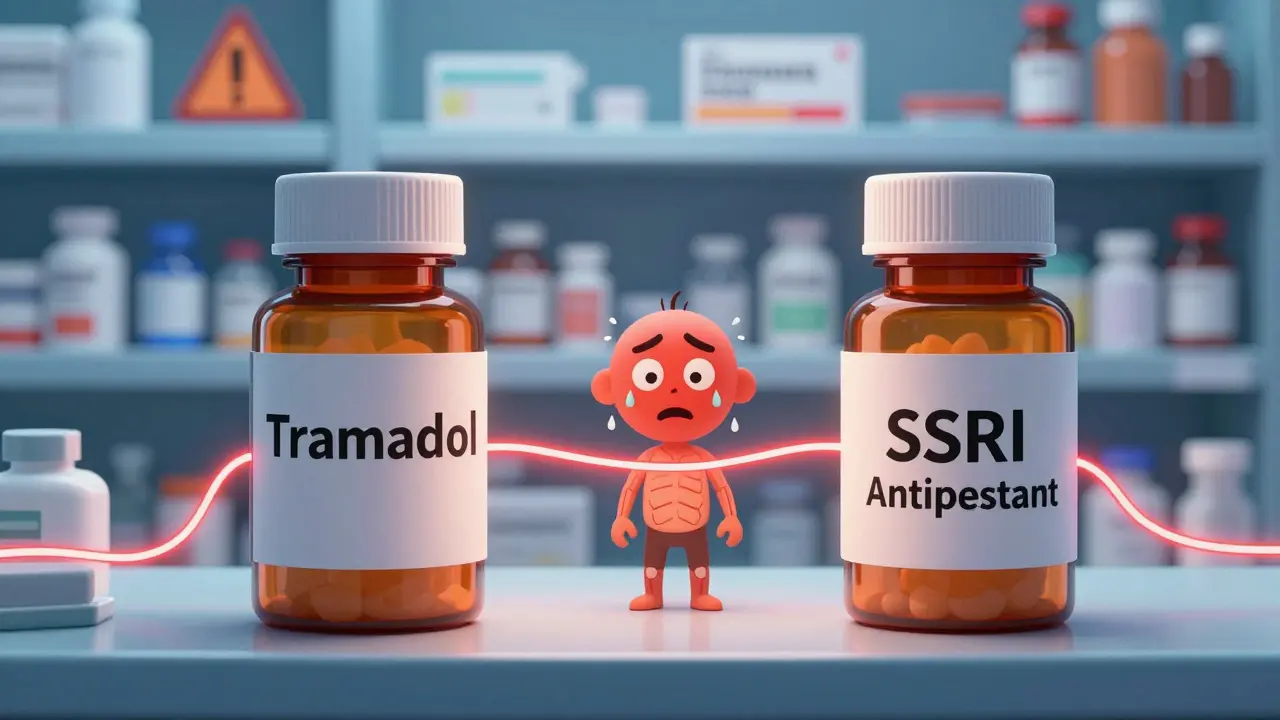
If you’re on an SSRI like fluoxetine (Prozac), sertraline (Zoloft), or escitalopram (Lexapro), or an SNRI like venlafaxine (Effexor) or duloxetine (Cymbalta), tramadol should be off the table. The combination doesn’t just raise the risk-it multiplies it. Why? Because SSRIs themselves block serotonin reuptake. Add tramadol’s serotonin-blocking effect, and your brain gets flooded. Even worse, SSRIs also block the CYP2D6 enzyme that breaks down tramadol. So you’re not just adding serotonin-you’re making tramadol last longer and build up in your system. It’s like pouring gasoline on a fire.
A 2013 meta-analysis in the Journal of Clinical Psychiatry found that 14.7% of people taking tramadol with an SSRI developed serotonin syndrome. Compare that to codeine (0.8%) or hydrocodone (1.2%). That’s not a small difference. That’s a red flag. And it’s not just antidepressants. Triptans for migraines, certain antibiotics like linezolid, and even some herbal supplements like St. John’s wort can trigger this reaction. The American Geriatrics Society’s 2019 Beers Criteria lists tramadol as potentially inappropriate for older adults specifically because of this risk. And it’s not just seniors-anyone on these drugs is vulnerable.
It Can Happen Even Without Other Drugs
Here’s what most doctors don’t tell you: you don’t need to be mixing drugs to get serotonin syndrome from tramadol. There are real, published case reports of people developing it on therapeutic doses of tramadol alone. One case involved a 63-year-old woman taking 100 mg twice daily-exactly what’s prescribed-and suddenly developing fever, confusion, and muscle rigidity. Her symptoms cleared up within 24 hours after stopping tramadol. Another case involved a 42-year-old woman who took two 50 mg tablets and ended up in the hospital with a 104°F fever and severe muscle stiffness. She had no other medications. No history of depression. Just tramadol.
These aren’t outliers. They’re warnings. Traditional opioids like oxycodone don’t do this. Fentanyl doesn’t do this. But tramadol does. And that’s why experts like Dr. Junji Takeshita from the University of Hawaii say the toxicity from tramadol comes from its effect on monoamines-not its opioid action. It’s not an opioid problem. It’s a serotonin problem wearing an opioid mask.
Who Should Avoid Tramadol Completely
If you have any of these, tramadol is a bad idea:
- You’re taking any SSRI, SNRI, MAOI, or triptan
- You have a history of bipolar disorder or mania-tramadol can trigger hypomania
- You’re over 65-older adults are 2.7 times more likely to develop serotonin syndrome on tramadol
- You’ve had seizures before-tramadol lowers the seizure threshold
- You’re a poor CYP2D6 metabolizer (common in 7-10% of Caucasians)
- You’ve ever had serotonin syndrome before
The CDC’s 2022 Opioid Prescribing Guideline explicitly says tramadol has “unique serotonergic risks not shared by other opioids” and recommends avoiding it in patients with depression or anxiety. The European Medicines Agency is considering restricting its use in the EU by 2025 because of this. If you’re on tramadol and you’re also on an antidepressant, you’re playing Russian roulette with your brain chemistry.
What to Do If You Think You Have Serotonin Syndrome
If you’re on tramadol and start feeling unusually hot, shaky, confused, or your muscles feel locked up, stop taking it immediately. Call your doctor or go to the ER. Don’t wait. The sooner you stop the drug, the better your chances.
First-line treatment is cyproheptadine, an antihistamine that blocks serotonin receptors. A typical dose is 12 mg taken orally right away, followed by 8 mg every 6 hours until symptoms improve. Benzodiazepines like lorazepam help with agitation and muscle stiffness. Cooling measures and IV fluids are often needed for high fevers. In severe cases, patients end up in the ICU.
But here’s the good news: if treated within 6 hours, the death rate drops from 22% to less than 0.5%. That’s not a small margin. That’s life or death based on speed. And the key is recognizing it early. If you’ve been on tramadol for a few days and suddenly feel “off,” don’t brush it off as anxiety or a bug. Ask yourself: Did I start or increase my dose? Am I on any other meds? Is my body reacting in ways I’ve never felt before?
Are There Safer Alternatives?
Yes. And they’re getting better.
Tapentadol is one. Like tramadol, it’s a dual-action painkiller, but it barely touches serotonin. A 2023 NIH-funded study called TRAM-SAFE compared tapentadol to tramadol in 2,500 patients with depression and found tapentadol had a 63% lower rate of serotonin syndrome-just 0.4% vs. 1.1%. That’s a huge difference.
For nerve pain, gabapentin or pregabalin are often safer and just as effective. For general pain, acetaminophen or NSAIDs like ibuprofen (if your kidneys and stomach can handle them) are better first choices. Even low-dose naltrexone, used off-label for chronic pain, avoids serotonin risks entirely.
And research is moving forward. Mayo Clinic is testing CYP2D6 genetic testing before prescribing tramadol. If you’re a poor metabolizer, you get a different drug. Phase II trials are also underway for a new version of tramadol-called M1-tramadol-that keeps the pain relief but removes the serotonin effect.
The Bottom Line
Tramadol isn’t just another pain pill. It’s a drug with a hidden double life. It looks like a safe opioid, but it’s wired like an antidepressant. That’s why it causes serotonin syndrome when other opioids don’t. It’s not about taking too much-it’s about how your body handles it. Even at normal doses. Even alone.
If you’re on tramadol and you’re also taking any antidepressant, migraine med, or herbal supplement that affects serotonin, talk to your doctor now. If you’ve had unexplained fever, muscle stiffness, or mental confusion after starting tramadol, get checked. And if you’re considering tramadol for chronic pain-especially if you have depression, anxiety, or are over 65-ask for alternatives. There are safer options. You don’t have to risk your brain chemistry for pain relief.
Tramadol can still help some people-68% of chronic pain patients in one survey reported good results without side effects. But for others, it’s a silent threat. Know your risk. Know the signs. And don’t assume it’s safe just because it’s prescribed.
Can tramadol cause serotonin syndrome on its own?
Yes. While it’s more common when combined with antidepressants, there are documented cases of serotonin syndrome occurring after taking therapeutic doses of tramadol alone-no other drugs involved. The drug’s dual action on opioid and serotonin systems makes this possible, even without interactions.
How long does it take for serotonin syndrome to develop after taking tramadol?
Symptoms can appear within hours-sometimes as quickly as 1 to 6 hours after taking a dose, especially if you’ve recently started or increased the dose. If you’re combining tramadol with another serotonergic drug, onset can be even faster. Don’t wait for symptoms to get worse.
Is tramadol still prescribed today?
Yes, but less than before. In 2022, there were about 39.4 million tramadol prescriptions in the U.S., down from 43.2 million in 2018. The FDA’s black box warning in 2011 and its reclassification as a Schedule II controlled substance in 2014 led to reduced prescribing. Many doctors now avoid it in patients with depression, anxiety, or those on antidepressants.
What are the most common serotonergic drugs that interact with tramadol?
The most common are SSRIs (like fluoxetine, sertraline), SNRIs (like venlafaxine, duloxetine), MAOIs, triptans (for migraines), and certain herbal supplements like St. John’s wort. Even some cough medicines containing dextromethorphan can trigger a reaction. Always check with your pharmacist before combining tramadol with anything new.
Can genetic testing help prevent serotonin syndrome with tramadol?
Yes. About 7-10% of Caucasians are poor metabolizers of tramadol due to CYP2D6 gene variations. This means their bodies can’t break down the drug properly, leading to dangerous buildup. Genetic testing for CYP2D6 status is being tested at places like Mayo Clinic and could soon become standard before prescribing tramadol to high-risk patients.
They’re lying to you. Tramadol was never meant to be safe. It’s a psyop by Big Pharma to get people hooked on antidepressants under the guise of pain relief. The FDA knew. The WHO knew. They just didn’t want to admit that their ‘safer opioid’ was actually a serotonin bomb disguised as a pill. And now they’re pushing genetic testing to shift blame onto your DNA instead of their profit margins.
Bro. I took tramadol for two weeks after my back surgery. Felt like I was being electrocuted from the inside. Shook like a leaf, couldn’t sleep, thought I was dying. Went to the ER and they just handed me a Tylenol and said ‘maybe you’re anxious.’ No. I was serotonin-fried. This post is 100% accurate. If you’re on SSRIs and they give you tramadol, run. Don’t walk.
Hey, I just want to say thank you for writing this. I’m a physical therapist and I’ve seen too many patients come in with this exact set of symptoms - fever, rigidity, confusion - and no one connects it to tramadol. I’ve started asking patients outright if they’re on antidepressants before even looking at their pain meds. It’s saved lives. Seriously. If you’re on tramadol and feel weird, don’t ignore it. Call your doc. Or better yet, call poison control. They’re trained for this stuff.
I’ve been on tramadol for 3 years for sciatica. Never had an issue. But I don’t take anything else with it. Maybe it’s just me, but I think the real problem is doctors prescribing it with antidepressants without checking. I get it - everyone’s in pain, everyone’s depressed. But you can’t just stack meds like Legos. My uncle died from this. Not because he took too much. Because he took tramadol + Zoloft. No one told him it was dangerous.
Tramadol? More like Trama-LIE. They gave it to me for a pulled muscle and I ended up hallucinating my cat was singing opera. I thought I was in a cult. Turns out I was just serotonin-saturated. Now I only take ibuprofen and cry quietly in the shower. Also, the FDA is owned by Pfizer. Everything’s a scam.
This is so important!! 💔 I’m on Lexapro and my doctor almost prescribed me tramadol for my chronic back pain. I asked about serotonin syndrome and he looked at me like I was speaking Klingon. I had to Google it myself and bring him the JAMA study. He changed it to gabapentin immediately. 🙌 Please, if you’re on antidepressants - don’t trust your doctor’s memory. Do your research. Your brain is worth it.
Let me break this down because people keep saying ‘it’s rare’ - it’s not rare. It’s underdiagnosed. ER docs are trained to look for infections, strokes, or drug overdoses. Serotonin syndrome? They see ‘fever + confusion’ and think ‘flu’ or ‘psychosis.’ That’s why the Hunter Criteria exist - because the old Sternbach criteria are useless. If you have spontaneous clonus, you have serotonin syndrome. Full stop. And if you’re on tramadol + any serotonergic drug, you’re already in the danger zone. No ‘maybe.’ No ‘probably.’ You’re at risk. Period. And yes, even if you’re ‘just’ on 50mg twice a day. That’s the whole point. It’s not about dose. It’s about mechanism. Tramadol is a chemical grenade with a pull tab labeled ‘pain relief.’
My sister had serotonin syndrome after taking tramadol for a toothache. She didn’t even know she was on an SSRI - her doctor had switched her from Wellbutrin to Celexa and didn’t tell her to wait. She took tramadol 3 days later. Ended up in ICU for 72 hours. They had to intubate her. She’s fine now, but she has PTSD from it. This isn’t a ‘maybe.’ It’s a ‘when.’ If your doctor prescribes tramadol and you’re on anything that affects mood, ask them to justify it. If they can’t - walk out.
It is truly a matter of grave concern that such a medication, possessing such a dual pharmacological profile, is still widely prescribed without adequate screening protocols. In Nigeria, where access to pharmacogenetic testing is virtually nonexistent, the risk is amplified exponentially. We must advocate for mandatory patient education and the adoption of international guidelines such as the Beers Criteria, particularly for elderly populations who are disproportionately affected. This is not merely a medical issue - it is a public health imperative.
Tramadol is fine if you’re not on other meds. I’ve been on it for 5 years. No issues. But I don’t drink, don’t take anything else. So yeah, if you’re mixing stuff, you’re asking for trouble. But don’t blame the drug. Blame the people who stack it with antidepressants like candy.
I didn’t know any of this until my mom had a scare. She’s 71, on Lexapro, got tramadol for arthritis. Started trembling and saying she saw spiders on the walls. We rushed her to the hospital. They gave her cyproheptadine and she was fine in 4 hours. Now I print this post out and hand it to every doctor I meet. Knowledge is power. Don’t assume it’s safe just because it’s FDA-approved.
Oh, so now American doctors are too lazy to read a damn drug interaction chart? Brilliant. We’ve got a healthcare system where a 70-year-old woman gets tramadol with an SSRI and then we blame genetics? In Britain, we’ve had warnings since 2017. Here? You need to Google your own death. Pathetic.
Wait… so if you’re a poor CYP2D6 metabolizer, tramadol builds up and causes serotonin syndrome… but if you’re a normal metabolizer, you’re fine? So… the drug is safe for most people? Then why is everyone acting like it’s a poison? I get the risk with SSRIs - but the article makes it sound like every single person who takes tramadol is one pill away from a coma. That’s fearmongering. I’ve taken it twice. Felt fine. Maybe the real problem is overdiagnosis? Or maybe we’re just scared of anything that doesn’t have a 0% risk? 🤔
In my community, many elderly patients rely on tramadol because it’s cheap and covered by insurance. We don’t have access to tapentadol or gabapentin. So while I agree with the science, I also know that for many, the alternative is untreated pain - and that’s its own kind of suffering. We need better access to safer alternatives, not just warnings. Education without options is just guilt.
OMG I had this happen to me and NO ONE BELIEVED ME. I was just trying to get through my divorce and my doctor gave me tramadol for back pain from crying too much. I thought I was having a spiritual awakening until I started screaming at my dog because he looked like a demon. Then I passed out. Woke up in the hospital with a catheter and a nurse saying ‘you’re lucky you didn’t die.’ Now I take CBD oil and I don’t talk to anyone who still uses tramadol. I’m still traumatized. Like… why did they even make this drug? 😭