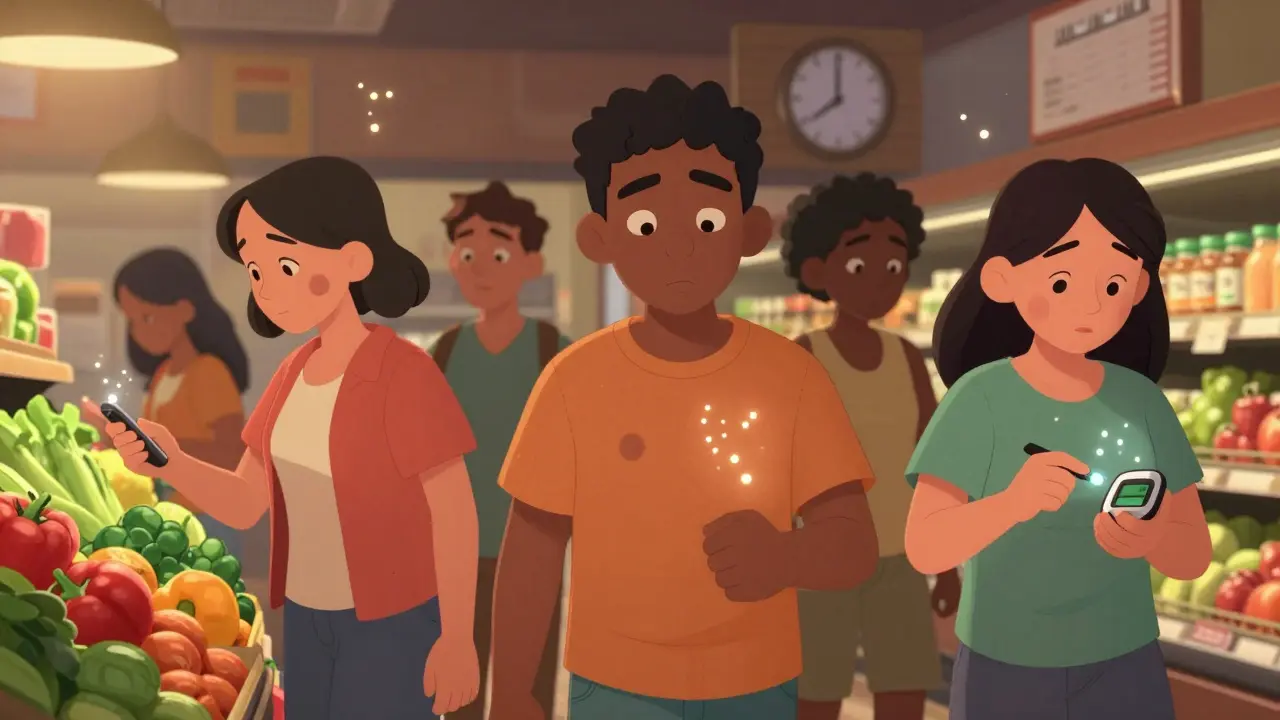
When your body stops responding to insulin like it should, blood sugar starts climbing-slowly, quietly, often without warning. That’s type 2 diabetes. It’s not just a sugar problem. It’s a whole-body issue that sneaks up over years, sometimes decades, before you notice anything wrong. By the time symptoms show up, damage may already be happening in your heart, kidneys, nerves, and eyes. The good news? You can stop it. You can even reverse it-if you act early enough.
What Actually Happens in Type 2 Diabetes?
Your body uses insulin to move glucose (sugar) from your blood into your cells for energy. In type 2 diabetes, two things go wrong. First, your muscle, fat, and liver cells stop listening to insulin-they become resistant. Second, your pancreas can’t keep up by making enough extra insulin to compensate. Over time, the insulin-producing beta cells burn out. By the time most people are diagnosed, they’ve already lost about half their insulin-making capacity.
This isn’t something that happens overnight. It builds slowly. A person with a BMI over 30 is 80 times more likely to develop it than someone with a healthy weight. Physical inactivity adds to the risk. Genetics play a role too-if a parent or sibling has it, your chance jumps by 40%. But it’s not destiny. Even with a strong family history, lifestyle can change the outcome.
Signs You Might Have Type 2 Diabetes (They’re Subtle)
Many people don’t realize they have it until a routine blood test shows high sugar levels. But here are the real signs, backed by clinical data:
- Constant thirst-you’re drinking more water than usual, even at night. This happens because your kidneys work overtime to flush out excess sugar, pulling fluid from your body.
- Frequent urination-you’re going to the bathroom more often, especially after drinking water.
- Unexplained fatigue-you’re tired all the time, even after sleeping. Your cells aren’t getting the fuel they need because sugar can’t get inside them.
- Blurred vision-high blood sugar changes the shape of your eye’s lens, making it hard to focus.
- Slow-healing cuts or sores-your body’s repair system slows down when sugar levels are high.
- Recurrent infections-yeast infections, urinary tract infections, or skin infections that won’t go away.
- Tingling or numbness in hands or feet-this is nerve damage from long-term high sugar.
- Dark patches on skin-especially on the neck, armpits, or groin. This is called acanthosis nigricans and is a visible red flag for insulin resistance.
Here’s the hard truth: 27% of Americans with diabetes don’t know they have it. Symptoms are mild at first. You might blame tiredness on stress, thirst on hot weather, or blurred vision on screen time. But if you’re over 45, overweight, inactive, or have a family history, don’t wait for symptoms. Get tested.
Why Some Groups Are at Higher Risk
Type 2 diabetes doesn’t affect everyone equally. Native Americans have the highest rate at 14.5%, followed by African Americans (12.1%), Hispanic/Latino Americans (11.8%), and Asian Americans (9.5%). Non-Hispanic White Americans have a 7.4% rate. Why? It’s not just genetics. It’s access to healthy food, safe places to exercise, stress levels, and healthcare gaps. The same genetic risk might show up differently depending on environment.
And it’s no longer just an older adult disease. In 2022, more than 287,000 Americans under 20 had type 2 diabetes-up sharply from just 15 years ago. Childhood obesity is a major driver. Kids with insulin resistance often show dark skin patches before they even develop high blood sugar. That’s a warning sign parents need to recognize.
How Type 2 Diabetes Gets Worse Over Time
Left untreated, high blood sugar doesn’t just cause discomfort-it causes damage. Every year, your pancreas loses 4-5% more insulin-producing cells. That means what worked last year-maybe just diet and walking-won’t be enough next year.
The complications are serious:
- Heart disease-65-80% of people with type 2 diabetes die from heart attack or stroke. Their risk is 2 to 4 times higher than someone without diabetes.
- Nerve damage-60-70% of people develop neuropathy after 10 years. That can lead to foot ulcers, and 1 in 5 of those ulcers ends in amputation.
- Kidney failure-type 2 diabetes causes 44% of all new cases of kidney failure needing dialysis.
- Blindness-diabetic retinopathy causes 17,000 new cases of vision loss each year in the U.S. alone.
- Brain health-people with diabetes have a 2-3 times higher risk of Alzheimer’s. Some researchers now call it ‘type 3 diabetes’ because the same insulin resistance affects the brain.
- Depression-it’s twice as common in people with diabetes and linked to a 20% higher risk of early death.
These aren’t rare outcomes. They’re predictable results of uncontrolled blood sugar. But they’re not inevitable.
How to Manage Type 2 Diabetes-Real Strategies That Work
Management isn’t about perfection. It’s about consistency. The goal isn’t to eliminate sugar forever-it’s to keep your blood sugar in a safe range so your body can heal.
1. Start with lifestyle changes-this is the most powerful tool you have. The CDC’s National Diabetes Prevention Program found that losing just 7% of your body weight through diet and 150 minutes of walking per week cuts your risk of developing diabetes by 58%. That’s more effective than any drug.
2. Eat for stable blood sugar-cut out sugary drinks, refined carbs like white bread and pastries, and processed snacks. Focus on whole foods: vegetables, lean proteins, beans, nuts, whole grains, and healthy fats. A plate with half non-starchy veggies, a quarter protein, and a quarter whole grains is a simple rule to follow.
3. Move every day-you don’t need to run a marathon. Just walking 30 minutes after meals helps lower blood sugar spikes. Strength training twice a week improves insulin sensitivity even more.
4. Medication isn’t failure-it’s support-metformin is still the first-line drug. It lowers blood sugar by making your body use insulin better and doesn’t cause weight gain or low blood sugar. If that’s not enough, newer drugs like GLP-1 agonists (semaglutide, liraglutide) or SGLT2 inhibitors (empagliflozin, dapagliflozin) do more than lower sugar-they protect your heart and kidneys, and help you lose weight.
5. Monitor your numbers-HbA1c (a 3-month average of blood sugar) should be under 7% for most adults. But for older people or those with other health issues, 7-8% might be safer. Don’t chase ultra-low numbers if it means frequent low blood sugar episodes.
Can Type 2 Diabetes Be Reversed?
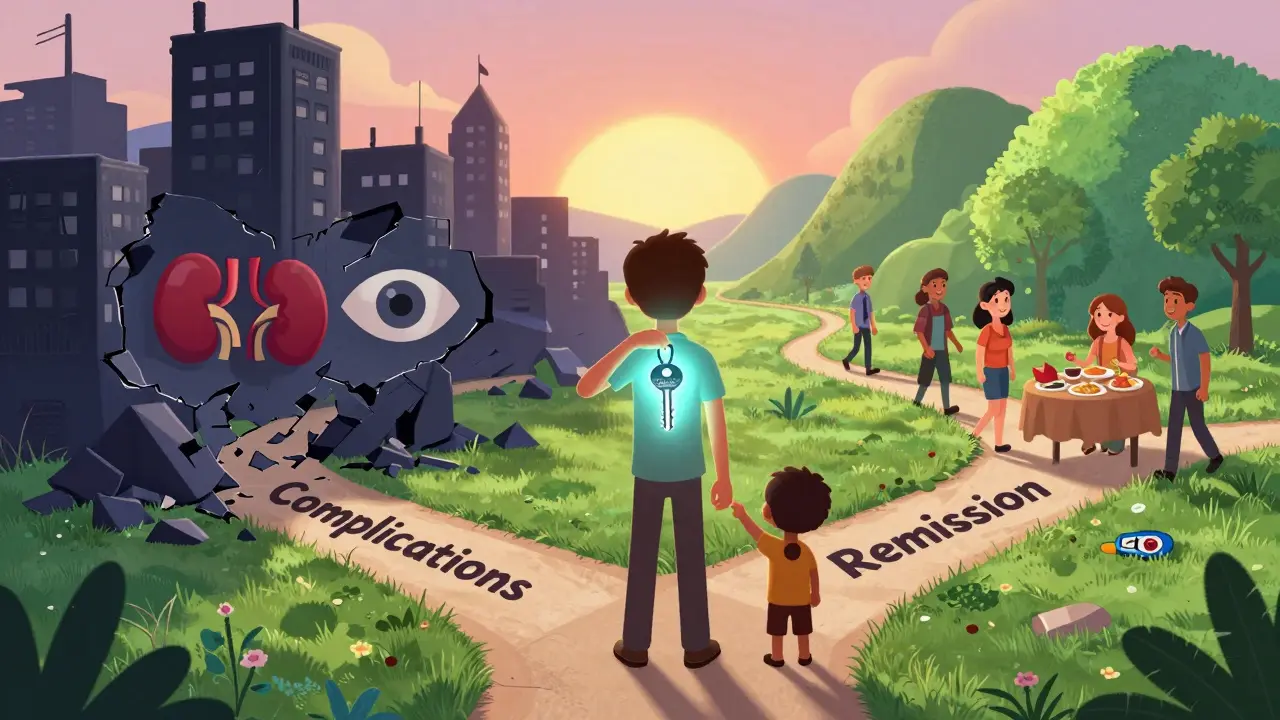
Yes-sometimes. Not always. But in people who’ve had it for less than six years, structured weight loss programs can put it into remission. The landmark DIALECT trial showed that 46% of participants who followed a very low-calorie diet (800 calories/day for 3-5 months), then slowly added back food, reached remission-meaning their HbA1c dropped below 6.5% without any medication.
It’s not easy. It requires discipline, support, and medical supervision. But it’s possible. And the longer you wait, the harder it becomes. Beta cells that have been silent for years may not come back online.
What’s New in Treatment
Medicine is moving fast. Tirzepatide (Mounjaro), a new dual-action drug approved in 2022, lowers HbA1c by up to 2.3% and helps people lose 11-15 pounds on average. Hybrid closed-loop insulin systems, once only for type 1, are now approved for type 2. These devices automatically adjust insulin based on real-time glucose readings, improving time-in-range from 51% to 71%.
And access is improving. Medicare coverage for continuous glucose monitors (CGMs) jumped from 1.2% of users in 2017 to 12.7% in 2022. That means more people can see how food, sleep, and stress affect their sugar-without pricking their fingers constantly.
What Doesn’t Work
Diets that promise quick fixes? They don’t last. Supplements that claim to cure diabetes? They’re not proven. Cutting out all carbs? You’ll feel terrible and likely regain weight. The key isn’t extreme restriction-it’s sustainable change.
And aggressive blood sugar targets aren’t always better. For older adults with heart disease or a history of low blood sugar, aiming for HbA1c under 6.5% can be dangerous. The goal is balance: good control without risking hypoglycemia.
How to Start Today
If you’re worried you might have type 2 diabetes:
- Get a fasting blood sugar test or HbA1c test from your doctor.
- If you’re overweight, aim to lose 5-10% of your body weight. Even 10 pounds can make a big difference.
- Swap one sugary drink for water every day.
- Take a 15-minute walk after dinner.
- Write down what you eat for three days. You’ll spot patterns you didn’t notice.
If you already have it:
- Don’t wait for symptoms to get worse. Check your HbA1c every 3-6 months.
- Ask your doctor about GLP-1 or SGLT2 drugs if you’re not on them-they do more than lower sugar.
- Consider a CGM if you’re struggling to control your numbers.
- Join a CDC-recognized lifestyle program. They’re free or low-cost in most states.
Type 2 diabetes isn’t a life sentence. It’s a signal. A signal that your body needs better fuel, more movement, and more care. The tools to fix it are here. The question is: are you ready to use them?
Can type 2 diabetes be cured completely?
Type 2 diabetes can go into remission-meaning blood sugar returns to normal without medication-but it’s not a permanent cure. If you regain weight or stop healthy habits, it can come back. Remission is most likely in people who lose significant weight early after diagnosis, especially within the first six years. Studies show about half of those who follow strict weight-loss programs can achieve remission. But the underlying risk remains, so ongoing monitoring is essential.
Do I need to take medication forever?
Not necessarily. Some people can stop medication if they lose weight, get active, and keep their blood sugar in range through lifestyle changes alone. Others may need medication long-term, especially if their pancreas has lost too much function. The goal isn’t to avoid medication-it’s to use it wisely. Metformin is often used long-term because it’s safe and effective. Newer drugs like GLP-1 agonists can help with weight loss and heart protection, making them valuable even if you don’t need them just for blood sugar.
Is type 2 diabetes hereditary?
Yes, genetics play a big role. If a parent or sibling has type 2 diabetes, your risk is about 40% higher. Over 400 gene variants have been linked to increased susceptibility. But genes aren’t fate. Even with a strong family history, maintaining a healthy weight and staying active can cut your risk by more than half. Your lifestyle choices have more power than your DNA.
Can I still eat carbs if I have type 2 diabetes?
Absolutely-but the type and amount matter. Avoid refined carbs like white bread, pastries, and sugary cereals. These spike blood sugar fast. Instead, choose whole grains like oats, quinoa, brown rice, and legumes. These digest slowly and come with fiber, which helps control sugar spikes. Portion control is key. One small serving of whole grains at a meal is fine. Pair it with protein and vegetables to slow absorption.
Why do some people with type 2 diabetes lose weight?
When your body can’t use glucose for energy because of insulin resistance, it starts breaking down fat and muscle for fuel. This causes unexplained weight loss-even if you’re eating normally. It’s a sign your body is struggling. That’s why weight loss can be an early symptom. Once treatment starts and glucose enters cells properly, weight often stabilizes or even increases slightly-which is actually a good sign your body is healing.
How often should I check my blood sugar?
It depends on your treatment plan. If you’re on insulin or have trouble controlling your numbers, checking daily (or using a continuous glucose monitor) helps you adjust food, activity, or meds. If you’re managing with diet and metformin, checking once or twice a week may be enough. Your doctor will guide you based on your HbA1c, lifestyle, and risk of low blood sugar. The goal isn’t to obsess over numbers-it’s to understand trends and make smarter daily choices.
Can stress make type 2 diabetes worse?
Yes. Stress triggers hormones like cortisol, which raise blood sugar. Chronic stress can make it harder to control your numbers, even if you’re eating well and exercising. It can also lead to emotional eating or skipping workouts. Managing stress through sleep, mindfulness, walking, or talking to someone isn’t optional-it’s part of diabetes care. Studies show people who practice stress-reduction techniques have better HbA1c levels over time.
Are there foods that can reverse type 2 diabetes?
No single food reverses type 2 diabetes. But whole, unprocessed foods-especially non-starchy vegetables, legumes, nuts, seeds, and lean proteins-support insulin sensitivity. The most effective approach is a structured, calorie-controlled diet like the one used in the DIALECT trial, which combined total diet replacement with gradual food reintroduction. It’s not about eating one superfood-it’s about changing your entire eating pattern over time.
What Comes Next?
If you’re newly diagnosed, give yourself grace. This isn’t a failure. It’s a wake-up call. Start small: swap soda for water, take a walk after dinner, get your HbA1c tested. Talk to your doctor about options beyond metformin-newer drugs can help you lose weight and protect your heart. Consider joining a lifestyle program. You’re not alone.
If you’ve had it for years and feel stuck, know this: it’s never too late to make a change. Even small improvements lower your risk of complications. Your body is still capable of healing-especially if you give it the right tools.
Type 2 diabetes is common. But it doesn’t have to be your story forever.
Diabetes ain't a lifestyle choice it's a slow motion car crash and most people only notice when the airbag blows
It's not about willpower. It's about systems. Your body isn't broken-it's been starved of real food, movement, and peace. The real cure? Belonging. Community. Not just glucose monitors but human connection. I've seen people reverse this not by willpower but by finding a tribe that holds space for them to heal.
It's not the carbs that kill you-it's the loneliness that makes you reach for them.
Okay, so let me get this straight-your pancreas is basically a tired bartender who's been serving 12 shots an hour for 20 years, and now it's like, 'I'm done, I'm quitting, I'm going to Bali'-and your cells are like, 'Nah, we don't take cash anymore, we need insulin vouchers.' And then your liver's like, 'I'll just make my own sugar, no big deal,' and your brain's like, 'Wait, why am I so tired and hungry all the time?' And you're just sitting there wondering why your socks don't fit anymore. This isn't a disease-it's a full-systems collapse, and we're treating it like a bad Yelp review.
And don't even get me started on the fact that the same people who sell you kale smoothies are the ones who own the food deserts where your grandma buys 20 packs of Pop-Tarts because they're on sale. This is capitalism with a side of insulin resistance.
You got this. I was prediabetic at 32. I swapped soda for sparkling water. Walked after dinner. Didn’t quit carbs-just chose the ones that didn’t make me feel like a zombie. Now my HbA1c is 5.4. No meds. No magic. Just consistency. You don’t need to be perfect-you just need to show up.
metformin is the OG. glp1s are just fancy glitter on a busted engine. also why is everyone acting like weight loss is the only solution? what about the lean diabetics? 🤨
I just want to say-thank you for writing this. So many people feel alone with this. I was diagnosed three years ago, and I thought I was failing until I realized: it’s not about being perfect. It’s about showing up, even when you’re tired. Even when the scale doesn’t move. Even when you eat the damn cookies. Your body still hears you. It still responds. You’re not broken. You’re becoming.
Oh sweetie, you really think a 7% weight loss is gonna fix a 20-year insulin resistance? Honey, I’ve seen this movie. The body remembers. The fat cells remember. The liver remembers. You can’t out-walk a lifetime of processed food and stress. And don’t even get me started on the 'just move more' advice from people who’ve never had to work three jobs and still choose between insulin and rent.
It’s not a lifestyle-it’s a systemic failure wrapped in a wellness influencer’s Instagram post.
In India, we used to say, 'Food is medicine.' Now, medicine is food-and we’ve forgotten how to eat. My grandmother cooked with turmeric, neem leaves, and millet. No pills. Just rhythm. Maybe we lost something when we traded tradition for convenience.
Not all solutions are high-tech. Sometimes, they’re just quiet.
Let’s be honest: the entire medical-industrial complex is profiting from your metabolic dysfunction. They don’t want you to reverse it-they want you to manage it… forever. And those 'new' drugs? They’re not cures-they’re corporate patents with side effects you’ll pay for in kidney failure. The real reversal? Reject the system. Eat whole. Move freely. Live without fear. But of course, that’s not monetizable.
i just got my a1c down to 5.8 after 2 years!! i didnt even try that hard!! i just stopped eating cereal and started walking with my dog!! she’s a good therapist!!
The data presented here is largely consistent with current clinical guidelines. However, the framing of 'reversal' as a binary outcome may be misleading. Remission is better understood as a dynamic state contingent upon sustained behavioral adherence. Further, the generalizability of the DIALECT trial results to populations without access to intensive medical supervision remains limited.
Look-I’m not here to shame anyone. But if you’re reading this and you’re scared, that’s okay. You’re not late. You’re not broken. You just need to start somewhere. One meal. One walk. One honest conversation with your doctor. That’s all it takes. You don’t need to be perfect. You just need to be present.
And if you’ve been told you’re 'too late'? That’s not true. Your body is still listening. Keep showing up.
My dad had it. He lost 50 pounds. He walked every day. He ate veggies. He still got kidney damage. So I don’t believe in 'reversal' as a promise. I believe in fighting for every inch. Even if you can’t fix it, you can still protect what’s left.
Oh please. You think walking after dinner fixes decades of sugar addiction? You think your kale smoothie cancels out your childhood trauma? This isn’t a diet-it’s a trauma response wrapped in a biohacker’s fantasy. Stop pretending this is about willpower. It’s about poverty, racism, and food apartheid.
Bro... what if diabetes is just nature's way of saying 'stop eating so much'? 🤔😂