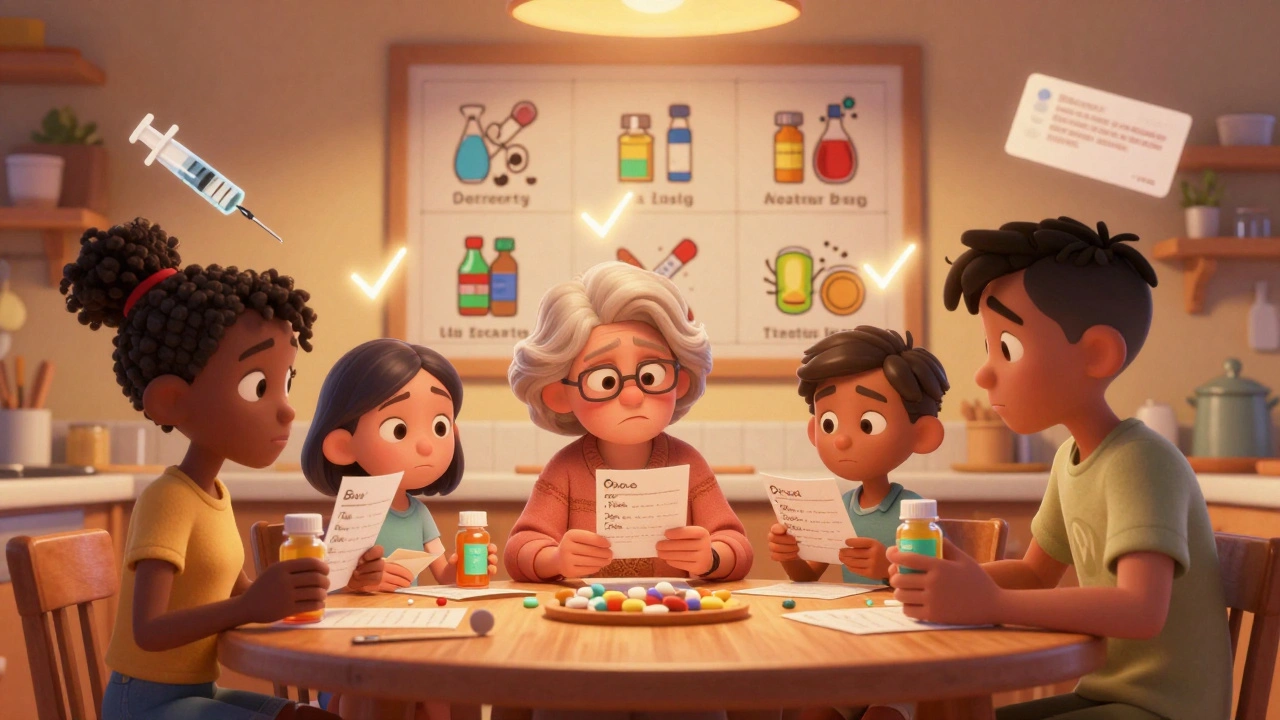
Every year, over 1.5 million people in the U.S. end up in the emergency room because of problems with their medications. Many of these cases aren’t accidents-they’re preventable. Medication safety isn’t just a hospital policy or a checklist for nurses. It’s the system that keeps you from taking the wrong pill, the wrong dose, or a drug that clashes with something else you’re already taking. And it matters just as much whether you’re 25 or 75.
What Exactly Is Medication Safety?
Medication safety means making sure you get the right medicine, in the right amount, at the right time, for the right reason-and that nothing bad happens because of it. It’s not just about doctors prescribing correctly. It includes how the pharmacy fills the prescription, how you store your pills at home, whether you understand the instructions, and if your doctor knows what other meds you’re taking.
The process doesn’t stop at the pharmacy counter. It spans nine steps: buying the drug, storing it, writing the prescription, transcribing it, preparing it, dispensing it, giving it to you, recording it, and watching how your body reacts. At every step, something can go wrong. A handwritten note misread. A label that looks too similar to another drug. A nurse distracted during administration. A patient skipping doses because they can’t afford them.
According to the Institute of Medicine, a medication error is any mistake that could lead to harm-and most of them are preventable. The CDC says 400,000 of these errors happen inside U.S. hospitals every year. That’s not a tiny fraction. That’s a massive, avoidable burden on patients and the system.
Why Do Medication Errors Happen?
It’s rarely one person’s fault. It’s usually a chain of small breakdowns.
Prescribing errors make up 38% of all mistakes. A doctor might write “10 mg” instead of “1 mg,” or prescribe a drug that interacts badly with another. One Reddit user shared how their mother was given 10 mg of Xanax instead of 1 mg because of messy handwriting. She ended up hospitalized for three days.
Administration errors-when the nurse gives the wrong drug or dose-are the second most common, at 26%. That’s often because of rushed shifts, poor labeling, or skipping safety checks. Barcode scanning systems cut these errors by 65% when used properly. But only about half of hospitals have fully integrated them.
And then there’s the patient side. A 2023 survey found that 42% of adults over 65 skip doses, cut pills in half, or stop taking meds because of cost or side effects. That’s not noncompliance-it’s survival. When you’re choosing between paying for insulin or groceries, safety becomes a luxury.
High-alert drugs are especially dangerous. Insulin, opioids, blood thinners, and IV oxytocin are responsible for a huge chunk of serious errors. One wrong dose of insulin can send someone into a coma. One extra milligram of an opioid can stop breathing.
Who’s Most at Risk?
Children and older adults are the most vulnerable. Kids make up 20% of all adverse drug events, often because dosing is based on weight and small miscalculations have big consequences. Seniors 65 and older account for half of all medication-related hospital stays. Why? Because they’re more likely to take five, ten, or even fifteen different drugs at once. Polypharmacy isn’t just a buzzword-it’s a ticking time bomb.
Pregnant women face unique risks too. Some drugs that are safe for most people can cause birth defects. Yet many women aren’t told about these dangers unless they specifically ask.
And let’s not forget people managing chronic conditions. Someone with diabetes, heart disease, and depression might be on eight medications. Each one adds complexity. A single missed interaction can lead to kidney failure, dangerous bleeding, or a stroke.
How Do You Protect Yourself?
You don’t have to wait for the system to fix itself. There are simple, powerful things you can do right now.
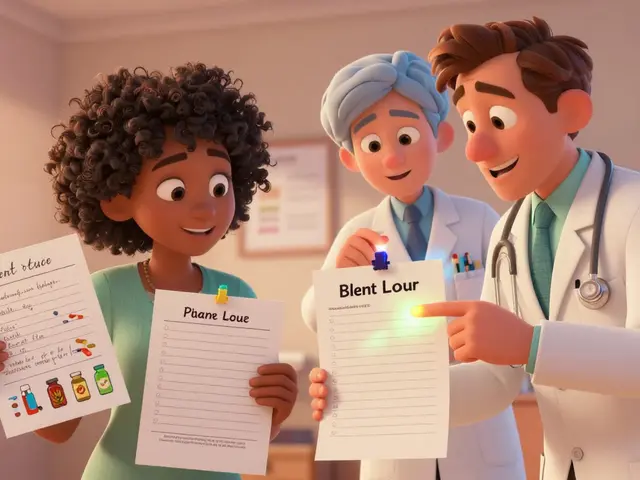
Keep a living list of every medication you take. That includes prescriptions, over-the-counter drugs, vitamins, supplements, and even herbal teas. Write down the name, dose, why you take it, and how often. Update it every time your doctor changes something. The CDC says patients who use this method reduce errors by 45% during hospital transitions.
Ask three questions every time you get a new prescription:
- What is this medicine for?
- How do I take it-and when?
- What side effects should I watch for?
If the answer is vague or rushed, ask again. You have the right to understand your treatment.
Use a pill organizer. Blister packs or weekly trays help you avoid double-dosing or skipping days. One AARP study showed patients using them improved adherence by 60%.
Bring your list to every appointment. Don’t assume your doctor remembers what you took last month. Bring the list. Hand it to them. Say, “This is what I’m on now.”
Know your high-alert drugs. If you’re on insulin, warfarin, or opioids, ask your pharmacist for extra counseling. These drugs need extra attention.
What’s Being Done to Fix This?
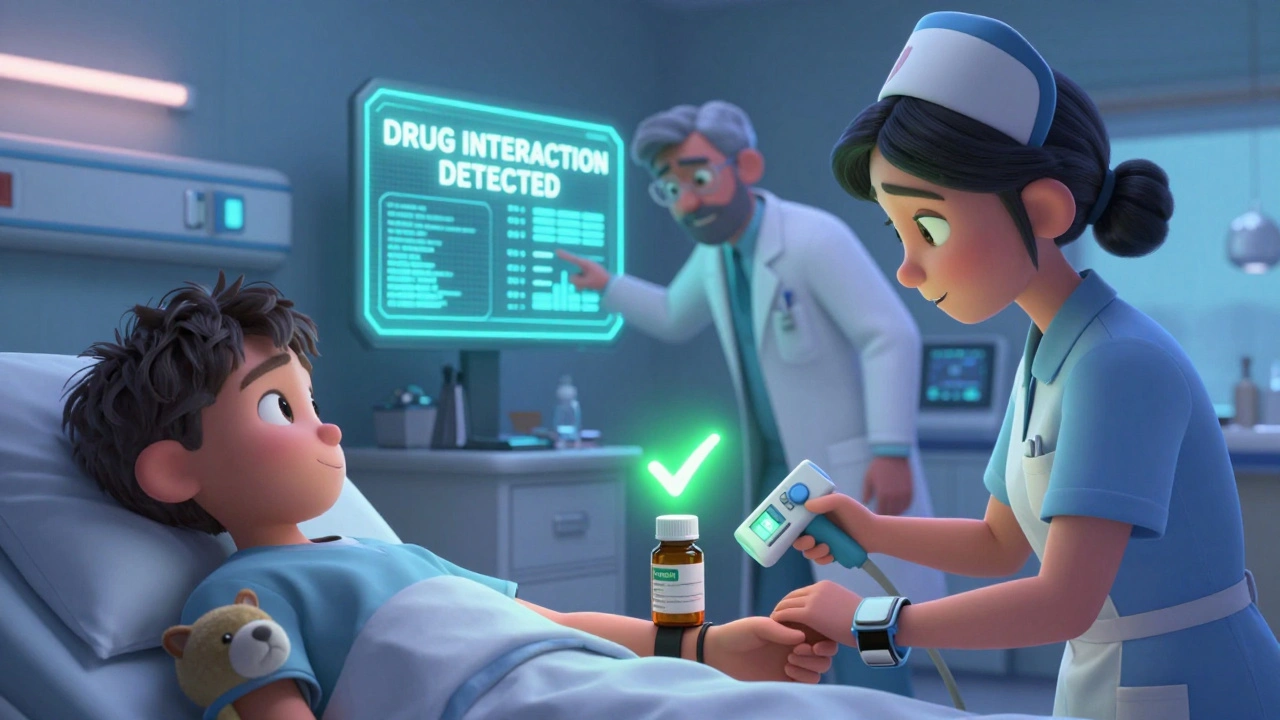
Hospitals and pharmacies aren’t ignoring the problem. Many now use electronic health records with built-in alerts. If a doctor tries to prescribe a drug that clashes with another, the system flashes a warning. Studies show this cuts serious errors by nearly half.
Barcode scanning at the bedside means a nurse scans your wristband and the pill before giving it. If it doesn’t match, the system won’t let them proceed. That’s how hospitals have slashed administration errors.
The FDA recently required all prescription labels to use standardized numeric dosing-no more “.5 mg” that could be misread as “5 mg.” In pilot programs, this reduced decimal errors by 32%.
The World Health Organization’s “Medication Without Harm” campaign is pushing countries to cut severe medication-related harm by 50% by 2027. Countries that joined already saw 18% fewer incidents in the first year.
But technology alone won’t fix this. The biggest barrier isn’t tools-it’s culture. Only 35% of healthcare organizations have truly non-punitive reporting systems. If nurses fear being blamed for mistakes, they won’t report them. And if errors aren’t reported, they can’t be fixed.
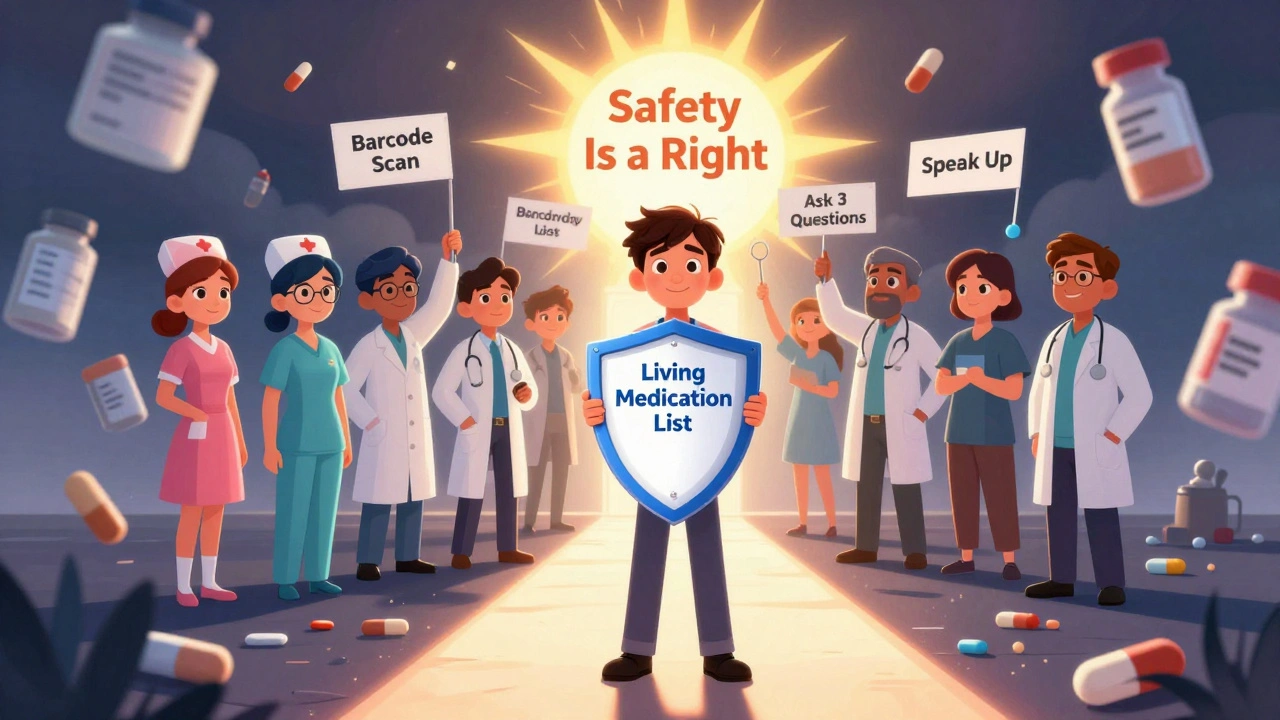
The Bigger Picture: Safety Is a Right, Not a Bonus
Medication safety isn’t about avoiding lawsuits or meeting regulations. It’s about the basic promise of healthcare: do no harm. When you walk into a clinic or hospital, you trust that the person giving you medicine knows what they’re doing. That trust should be backed by systems-not luck.
Every dollar spent on medication safety returns $4.20 in saved hospital costs, fewer readmissions, and better outcomes. That’s a return most industries would kill for.
And yet, the system still fails too often. In the U.S., preventable medication errors still cause 100,000 to 200,000 deaths a year. That’s more than car accidents. More than breast cancer. And most of it is avoidable.
It’s not just the job of doctors, nurses, or pharmacists. It’s yours too. You are the last line of defense. You know your body. You know your routine. You know when something feels off.
Don’t wait for someone else to protect you. Be your own advocate. Ask questions. Write things down. Speak up. Your life might depend on it.
What Happens When Safety Fails?
Real stories don’t come from reports-they come from kitchens, living rooms, and hospital beds.
A grandmother in Ohio took her blood thinner at night instead of morning because the label was blurry. She ended up in the ER with internal bleeding.
A teenager in Texas was given an antibiotic that clashed with his birth control. He didn’t know. His mom didn’t know. They didn’t ask. He got an unexpected pregnancy.
A man in Florida took two different painkillers-both containing acetaminophen. He didn’t realize the doses added up. He developed liver failure.
These aren’t rare. They’re routine.
And the saddest part? Most of these people had no idea they were at risk.
What’s Next for Medication Safety?
The future is getting smarter. AI tools are being tested to scan your entire medication history and flag potential clashes before a doctor even writes the script. Blockchain tech is being used in Europe to track pills from factory to pharmacy, cutting down fake drugs by 65%.
Telehealth is growing fast-but so are errors. A 2023 report showed a 300% jump in telehealth medication mistakes. No physical exam. No visual check. No pharmacist handing you the bottle. That’s a dangerous gap.
Personalized medicine is another double-edged sword. Treatments tailored to your genes are powerful-but they also mean more complex regimens, more interactions, more chances for error.
The tools are coming. But they won’t help if we don’t use them. And they won’t matter if we don’t change how we think about safety.
Medication safety isn’t a department. It’s a mindset. It’s the moment you pause before swallowing a pill and ask: ‘Is this right?’
It’s the nurse who double-checks the wristband. The pharmacist who calls the doctor when the dose seems off. The patient who says, ‘I think this isn’t what I was told.’
It’s not complicated. It’s just human.
So let me get this right: we’re spending billions on fancy EHRs, but the guy at the pharmacy still can’t read handwriting?!!! And we wonder why people die???
Man, this hit home. My grandma used to crush her pills because she said they were too big. No one ever told her it was dangerous. She’s fine now, but… yeah. We need to talk about this more. 😊
Okay but what if the whole system is rigged? I mean, who profits from people being sick? Big Pharma, right? And the FDA? They’re all in bed together. You think they want you to be safe? Nah. They want you hooked. 💊🩸
While I appreciate the intent of this piece, I must emphasize the critical importance of structured patient education protocols in reducing adverse drug events. Without standardized, culturally competent counseling, even the most well-intentioned advice remains insufficient. This is not merely a behavioral issue-it is a systemic failure of communication infrastructure.
OMG YES!! I started using a pill organizer and my anxiety dropped like a rock 🙌 I used to forget if I took my BP med or not… now I just look at the tray. Life changer. Also, I write everything in Sharpie on post-its because my handwriting looks like a spider had a stroke 🕷️
lol u think this is bad? In India, people buy antibiotics from street vendors. No script. No idea what they’re taking. And u guys are worried about barcode scanners? 😂 The real problem? Global capitalism. Pharma is a cult. End of story.
This made me cry. My mom had to choose between her insulin and her rent last winter. No one talks about that. We need to fix the system, not just tell people to ‘ask questions.’
Wait wait wait-so if I’m on 8 meds and I forget one, am I just a walking time bomb? 😅 I started using a voice memo on my phone to explain each pill to myself. ‘This one’s for the heart, not the knee, don’t take it with grapefruit, it’s blue, not green.’ It’s weird but it works. 🤓
You’re all missing the point. The real issue? Doctors don’t even know what’s in their own prescriptions half the time. I had a doc prescribe me metformin and then ask me ‘what’s that for?’ I didn’t know whether to laugh or cry.
As an Australian, I can confirm: our PBS system reduces errors significantly because dosing is standardized and pharmacists are legally required to counsel. It’s not perfect, but it’s a start. The U.S. system is a chaotic carnival. And we’re all just trying not to get trampled.
Medication safety isn’t about tech-it’s about dignity. When someone’s too tired, too poor, or too scared to ask, the system has already failed them. We need to build spaces where people feel safe saying, ‘I don’t understand.’ That’s the real innovation.
While the data presented is compelling, I would urge greater emphasis on longitudinal studies tracking adherence outcomes in low-income populations. Without granular socioeconomic context, the proposed interventions risk being superficial. The root cause lies not in patient noncompliance, but in structural inequity.
Are we seriously attributing 200,000 deaths to preventable medication errors? That figure is statistically inflated. The CDC itself admits that many of these are comorbidities misclassified. This is fearmongering dressed as advocacy.