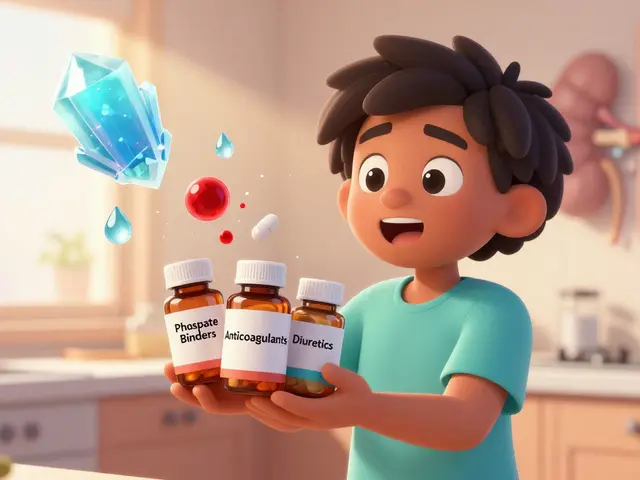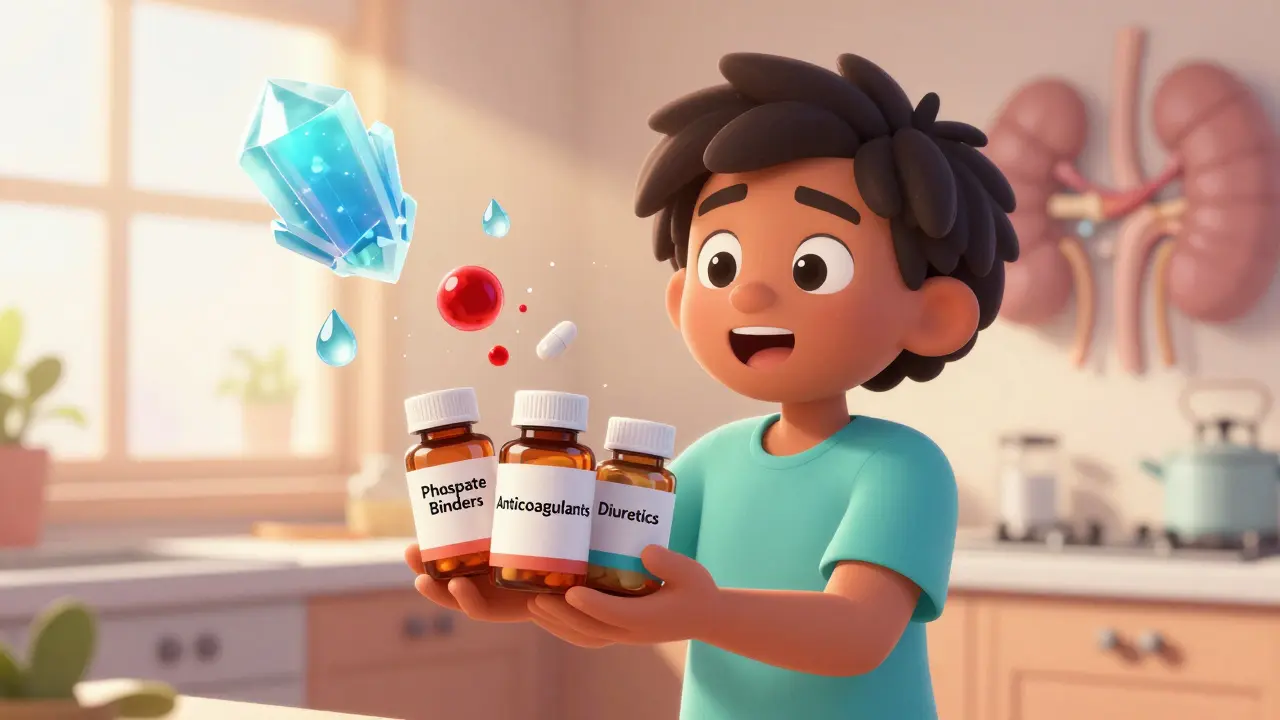
When your kidneys aren’t working well, your body starts to hold onto things it shouldn’t - too much phosphate, too much fluid, or dangerous blood clots. These aren’t just side effects. They’re life-threatening complications. That’s where phosphate binders, diuretics, and anticoagulants come in. These aren’t optional extras. For many people with advanced kidney disease, they’re the difference between staying out of the hospital and ending up in one.
Phosphate Binders: Stopping the Silent Killer in Your Gut
Your kidneys normally flush out phosphate. When they fail, phosphate builds up. High levels don’t just make you feel tired - they harden your arteries, weaken your bones, and raise your risk of heart attack. About 60% of people with stage 4 or 5 kidney disease have this problem. The fix? Phosphate binders. They don’t fix your kidneys. They trap phosphate in your stomach before it gets absorbed.
There are four main types. Calcium-based binders like calcium acetate (Phoslo) and calcium carbonate are cheap - around $50 to $80 a month in the U.S. But they come with a hidden cost: they can raise your blood calcium too high, which speeds up artery calcification. Studies show this increases heart disease risk by 25% over two years.
Non-calcium options like sevelamer (Renagel) and lanthanum carbonate (Fosrenol) are safer for your vessels. Sevelamer lowers phosphate by 1.2 to 1.8 mg/dL in most people, and those who take it regularly have an 18% lower chance of dying over time. But they cost $150 to $250 a month. Ferric citrate (Auryxia) is newer. It binds phosphate and also gives you iron - useful if you’re anemic. But it runs $6,500 to $7,200 a year. Most patients can’t afford that without help.
Real people struggle with these drugs. One Reddit user said sevelamer caused severe constipation. Another switched to lanthanum and paid $200 out-of-pocket - but it worked. On Drugs.com, 78% of people who stick with binders say timing matters: take them with every meal and snack. Skip a dose? Phosphate spikes. Sixty-eight percent of patients quit within six months because of cost, side effects, or just forgetting.
Diuretics: Fighting Fluid Overload When Kidneys Give Up
Fluid overload is the silent enemy of kidney disease. It causes swelling in your legs, high blood pressure, and heart failure. Up to 90% of people with advanced kidney disease deal with it. Diuretics - water pills - help your body pee out the extra fluid. But they’re not simple. Your kidneys don’t respond the same way they used to.
Loop diuretics like furosemide, torsemide, and bumetanide are the go-to. Furosemide is the cheapest - $4 to $10 a month as a generic. But in advanced kidney disease, it often stops working. That’s called diuretic resistance. It hits 40% to 60% of patients by stage 4. The fix? Add a thiazide like metolazone. It works even when your kidneys are barely functioning. But you need to be careful - too much can drop your potassium or blood pressure too low.
Torsemide is stronger and lasts longer. One study showed it reduces heart failure hospitalizations by 22% compared to furosemide. It’s 30% more bioavailable in kidney patients. But brand-name torsemide costs $90 to $120 a month. Generic? Just $10 to $25. Most patients who’ve tried both prefer torsemide because they don’t need to pee as often at night.
But here’s the real issue: timing. Sixty-two percent of patients say their diuretics ruin their sleep. Taking them after 4 p.m. means midnight bathroom trips. The fix? Split the dose. Take half in the morning, half at lunch. Don’t wait until afternoon. And never skip a dose because you’re afraid of peeing - fluid builds up fast. The American Kidney Fund found 68% of patients struggle with this. Education helps. So does tracking your weight daily. A 2-pound jump in a day? That’s fluid. Time to call your doctor.

Anticoagulants: Preventing Clots When Your Blood Gets Sticky
Kidney disease doesn’t just damage your kidneys. It makes your blood clot more easily. People with CKD have a 2 to 4 times higher risk of stroke, heart attack, or pulmonary embolism. That’s why anticoagulants are critical - especially if you have atrial fibrillation. But choosing the right one is tricky. Your kidneys help clear these drugs. If they’re failing, the medicine builds up. Too much? You bleed. Too little? You clot.
Warfarin (Coumadin) has been around since the 1950s. It’s cheap. But you need weekly blood tests to check your INR. Many doctors avoid it in kidney disease, thinking it’s riskier. But experts say that’s wrong. In very advanced kidney disease (eGFR under 15), warfarin is often safer than newer drugs because its effects are easier to monitor and reverse.
DOACs - dabigatran, rivaroxaban, apixaban, edoxaban - are the new standard. They don’t need blood tests. But they’re expensive. Apixaban (Eliquis) is the safest for CKD. At eGFR 15 to 29, you take 2.5 mg twice daily - half the normal dose. Studies show it cuts major bleeding by 31% compared to warfarin. Rivaroxaban (Xarelto) must be dropped to 15 mg daily if your eGFR is below 50. Edoxaban (Savaysa) isn’t approved below eGFR 15.
One patient on HealthUnlocked switched from apixaban to warfarin after alarming bruising. He hated the weekly INR checks, but he felt more in control. That’s the trade-off: convenience vs. predictability. The American Heart Association says DOACs are preferred for eGFR above 30. Below that? Warfarin still has its place. And if you’re on dialysis? Most DOACs aren’t studied enough. Stick with warfarin unless your nephrologist says otherwise.
What Happens When These Drugs Don’t Work
Not everyone responds. Phosphate binders fail if you’re not taking them with food. Diuretics fail if you’re eating too much salt. Anticoagulants fail if you’re drinking alcohol or taking NSAIDs like ibuprofen. And here’s the scary part: 35% of hospitalizations in kidney patients are from medication errors - wrong dose, wrong timing, or drug interactions.
Diuretic resistance? Add metolazone. But don’t start it alone. Do it under supervision. Phosphate levels won’t drop? Check your diet. Hidden phosphate is in processed meats, colas, and fast food. Even “healthy” snacks like granola bars are loaded. A renal dietitian can help you find alternatives.
Anticoagulant bleeding? Don’t stop it cold turkey. Talk to your doctor. Maybe your dose is too high. Maybe you need a different drug. The new AUGUSTUS-CKD trial showed that using apixaban with just one blood thinner (instead of two) cuts bleeding risk by 31% in patients with atrial fibrillation and kidney disease.
What’s Coming Next
Medications for kidney disease are changing fast. Tenapanor (Xphozah), approved in September 2023, blocks phosphate absorption differently than binders. It’s 30% more effective than sevelamer in trials. But it costs $6,800 a year. Will insurance cover it? That’s the big question.
SGLT2 inhibitors like dapagliflozin and empagliflozin - originally for diabetes - are now recommended for all CKD patients with diabetes. They lower phosphate, reduce fluid, and protect the heart. In some cases, they reduce the need for binders and diuretics by 15% to 20%.
And there’s hope for diuretic resistance. A new drug called AZD9977 is in phase 3 trials. If it works, it could be the first true breakthrough in decades. For anticoagulants, andexanet alfa might soon reverse DOAC bleeding - a game-changer for kidney patients who bleed.
How to Stay Safe
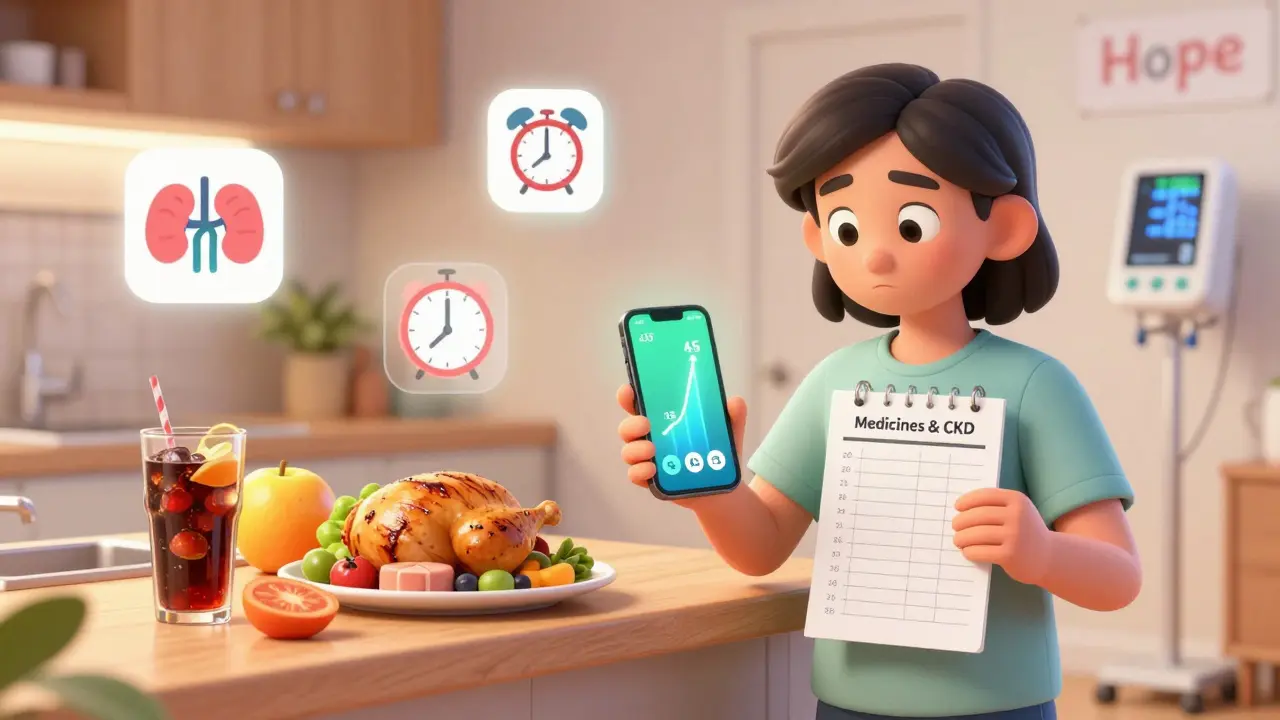
- Take phosphate binders with every meal - even snacks. Set phone alarms if you forget.
- Track your weight daily. A 2-pound gain in 24 hours means fluid buildup.
- Never take NSAIDs like ibuprofen or naproxen. They can crash your kidney function.
- Know your eGFR. It changes. Dosing must change with it.
- Use the National Kidney Foundation’s ‘Medicines and CKD’ app. It’s free, updated, and cuts medication errors by 27%.
- Ask for a renal dietitian. They’re not a luxury - they’re essential.
Kidney disease isn’t just about dialysis or transplant. It’s about managing the daily battles - with pills, with diet, with timing. These three classes of drugs - binders, diuretics, anticoagulants - aren’t just prescriptions. They’re tools for survival. Get them right, and you buy yourself years. Get them wrong, and the next hospital visit might be your last.
Can I stop taking phosphate binders if my levels are normal?
No. Phosphate levels can spike quickly if you stop binders, even if your diet is good. Your kidneys aren’t removing phosphate - the binders are. Stopping them means your levels will rise again within days. Only stop if your doctor tells you to, and even then, it’s usually because your diet has improved enough to manage levels without them.
Why do I need to take diuretics at the same time every day?
Consistency helps your body adjust. Taking them at different times can cause unpredictable urination, leading to dehydration or fluid overload. It also makes it harder for your doctor to tell if the dose is right. If you take your diuretic at 8 a.m. and 2 p.m. every day, your body learns that rhythm - and your doctor can adjust doses based on steady patterns.
Are DOACs safe if I have stage 4 kidney disease?
Apixaban is the only DOAC approved for stage 4 (eGFR 15-29). Rivaroxaban and dabigatran can be used with dose reductions, but only if your doctor carefully monitors you. Edoxaban is not approved below eGFR 15. Warfarin remains the safest option for eGFR under 15 because its effects are easier to measure and reverse. Never assume a DOAC is automatically safer - it depends on your exact kidney function.
Can I use over-the-counter supplements with these medications?
Be extremely careful. Many supplements contain hidden phosphate - like calcium phosphate or phosphorus-containing vitamins. Others, like St. John’s Wort or green tea extract, can interfere with anticoagulants. Even magnesium supplements can be dangerous if your kidneys can’t clear them. Always check with your nephrologist or pharmacist before taking anything not prescribed.
What should I do if I miss a dose of my anticoagulant?
Don’t double up. If you miss a dose of apixaban or rivaroxaban and remember within 6 hours, take it. If it’s been longer, skip it and take your next dose at the regular time. For warfarin, call your clinic - they’ll tell you whether to take it or skip it based on your last INR. Never guess. A missed dose can lead to a clot. Doubling up can cause dangerous bleeding.
How often should my kidney function be checked when on these meds?
At least every 3 months if you’re stable. If your eGFR drops more than 10 points, your doses may need adjusting - especially for anticoagulants and diuretics. If you’re on dialysis, check every month. Many patients don’t realize that even small changes in kidney function can turn a safe dose into a dangerous one.
These medications aren’t magic. They’re tools. And like any tool, they only work if you use them right. The goal isn’t just to live longer - it’s to live better. Without them, your body fights a losing battle. With them - and the right care - you can keep that fight going for years.