When you pick up a generic pill at the pharmacy, you expect it to work just like the brand-name version. But how does the FDA make sure it does? The answer lies in a quiet, highly technical process called dissolution testing. It’s not flashy. You won’t see it on TV. But it’s one of the most important steps that keeps generic drugs safe, effective, and consistent - every single time.
Why Dissolution Testing Matters
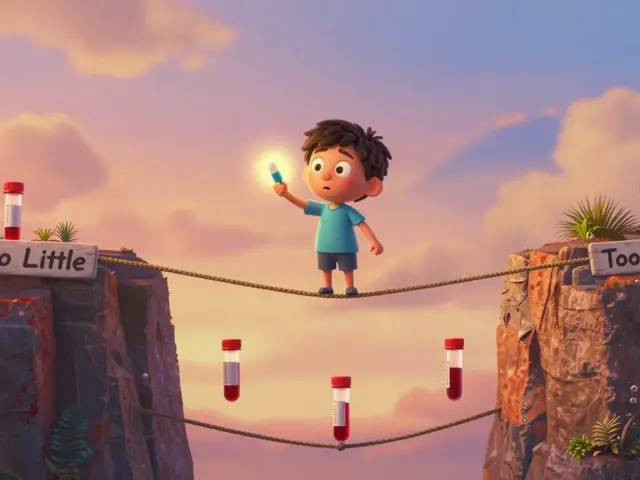
Dissolution testing measures how quickly a drug releases its active ingredient in a controlled lab environment. Think of it like watching a sugar cube dissolve in water. But instead of water, scientists use fluids that mimic what happens in your stomach and intestines. The goal? To prove that the generic version releases its medicine at the same rate and in the same amount as the original brand-name drug.This isn’t just about chemistry. It’s about your health. If a generic drug releases too slowly, you might not get enough medicine into your bloodstream. If it releases too fast, you could get too much at once - risking side effects or even overdose. Dissolution testing catches these problems before the drug ever reaches you.
The FDA doesn’t require human trials for every generic drug. Instead, they rely on dissolution testing as a reliable stand-in. If the drug dissolves the same way in the lab, it’s likely to behave the same way in your body. This saves time, money, and avoids unnecessary testing on people.
How the FDA Sets the Rules
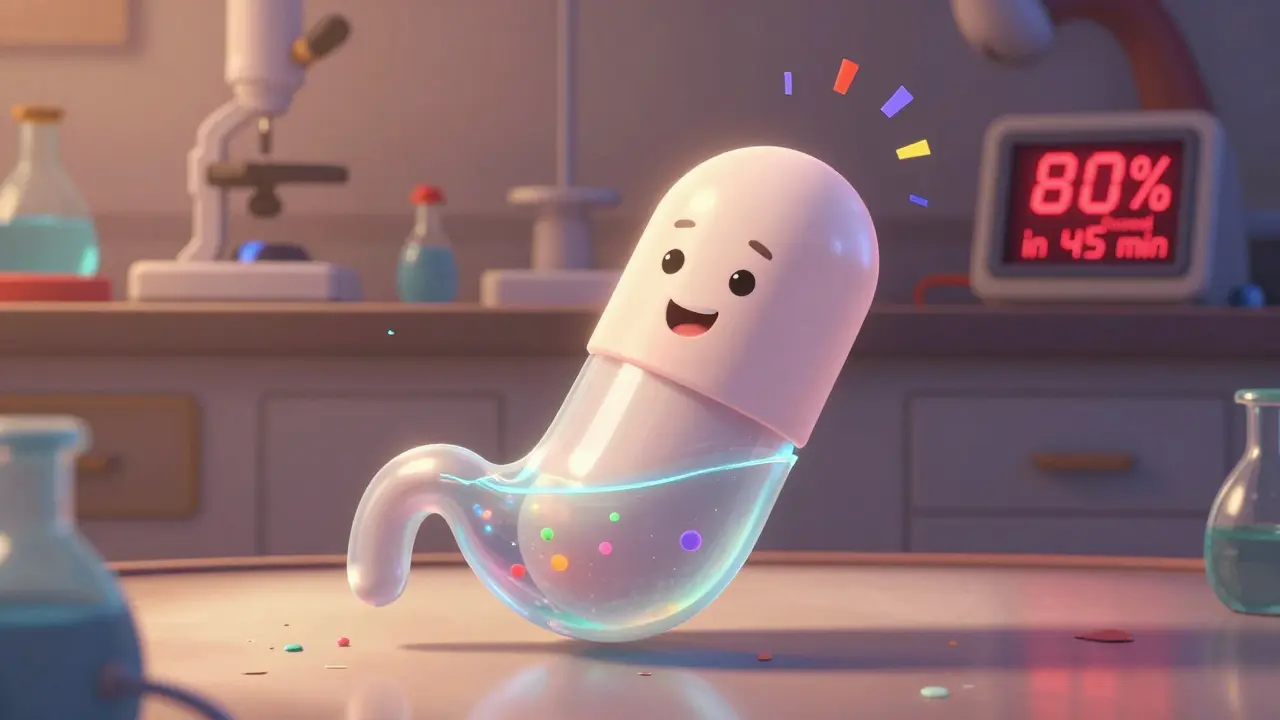
The FDA doesn’t guess at dissolution standards. They build them on real data. For every generic drug, they look at the brand-name version first. They study how it dissolves under different conditions - different pH levels, different fluid volumes, different stirring speeds. Then they set exact rules for what the generic must match.For immediate-release pills - like most painkillers or antibiotics - the standard is clear: at least 80% of the drug must dissolve within 45 minutes. But even that rule isn’t one-size-fits-all. A drug for acid reflux might need to dissolve in a more acidic environment. A slow-release heart medication might need to release over 12 hours. Each drug gets its own custom test.
The FDA uses five key pieces of data to approve a generic:
- How soluble the active ingredient is in different fluids
- Exactly how the test is set up - what machine, what speed, what fluid, how much
- Proof the test works consistently, even if someone changes one variable
- Validation that the lab can accurately measure how much drug is dissolved
- Proof the test can tell the difference between good and bad formulations
These aren’t suggestions. They’re requirements. If any of these are missing, the FDA will reject the application.
Comparing Products: The f2 Test
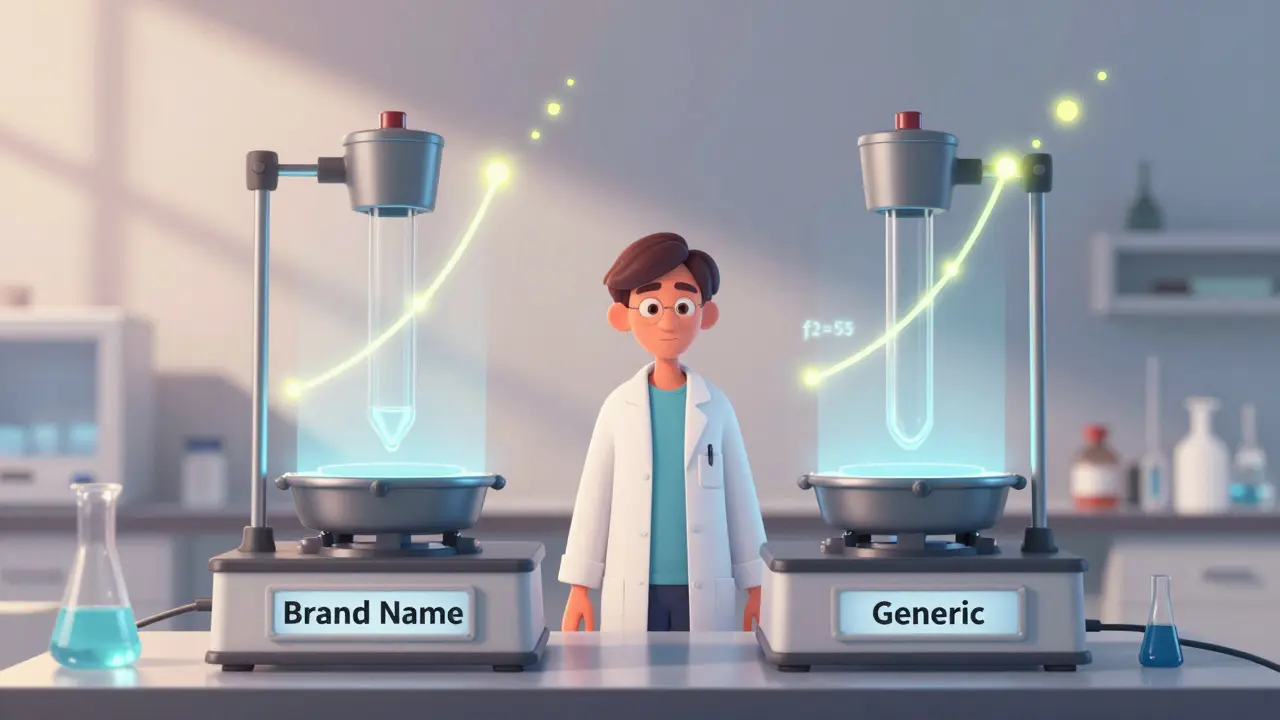
When a generic company submits a drug, they must compare its dissolution profile to the brand-name version. They don’t just check one time point. They test at multiple points - say, 15, 30, and 45 minutes - and plot the results on a graph.The FDA uses a statistical tool called the f2 similarity factor to compare these curves. If the f2 value is 50 or higher, the two profiles are considered equivalent. A score below 50 means the drugs dissolve differently - and the generic won’t be approved.
This is why some generics look identical on the shelf but behave differently inside your body. If the dissolution profile doesn’t match, the FDA won’t let it be sold - no matter how cheap it is.
Special Cases: Modified-Release and Low-Solubility Drugs
Not all drugs are simple. Some are designed to release slowly over hours. Others dissolve poorly in water. These are the hardest to test.For extended-release pills - like those for high blood pressure or ADHD - the FDA requires testing under multiple pH levels (1.2, 4.5, and 6.8) to simulate different parts of your digestive tract. They also test with alcohol. Yes, alcohol. Why? Because if a slow-release pill releases all its medicine at once when taken with a drink, it can be dangerous. This is called “dose dumping.” The FDA requires manufacturers to test for this risk.
For low-solubility drugs - like many cancer treatments or antifungals - the test gets even more complex. These drugs don’t dissolve easily. So the FDA demands methods that can detect small differences in formulation. A tiny change in an excipient (a filler) might make the drug absorb poorly. The test must catch that.
BCS Classification: When Humans Aren’t Needed
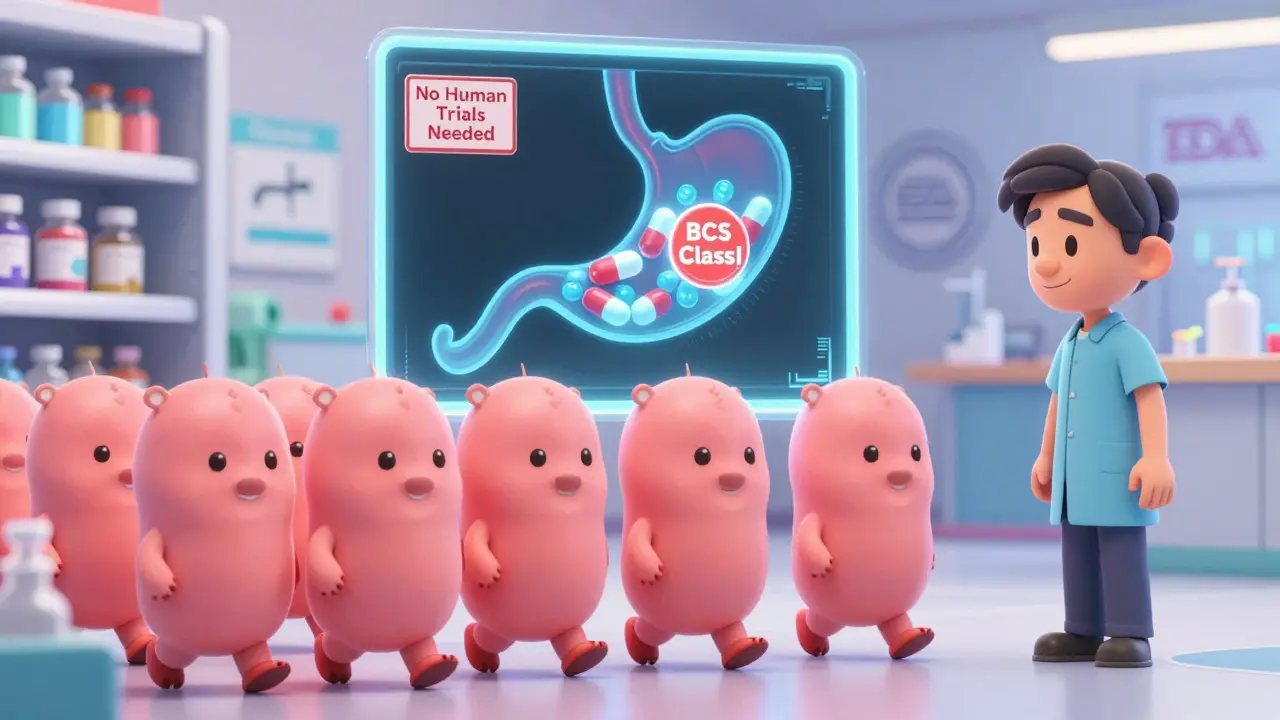
The FDA has a shortcut for certain drugs. If a drug is classified as BCS Class I - meaning it’s highly soluble and highly absorbable - then dissolution testing alone can replace human bioequivalence studies.For example, if a generic version of a BCS Class I drug dissolves within 30 minutes using 900 mL of 0.1N HCl (a standard stomach fluid), the FDA will approve it without testing on people. This saves thousands of dollars per drug and speeds up access.
As of 2023, over 2,800 drug products have FDA-recommended dissolution methods in their public database. Many of these are for BCS Class I drugs. This system works because science has proven that for these drugs, dissolution predicts real-world performance with near-perfect accuracy.
What Happens After Approval?
Approval isn’t the end. The FDA still watches. If a manufacturer changes the drug’s formula - even slightly - they must retest dissolution. A new supplier for the active ingredient? New excipients? A different factory? All of these require fresh dissolution data.This is part of the SUPAC-IR guidelines. The FDA calls it “post-approval change control.” It means the same drug you bought last month must dissolve the same way next month. No shortcuts. No surprises.
Manufacturers submit hundreds of pages of test data with every application. One drug might require 80 pages just to explain how the dissolution method was developed, validated, and verified. The FDA reviews every line.
The Bigger Picture
Dissolution testing is the quiet backbone of the generic drug system. It’s what lets millions of people save money without sacrificing safety. It’s why a $5 generic can replace a $300 brand-name pill with confidence.The FDA doesn’t just set rules - they update them. In 2022, they began exploring biowaivers for BCS Class III drugs (high solubility, low permeability). By 2025, experts predict over a third of all generic approvals will rely on standardized dissolution methods - up from just 25% in 2020.
But the core principle hasn’t changed: dissolution must be product-specific. No cookie-cutter tests. No shortcuts. Every drug gets its own tailored method because your health depends on it.
What is dissolution testing in generic drugs?
Dissolution testing is a lab procedure that measures how quickly a drug releases its active ingredient under controlled conditions. For generic drugs, it proves the product releases medicine at the same rate and amount as the brand-name version, ensuring therapeutic equivalence without requiring human trials.
How does the FDA decide if a generic drug passes dissolution testing?
The FDA compares the dissolution profile of the generic drug to the brand-name drug using the f2 similarity factor. An f2 score of 50 or higher means the two profiles are statistically equivalent. The test must also meet specific criteria for time, medium, pH, and instrument type based on the drug’s characteristics.
Why is dissolution testing used instead of human bioequivalence studies?
For many drugs - especially those classified as BCS Class I (high solubility, high permeability) - dissolution testing has been proven to reliably predict how the drug behaves in the body. This allows the FDA to approve generics faster and cheaper without putting people through unnecessary clinical trials.
What happens if a generic drug fails dissolution testing?
If the dissolution profile doesn’t match the brand-name drug - or if the f2 score is below 50 - the FDA will not approve the generic. Manufacturers must revise the formulation or testing method and resubmit. Many applications are rejected for this reason.
Do all generic drugs need dissolution testing?
Yes, all oral solid dosage forms - tablets, capsules, and suspensions - require dissolution testing. The FDA exempts only drugs already in solution, like oral liquids or topical creams, because their absorption is not affected by dissolution rate.