
When your feet feel like they’re on fire, or your toes go numb without warning, it’s not just discomfort-it’s diabetic neuropathy. This isn’t something that goes away on its own. It’s nerve damage caused by years of high blood sugar, and it affects 60-70% of people with diabetes. For about one in five, the pain is constant, sharp, or burning. But here’s the truth: you don’t have to just live with it. There are real, proven ways to stop it from getting worse-and even find relief.
Stop the Damage Before It Spreads
The single most powerful tool you have isn’t a pill. It’s your blood sugar. Keeping your HbA1c below 7% (53 mmol/mol) cuts your risk of nerve damage by 60%, according to the landmark DCCT study. That’s not a suggestion-it’s the foundation of everything else. No medication, no patch, no nerve stimulator works as well as stable glucose levels over time. Think of your nerves like wires. Too much sugar is like corrosion. The longer it runs unchecked, the more the insulation wears away. Once that happens, signals get scrambled. That’s why numbness, tingling, or sudden sharp pains show up in your feet first. The goal isn’t just to feel better today. It’s to stop the corrosion before it destroys the whole system. The American Diabetes Association recommends fasting blood sugar between 80-130 mg/dL and under 180 mg/dL after meals. That’s not easy. But it’s doable. It means choosing whole grains over white bread, walking after dinner, checking your numbers regularly, and talking to your doctor about adjusting insulin or other meds if you’re consistently high.What Medications Actually Work?
If pain is already here, you need more than just sugar control. There are three first-line drugs backed by solid evidence:- Duloxetine (Cymbalta): An antidepressant that also blocks pain signals. In trials, about 35% of users got at least half their pain relief-compared to just 18% on placebo.
- Pregabalin (Lyrica): An anticonvulsant that calms overactive nerves. Around 30-40% of people saw major pain reduction.
- Amitriptyline: An older tricyclic antidepressant. It’s more effective than the others for some, with 58-63% pain reduction in studies. But it causes drowsiness, dry mouth, and can be risky for older adults or those with heart issues.
Topical Treatments: Less Systemic, More Targeted
If you hate pills or can’t tolerate them, topical options are worth a shot. The 8% capsaicin patch (Qutenza) is applied once every 3 months by a doctor. It works by depleting substance P, the chemical that tells your brain you’re in pain. In trials, 40% of users got at least 30% pain relief-with almost no drowsiness or dizziness. There’s also the 5% lidocaine patch, which you can buy over the counter. It’s great for localized pain, like burning on the bottom of your foot. You stick it on for 12 hours a day. No system-wide side effects. Just quiet relief where you need it. Avoid NSAIDs like ibuprofen. They might seem helpful for a day or two, but they raise your risk of heart problems and can hurt your kidneys-something you’re already more likely to have if you have diabetes. This isn’t worth the trade-off.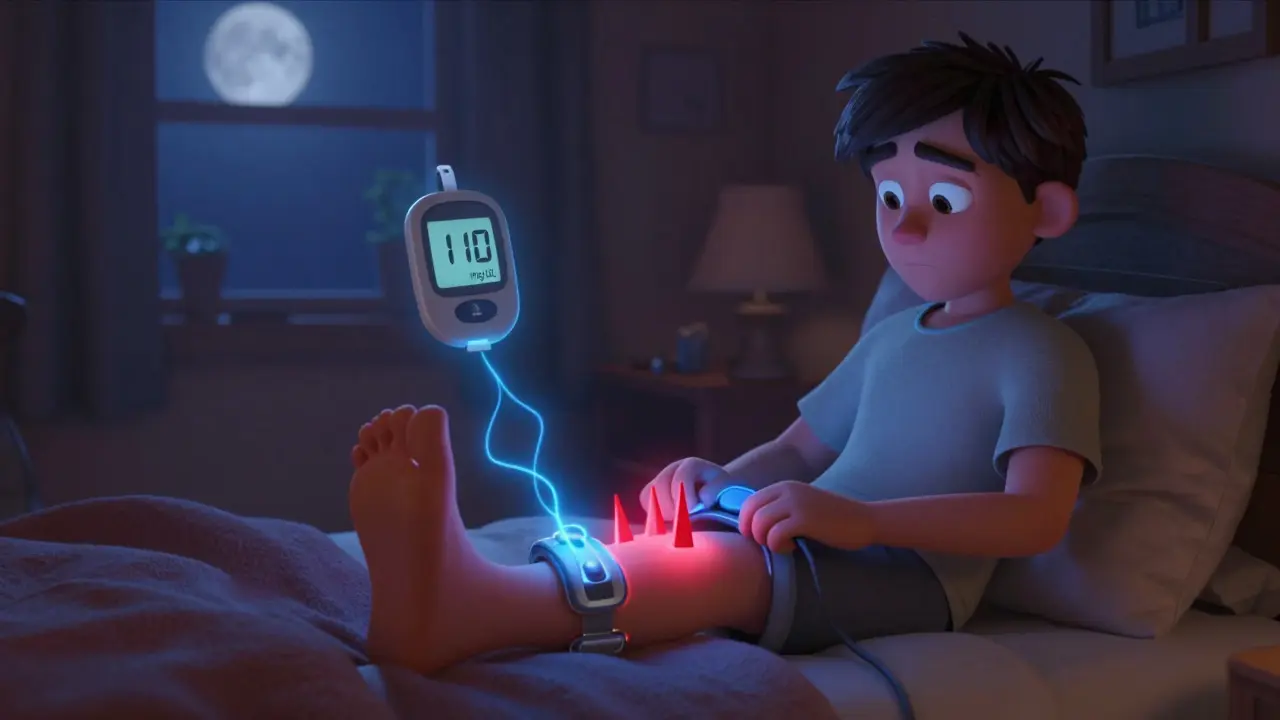
When Pills and Patches Aren’t Enough
For those with severe, unrelenting pain, there are next-level options:- Tramadol: A mild opioid. It helps about 40-50% of people, but it’s not first-line. Long-term use can lead to dependence. The CDC says 8-12% of long-term users develop opioid use disorder.
- TENS units: These handheld devices send gentle electrical pulses through your skin to block pain signals. One small trial showed 83% of users improved their pain scores, compared to just 38% using a fake device.
- Peripheral nerve stimulation: A tiny device is placed near the affected nerve (often in the foot or leg). It delivers mild pulses that interrupt pain signals. Results last months to years. It’s minimally invasive and doesn’t require major surgery.
- Spinal cord stimulation: This is the most exciting new option. A device implanted near your spine sends pulses that override pain signals. In studies, patients didn’t just feel less pain-they started regaining sensation in numb areas. One expert called it “unexpected.” That’s not hype. It’s science.
Lifestyle Changes That Actually Heal
Medications manage symptoms. Lifestyle changes can reverse damage.- Move daily: Walking 30 minutes a day improves blood flow to nerves. Swimming and cycling are great if standing hurts. Yoga helps with balance-critical if you’re numb in your feet.
- Eat to reduce inflammation: Focus on vegetables, legumes, lean proteins, and whole grains. Cut out sugary drinks, processed snacks, and fried foods. Sugar doesn’t just raise your HbA1c-it fuels nerve inflammation.
- Manage stress: Chronic stress raises cortisol, which makes blood sugar harder to control. Try 10 minutes of deep breathing, meditation, or progressive muscle relaxation every day. It’s not fluffy advice. It’s biology.
- Check your feet daily: Numbness means you can’t feel cuts or blisters. Use a mirror or ask someone to help. Wash, dry, and moisturize your feet every night. Don’t go barefoot-not even indoors.

What Doesn’t Work (And Why)
There’s a lot of noise out there. Here’s what to ignore:- Supplements like alpha-lipoic acid or B vitamins: Some studies show minor benefit, but none are FDA-approved for diabetic neuropathy. Don’t spend money hoping for a miracle.
- Alcohol: It’s toxic to nerves. If you have neuropathy, cutting out alcohol is one of the fastest ways to stop things from getting worse.
- Waiting to act: The longer you wait, the less likely nerves are to recover. Early intervention saves function.
Real Talk: It’s Hard, But Not Impossible
Most people try 2-3 meds before finding one that works. Side effects are frustrating. Blood sugar control is exhausting. Pain makes you tired, angry, or depressed. That’s normal. About 25-30% of people with painful neuropathy develop depression. But here’s what no one tells you: improvement is possible. Not overnight. Not always complete. But real. One patient in Adelaide, who started walking after dinner and got her HbA1c down from 8.9% to 6.5% over 10 months, said, “I didn’t just stop feeling the fire-I started feeling my toes again.” You’re not failing if you need help. You’re not weak if you need a patch or a device. You’re taking control.Can diabetic neuropathy be reversed?
Mild to moderate nerve damage can improve with strict blood sugar control, especially if caught early. In some cases, numbness and tingling fade within a year. But severe damage-like complete loss of sensation or muscle wasting-is often permanent. The goal is to stop it from getting worse and restore as much function as possible.
Why do my feet hurt more at night?
At night, your body isn’t distracted by movement or activity. Pain signals become more noticeable. Also, blood sugar can rise overnight if your evening meal or insulin dose isn’t balanced. Try a small, low-carb snack before bed if your doctor approves, and keep your feet warm but not hot.
Is it safe to use capsaicin cream if I have open sores?
No. Never apply capsaicin or any topical treatment to broken skin, ulcers, or wounds. It can cause severe burning and delay healing. Only use it on intact skin. If you have sores, see a podiatrist immediately.
Can I stop taking pain meds if my blood sugar improves?
Sometimes. If your HbA1c drops and your symptoms improve, talk to your doctor about gradually reducing your medication. Never stop cold turkey-especially with drugs like pregabalin or duloxetine. Tapering under medical supervision prevents withdrawal symptoms and lets you see if your nerves are healing.
What’s the best way to check my feet if I can’t feel them?
Use a mirror to look at the bottoms of your feet every night. Or ask a family member to help. Look for redness, swelling, cuts, blisters, or changes in skin color. Wash and dry them gently. Apply moisturizer (but not between toes). If you see anything unusual, don’t wait-see your doctor or podiatrist within 24 hours.
Do I need to see a specialist for diabetic neuropathy?
If your pain isn’t improving after 2-3 months of trying first-line treatments, or if you’re losing strength or balance, see a neurologist or pain specialist. They can offer advanced options like nerve stimulation or specialized medication combinations. You don’t have to manage this alone.

Let’s be real-60% risk reduction with HbA1c under 7%? That’s not a miracle, it’s basic math. The real tragedy is how many patients are still told to ‘just eat less sugar’ without a single actionable plan. Data doesn’t lie, but the healthcare system sure does.
This is the most honest thing I’ve read about neuropathy in years. No fluff. No hype. Just facts that actually help. Thank you.
Think of your nerves like wires. Too much sugar is like corrosion. That metaphor alone deserves a medal. I’ve been living with this for 12 years, and no one’s ever put it like that. I’ve started walking after dinner-just 20 minutes-and my toes tingled for the first time in months. Not gone, but… alive again. Feels weird. Good weird.
Also, the capsaicin patch? My podiatrist slapped it on like it was a bandage. No pain during application, zero drowsiness. Four months later, I can feel the grass under my bare feet. Still can’t feel my left big toe, but hey-I’m not walking on fire anymore.
And yes, the amitriptyline made me feel like a zombie for two weeks. Switched to duloxetine. Nausea? Yeah. But I can sleep. And that’s the win.
Stop scrolling. Start moving. Your feet are screaming. Listen.
Also, avoid alcohol like it’s the ex who stole your wallet. It’s not a ‘social lubricant’-it’s nerve poison. I quit cold turkey. My HbA1c dropped 1.8% in three months. Coincidence? Nah.
People say ‘it’s just neuropathy.’ Like it’s a minor inconvenience. It’s not. It’s your body telling you it’s been betrayed. Don’t ignore it. Fight back.
I’m not cured. But I’m not broken anymore. That’s progress.
And if you’re thinking about supplements? Save your cash. The only thing that rebuilds nerves is time, discipline, and glucose control. Nothing else.
One day at a time. One step. One HbA1c test. One foot in front of the other.
Ugh, another ‘just control your sugar’ lecture. Like I don’t already know that. My HbA1c is 6.8. I still feel like my feet are in a microwave. So what now?
Hey, I get it. It’s exhausting. I’ve been there. The meds, the tests, the foot checks-it’s a full-time job. But you’re not alone. I started using the lidocaine patches and honestly? They’re a game-changer for nighttime burning. Just stick one on before bed. Doesn’t fix everything, but it lets me sleep. And sleep is everything.
You’re doing better than you think.
So let me get this straight-we’ve got a $1,200 patch that works better than most pills, but we’re still pushing antidepressants as first-line? Brilliant. The system is a circus, and we’re the clowns with diabetic feet.
Why do Americans always act like they discovered this? In Nigeria, we’ve known for decades: sugar kills nerves. No magic pills. No fancy patches. Just food. Real food. No soda. No white rice. No fried plantain. Your body is not a sugar factory. Stop treating it like one.
And if you think TENS units are ‘next-level’-bless your heart. We’ve had those in Lagos clinics since 2008. Maybe stop acting like everything is new just because it’s FDA-approved.
Also, your ‘real talk’ section? Cute. But real talk is: your pain is your fault. You ate the cake. You drank the soda. You ignored the warnings. Now fix it. No sympathy. Just action.
Of course you’re going to mention Nav 1.7 blockers and NGF antibodies-because nothing says ‘I’m smarter than you’ like name-dropping Phase II trials you don’t understand. Meanwhile, I’m over here trying to afford duloxetine without insurance. Cool story, Elon.
😂
Thank you for this comprehensive and clinically grounded overview. The integration of evidence-based pharmacotherapy with lifestyle interventions represents the gold standard in patient-centered care. I will be sharing this resource with my diabetes education cohort.
Let me tell you about my cousin. Diagnosed at 42. HbA1c at 10.5. Thought he was ‘fine’ because he wasn’t ‘that’ diabetic. Then he stepped on a nail. Didn’t feel it. Got infected. Lost his foot. All because he waited. Don’t be him. Start today. Walk. Check. Eat clean. Talk to your doctor. No excuses.
You got this.
So… we’re recommending opioids for neuropathy? Because clearly, the solution to nerve damage is more addiction risk. Brilliant logic. Next up: prescribing cocaine for fatigue.
Also, ‘spinal cord stimulation’-sure, if you’ve got $50k and a second mortgage.
My dad in Kenya uses neem leaf paste on his feet. Says it helps. I don’t know if it works. But he’s 80, walks barefoot, and his HbA1c is 6.2. Maybe the real answer isn’t in a pill bottle.
Thank you for the meticulous detailing of therapeutic modalities. The emphasis on HbA1c as the cornerstone of intervention is both scientifically sound and clinically imperative. This document should be required reading for all primary care providers managing patients with type 2 diabetes.