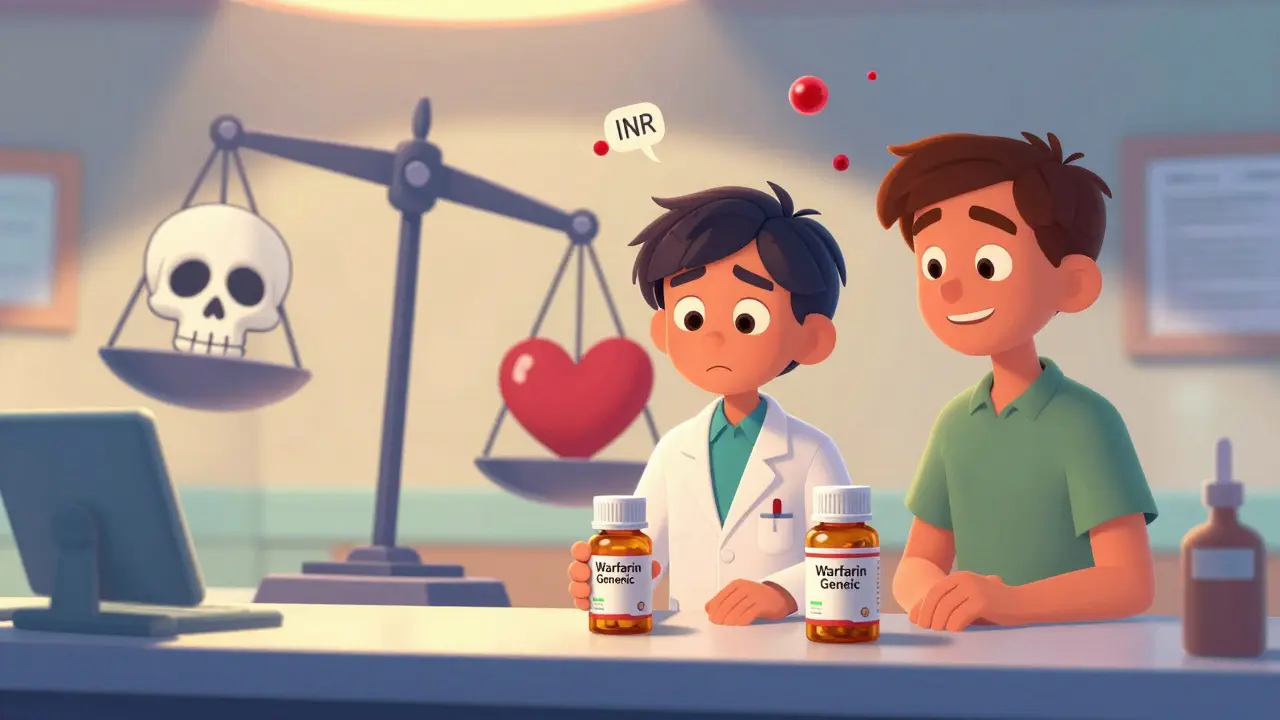
When a pharmacist fills a prescription for warfarin, levothyroxine, or phenytoin, they don’t just see another generic drug. They see a minefield. These are NTI generics - drugs with a narrow therapeutic index, where even tiny changes in dosage or absorption can mean the difference between healing and hospitalization. For pharmacists on the front lines, this isn’t theoretical. It’s daily work. And the concerns are growing.
What Exactly Are NTI Generics?
NTI stands for Narrow Therapeutic Index. These are medications where the gap between an effective dose and a toxic one is razor-thin. A 10% change in blood concentration can cause a seizure, a stroke, or organ failure. The FDA doesn’t publish a formal list, but it does track these drugs using Therapeutic Equivalence Evaluation Codes in the Orange Book. Drugs marked with a "B" code aren’t automatically interchangeable - and that’s where the real trouble starts.
Think of it like tuning a piano. A standard drug is like a guitar - you can swap strings and it still plays fine. But an NTI drug? It’s a concert grand. Even a slightly different string can throw the whole piece off. That’s why pharmacists worry when a patient switches from one generic version of warfarin to another, or from brand to generic, without warning.
Why Pharmacists Are Stressed
In 2024, the American Society of Health-System Pharmacists surveyed 1,200 pharmacists. Sixty-eight percent said they’re concerned about substituting NTI generics. Why? Because it’s not just about bioequivalence - it’s about consistency.
For most generic drugs, the FDA allows bioavailability to vary between 80% and 125% of the brand-name drug. That’s a wide range. But for NTI drugs, the FDA recommends a tighter window: 90% to 111%. Even then, studies show that’s not enough. The University of Minnesota reported in 2024 that 15 NTI drugs have documented clinical consequences when bioavailability shifts outside that range. One patient might get stable INR levels on one generic warfarin brand. Switch them to another - even one approved by the FDA - and their INR spikes or crashes. That’s not a glitch. It’s a pattern.
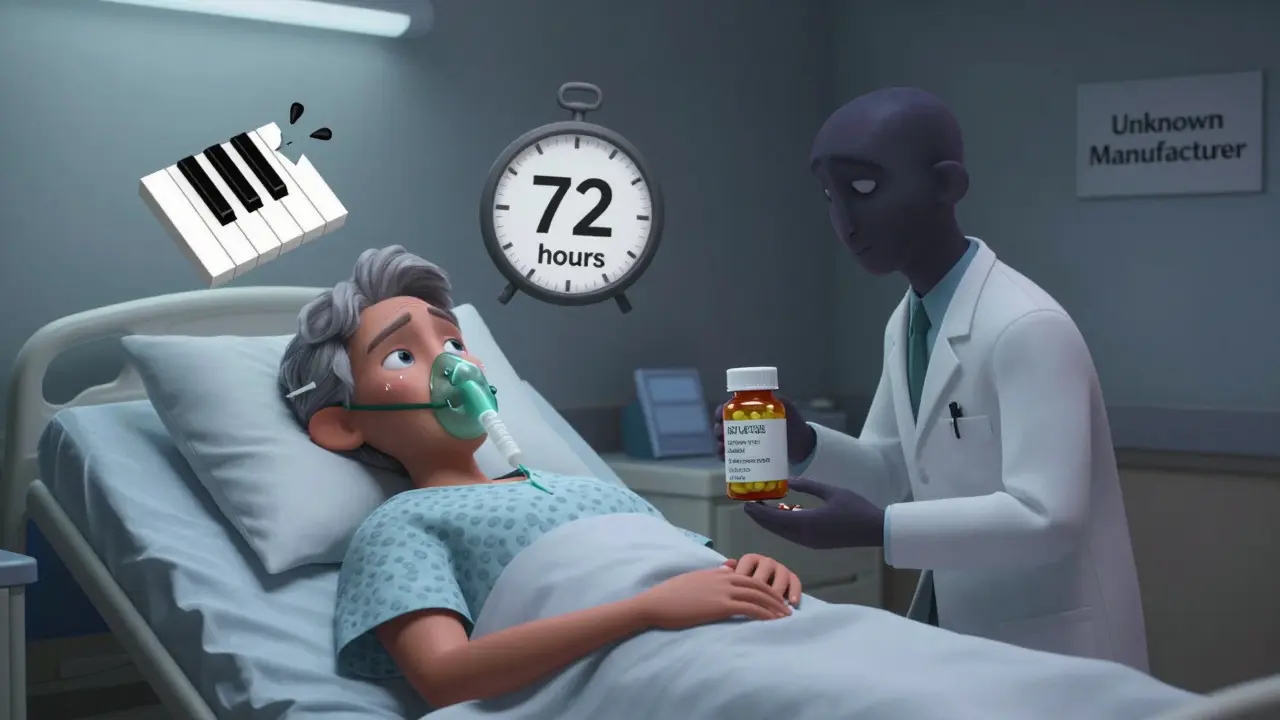
Pharmacists are seeing it. A hospital pharmacist in Ohio told a colleague: “I had a 72-year-old man on warfarin for years. Switched him to a new generic. His INR jumped from 2.8 to 5.1 in 72 hours. He ended up in the ER with a subdural hematoma. The pharmacy didn’t know the switch was coming. The doctor didn’t know either.”
The Supply Chain Is Fragile
NTI drugs are made in fewer places. About 80% of all generic drugs are finished overseas. For NTI drugs, that number is even higher. The FDA reported 47 NTI drug shortages in 2024 - 17.4% of all shortages, even though NTI drugs make up only 6% of generic prescriptions. When one manufacturer has a problem - a failed inspection, a raw material delay - there’s no backup.
And when a pharmacy switches between generic manufacturers? That’s where things get dangerous. The FDA found that 23% of NTI drug shortages were worsened by switching between suppliers. Pharmacists can’t predict when a batch will change. A patient gets their refill on Monday. Next week, the pill looks different. The label says the same thing. But the active ingredient? It’s not the same. And patients? They don’t know.
State Laws Don’t Match the Risk
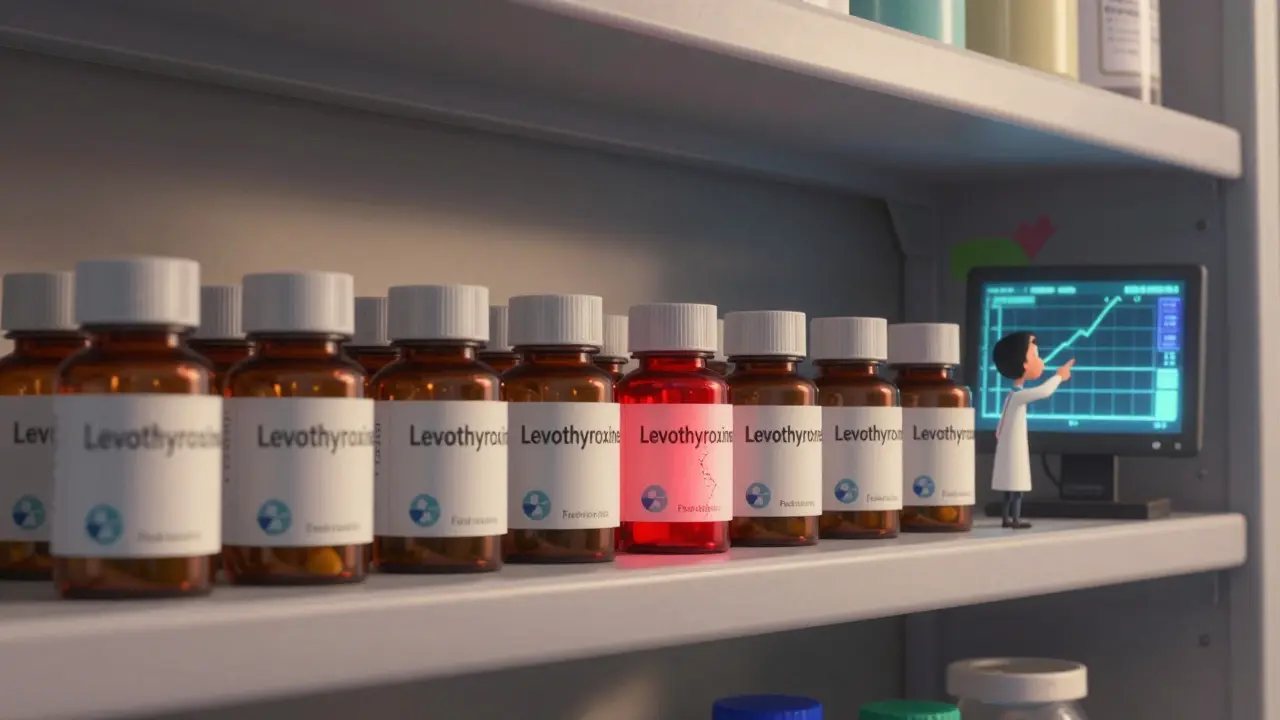
Here’s the kicker: only 28 states have laws that restrict automatic substitution for NTI drugs as of January 2025. That means in 22 states, a pharmacist can swap a brand-name levothyroxine for any generic - even if the prescriber didn’t say it’s okay. And in six states, substitution is completely banned. The rest? A patchwork. A patient in Texas might get a generic without consent. One in New York might get the brand. Same drug. Different outcomes.
Independent pharmacists are caught in the middle. The National Community Pharmacists Association’s 2025 survey found that 73% of community pharmacists get calls from doctors asking them not to substitute NTI generics. But without a law backing them up, they’re forced to choose between following the law - and risking patient safety - or following the doctor’s wishes - and risking legal trouble.
Cost vs. Safety: The Real Trade-Off
Generics save money. NTI generics cost 80-85% less than brand-name versions. That’s huge for patients. One pharmacy owner in Florida reported a 35% drop in patients abandoning their prescriptions when generics became available. But here’s the catch: cost savings shouldn’t come at the cost of safety.
The FDA’s Adverse Event Reporting System logged 1,247 adverse events linked to NTI generic substitutions between 2020 and 2024. For non-NTI generics? Just 382. That’s more than triple the risk. And it’s not just hospitalizations. It’s INR spikes, thyroid dysfunction, seizures, arrhythmias. These aren’t rare. They’re predictable.
Pharmacists aren’t against generics. They’re against *inconsistent* generics. They want the same pill, from the same manufacturer, every time. But the system doesn’t guarantee that. And patients pay the price.
What’s Changing - and What’s Not
The FDA announced in April 2025 that it’s developing a new bioequivalence framework for critical dose drugs. By 2026, 12 high-priority NTI drugs will face stricter testing standards. That’s a step forward. But it’s not enough. The current standards still allow variability. And with 42 drugs already flagged for narrower ranges, the FDA is playing catch-up.
Meanwhile, the Medicare Drug Price Negotiation Program is adding three NTI drugs to its first round of price talks. That’s good for affordability. But Lisa Schwartz of the NCPA warned that the 21-day reimbursement delay could cause cash flow problems for pharmacies. If a pharmacy can’t afford to stock a drug for three weeks, it stops carrying it. And if that drug is phenytoin? Patients are left without options.
Some hospitals are taking matters into their own hands. The ASHP’s 2025 toolkit recommends keeping one source for NTI drugs whenever possible. Sixty-three percent of hospital systems now do this. That means no switching. No surprises. Just consistency. But community pharmacies? They’re pressured by insurers and PBMs to use the cheapest option - even if it changes every month.
What Pharmacists Are Asking For
They’re not asking for bans. They’re asking for:
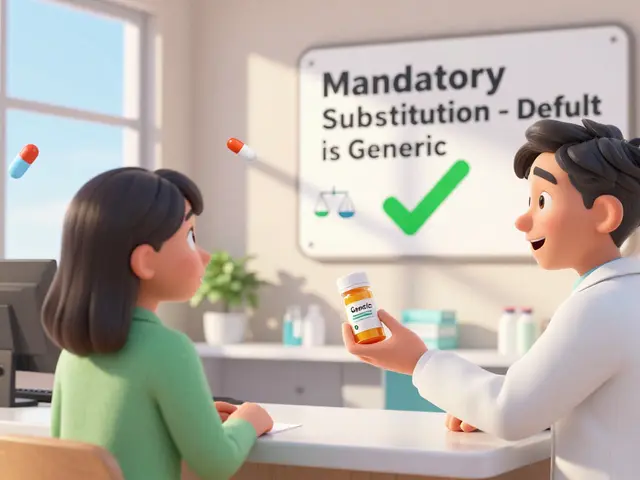
- State laws that require prescriber consent before substituting NTI drugs
- Clear labeling on generics that shows the manufacturer and lot number
- Pharmacist-led monitoring programs - 74% of healthcare systems plan to implement them by 2027
- Transparency in supply chains - knowing where the drug is made and why it might change
The American Pharmacists Association found that 61% of pharmacists support prescriber notification for NTI substitutions. Only 29% want it for non-NTI drugs. That tells you everything.
What Patients Should Know
If you take warfarin, levothyroxine, carbamazepine, or any other NTI drug:
- Ask your pharmacist: “Is this the same manufacturer as last time?”
- Ask your doctor: “Can you write ‘Do Not Substitute’ on the prescription?”
- Check your blood levels regularly - INR, TSH, serum levels. Don’t assume stability.
- Report any unusual symptoms after a generic switch - even if it seems minor.
You’re not overreacting. You’re being smart.
Are all generic drugs unsafe?
No. Most generic drugs are safe and effective. The problem is specific to NTI drugs - those with a narrow window between effective and toxic doses. For antibiotics, blood pressure meds, or antidepressants, generics work just fine. But for warfarin, levothyroxine, and phenytoin, even small changes can matter.
Why can’t the FDA just fix the bioequivalence standards?
The FDA has tried. They’ve issued guidance for specific NTI drugs and recommended tighter ranges. But updating standards for all 42 high-risk drugs takes years. It requires new testing methods, clinical data, and manufacturer compliance. Meanwhile, substitutions continue. The system is slow to adapt, even when patient safety is at stake.
Can I ask my pharmacy to keep me on the same generic brand?
Yes. Many pharmacies will honor that request - especially if your doctor writes "Do Not Substitute" on the prescription. You can also ask for the manufacturer name and lot number on your label. If it changes unexpectedly, call your pharmacist. Don’t assume it’s safe.
Why do some states ban NTI substitution while others don’t?
It’s political. Some states prioritize cost savings and assume generics are interchangeable. Others, after seeing adverse events, passed laws to protect patients. There’s no national standard. That’s why a patient in California might get the same pill for years, while one in Alabama gets switched every refill.
What should I do if I switch to a new generic and feel different?
Don’t ignore it. Contact your pharmacist and doctor immediately. Ask for a blood test - INR for warfarin, TSH for levothyroxine, serum level for phenytoin. Even a small shift can be dangerous. Document the change in manufacturer and when it happened. That information could save your life.
What’s Next?
The system isn’t broken - it’s outdated. Pharmacists aren’t resisting generics. They’re demanding better science, better regulation, and better communication. By 2027, more hospitals will have pharmacist-led NTI stewardship programs. But until state laws catch up and manufacturers commit to consistency, patients will keep paying the price for cost-cutting.
NTI drugs aren’t about savings. They’re about safety. And for the pharmacists who know the risks - every pill matters.

My pharmacist in Dublin just told me she refuses to swap my levothyroxine unless the doc explicitly says it's fine. She says she's seen too many patients crash their TSH levels after a 'generic switch' that no one warned them about. I always ask for the manufacturer name now - it's on the label, if you look close enough. Seriously, if you're on an NTI drug, treat it like your phone's battery: same charger, same brand, no compromises.
Also, why do we let insurance companies decide what's safe? That's wild.
Stop crying about generics. The FDA approves these things. If you can't handle a pill made in India, go back to paying $500 a month for brand-name. This isn't 2005. We're not living in a world where you get to choose your pill's nationality. Get over it.
Pharmacists are just scared of losing control. The system works. Patients are fine. Stop scaring people with anecdotes.
They're not telling you the whole story. Did you know the FDA outsources inspections to third-party contractors who get paid per inspection? And guess what? They don't check the active ingredient - they check the *label*. That's why two pills look identical but one's got 30% less warfarin. The whole system is rigged. Big Pharma and the FDA are in bed together. You think this is about safety? It's about profit.
My cousin died after switching generics. They called it 'natural progression.' Bullshit.
I've been working in pharmacy for 22 years and let me tell you - this isn't a debate. It's a crisis. I had a patient on phenytoin for 14 years. Stable. No seizures. Then one day, the pharmacy switched her to a new generic because the insurer said it was cheaper. Same box. Same name. Same color. But the bioavailability? It was 87%. She had a seizure two days later. Broke her pelvis. Spent six weeks in rehab.
And the worst part? The doctor didn't even know. The pharmacist didn't document it. The patient didn't know to ask. We're not talking about minor side effects here. We're talking about people dying because a corporation decided a 5-cent difference in pill cost was worth the risk.
And now the FDA is 'developing a new framework'? By 2026? That's like fixing the bridge after the car went over the edge. We need a moratorium on substitutions now. Not in two years. NOW. And we need mandatory manufacturer labeling - not just 'generic' - we need the name of the company, the lot number, and the country of origin printed on the bottle. Like cigarettes. People deserve to know what they're putting in their bodies.
I've seen the reports. I've seen the INR logs. I've seen the ER charts. This isn't theoretical. It's happening every damn day. And the system? It's still asleep.
It's heartening to see such a nuanced and well-researched piece on this critical issue. The data presented - particularly the 1,247 adverse events tied to NTI substitutions - underscores the urgency of regulatory reform. Pharmacists are not resisting cost-efficiency; they are advocating for patient safety through evidence-based practice. The call for prescriber consent, transparent labeling, and supply chain accountability is not radical - it is fundamental. Hospitals that have implemented single-source protocols for NTI drugs are seeing measurable reductions in adverse events. This should be the national standard, not the exception. We owe it to patients to prioritize clinical integrity over supply-chain convenience.
As a clinical pharmacist in Mumbai, I can confirm that the issue is global. In India, where over 90% of prescriptions are filled with generics, NTI drugs like levothyroxine and phenytoin are often sourced from multiple manufacturers due to cost constraints. We have documented cases of TSH fluctuations after switches, especially in elderly patients with comorbidities. Our hospital has implemented a policy: for NTI drugs, we retain the original manufacturer unless the prescriber approves a change. We also maintain a log of batch numbers and patient responses. It is not perfect, but it reduces risk.
Regulatory bodies worldwide must harmonize bioequivalence standards for NTI drugs. The 90-111% window is insufficient. We need 95-105% for these drugs, with real-world pharmacovigilance tracking. Until then, patient education is paramount. Every patient on warfarin should know their target INR range and be encouraged to report even minor changes in symptoms.
I think about how much we trust medicine without understanding it. We swallow pills like they’re magic, not realizing they’re made in factories we’ve never seen, by people we’ll never meet.
My mom’s on levothyroxine. She didn’t even notice when her pill changed color last year. She just took it. And then she got so tired she couldn’t get out of bed. We didn’t connect it until I checked the bottle - different manufacturer. Same name. Different chemistry.
It’s not that generics are bad. It’s that we treat them like interchangeable commodities. But the body isn’t a vending machine. It doesn’t care what the label says. It cares what’s inside.
Maybe we need to start seeing pills like food - knowing where it comes from, who made it, and if it’s the same batch as last time. It’s not paranoia. It’s care.
Why are you all so obsessed with pills? It’s not the generic. It’s the fact that nobody monitors patients after switching. The system is broken because doctors don’t follow up. Pharmacists don’t call. Patients don’t report. You blame the pill, but the real issue is the lack of care.
I’ve been on warfarin for 12 years. I get my INR checked every 4 weeks. I know my numbers. I know my manufacturer. I ask questions. If you’re not doing that, it’s not the drug. It’s you.
Stop blaming the system. Take responsibility.
How quaint. A pharmacist in Ohio shares one anecdote and suddenly we’re all supposed to panic? The FDA has reviewed over 12,000 bioequivalence studies for NTI drugs. The vast majority demonstrate clinical equivalence. The few outliers? They’re flagged. The system isn’t broken - you’re just emotionally overinvested in the myth of pharmaceutical purity.
Let me guess - you also believe in astrology and that your morning coffee should be organic, fair-trade, and roasted by a monk in the Andes?
Real science doesn’t operate on fear. It operates on data. And the data says: generics work. Most of the time. And when they don’t? We find out. Quickly. Because we’re not living in the 19th century.