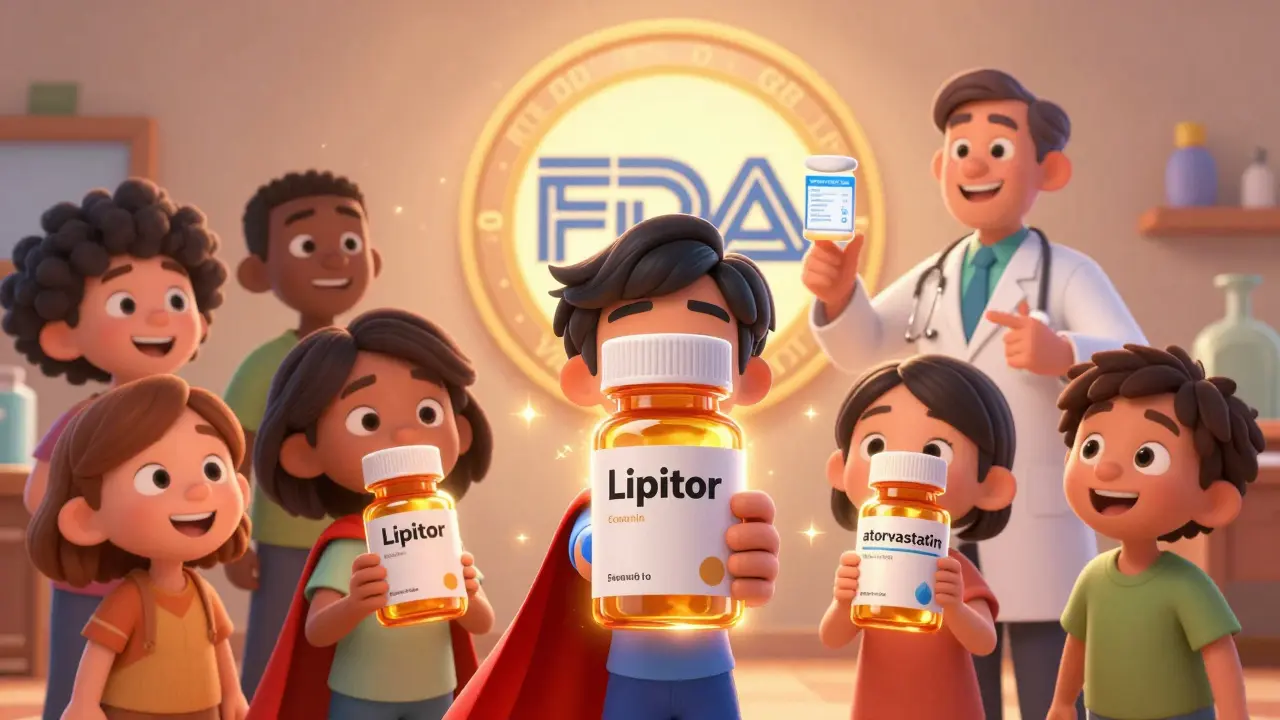
For decades, the idea of a generic drug has been tied to cheapness - not quality. You’ve probably heard someone say, "I won’t take the generic. It’s not the same." But here’s the truth: the generic version of your blood pressure pill, your insulin, or your cholesterol medicine has the exact same active ingredient, works the same way, and is held to the same strict standards as the brand-name version. The difference? Price. And perception.
By 2025, generic drugs made up 90% of all prescriptions filled in the U.S. Yet they accounted for just 12% of total drug spending. That’s not a mistake. It’s proof that generics work - and save money. But if 78% of doctors say their patients still worry generics aren’t as effective, then something deeper is going on. It’s not about chemistry. It’s about psychology.
Why We Still Doubt Generic Drugs
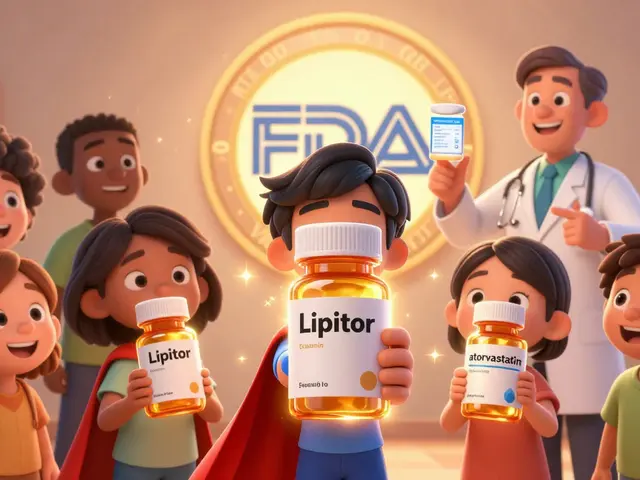
Brand-name drugs aren’t just medicine. They’re brands. Think of Lipitor, Humira, or Ozempic. They have logos, TV ads, patient support programs, and decades of marketing. Their names are familiar. They feel safe. Generic drugs? They’re labeled with long, unfamiliar chemical names - like atorvastatin instead of Lipitor. No ads. No glossy packaging. Just a plain bottle with a price tag that’s 80% lower.
That’s not a flaw. It’s the point. But our brains don’t always follow logic. When we see something cheap, we assume it’s low quality - even when science says otherwise. A 2025 survey found that 42% of patients switched back to brand-name drugs after insurance changed coverage, not because they felt worse, but because they believed the generic wouldn’t work as well.
This isn’t just patient behavior. Even some doctors hesitate. Why? Because they were trained during an era when generics were less reliable. Back then, manufacturing standards weren’t as tight. Some early generics had inconsistent absorption. But that’s not the case anymore. Today’s generics must prove they’re bioequivalent - meaning they deliver the same amount of drug into your bloodstream at the same rate as the brand. The FDA requires this. Every time.
Generics Have Changed - A Lot
When people think of generics, they picture little white pills. But the market has exploded beyond that. In 2025, the FDA approved five new biosimilars for denosumab - drugs used for osteoporosis and bone cancer. These aren’t simple copies. They’re complex biological products made from living cells. Think of them as the high-tech version of generics. Companies like Bildyos, Aukelso, and Enoby are now competing with Prolia and Xgeva - and they’re just as effective.
Specialty generics - injectables, inhalers, and complex formulations - are growing fast. Hospitals are using more of them. Why? Because they save money without sacrificing care. In oncology units, switching to generic chemotherapy injectables has allowed clinics to treat more patients. One hospital system in Texas reported a 20% increase in treatment capacity after switching to generic versions of key drugs. No drop in outcomes. Just more people helped.
And it’s not just about what’s in the pill. The manufacturing process has improved. Modern generic makers use the same automated lines, quality controls, and real-time monitoring as brand-name companies. Many are even made in the same factories. The difference? The label.
The Cost Gap Isn’t Just About Price - It’s About Trust
Generics save patients and insurers billions. But savings alone don’t change minds. People need to feel confident. That’s why new approaches are focusing on transparency, not just discounts.
CivicaScript, a nonprofit generic drug manufacturer, is leading the way. Instead of hiding costs behind layers of middlemen, they sell directly to hospitals at fixed, low prices. No rebates. No surprise fees. Just clear pricing. Their model cuts costs by up to 70% for common hospital drugs. And because they’re nonprofit, they reinvest profits into expanding access - not shareholder returns.
Another strategy? Domestic production. The U.S. still relies on overseas factories for most generic drugs. That’s why we had 270 active drug shortages in 2025. By bringing more manufacturing home - especially for critical drugs like antibiotics and anesthetics - supply becomes more reliable. And reliability builds trust. If you know your medicine won’t suddenly disappear, you’re more likely to trust it.
Technology Is Becoming a Trust Builder
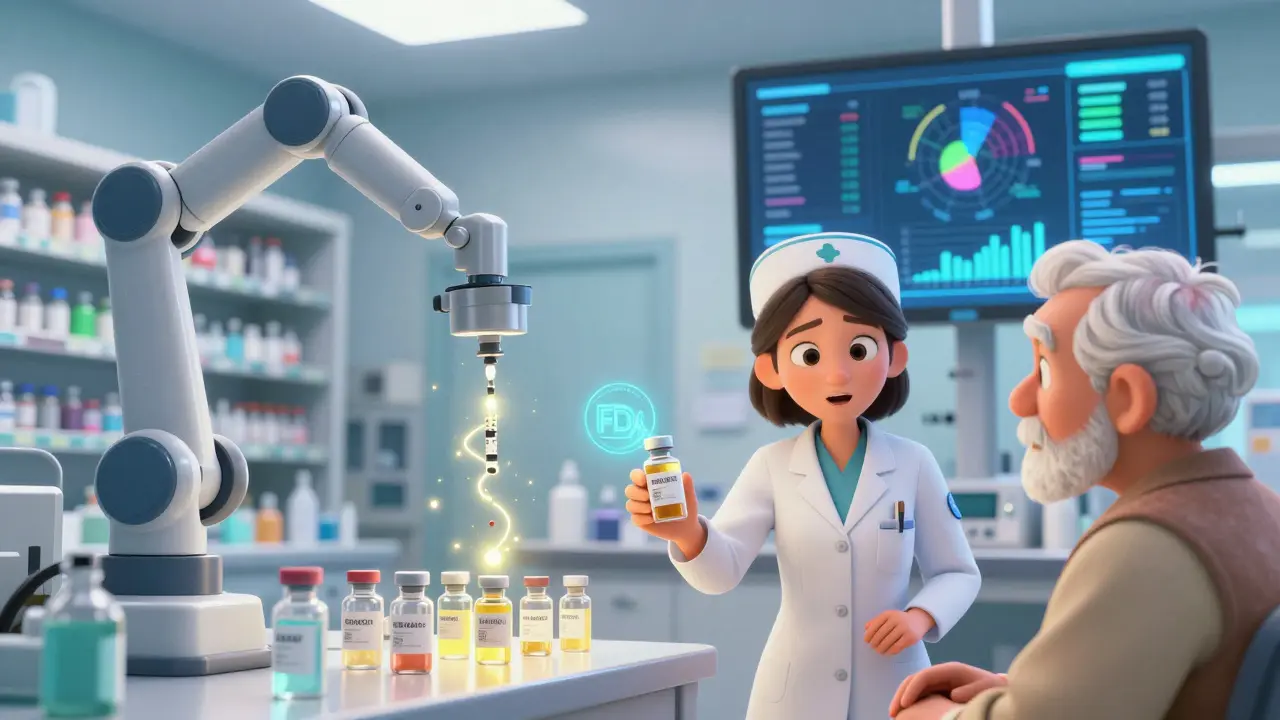
What if you could scan a pill bottle and see its entire journey - from raw ingredient to your pharmacy? That’s not science fiction. Blockchain and AI are being tested to track generic drug supply chains in real time. Imagine knowing exactly where your generic metformin was made, tested, and shipped. No guesswork. No fear of counterfeit pills.
Some pharmacies are already using QR codes on generic packaging that link to FDA approval data, manufacturing details, and bioequivalence reports. One pilot in California showed a 30% drop in patient concerns after introducing these labels. People didn’t just see a cheaper drug. They saw proof.
AI is also helping doctors. Tools now pull up real-time data on generic performance across thousands of patients. If a doctor wants to know how well a generic version of warfarin performed in diabetic seniors over the past year, the system shows them. No opinion. Just outcomes.
Education Works - When It’s Done Right
Most patients don’t know the difference between a brand and a generic. They don’t understand bioequivalence. They don’t know the FDA inspects generic factories just as often as brand-name ones.
A 2025 pilot by the American Medical Association trained primary care doctors to explain generics in simple terms during appointments. Instead of saying, "This is the generic version," they said, "This pill has the same active ingredient as the brand, works the same way, and costs 85% less. Here’s what the FDA says about it." They showed patients the approval data on a tablet.
Result? A 35% reduction in patient concerns. Not because prices changed. Because understanding did.
Biosimilars Are the Next Frontier
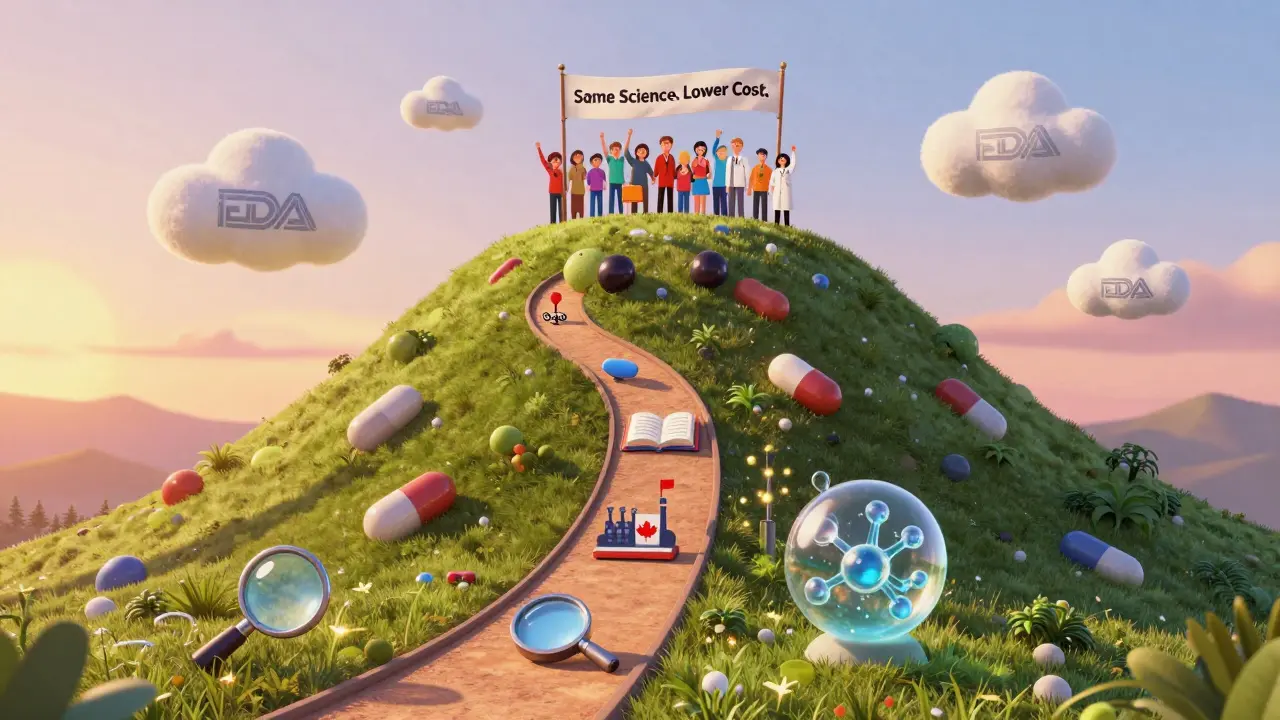
While traditional generics copy small-molecule drugs, biosimilars copy complex biologic drugs - like those used for rheumatoid arthritis, Crohn’s disease, and cancer. These used to cost over $100,000 a year. Now, biosimilars are hitting the market at 15-30% lower prices. The market is expected to hit $133 billion by 2025.
But adoption is slow. Why? Because they’re expensive to make. Because doctors aren’t trained on them. Because patients fear "copy" biologics won’t work.
That’s changing. The FDA approved six new biosimilars in Q3 2025 alone. Hospitals are starting to use them routinely. And when patients have been on them for six months - like those switching from Humira to a biosimilar - their outcomes are nearly identical. The difference? Hundreds of dollars saved per month.
The Future Isn’t About Cheaper Pills - It’s About Better Perception
Generic drugs aren’t going away. In fact, over 100 brand-name drugs will lose patent protection between 2025 and 2027. That means more generics. More biosimilars. More savings.
But the real challenge isn’t manufacturing. It’s mindset. We’ve spent 40 years telling people generics are cheap. Now we need to tell them they’re reliable. They’re safe. They’re backed by science.
The future of generic drugs won’t be won with ads. It’ll be won with transparency. With education. With supply chain clarity. With doctors who take five minutes to explain why a $5 pill works just as well as a $40 one.
And it’s already happening. More patients are choosing generics when they understand them. More hospitals are switching. More insurers are pushing them. The data doesn’t lie. The perception just needs to catch up.
Generics work. Period. I’ve been on atorvastatin for five years. My labs are perfect. My doctor showed me the FDA bioequivalence data. No difference. Why pay extra?
You think this is about science? Nah. It’s about branding. We’ve been conditioned to equate price with value-like a $500 watch must tick better than a $50 one. The pharmaceutical industry didn’t just sell pills-they sold identity. Lipitor isn’t medicine-it’s a status symbol for people who believe they deserve the ‘best.’ Meanwhile, the rest of us are just lucky if we can afford the damn thing at all.
And don’t get me started on how doctors still whisper ‘brand only’ like it’s a recommendation, not a privilege. It’s cultural conditioning wrapped in white coats.
So true 😔 I had a friend switch from Humira to a biosimilar last year-scared to death at first. But after 6 months? Same energy, same joint pain relief, same $0 copay. She cried when she realized she’d been overpaying for years. It’s not about the drug. It’s about fear. And fear can be unlearned. 💪
Let’s deconstruct the perceptual economics here. The brand-name drug ecosystem operates on a monopoly rent-seeking model-patent cliffs, evergreening, direct-to-consumer advertising budgets that dwarf R&D spend. Generics disrupt this by commoditizing therapeutic outcomes. But perception lags because cognitive dissonance is a powerful force: if you’ve spent $200/month for a decade, accepting a $15 alternative feels like admitting you were exploited. The real barrier isn’t pharmacokinetics-it’s psychological ownership of illness. We don’t just treat disease; we ritualize it. The pill becomes a sacrament. And generics? They’re heresy.
That’s why transparency tech matters. Blockchain traceability, FDA portal integration, AI-driven outcome dashboards-they don’t just inform. They reframe. They shift the narrative from ‘cheap’ to ‘democratized.’ The next frontier isn’t bioequivalence-it’s epistemic equity. Can we trust the data? If yes, then the pill is just a delivery mechanism. The brand is the illusion.
Interesting points... but I’ve seen too many cases where generics caused issues-especially with anticoagulants... I’m not saying they’re unsafe... just that individual variability exists... and not all manufacturers are equal... the FDA oversight is good... but human factors? Still a concern... 🤔
Oh please. You’re all acting like generics are some revolutionary miracle. Newsflash: they’re not. They’re the pharmaceutical industry’s way of offloading low-margin, low-effort products to the masses while the rich get the ‘premium’ experience. And let’s be real-most of these generics are still made in China or India, with questionable oversight. You think a QR code is going to fix that? Please. This is just woke capitalism repackaged as public health. The real solution? Nationalize drug manufacturing. Not slap a sticker on a pill and call it transparency.
There is no empirical evidence to support the claim that patient perception is the primary barrier to generic adoption. The data shows that insurance formularies, pharmacy benefit manager restrictions, and prescriber inertia are the dominant factors. To attribute this to ‘psychology’ is to engage in reductive narrative-building. Furthermore, the FDA’s bioequivalence standards are not uniformly enforced across all generic manufacturers-particularly for extended-release formulations. The anecdotal success stories cited here ignore the systemic failures documented in the 2024 GAO report on generic drug quality control. Until those structural issues are addressed, appeals to ‘trust’ are merely performative.
Wait-so we’re saying the solution is to show patients the FDA paperwork? That’s it? 😍 YES. Let’s put those QR codes on EVERYTHING. Let’s have pharmacists hand out one-pagers with before-and-after lab results from people who switched. Let’s make this a movement. This isn’t just about money-it’s about dignity. Everyone deserves to feel safe taking their medicine. And we can make that happen. Let’s do this. 🙌