Why Post-Marketing Drug Safety Tracking Matters
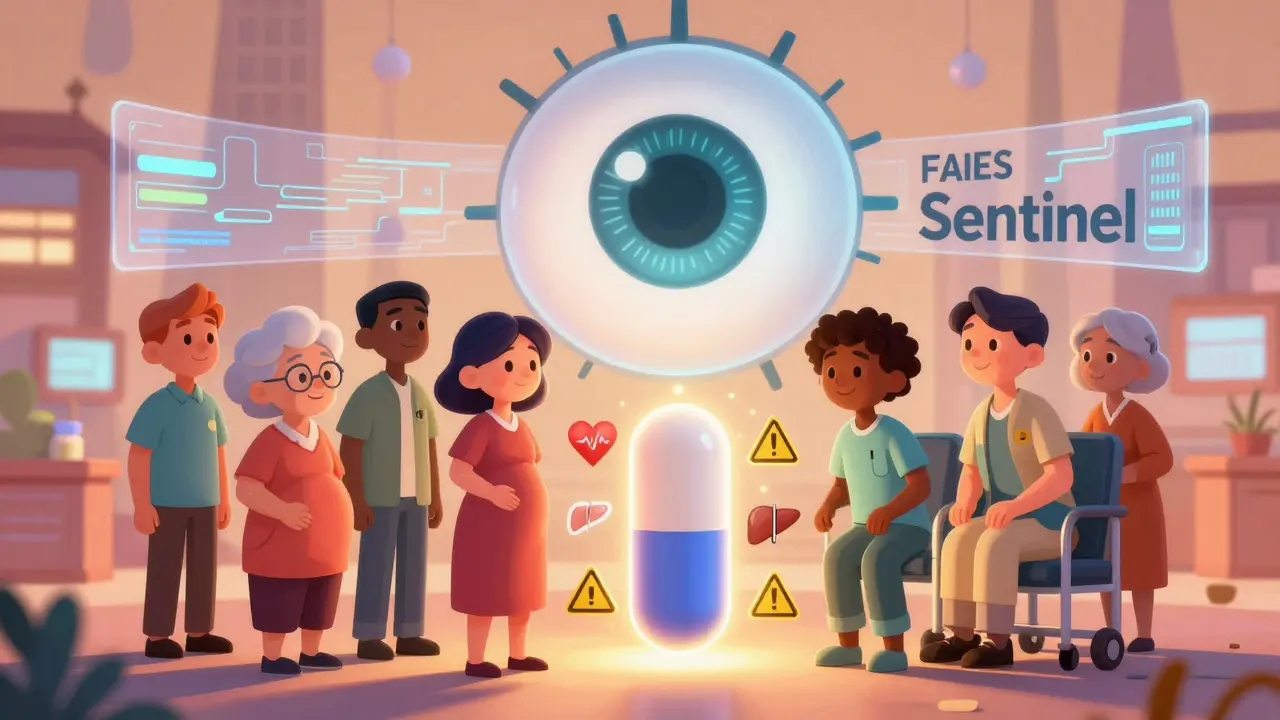
Drugs approved by the FDA or other regulators aren’t proven safe for everyone-not yet. Clinical trials involve a few thousand people, mostly healthy adults, under controlled conditions. They rarely include elderly patients, pregnant women, or those with multiple chronic conditions. That’s where post-marketing surveillance comes in. Once a drug hits the market, real-world use reveals side effects that didn’t show up in trials. A 2022 FDA report found that 28% of serious adverse reactions were only detected after the drug was widely used, mostly because older patients-now 43% of users-weren’t properly represented in initial studies.
Tracking these studies isn’t optional. It’s a legal requirement. The FDA, EMA, and other agencies mandate ongoing safety monitoring. Companies that fail to meet deadlines risk fines, label changes, or even withdrawal from the market. Between 2018 and 2022, 87% of safety actions taken by the FDA were triggered by post-marketing data-mostly through updates to drug labels. That means the information you collect now can change how a drug is prescribed tomorrow.
The Three Core Systems for Tracking Drug Safety
There are three main systems used globally to track drug safety after approval, each with different strengths.
FAERS (FDA Adverse Event Reporting System) is the backbone of U.S. safety monitoring. It’s a database with over 30 million reports from doctors, pharmacists, patients, and drug manufacturers. Anyone can submit a report-whether it’s a mild rash or a heart attack. FAERS doesn’t prove causation, but it flags patterns. In 2022, 63% of safety signals came from these spontaneous reports. If a drug suddenly shows 50+ reports of liver injury in a month, that’s a red flag.
Sentinel System is the FDA’s active surveillance network. It pulls data from insurance claims and electronic health records across 300 million Americans. Unlike FAERS, which relies on voluntary reports, Sentinel automatically scans for health events tied to drug use. It found, for example, that a popular diabetes drug increased heart failure risk in older patients-something FAERS missed because the reports were too scattered. But Sentinel has limits. It doesn’t capture lab results, vital signs, or detailed clinical notes. That’s why the FDA is expanding it with the Sentinel Common Data Model Plus (SCDM+), which by 2026 will include genomic data from 50 million patients.
Yellow Card (UK) and Canada Vigilance are national equivalents. The UK’s Yellow Card system received over 76,000 reports in 2022, up 12% from the year before. Canada’s program got nearly 29,000. These systems feed into global databases like the WHO’s VigiBase, helping connect dots across borders. A side effect seen in Japan might show up in Germany months later-tracking across systems makes that possible.
How Post-Marketing Studies Are Designed and Required
Not all safety monitoring is passive. The FDA often requires companies to conduct specific studies after approval. These are called Post-Approval Commitments (PACs) or Post-Marketing Requirements (PMRs). Since 2017, the 21st Century Cures Act has increased these mandates by 37%, especially for cancer, neurology, and immunology drugs.
These studies can be observational (tracking patients in real-world settings), interventional (testing new dosing or combinations), or database studies (analyzing claims data). For example, a new Alzheimer’s drug might be required to track cognitive decline over five years in patients over 75. The problem? Most take too long. A 2023 National Academies report found that 72% of these studies miss their 3-year deadline, with an average completion time of 5.3 years. Why? Poor patient recruitment, fragmented data sources, and slow institutional approvals.
Companies now use distributed data networks to speed things up. Instead of collecting data from one hospital at a time, they connect to multiple health systems through secure networks. This cut study start times from 14 months in 2018 to under 9 months in 2023. Still, the biggest hurdle isn’t technology-it’s coordination. You need pharmacovigilance teams, data scientists, legal advisors, and clinical staff all working from the same playbook.
Signal Detection: Turning Data into Action
Collecting data is only step one. The real work is spotting the signal in the noise. FAERS alone gets 1 million new reports every year. Most are unrelated or duplicates. The FDA’s Office of Surveillance and Epidemiology uses a five-step process to filter them:
- Signal Identification: Algorithms flag unusual patterns-like a spike in kidney failure among users of a new blood pressure drug.
- Triage and Prioritization: Is this a rare side effect or a life-threatening one? Is it happening in a vulnerable group? High-risk signals get top priority.
- Multisource Evaluation: Does Sentinel confirm it? Are there case reports in medical journals? Has the EMA seen similar data?
- Regulatory Decision: Do we update the label? Issue a warning letter? Add a Risk Evaluation and Mitigation Strategy (REMS)?
- Communication: The FDA issues Drug Safety Communications, updates its website, and notifies healthcare providers via email alerts.
Between 2020 and 2022, the FDA issued 147 such communications affecting 112 drugs. Most resulted in label changes. Only 1% led to market withdrawal. But that 1% saved lives. A 2021 recall of a diabetes drug after a signal from Sentinel prevented an estimated 2,300 cases of pancreatitis.
Tools and Best Practices for Tracking
If you’re managing post-marketing studies, here’s what works:
- Centralized Monitoring Platform: Use software that tracks all study deadlines, data sources, and regulatory correspondence in one place. Missing a deadline can trigger an FDA warning letter.
- Automated Alerts: Set up triggers for data anomalies-like a 50% increase in reports of a specific side effect in a month.
- Pharmacovigilance Team Structure: One dedicated specialist per $500 million in annual product revenue is the industry standard. Too few, and you’ll miss signals. Too many, and you’ll waste resources.
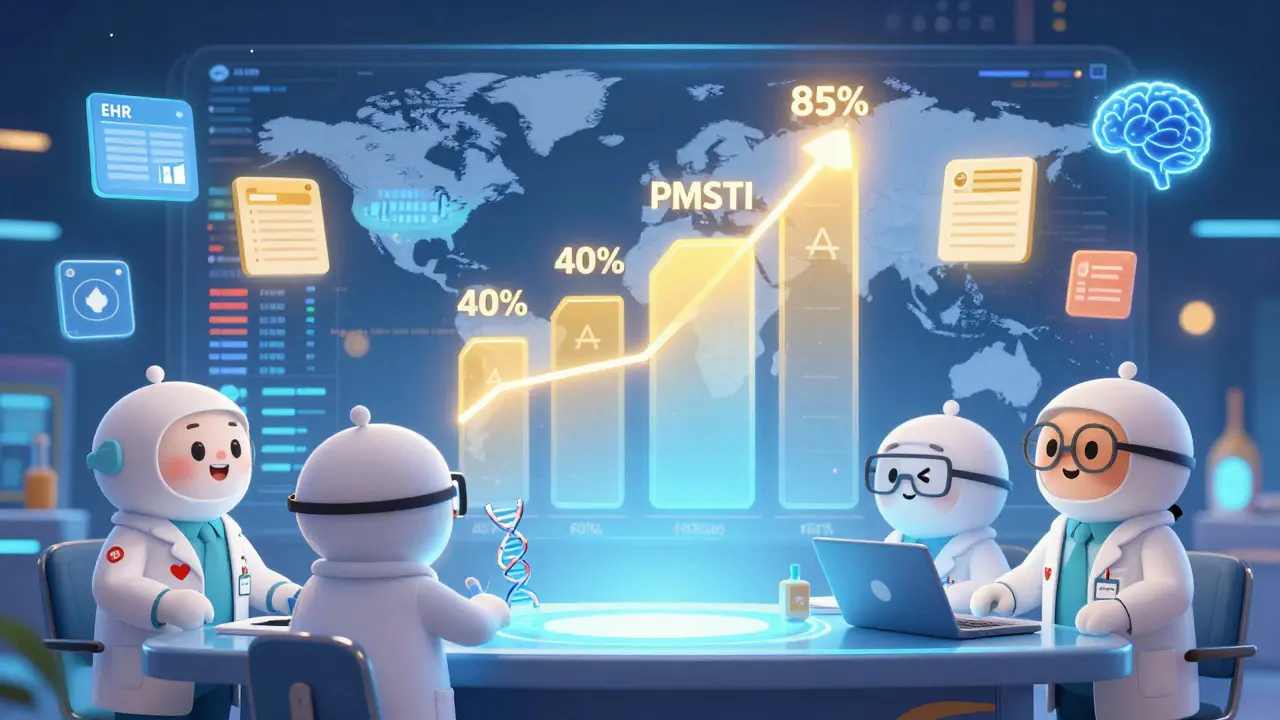
- PMSTI (Post-Marketing Study Timeliness Index): Track the percentage of studies completed on time. If your index is below 70%, you’re at risk.
- Use Real-World Evidence (RWE): Don’t just rely on FAERS. Combine it with EHR data, pharmacy claims, and patient registries. The more sources, the more confident you can be in your findings.
Emerging tools like AI and Large Language Models (LLMs) are being tested to scan unstructured EHR notes for hidden safety signals. A 2023 pilot with Lifebit AI showed a 42% improvement in detection accuracy. But false positives rose by 23%. So use AI as a helper-not a replacement-for human review.

What Happens When You Don’t Track Properly
Ignoring post-marketing surveillance has real consequences. In 2019, a major manufacturer failed to submit required safety data for a new antidepressant. The FDA placed the company on a warning list, delayed approval of its next drug, and fined it $12 million. The drug’s sales dropped 40% after the public learned of the compliance issues.
Worse, patients suffer. A 2022 study in JAMA Network Open showed that delays in detecting a heart rhythm side effect from a common antibiotic led to 14 preventable deaths over 18 months. The company had the data-they just didn’t analyze it in time.
Compliance isn’t just about avoiding fines. It’s about trust. Patients and doctors need to believe that a drug is safe long after it’s prescribed. If you don’t show you’re actively monitoring, they’ll choose alternatives.
What’s Coming Next
The future of drug safety tracking is faster, smarter, and more connected.
- SCDM+ (2026): The FDA’s new system will combine genomic data with clinical records for 50 million people. This will help predict who’s at risk for rare side effects based on their DNA.
- EudraVigilance AI (2025): The EU is launching an AI-powered system that auto-classifies adverse events and links them to drug use patterns across 30 countries.
- WHO Global Network (2027): By 2027, 100 countries will share pharmacovigilance data in real time. A side effect in Brazil will be visible to regulators in India within hours.
These systems won’t replace human judgment. But they’ll make it faster, more accurate, and more global. The goal isn’t just to catch problems-it’s to prevent them before they spread.
Final Takeaway
Tracking post-marketing studies isn’t paperwork. It’s patient protection. Every report, every study, every data point adds to the safety net. The tools are better than ever. The data is more accessible. The stakes? Higher than ever. If you’re responsible for drug safety, your job isn’t done when the drug is approved. It’s just beginning.