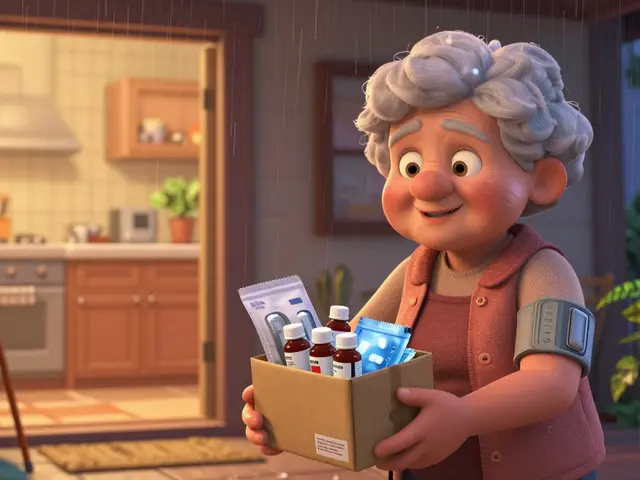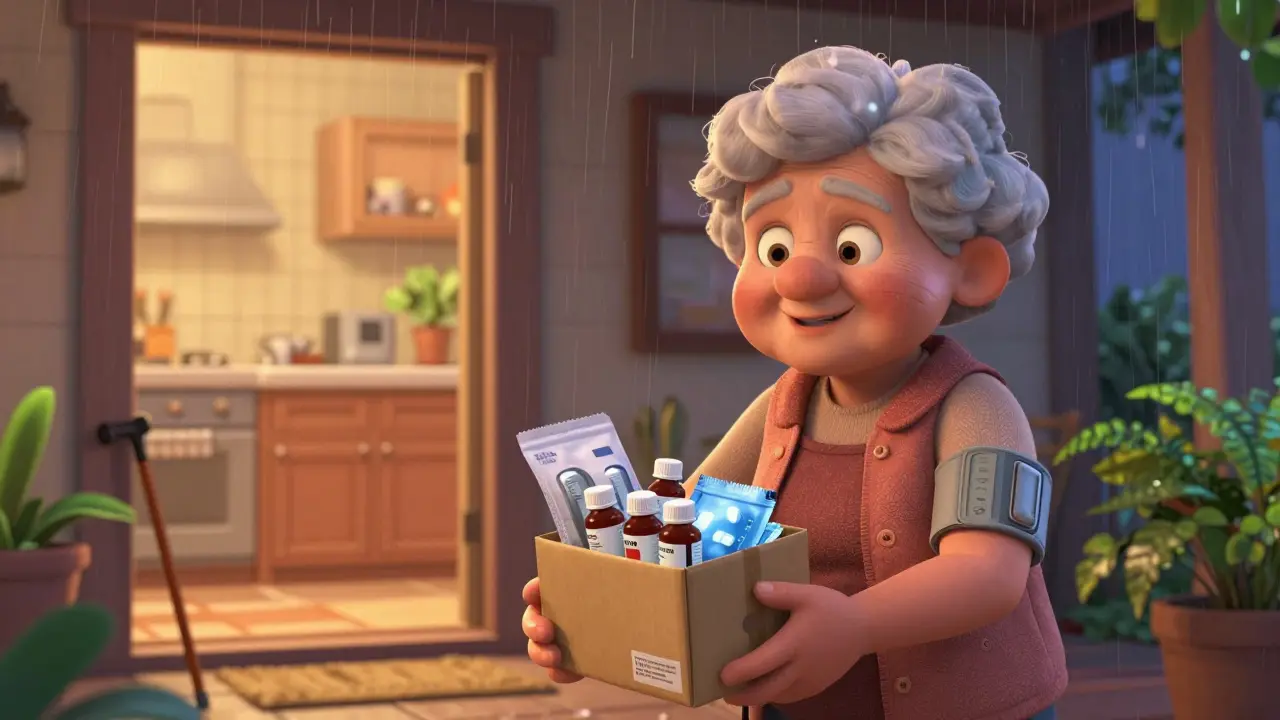
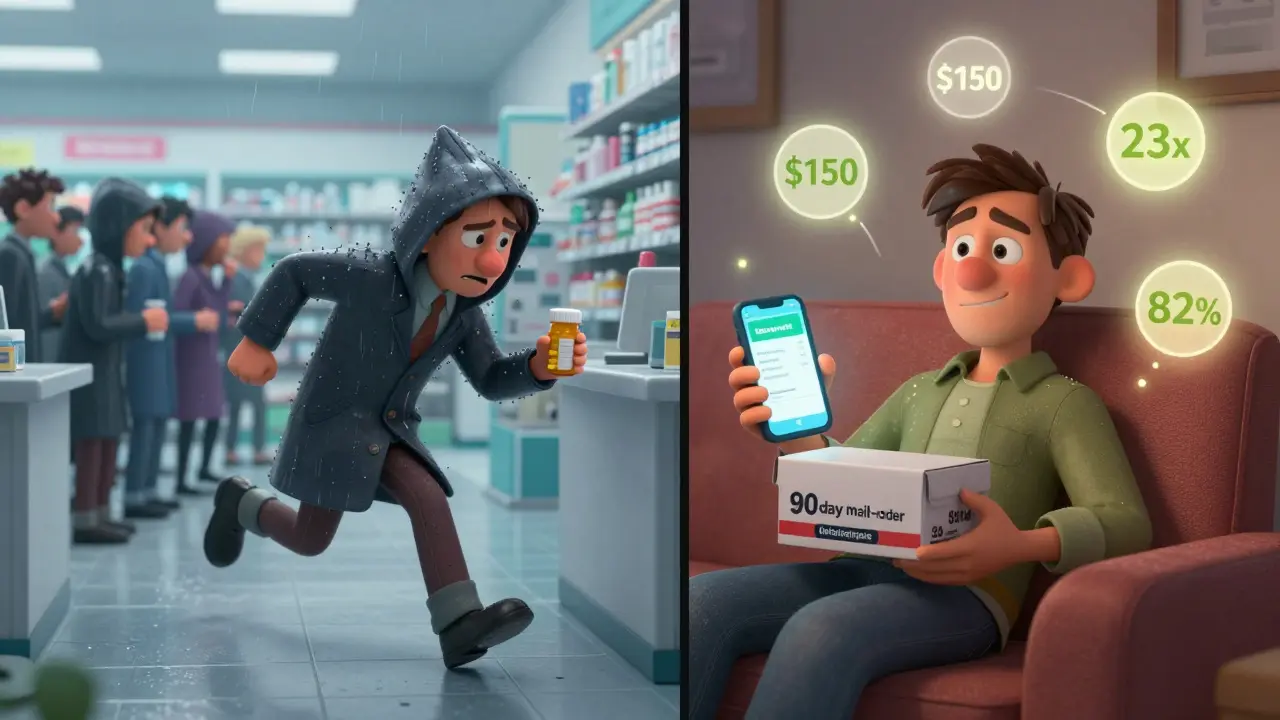
Running out of your blood pressure or diabetes meds shouldn’t mean driving across town in the rain, waiting in line, or skipping a dose. That’s where pharmacy delivery and mail-order services come in - simple, quiet, and life-changing for people managing long-term health conditions.
Think about it: if you’re on a daily pill for cholesterol, thyroid, or asthma, you’re taking that same medicine every single day for months or years. Now imagine getting all 90 days’ worth delivered to your door - no trips, no copays for each refill, and no risk of forgetting because you’re too tired or busy. That’s not a luxury. It’s a proven way to stay healthy.
Why Mail-Order Works Better for Chronic Medications
People who get their maintenance meds through mail-order pharmacies are 82% likely to take them as prescribed. That’s not a guess. That’s data from Blue Cross NC, tracking over 1.2 million patients. Compare that to just 52% adherence when picking up 30-day supplies at a local pharmacy. The difference isn’t magic. It’s convenience.
When you order a 90-day supply, you’re not just saving time. You’re saving money. Three separate 30-day refills at retail cost about 25-35% more than one 90-day order through mail-order. For someone on a brand-name statin or insulin, that’s $150 to $300 saved every year. And most insurance plans cover it at the same copay as a 30-day fill - you just get three months’ worth.
It’s not just about cost. It’s about safety. Mail-order pharmacies use robotic systems and computer checks to fill prescriptions. They’re 23 times more accurate than retail pharmacies, according to PCMA research. No human misreads a script. No wrong dosage gets packed. That matters when you’re on multiple meds.
What Medications Can You Get Delivered?
Not every prescription qualifies. Mail-order works best for stable, ongoing medications - the ones you take every day, month after month. That includes:
- High blood pressure drugs (lisinopril, amlodipine)
- Cholesterol meds (atorvastatin, rosuvastatin)
- Diabetes pills (metformin, glimepiride)
- Thyroid hormones (levothyroxine)
- Asthma inhalers (fluticasone, albuterol - if not urgent)
- Antidepressants and anti-anxiety meds (sertraline, escitalopram)
What’s excluded? Controlled substances. No opioids, no Adderall, no Xanax. These require in-person pickup due to federal rules. Same goes for some specialty injectables or biologics that need special handling - though many of those are now available through specialty mail-order pharmacies with cold-chain packaging.
Temperature-sensitive meds - like insulin or certain autoimmune drugs - are shipped in insulated boxes with ice packs. They’re designed to stay safe even if your package sits on the porch for a few hours. Most services guarantee delivery within 3-5 business days. Some, like Patient Direct Pharmacy, offer next-day delivery for urgent refills.
How to Get Started (Step by Step)
Signing up takes less than 15 minutes. Here’s how:
- Check your insurance. Most health plans - including Medicare Part D, Medicaid, and employer plans - include mail-order as a standard benefit. Log into your insurer’s website or call the number on your card. Ask: "Does my plan offer mail-order pharmacy with 90-day refills?" If yes, you’re good to go.
- Find your mail-order provider. Your insurer will name the pharmacy they work with. Common ones are Express Scripts, CVS Caremark, OptumRx, or Birdi Pharmacy (used by University of Michigan). If you’re unsure, call your insurer or check your member portal.
- Transfer your prescriptions. You can do this online through the mail-order pharmacy’s website or by phone. You’ll need your prescription details and insurance info. Most transfers take 3-5 business days. You can also ask your current pharmacy to send it over - they’ll handle the paperwork.
- Set up your account. Create a username and password. Enter your shipping address. Set up automatic refills if you want. Most services let you reorder online, through an app, or by calling a toll-free number - 24/7.
- Order your first 90-day supply. Don’t wait until you’re out. Order when you have about 10-14 days left. That gives time for processing and shipping. If you’re switching from retail, you can often get a 30-day supply at your local pharmacy while you wait for the first mail-order delivery.
Pro tip: If you take multiple meds, ask if they can synchronize your deliveries. Most services now let you pick one day each month when all your prescriptions arrive together. No more juggling different refill dates.
What to Watch Out For
Mail-order isn’t perfect. Here’s what you need to know before you sign up.
Not for emergencies. If you need an antibiotic for a sudden infection, or a new painkiller after surgery, go to your local pharmacy. Mail-order takes days. You need it now. Doctors agree: 87% of them still recommend retail for acute meds.
Delays happen. About 8.3% of users report packages arriving later than promised. Weather, holidays, or processing backlogs can slow things down. That’s why ordering early matters. Don’t wait until your bottle is empty.
Lost or damaged packages. Roughly 1.2% of shipments get damaged or lost. Most services will replace them free of charge - but you’ll need to call customer service. Keep your tracking number.
Controlled substances won’t ship. If your doctor prescribes something like oxycodone or Adderall, you’ll still need to pick it up in person. No exceptions.
Not all pharmacies are equal. Stick with your insurer’s partner. Third-party sites that claim to offer "cheap mail-order" may not be licensed, insured, or safe. Only use pharmacies that are licensed in your state and connected to your insurance.
Real People, Real Results
One Reddit user, u/ChronicWarrior2020, wrote: "I have MS and can’t walk far. Getting my disease-modifying drugs delivered? Changed my life. I don’t have to beg for rides or cancel plans because I’m out of meds."
Trustpilot reviews for Patient Direct Pharmacy average 4.7 out of 5 stars. People praise next-day delivery and how easy it is to coordinate with workers’ comp claims. University of Michigan employees say Birdi’s pharmacists actually call them if there’s a question - not just a robot.
It’s not just about saving time. It’s about peace of mind. No more rushing to the pharmacy at 6 p.m. on a Friday. No more panic when your bottle runs out on a holiday weekend. You know your meds are coming. You can plan your life around your health, not the other way around.
What’s Next for Pharmacy Delivery?
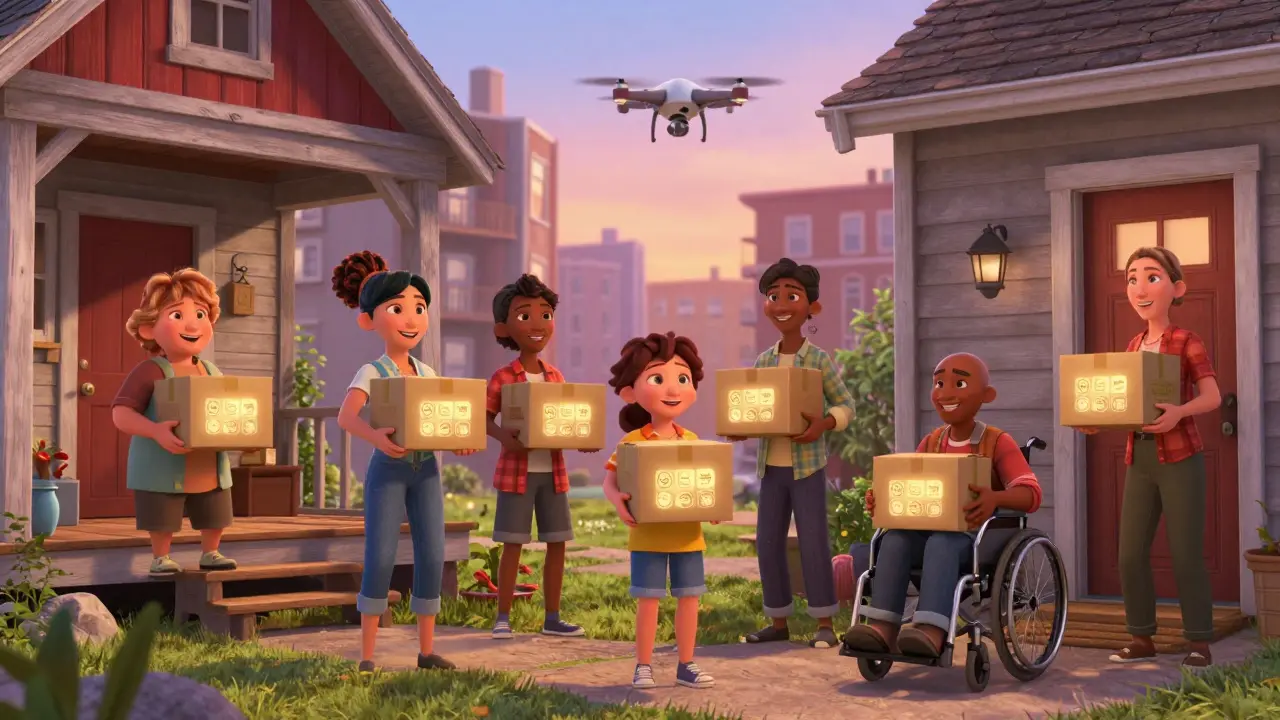
The industry is growing fast. The U.S. mail-order market hit $102 billion in 2022 and is expected to hit $189 billion by 2028. More insurers are adding specialty drugs to mail-order lists. Some are even testing AI systems that predict when you’re likely to skip a dose - and then send you a text reminder.
UPS and CVS are testing drone deliveries in rural North Carolina. Smart packaging with temperature sensors is rolling out for high-cost biologics. And more employers - 85% of Fortune 500 companies now - offer mail-order as a standard benefit because it cuts absenteeism and hospital visits.
For you? It means better access, lower costs, and fewer gaps in your treatment. The goal isn’t just to deliver pills. It’s to keep you out of the ER, off disability, and living your life.
Still Unsure? Try It
If you’re on chronic meds and tired of pharmacy runs, give it a shot. Start with one prescription. Order your next 90-day refill through mail-order. See how it feels to wake up and know your meds are on the way.
You don’t need to switch everything at once. Just one less trip to the pharmacy. One less worry. One more day where your health doesn’t depend on your schedule.
Can I use mail-order pharmacy if I don’t have insurance?
Yes. Many mail-order pharmacies, like Patient Direct Pharmacy and HomeMed, offer cash pricing that’s often lower than retail copays. You can compare prices online before ordering. Some even have discount programs for low-income patients. You don’t need insurance to use mail-order - but if you have it, you’ll usually pay less.
How long does it take to get my first mail-order prescription?
It usually takes 3-5 business days from when your prescription is transferred and your order is processed. If you’re switching from a local pharmacy, you can get a 30-day supply there while you wait. Always order your refill when you have 10-14 days left to avoid running out.
Can I get my medications delivered if I live in a rural area?
Absolutely. Mail-order was built for people in pharmacy deserts - areas with no nearby pharmacy. In fact, 29.5 million Americans live in places where the nearest pharmacy is more than 10 miles away. Mail-order solves that problem. Delivery covers all 50 states, including remote locations. Some services even offer free shipping regardless of location.
What if I need to change my dose or stop a medication?
Call your doctor first to update your prescription. Then contact your mail-order pharmacy’s pharmacist - most offer 24/7 phone support. They’ll hold your next shipment until your new script arrives. Never stop or change meds without talking to your provider, even if you’re using mail-order.
Are mail-order pharmacies safe and legitimate?
Yes - if you use your insurer’s approved provider. These pharmacies are licensed, regulated, and audited. They follow HIPAA rules for privacy and use FDA-approved drugs. Avoid websites that sell meds without a prescription or seem too cheap. Stick with names you recognize: Express Scripts, CVS Caremark, OptumRx, Birdi, or Patient Direct.
Can I use mail-order for my pet’s medications?
Some mail-order pharmacies now offer veterinary prescriptions, especially for chronic pet conditions like thyroid disease or seizures. But not all do. Check with your vet first - they can recommend a pet-specific mail-order service or help you transfer the prescription to a pharmacy that handles animal meds.
If you’re managing a chronic condition, pharmacy delivery isn’t just convenient - it’s a tool for better health. It removes the barriers that make adherence hard: time, cost, transportation, forgetfulness. You’re not just getting pills in the mail. You’re getting consistency. Stability. Control. And that’s worth more than a few minutes saved on a drive.