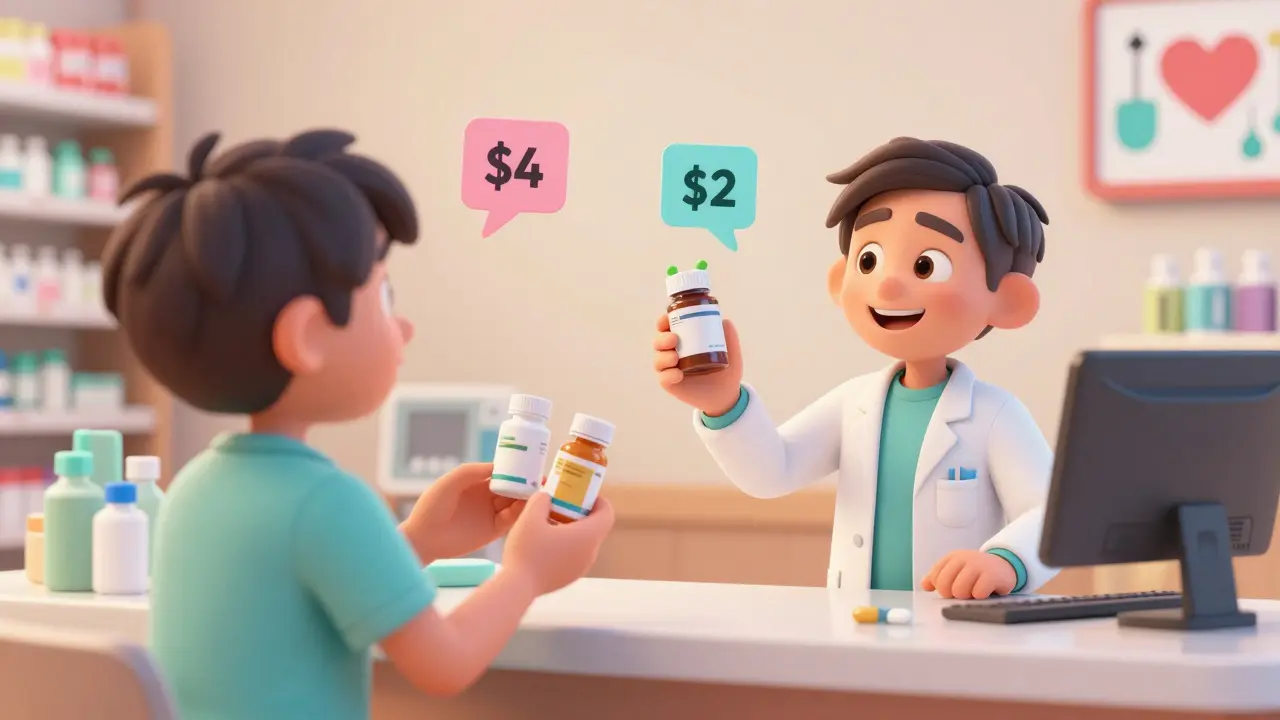
When you’re on multiple medications for high blood pressure, diabetes, or cholesterol, you might notice something strange: your insurance covers two separate pills for $10 each, but the pill that combines those same two drugs costs $50. It doesn’t make sense-until you understand how insurance formularies work.
Why Generic Combinations Are Treated Differently
Generic combination drugs are single pills that contain two or more active ingredients already available as individual generics. For example, a combination pill might include amlodipine and atorvastatin-both sold separately as cheap generics-for treating high blood pressure and high cholesterol together. The FDA confirms these combination drugs are chemically identical to their brand-name versions and meet the same safety and effectiveness standards. But here’s the catch: insurance plans don’t always treat them the same way. Some plans cover the combination pill as a single Tier 1 generic with a $5 copay. Others only cover the two individual generics, forcing you to buy them separately. In rare cases, the combination version ends up on a higher tier, making it more expensive than buying the pieces separately. This isn’t random. It’s driven by pharmacy benefit managers (PBMs) like CVS Caremark, Express Scripts, and OptumRx, who control 80% of the market. They decide which drugs go on which tier based on cost, rebates, and negotiations with manufacturers. A combination drug might be placed higher because the manufacturer didn’t offer a big enough rebate, or because the PBM wants to push patients toward cheaper, separate pills.How Medicare Part D Handles These Drugs
Medicare Part D plans cover 84% of their drug options with generic-only rules, meaning brand-name versions are outright excluded. That number has climbed from 69% in 2012, showing a clear trend toward favoring generics. Most plans use a four-tier system:- Tier 1: Preferred generics-copays as low as $0 to $5
- Tier 2: Non-preferred generics or preferred brand-name drugs-$10 to $20
- Tier 3: Non-preferred brand-name drugs-$40 to $70
- Tier 4: Specialty drugs-$100+
The Real Cost Difference: What Patients Actually Pay
In 2024, the average copay for a generic drug under Medicare Part D was between $1 and $15. Brand-name drugs? $47 to $112. That’s an 80-95% savings. But when it comes to combinations, the math gets messy. Take a patient on lisinopril and hydrochlorothiazide for hypertension. Each generic costs $4 per month. Together, that’s $8. The combination pill? $12. The plan covers both, but the combo is on Tier 2. The patient pays $12 instead of $8. That’s a 50% markup for convenience. On the flip side, some patients see huge savings. When the blood pressure combo drug Cozaar-HCT went generic, one user reported their monthly cost dropped from $45 to $7. That’s because the combination became the cheapest option after generic approval. It all depends on the plan’s formulary. You can’t assume the combo is cheaper. You have to check.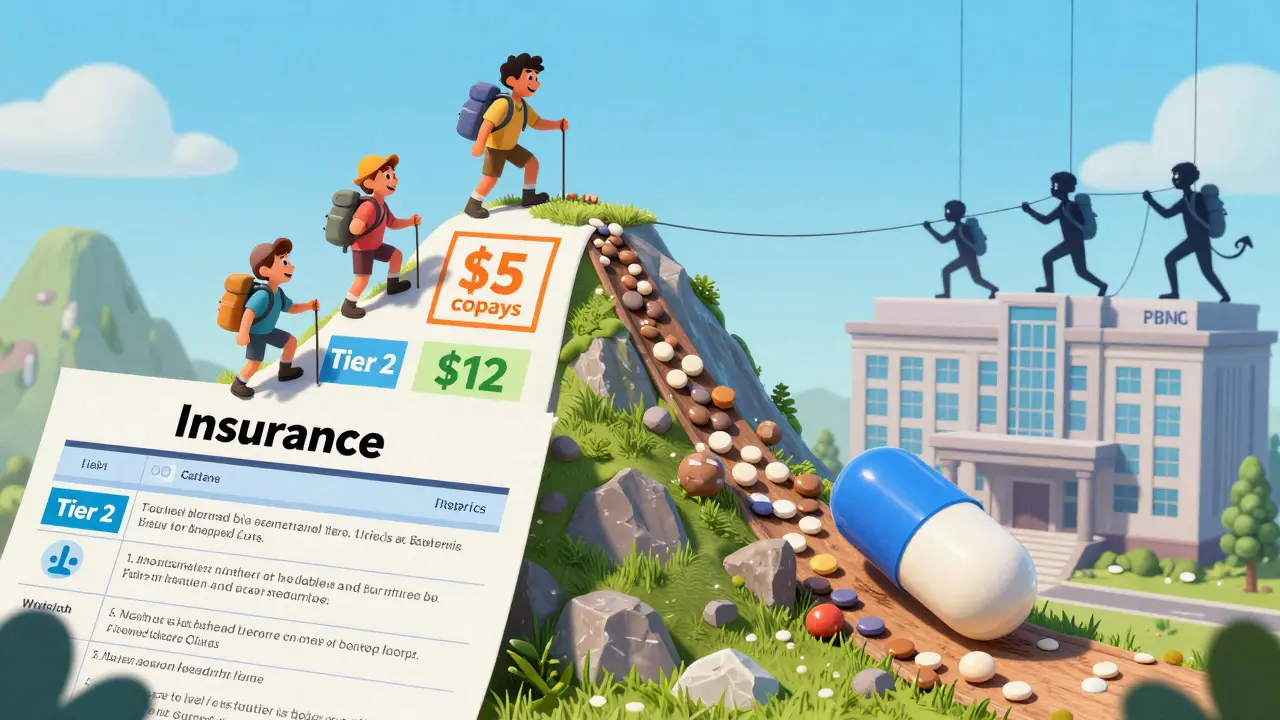
Why Some Plans Push Individual Generics
Insurance plans often prefer you to take two separate pills for three reasons:- Cost control: If the combination drug is a single-source generic (only one manufacturer makes it), it might not have price competition. Separate generics? Dozens of manufacturers. Prices stay low.
- Flexibility: If your dose needs adjustment, it’s easier to change one pill than switch to a new combo. A doctor can increase the dose of one component without touching the other.
- PBM incentives: PBMs get rebates from manufacturers. Sometimes, the rebate for two individual generics is higher than for the combo. That makes the combo less attractive to the plan-even if it’s better for you.
What to Do If Your Combo Drug Is Expensive
If your combination drug is priced higher than the individual generics, you have options:- Ask your doctor to prescribe the separate generics. Many doctors will do this if it saves you money. You’ll take two pills instead of one, but you’ll pay less.
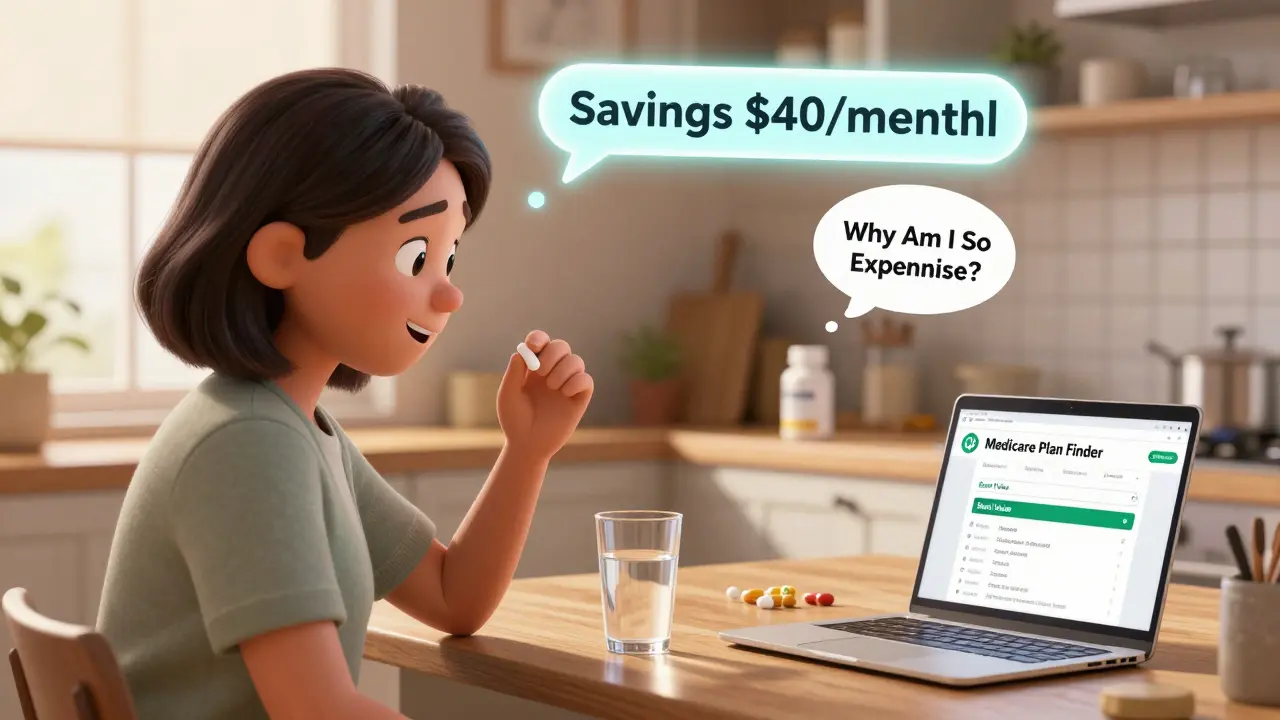
- Use the Medicare Plan Finder. Enter your drugs and zip code. It shows you which plans cover what at the lowest cost. You can compare plans side by side.
- Request a coverage determination. If your plan denies the combo but your doctor says it’s medically necessary, you can file a formal request. The plan has 72 hours to respond. Expedited requests take 24 hours.
- Check for manufacturer coupons. Some combo drug makers offer savings cards-even for generics. Since the September 2023 court ruling, these can now count toward your out-of-pocket maximum, making them more valuable.
The Bigger Picture: Why This Matters
In 2022, 90% of all prescriptions in the U.S. were filled with generics. That’s a win for affordability. But combination drugs make up 15% of all prescriptions-and 28% of top-selling drugs. As more of these drugs go generic (thanks to FDA’s GDUFA III program accelerating approvals), the gap between individual and combo coverage will narrow. The Inflation Reduction Act, which took effect in 2024, capped out-of-pocket drug spending at $2,000 a year for Medicare Part D users. That’s a game-changer. It means even if your combo drug is on a higher tier, you won’t pay more than $2,000 total for all your meds in a year. But until then, patients need to be smart. Don’t assume the combo is cheaper. Don’t assume two pills are worse. Check your plan’s formulary. Talk to your pharmacist. Ask your doctor to compare costs.Common Myths About Generic Combinations
- Myth: Combination generics are less effective. Fact: The FDA requires them to be bioequivalent to brand-name combos. No difference in how they work.
- Myth: Taking two pills is harder to remember. Fact: Studies show adherence is similar between combo pills and separate pills-especially when patients get counseling.
- Myth: Insurance always prefers combos. Fact: Only 42% of Medicare plans make their formularies easy to read. Most patients don’t know what’s covered until they get to the pharmacy.
Final Tip: Always Ask for a Cost Comparison
Before you leave the pharmacy, ask the pharmacist: "If I took these two separate generics instead, how much would I pay?" They have access to real-time pricing. Sometimes, the difference is $40 a month. That’s $480 a year. You don’t need to be a pharmacist or a policy expert to save money. You just need to ask the right questions.Are generic combination drugs as safe as brand-name ones?
Yes. The FDA requires generic combination drugs to be bioequivalent to their brand-name counterparts, meaning they have the same active ingredients, strength, dosage form, and absorption rate. They’re held to the same manufacturing and quality standards. Millions of people take generic combos every day without issues.
Why is my combination drug more expensive than the two separate generics?
It’s usually because the combination drug is on a higher insurance tier. Even though the ingredients are the same, the plan may have negotiated better rebates for the individual generics, or the combo might be a single-source generic with no competition. Always ask your pharmacist to compare the total cost of buying two separate pills versus the combo.
Can I switch from a combination drug to two separate generics?
Yes, and many patients do. Your doctor can write separate prescriptions for each generic ingredient. This is common for blood pressure, diabetes, and cholesterol meds. Just make sure your plan covers both individual drugs at a low cost. Some people prefer two pills because it gives more flexibility to adjust doses.
Does Medicare cover generic combinations differently than private insurance?
Medicare Part D plans are more standardized and have higher generic coverage rates (84%) than many private plans. Private insurers often have more variation-some favor combos, others don’t. But both use tiered formularies and rely on pharmacy benefit managers (PBMs) to decide pricing and coverage. Always check your specific plan’s formulary.
What’s a single-source generic, and why does it matter?
A single-source generic is a generic drug made by only one manufacturer. Without competition, prices don’t drop as much. Some combination drugs are single-source generics, which means they might cost more than expected-even though they’re not brand-name. Always check if your combo has multiple manufacturers. If not, it might be worth switching to separate generics.
How do I find out what my insurance covers?
Log into your plan’s website and look for the formulary (also called a drug list). Search for your exact drug names, including the brand and generic versions. Use the Medicare Plan Finder at medicare.gov if you’re on Medicare. If the info is hard to find, call your plan’s pharmacy help line-they’re required to give you a printed copy if you ask.
Can I appeal if my plan won’t cover my combination drug?
Yes. Your doctor can file a coverage determination request. For standard requests, the plan has 72 hours to respond. If your health is at risk, you can ask for an expedited review, which must be done within 24 hours. Include a letter from your doctor explaining why the combo is necessary-maybe you have trouble swallowing pills, or you’re at risk of missing doses.


Man, I used to hate taking two pills every morning until I found out the combo was costing me $40 extra. Now I just ask my pharmacist to compare prices - saved me $480 last year. Simple as that.
Also, shoutout to my doc who didn’t bat an eye when I asked for separate generics. We’re not fighting the system, we’re just playing it smarter.
Same. I’m on a combo for BP and diabetes, and my plan made me pay $55 for it. I switched to two generics - $7 total. Now I have extra cash for chai lattes. 😎
It’s wild how the system rewards complexity over simplicity. Two pills = cheaper, but the combo looks ‘cleaner’ on paper. PBMs are playing 4D chess while we’re just trying to survive the monthly pharmacy run. 🤷♂️
Thank you for sharing this. As a patient advocate, I’ve seen too many seniors pay hundreds extra because they assumed the combination pill was the ‘better’ option. This information could literally save lives - and wallets.
Always ask for the cost comparison. Always. The pharmacist is your ally, not your adversary.
so like… if the ingredients are the same, why does the combo cost more? it’s not like the pill has gold in it or something.
also, why do we even have this system? who thought ‘let’s make people do math at the pharmacy’ was a good idea? 😅
Let’s be real - this isn’t about cost efficiency, it’s about corporate greed disguised as ‘formulary optimization.’ PBMs don’t give a damn if you swallow one pill or two. They care about the rebate check they get from the manufacturer of the individual generics. The combo? No rebate. No love.
And don’t get me started on how formularies are written in legalese so dense that even pharmacists need a decoder ring. You think this is about patient care? Nah. It’s about profit margins and quarterly earnings calls. The FDA doesn’t care how many pills you take - they just care if the molecules match. The rest? Pure capitalism with a side of confusion.
Meanwhile, your doctor’s office is too busy billing to even check your copay. So you pay. And pay. And pay. And then you wonder why you’re broke at 52. It’s not your fault. It’s the system. And it’s rigged.
EVERYTHING here is a lie. PBMs don’t care about rebates - they’re owned by Big Pharma. The combo drug? It’s a trap. They make the combo expensive so you’ll buy the individual generics… then they raise the price of those too. It’s all one big scheme to keep you dependent.
And don’t trust the Medicare Plan Finder - it’s rigged to show you the most expensive options first. I checked my meds three times. All three times it lied. They’re watching. They’re always watching. 🕵️♂️💊
Y’all are doing it right - asking questions, checking prices, talking to your pharmacist. That’s how you win. I had a client who saved $600/year just by switching to separate generics. She cried when she saw the receipt. Not from sadness - from POWER. 💪
Don’t be shy. Walk up to the counter and say, ‘What’s the cheapest way to take these?’ They’re trained to help you. And if they don’t? Ask for the formulary. Print it. Bring it to your doctor. You’ve got rights.
And yes - the combo CAN be cheaper. But you have to check. No assumptions. Ever. 🙌
One must acknowledge the structural inefficiencies inherent in the current pharmaceutical reimbursement paradigm. The fragmentation of formulary decision-making among PBMs, coupled with the absence of transparent pricing mechanisms, engenders a suboptimal patient outcome landscape. One is compelled to posit that a unified, publicly audited drug pricing registry - aligned with pharmacoeconomic principles - would mitigate the arbitrary tiering currently observed.
Moreover, the cognitive burden placed upon the patient to perform cost-benefit analyses at the point of care is neither equitable nor sustainable. A systemic recalibration is not merely advisable - it is imperative.