Millions of people take statins to lower cholesterol and protect their hearts. At the same time, nearly half of all Americans take vitamin D supplements-often because they’ve been told it’s good for bones, immunity, or even muscle pain. But what happens when these two are taken together? Does vitamin D help with statin-related muscle aches? Do statins mess with vitamin D levels? And is there real science behind the claims-or just wishful thinking?
Why This Question Keeps Coming Up
If you’ve ever Googled "statins and vitamin D," you’ve probably seen conflicting advice. Some doctors say take it. Others say it won’t help. Reddit threads are full of people swearing vitamin D saved their muscles. Meanwhile, major trials say it doesn’t. So who’s right? The confusion comes from two big facts: statins are among the most prescribed drugs in the world, and vitamin D is one of the most popular supplements. In the U.S. alone, about 30% of adults over 40 take a statin. Around 40% take vitamin D. That’s a huge overlap. When people on statins get muscle soreness-common, real, and sometimes severe-they naturally look for solutions. Vitamin D is cheap, safe, and widely available. It’s no surprise so many try it.What the Science Says About Muscle Pain
The biggest concern for statin users is statin-associated muscle symptoms, or SAMS. That’s the technical term for aches, cramps, weakness, or fatigue that can make people stop taking their medication. Up to 28% of statin users report these symptoms. Some quit altogether. For years, many believed low vitamin D was to blame. The theory made sense: statins block cholesterol production. Vitamin D is made from cholesterol. So if cholesterol drops, does vitamin D drop too? And if vitamin D drops, does that cause muscle pain? The most definitive answer comes from the VITAL trial substudy (2022), which tracked over 2,000 people starting statins. Half took 2,000 IU of vitamin D daily. The other half took a placebo. After a year, muscle symptoms occurred in exactly 31% of both groups. No difference. Not even in people who started with low vitamin D levels. If you were deficient (under 20 ng/mL), 33% in the vitamin D group had muscle pain. So did 35% in the placebo group. The study was double-blind, randomized, and large. This isn’t a fluke. The American College of Cardiology and the European Society of Cardiology both say this: don’t take vitamin D to prevent statin muscle pain. The evidence just isn’t there.Do Statins Raise or Lower Vitamin D Levels?
Here’s where things get weird. Some studies say statins increase vitamin D. Others say they lower it. How can both be true? It depends on the statin. Research shows that atorvastatin and rosuvastatin are linked to higher vitamin D levels. One 2012 study found rosuvastatin boosted vitamin D from 11.8 ng/mL to 35.2 ng/mL in just eight weeks. Another 2019 study showed patients on atorvastatin had the highest vitamin D levels among all statin users. Why? Researchers think these statins might boost proteins that help absorb vitamin D from the gut-kind of like turning up a faucet. But other statins don’t do this. Fluvastatin didn’t raise vitamin D in the same study. And a 2018 study found statin users overall had lower vitamin D levels than non-users. Their average was 15.8 ng/mL vs. 20.6 ng/mL in controls. Nearly 72% of them were deficient. So why the contradiction? It’s not just the drug. It’s the person. Age, weight, sun exposure, kidney function, genetics-all play a role. Some people on statins naturally have low vitamin D because they’re older, less active, or eat poorly. The statin isn’t the cause-it’s just happening at the same time.
Could Vitamin D Affect How Statins Work?
There’s another layer: could vitamin D change how your body handles the statin itself? Both vitamin D and some statins (atorvastatin, simvastatin, lovastatin) are processed by the same liver enzyme: CYP3A4. When two substances use the same pathway, they can compete. One might block the other. A 2015 study found that people taking 800 IU of vitamin D daily had lower levels of atorvastatin in their blood. That could mean the statin is less effective. But the drop was small. No one in the study had higher cholesterol or more heart events. So while it’s a possible interaction, it’s probably not dangerous for most people. The good news? Not all statins use CYP3A4. Pravastatin, rosuvastatin, and fluvastatin are metabolized differently. If you’re on one of these, vitamin D is unlikely to interfere.What About Patient Stories?
You’ll still hear people say, "I started vitamin D and my muscle pain vanished." And they’re not lying. But correlation isn’t causation. Many people who take vitamin D for statin pain are also changing other things: they’re eating better, walking more, sleeping longer, or reducing alcohol. Those changes alone can improve muscle symptoms. Also, the placebo effect is powerful. If you believe something will help, your brain can reduce pain signals-even if the substance has no biological effect. That’s likely why 54% of Reddit users say vitamin D helped them, while the best science says it doesn’t. There’s also a real group that does benefit: people with severe deficiency. If your vitamin D is under 12 ng/mL, correcting that can improve overall health, including muscle function. But that’s not because vitamin D fights statin pain-it’s because you were sick from being deficient.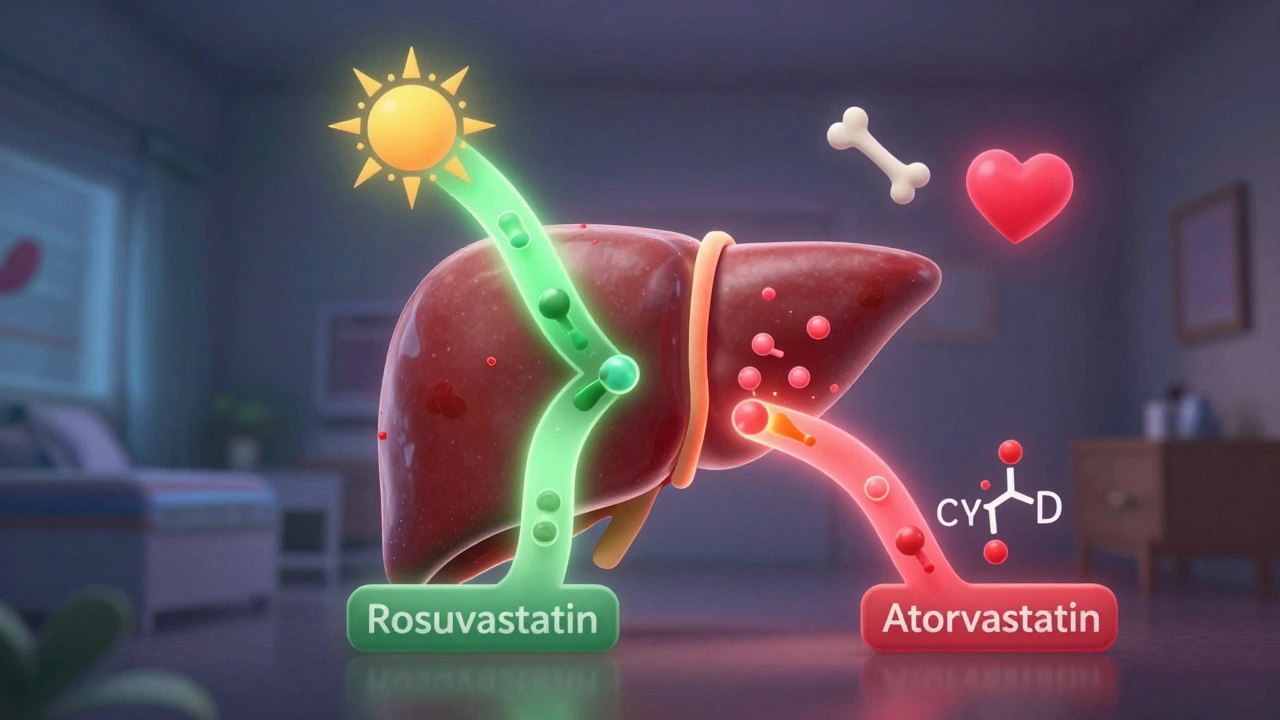
What Should You Do?
Here’s the practical take:- If you’re on a statin and have muscle pain, don’t assume vitamin D will fix it. Talk to your doctor first.
- If you’re low on vitamin D (below 20 ng/mL), supplementing is a good idea-for your bones, immune system, and overall health. But don’t expect it to stop statin side effects.
- If you’re on atorvastatin, simvastatin, or lovastatin, talk to your pharmacist about whether vitamin D could affect your drug levels. It’s unlikely to matter, but it’s worth checking.
- If you’re on rosuvastatin, pravastatin, or fluvastatin, vitamin D is safe and won’t interfere.
- Don’t stop your statin because of muscle pain. Many symptoms improve over time, or switching statins helps. Don’t risk your heart health on unproven fixes.
The Bigger Picture
This isn’t just about vitamins and pills. It’s about how we interpret health information. We want simple answers: take this, feel better. But biology is messy. Statins and vitamin D interact in ways we’re still learning. Some effects are real. Some are coincidental. Some are just noise. The most important thing? Don’t let confusion keep you from your heart medication. Statins save lives. Vitamin D helps your bones. But one doesn’t fix the side effects of the other. Looking ahead, the PRECISION trial (expected results late 2025) is testing whether a tiny group-people with extremely low vitamin D (under 12 ng/mL)-might still benefit. Until then, the evidence says: supplement if you’re deficient. But don’t take it for statin pain.Frequently Asked Questions
Does vitamin D help with statin muscle pain?
No, high-quality studies show vitamin D does not prevent or reduce statin-related muscle pain. The largest trial (VITAL, 2022) found no difference in muscle symptoms between people taking vitamin D and those taking a placebo-even in those with low vitamin D levels.
Can statins lower vitamin D levels?
It depends on the statin. Atorvastatin and rosuvastatin are linked to higher vitamin D levels, possibly by improving absorption. Other statins like fluvastatin don’t have this effect. Some studies show lower vitamin D in statin users overall, but this is likely due to lifestyle factors like less sun exposure or poor diet-not the drug itself.
Should I take vitamin D if I’m on a statin?
Only if you’re deficient. If your blood level is below 20 ng/mL, supplementing is recommended for bone and immune health. But don’t take it to prevent muscle pain from statins-it won’t work. Talk to your doctor about testing your levels before starting supplements.
Which statins interact with vitamin D?
Atorvastatin, simvastatin, and lovastatin are metabolized by the CYP3A4 enzyme, which also processes vitamin D. This creates a theoretical risk of interaction. Rosuvastatin, pravastatin, and fluvastatin are not metabolized this way, so they’re unlikely to interact. Always check with your pharmacist if you’re unsure.
Is it safe to take vitamin D with statins?
Yes, it’s generally safe. There’s no evidence that vitamin D causes harm when taken with statins. The main risk is spending money and time on something that won’t help with muscle pain. If you’re not deficient, there’s no benefit. If you are deficient, taking vitamin D is a good idea-but for your overall health, not for statin side effects.